|
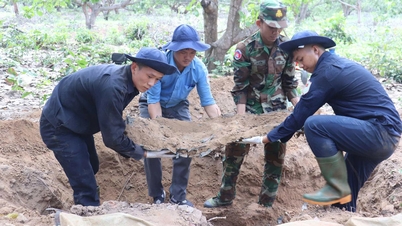
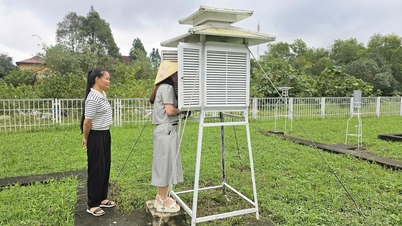
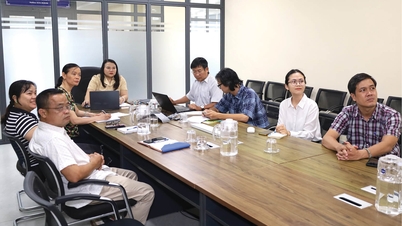
| Ecosystem surveys and measurements are a crucial step in converting natural resources into carbon credits. |
Rich in resources
Hue City, with its unique geographical location, possesses multiple green carbon ecosystems simultaneously, including the Tam Giang - Cau Hai Wetland Nature Reserve, established in June 2020 with a total area of over 2,000 hectares. According to Assoc. Prof. Dr. Hoang Cong Tin, Head of the Environmental Science Department, University of Science - Hue University, each hectare of seagrass can store 2-5 times more CO2 than one hectare of tropical rainforest. “The carbon potential from seagrass in Tam Giang - Cau Hai is enormous, but it has not yet been fully quantified,” Assoc. Prof. Dr. Hoang Cong Tin stated.
Furthermore, the Ru Cha mangrove forest is a symbol of a green carbon ecosystem that needs protection and expansion. Recently, Hue City has invested in a project to expand the mangrove forest on the lagoon to over 200 hectares, with the expansion mainly in the Ru Cha area extending to the Tam Giang bridge, opening up a new approach in the local "green carbon" development strategy.
Hue City's carbon potential is also demonstrated through carbon stock measurement activities. Hue City is one of six localities representing six ecological zones selected by the United Nations Development Programme (UNDP) in collaboration with the Forestry Department to pilot the nationwide measurement of mangrove forest carbon stocks. The results show that the average carbon stock from Vietnamese mangrove forests reached approximately 245 tons/ha (in 2024).
Opening up new opportunities


The development of green carbon needs to be linked to participation in domestic and international carbon credit markets. In fact, Vietnam has begun to participate in the carbon market through forest carbon credits within the framework of the REDD+ (Reducing Emissions from Deforestation and Forest Degradation) mechanism. The $51.5 million payment from the World Bank was made through the Forest Carbon Partnership Fund (FCPF), with technical support from the United Nations Programme on Reducing Emissions from Deforestation and Forest Degradation (UN-REDD). This is an important prerequisite for localities, including Hue, to move towards exploiting higher-value carbon credits such as green carbon.
In addition, earlier this year, the Government issued Decree No. 29/2026/ND-CP, dated January 19, 2026, on the establishment of a domestic carbon exchange, which has opened up a legal framework for localities like Hue to gradually bring green carbon resources into the market.
According to Mr. Le Ngoc Tuan, Head of the Hue City Forest Protection Department, the advantages of the forest ecosystem, the scale of natural area, and experience from emission reduction programs are creating favorable conditions for the locality to access the carbon credit market. This is the foundation for Hue to gradually participate more deeply in the carbon economy in the future.
Associate Professor Hoang Cong Tin analyzed that, to realize the potential of green carbon, Hue City needs to act in three parallel directions. First, it is necessary to urgently quantify the entire carbon reserves in seagrass and mangrove forests along the lagoon to create a carbon credit registration dossier according to international standards. Next, it is necessary to build an integrated management mechanism to protect the ecosystem from degradation, because carbon credits are only recognized when the ecosystem remains intact and is continuously monitored. Finally, it is necessary to proactively connect with international organizations that are implementing green carbon finance programs in Vietnam.
“The market is waiting. Investors need scientific data and a stable legal framework. Hue City is at a more favorable starting point compared to many other localities. That opportunity won't wait forever,” Associate Professor Dr. Hoang Cong Tin commented.
| Green carbon is carbon naturally stored in coastal ecosystems – mangrove forests, tidal swamps, and seagrass beds. Experts consider green carbon to be "nature's expensive and premium product." Mangrove carbon credit projects are tendered on the global market with a starting price of $35 per credit in the voluntary carbon market in 2022. |



Source: https://huengaynay.vn/kinh-te/tiem-nang-phat-trien-carbon-xanh-165401.html




























































![[Photo gallery] Tens of thousands of tourists visit and enjoy local specialties at the Long Khánh Fruit Festival.](https://vphoto.vietnam.vn/thumb/402x226/vietnam/resource/IMAGE/2026/06/28/1782662218511_b_20260628224930.jpeg)