At nearly 80 years old, veteran Tran Thanh Hoa, former squad leader of the reconnaissance team of Regiment 24A, B3 Front, Central Highlands, still vividly remembers the New Year's Eve of the Tet Offensive in 1968. That night, units of Regiment 24A were assigned to attack Kon Tum town. Battalion 4 attacked Military Zone 24, Battalion 5 attacked Zones 40 and 41. Mr. Hoa was the guide for the reconnaissance units as they approached their targets.
The battle was incredibly fierce. Enemy firepower rained down relentlessly. Many soldiers breached the barricades, fought to the last bullet, and perished right inside the enemy base. Their comrades outside were unable to bring them back. “Some of our men advanced deep into Military Zone 24 and Zones 40 and 41 and died. We could only retreat; we couldn’t bring our comrades out. That is the most agonizing thing in my life as a soldier,” Mr. Hoa said, his voice choked with emotion.

The old soldier's anguish
After retiring in 2005, instead of enjoying his old age, the veteran embarked on another journey: a journey to find his comrades. He traveled through many provinces and cities, meeting with veterans and witnesses, meticulously reviewing archived files, and comparing them with battle maps.
As the joint Vietnamese-American research team gained access to numerous documents and images provided by American veterans, Mr. Hoa continued to participate in comparing his memories with the battlefield. Each piece of the puzzle gradually led to the area of what is now Truong Chinh Street. According to the research results, this area is likely the burial site of 70 to 90 officers and soldiers from Battalion 4, Regiment 24A who died in the Tet Offensive of 1968.
At nearly 80 years old, what constantly weighs on Mr. Hoa's mind is not the war memories, but the comrades who still lie buried beneath the earth. "We are all old now. What I long for most is for my fallen comrades to return to their families and hometowns. Only then will those of us who are still alive truly find peace," he shared. Mr. Hoa is not alone; many families of fallen soldiers have waited nearly six decades to find out where their loved ones rest.




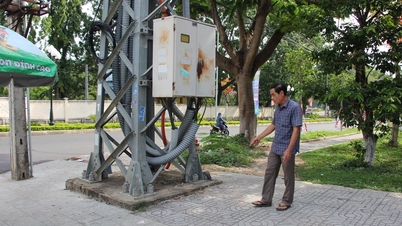
While the soldiers' memories opened the way for the search, the discoveries made by local people over the past 20 years have also contributed compelling evidence. In 2001, while digging a hole to erect an electric pole at the intersection of Truong Chinh and Ham Nghi streets, Mr. Nguyen Minh Da unexpectedly discovered human remains. After reporting to the authorities, the excavation was expanded along the roadside ditch. At a depth of only about one meter, the authorities recovered the remains of eight fallen soldiers.
Seven years later, in 2008, another discovery continued to stir emotions. While digging the foundation for his house, Mr. Tran Van The discovered many skeletons lying beneath the ground. The excavation work was expanded to the neighboring property. As a result, 22 more remains of fallen soldiers were unearthed from a mass grave. Mr. The still remembers the image of many skeletons piled on top of each other after more than four decades underground. "I was very moved to witness each skeleton being brought up. The people here all hope to soon find the remaining fallen soldiers so that they can rest in peace," he said.

We will not miss a single clue.
Two rounds of recovery, totaling 30 remains of fallen soldiers at both ends of the route, became important milestones, helping military authorities better visualize the direction of the burial trenches on the ground. Based on historical documents, witness accounts, previous recovery results, and documents from the United States, Quang Ngai province launched a large-scale search operation.
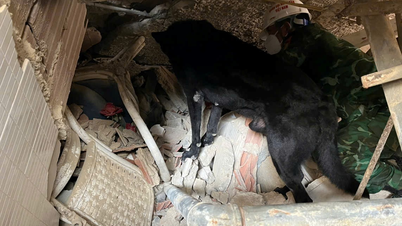
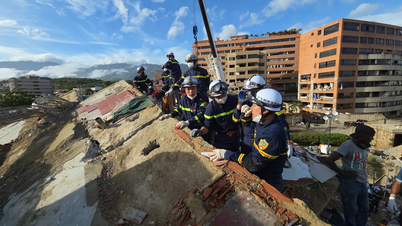
From the beginning of June 2026, more than 30 officers and soldiers of Team K53, along with many other forces, were mobilized. Two excavators, trucks, three ground-penetrating radar systems, and many other modern pieces of equipment continuously operated on Truong Chinh Street. By the end of June, the authorities had excavated and inspected more than 45 locations, removing over 3,200 cubic meters of soil and rock in the area of the Martyrs' Cemetery in Dak Cam Ward and along Truong Chinh Street. During the survey, the units discovered traces suspected to be old drainage ditches running along the road, along with many wartime artifacts. This is considered important evidence for further expanding the search area.

Colonel Mai Kim Binh, Political Commissar of the Quang Ngai Provincial Military Command, said that every trace, no matter how small, is carefully evaluated and analyzed by the task force before deciding on the next course of action. According to Colonel Mai Kim Binh, the search and repatriation of the remains of fallen soldiers is not only a political task but also a responsibility and an expression of affection for those who sacrificed their lives for the Fatherland.



Therefore, the Provincial Military Command will continue to maintain its forces, vehicles, and modern technical equipment to conduct a thorough and scientific search of the entire area. "We are determined to persevere in the search until there are no more sources of information, traces, or clues before proposing to end the search. As long as there is hope, we will continue the search," Colonel Binh affirmed.
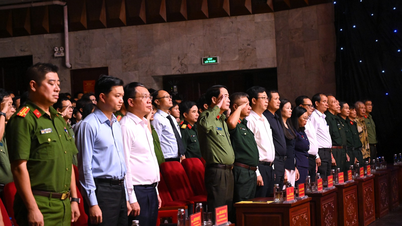
In recent days, images of soldiers patiently digging meter by meter under the scorching sun and sudden rain showers have moved many people. The construction has significantly impacted daily life and traffic on Truong Chinh Street, but the people have all agreed, because they understand that this is a work of special significance. During an inspection at the end of June, Lieutenant General Le Quang Minh, Deputy Head of the General Political Department of the Vietnam People's Army, affirmed that searching for, collecting, and identifying the remains of fallen soldiers is not only a political task but also a "command from the heart," reflecting the nation's principle of "drinking water, remembering the source."
That message resonates with the heartfelt wish of veteran Tran Thanh Hoa after nearly 60 years of searching for his comrades. Perhaps the streets have changed today, the old drainage ditches have been filled in, and new houses have sprung up. But beneath those streets, there are still soldiers who have not returned. And as long as there is a glimmer of hope, the soldiers of Team K53, the veterans, and the local people will continue this silent journey.
Source: https://baovanhoa.vn/doi-song/tim-dong-doi-duoi-nhung-long-pho-241939.html




![[Image] National conference summarizing one year of operation of the overall organizational model of the political system, the three-tiered government model.](https://vphoto.vietnam.vn/thumb/1200x675/vietnam/resource/IMAGE/2026/07/01/1782882811691_ndo_br_1-jpg.webp)