Part 1: The Race Against Time
In the relentless race against time, many veterans and relatives of fallen soldiers are still tirelessly searching for their comrades and loved ones to piece together the unfinished fragments. They understand that if they don't act quickly today, tomorrow no one may remember the exact battle or the place where their loved ones perished.
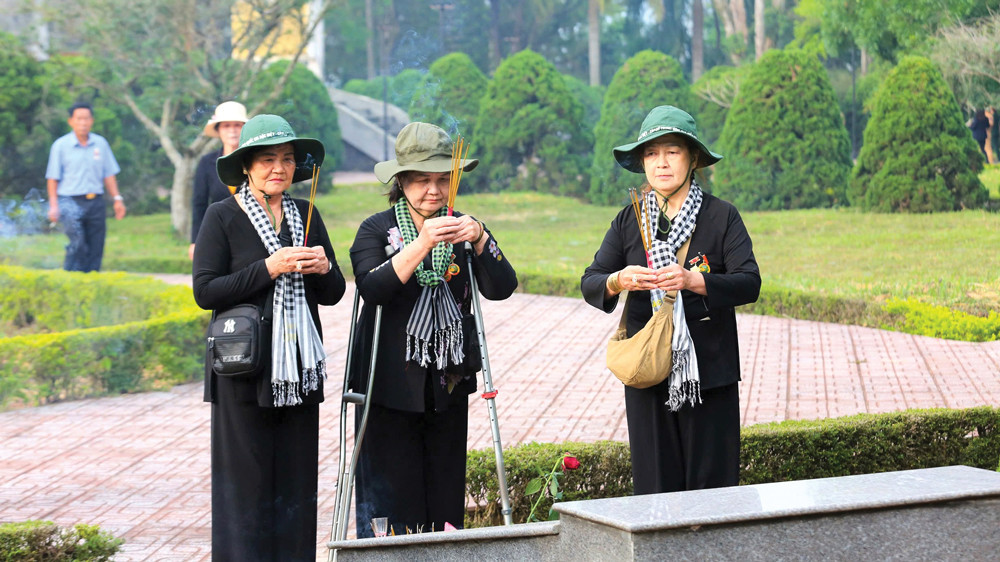
Unable to find teammates, he felt uneasy.
"Until we can find all our comrades, our hearts will never be at peace," Mr. Le Trung Tinh, Chairman of the Association of Soldiers of the Quang Tri Citadel in 1972 in Lam Dong province, repeatedly told us this as a heartfelt and agonizing wish.
Tears streamed down the weathered face of the man who had faced death many times and was now well past the age of "rarely seen before." He spoke to us as if to himself, to his comrades, saying, "How can I forget witnessing my brothers fall right before my eyes...?" In his memories, the pain resurfaced vividly. Young men from the capital, barely eighteen or twenty years old, put aside their studies to join the resistance. Today they shared a handful of rice, but tomorrow many names would be missing. "So many of our comrades sacrificed their lives," Mr. Tinh repeated, his voice choked with emotion. He had returned to the old battlefield countless times, and conducted numerous searches, but even now, his unit still has eight missing men. He and all his surviving comrades share the same fervent hope: "We hope to find our comrades soon."
Having just returned from the hospital, his health was still weak, but when mentioning his comrades, the eyes of People's Armed Forces Hero Hoang Dinh Kien were filled with hope. His memories were fragmented, but he clearly remembered the stories of his comrades during the days of "cutting through the Truong Son Mountains," from the battlefields of Phu Yen to the Southwestern region. More than half a century has passed, but for People's Armed Forces Hero Hoang Dinh Kien, the image of his comrades lying in the fierce battlefields, the pain seems to have never faded.


Like Mr. Le Trung Tinh, People's Armed Forces Hero Hoang Dinh Kien also worries about the passage of time. His health is declining, his intellect is no longer sharp, and the memories he needs to recall are gradually fading into oblivion. The "500-day campaign to intensify the search, collection, and identification of the remains of fallen soldiers" (referred to as the 500-day campaign) was carried out amidst the overwhelming joy and excitement of veteran Le Trung Tinh, People's Armed Forces Hero Hoang Dinh Kien, and all those who fought for national independence. Because everyone had longed for and were eager to "light incense for their comrades."
My mother is always looking forward to it…
In Dinh Van Lam Ha commune, in her simple, one-story house, Heroic Vietnamese Mother Vo Thi Thanh (86 years old) still stands by the altar every day, lighting incense for her husband and son. Each year, her hair turns grayer, and her eyes dim with longing for her loved ones. Perhaps, deep down, Mother Thanh's greatest regret is that she has yet to say goodbye to her eldest son – Martyr Bui Van Tung. That liaison soldier died in 1974 on the battlefield in Binh Thuan. More than half a century has passed, and she has shed countless tears in her agonizing wait, but her son still hasn't returned.
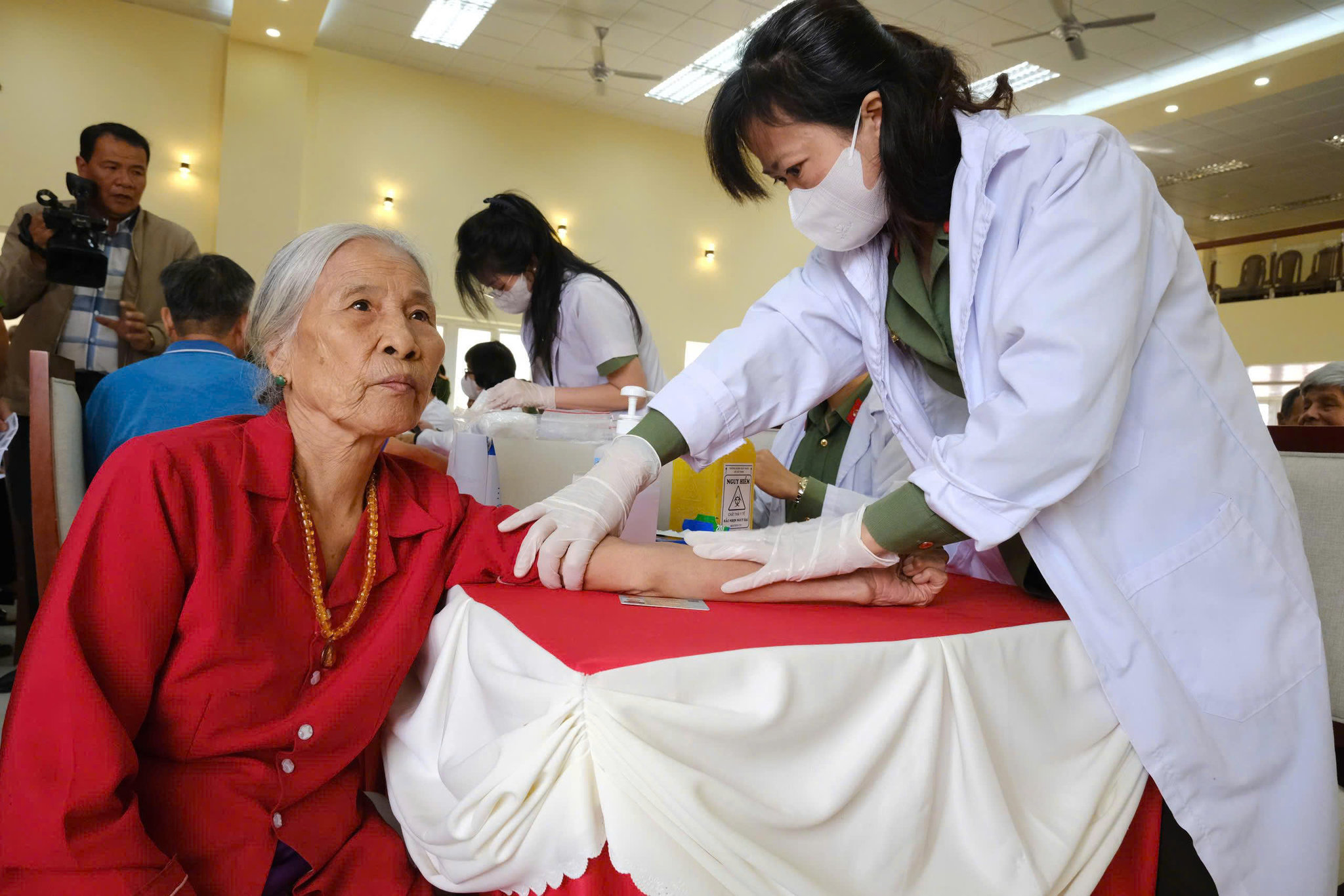
Mothers are in a hurry, and society as a whole is racing against time because the DNA information of the mother is of the highest value in matching the DNA of fallen soldiers' remains. Any further delay could mean the loss of this precious gene pool, and consequently, there will still be unidentified fallen heroes. This special data from the DNA samples of mothers and relatives of fallen soldiers will be integrated into the national database to build a national gene bank, serving as a scientific database for comparing and identifying the remains of fallen soldiers.
What Thanh's mother and many other mothers of fallen soldiers fear most is not old age or illness, but the worry of not being able to wait until the day they find their children. For these mothers, only when their children return will the long journey of more than half a century truly come to an end.
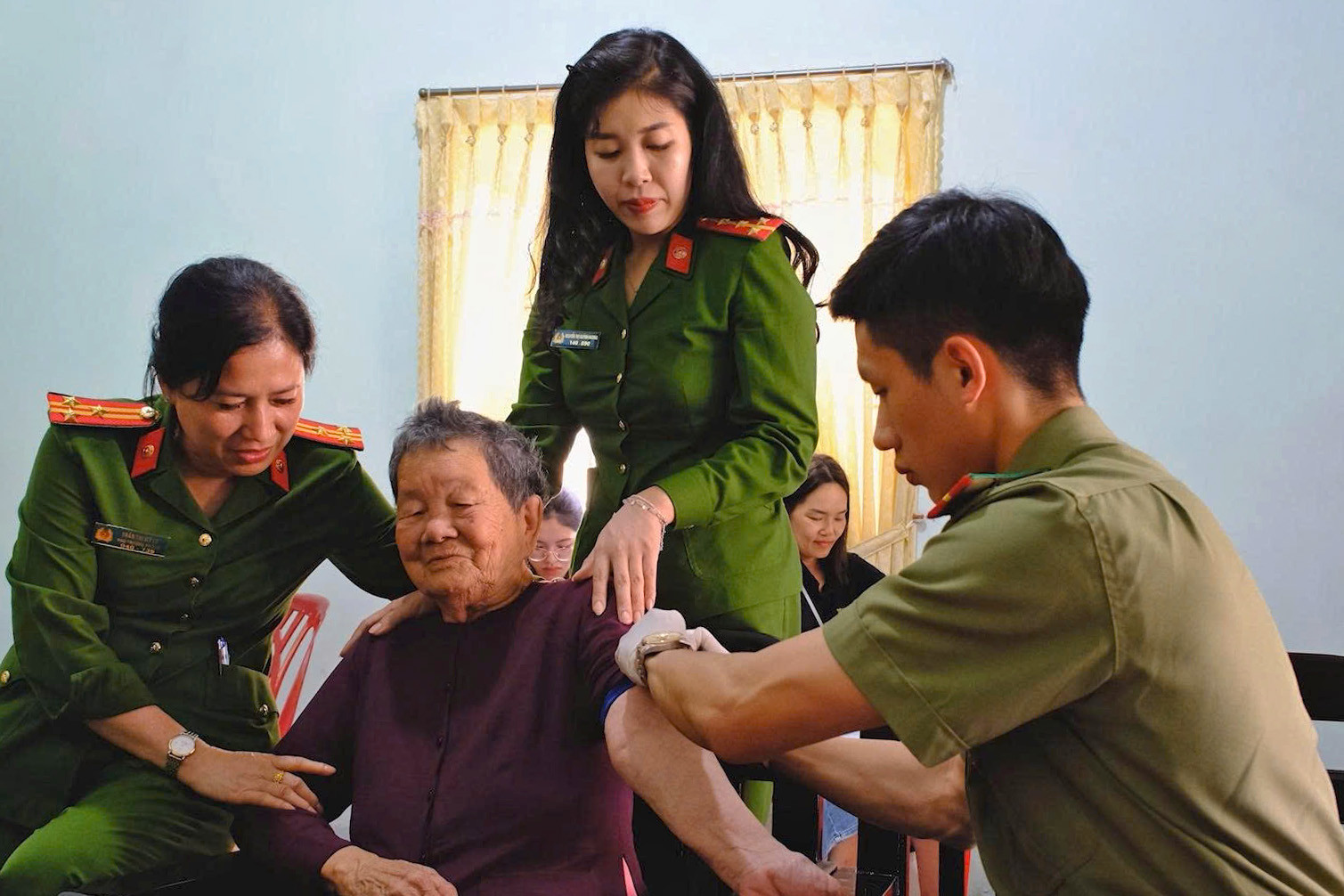
Currently, the national database contains over 57,000 DNA samples of relatives of fallen soldiers. In Lam Dong province, the Provincial Police have collected samples from nearly 120 families of fallen soldiers. Officers and soldiers went to the homes of the mothers to collect DNA samples. The trembling handshakes of the mothers, like a final farewell, motivated the provincial police officers and soldiers to work even harder and more efficiently to collect more accurate DNA samples from the relatives.
In the remote commune of Cat Tien 3, Ms. Nguyen Thi Binh, the sister of fallen soldier Nguyen Van Chung, and her family have spent many years searching in various battlefields, each unsuccessful search causing them excruciating pain. “Even though we knew the hope was slim, and the information we gathered was limited, my family never stopped searching for him. And when we had our DNA samples taken, our hope and expectation grew even stronger,” Ms. Binh shared, her eyes welling up with tears.

From here, gene banks will become increasingly complete and analytical technology will develop further, giving seemingly disparate pieces a chance to come together, reconnecting the gaps caused by time and war.
(To be continued)
Source: https://baolamdong.vn/tim-lai-ten-anh-giua-hoa-binh-448490.html
![[Image] Schools organize meetings and introduce teaching models to students admitted to grade 10.](https://vphoto.vietnam.vn/thumb/1200x675/vietnam/resource/IMAGE/2026/06/25/1782368077271_ndo_br_z7970052192242-1ec8daeb77a6eed1a4e9f58c564ddd3e-jpg.webp)
![[Image] Ho Chi Minh City: Ma Lang area, Chicken-Rice Market about to change its appearance](https://vphoto.vietnam.vn/thumb/1200x675/vietnam/resource/IMAGE/2026/06/25/1782377698627_ndo_br_m1-jpg.webp)

![[Photo] General Secretary and President To Lam receives Palestinian Ambassador Saadi Salama](https://vphoto.vietnam.vn/thumb/1200x675/vietnam/resource/IMAGE/2026/06/25/1782365384740_a1-bnd-9423-8322-jpg.webp)




![[GALLERY] Voidling Bound takes Steam by storm with 94% positive reviews.](https://vphoto.vietnam.vn/thumb/402x226/vietnam/resource/IMAGE/2026/06/25/1782396892878_tua-1-png.webp)