


Investing in education not only benefits individuals but also has a profound impact on the community and the nation. - Photo: VGP/MT
When investing in the education and training sector, the greatest desire of investors is not high profits, but that those investments truly benefit society and the community.
Currently, Vietnam's cooperation and investment policies in education have improved to make it more attractive to private investment. The legal framework for the socialization of education is also being gradually perfected. However, many economic and education experts still believe that, for a sector as important as education, especially higher education which is related to the quality of human resources for the socio-economic development of the country, it remains an unattractive field for private investors.
In his article, "Developing the Private Economy - A Lever for a Prosperous Vietnam," General Secretary To Lam pointed out the shortcomings currently facing the private economy. These shortcomings are also the bottlenecks in attracting private capital.
To contribute to finding solutions for creating momentum and attracting more capital from private investors for the education sector, the Government Online Newspaper has interviewed experts, education managers, and economists to offer solutions and suggestions for attracting private investment in general, including the education sector.
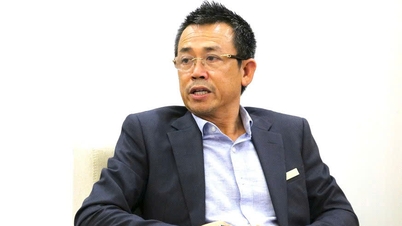
Lawyer Nguyen Van Quy, Head of Business at EY Auditing Company: Building a culture in business.

Lawyer Nguyen Van Quy, Head of Business Department at EY auditing firm - Photo: VGP/MT
A transparent investment and business environment, or more specifically, the business culture of each country and enterprise, will be the driving force helping the economies of countries increase investment flows into various sectors of the economy, including education and training (an investment for the future), thereby promoting national growth and development.
In my opinion, we must first build a healthy business culture and create a transparent investment environment to build trust and attract investors.
For the education sector, a sector with significant investment, long-term commitment, and low profit margins, the failure to create a healthy and stable business environment will not only hinder the attraction of capital but also lead to negative consequences: Parents and students lose faith in education and the value of learning, affecting their motivation to learn and develop themselves; impacting the psychology and ethics of those involved in and benefiting from education; reducing the quality of future human resources; decreasing the attractiveness of the market; and hindering investment flows, especially private and international investment.
Along with the amended and supplemented Education Law, related decrees have opened a wide door to attracting private sector investment in this field, notably Vingroup, FPT Group, EQuest Group, Nguyen Hoang Group (NHG), etc.
At the same time, Resolution No. 35/NQ-CP also clearly stated the need to attract investment resources for society and for education and training, especially in the context of Vietnam's increasingly deep integration into the international community. The Government has encouraged and created many conditions for investors in education and training at all levels and training fields. In particular, Resolution No. 35/NQ-CP clearly stated that the socialization of education and training must be considered an indicator in the socio-economic development of localities.
Therefore, I believe that in the economic or educational fields, once a culture of business cooperation is established, along with the establishment of regulations that are more consistent, unified, specific, and protect the rights of investors, it will certainly create a stable, safe, and transparent investment environment. This will then create motivation and confidence for businesses, especially private enterprises, to boldly invest capital.
Assoc. Prof. Dr. Ngo Van Cam ( FSB Institute of Management and Technology, FPT University): Promoting linkages and cooperation for mutual development.

Assoc. Prof. Dr. Ngo Van Cam, FSB Institute of Management and Technology, FPT University - Photo: VGP/MT
Transparency in the business environment not only promotes investment but also facilitates linkages and cooperation among domestic businesses. With publicly available and transparent information about markets, partners, and business opportunities, businesses can easily find and select suitable partners for collaboration.
Collaboration and cooperation among businesses aim to leverage each other's strengths, share risks, and optimize resources. Especially in the context of fierce competition and increasingly high demands for product and service quality, cooperation between businesses can create robust value chains, improving efficiency and enhancing the competitiveness of the entire industry.
In the context of the global trend of internationalizing education, Vietnam is always promoting international cooperation. Therefore, by creating a transparent business environment, we not only attract FDI but also create incentives for domestic businesses to link and cooperate with each other for mutual development.
Investing in education requires significant capital over a long period, but yields slow returns. Therefore, to attract and promote investment in education, it is necessary to improve the mindset and practices of state management agencies and businesses in the education sector. Businesses investing in education should not prioritize profit too much, viewing investment in education solely for returns, or lack vision, leading to low quality education and training, negatively impacting the quality of education and the interests of parents and students.
In addition, we need to create a stable business environment, develop a sustainable economy, and build trust – a solid foundation for all cooperative activities that promote exchange, learning, and improvement of skills on both sides.
Ms. Nguyen Phuong Linh, M.A., Director of the Institute for Sustainable Development Management Research, Head of the Open Social Innovation Village/Community: It is necessary to create motivation and confidence for investors.

Ms. Nguyen Phuong Linh, Director of the Institute for Sustainable Development Management Research - Photo: VGP/MT
Currently, we haven't attracted much private sector investment into broad-based and in-depth education projects and programs. This is a weakness, but also a great opportunity for investors seeking collaboration.
Vietnam's education sector is poised for impressive growth, reaching a value of up to $89 billion by 2026. With sufficient scale and profitability, domestic and foreign private investors will be willing to pour trillions of dong into universities.
According to the Ho Chi Minh City Department of Education and Training, the city currently spends an average of 2,700 billion VND annually on infrastructure and facilities for its school system. However, with an annual growth rate of approximately 65,000 students, the need for additional training facilities is enormous.
Therefore, attracting capital from other sources, such as FDI and private investment, is the only way to address the urgent problems facing the education sector today. One solution to attract such capital is to create incentives and confidence for investors by building a safe and stable business and investment environment.
The government has implemented numerous policies to facilitate cooperation among all parties. The Ministry of Education and Training has also issued decisions allowing various forms of collaboration aimed at ensuring the common goals of education and training as required by the State and society. Therefore, the issue is that, in addition to diversifying forms of linkage and cooperation, it is necessary to create a level playing field and transparency to attract more investment and cooperation from the private sector.
Simultaneously, For investment in education to yield results in training high-quality human resources that meet current economic development trends, it is essential that the leaders of educational institutions possess both dedication and vision.
Thanh Thủy (compiled)
Source: https://baochinhphu.vn/tim-loi-giai-cho-thu-hut-dau-tu-tu-nhan-trong-giao-duc-102250417125658478.htm

![[Photo] Prime Minister Pham Minh Chinh presides over a meeting on private sector economic development.](/_next/image?url=https%3A%2F%2Fvphoto.vietnam.vn%2Fthumb%2F1200x675%2Fvietnam%2Fresource%2FIMAGE%2F2025%2F12%2F20%2F1766237501876_thiet-ke-chua-co-ten-40-png.webp&w=3840&q=75)

























































































Comment (0)