


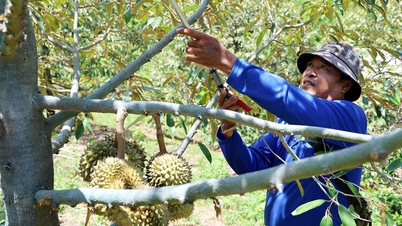
Farmers in Tan Hoi commune receive bank loans to develop their fruit orchards. Photo: AN LAM
According to the State Bank of Vietnam's Regional Branch 15, by the end of April 2026, the total mobilized capital of credit institutions in the province is estimated at VND 283,800 billion, an increase of 3.22% compared to the end of 2025. An Giang province continues to account for a large proportion, with total mobilized capital reaching VND 189,300 billion, an increase of 0.28% compared to the previous month and a 3.61% increase compared to the end of 2025. Outstanding credit in the entire region is estimated at approximately VND 407,000 billion, an increase of 2.67% compared to the end of 2025, of which more than 82% is concentrated in lending for production and business activities.
In An Giang, the demand for loans to support agricultural production has increased since the beginning of the year, especially in the areas of rice cultivation, catfish farming, livestock breeding, and agricultural supplies trading. Many households said that access to loans is now easier than before, and interest rates have also decreased, easing the pressure during a period when input costs are still high. Mr. Nguyen Hung Tinh, residing in Tan Hoi commune, who both raises pigs and runs a livestock feed business, received a loan from the bank at the beginning of 2026 to purchase goods and restock his herd. “The prices of livestock feed and veterinary medicine fluctuate erratically, so small producers and businesses like mine really need working capital. Previously, I sometimes had to buy on credit or borrow from outside sources because I didn't have enough money to buy feed. Now, with the bank providing loans at a suitable interest rate, the pressure is much less,” Mr. Tinh said.
Not only in the livestock sector, but credit for agriculture continues to grow significantly. Loan programs supporting the production of high-quality, low-emission rice and agricultural mechanization are being implemented by many commercial banks in localities throughout the province. Lending interest rates continue to be adjusted downwards to support people and businesses.
Currently, short-term lending interest rates for priority sectors are commonly around 4% per year. Credit flows in the 15 regions continue to focus on production and business, with agriculture being the fastest-growing sector. By the end of April 2026, outstanding loans in the agriculture, forestry, and fisheries sector are estimated at approximately VND 89,000 billion, an increase of 4.86% compared to the end of 2025. Industrial and construction credit reached approximately VND 54,600 billion, an increase of 3.69%. The trade and service sector still accounts for the largest proportion with outstanding loans of approximately VND 263,400 billion, serving business, consumption, and goods circulation needs in the region.
Besides the manufacturing sector, credit for social housing has also seen positive developments. According to the State Bank of Vietnam, Region 15 branch, the loan program for young people under 35 to buy social housing currently has outstanding loans at 3 projects in An Giang province: Residential Area No. 2, the Rach Gia Commercial Center - CIC Agricultural and Seafood Market residential area, and the Golden City social housing project. To date, the disbursement of the program has reached approximately 38 billion VND, with outstanding loans at 37 billion VND. This is considered an important source of support helping many young workers, laborers, and middle-income earners have the opportunity to access housing. In addition, the social housing loan program under Government Decree No. 100/2024/ND-CP, implemented by the Social Policy Bank, has also recorded a fairly large scale. As of the end of April 2026, cumulative disbursement reached approximately VND 984 billion, and outstanding loans amounted to VND 836 billion.
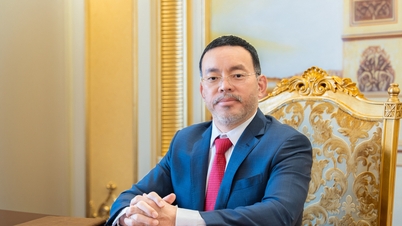
According to Tran Van Phuoc, Acting Director of the State Bank of Vietnam's Regional Branch 15, in the coming period, the State Bank of Vietnam will direct credit institutions to continue reducing operating costs to create conditions for lowering lending interest rates; and accelerate procedural reforms to help people and businesses access capital more easily.
“The banking sector is directing capital flows towards sectors that directly create value for the economy, such as agriculture, processing, exports, and small and medium-sized enterprises. At the same time, we will continue to closely monitor the production situation to provide appropriate support solutions for people and businesses facing difficulties. Banks will continue to promote digital transformation, cashless payments, and expand digital banking services to rural areas to facilitate transactions, access to capital, and use of financial services for the people,” said Mr. Tran Van Phuoc.
Source: https://baoangiang.com.vn/tin-dung-tiep-suc-san-xuat-kinh-doanh-a486519.html



























































































Comment (0)