

Based on a true story, the book The Boy Who Followed His Father into Auschwitz is a moving account of the enduring father-son bond amidst the hellish conditions of a Nazi concentration camp, where humanity seemed to have completely vanished.
Author and inspiration
Jeremy Dronfield is not a professional historian; he began his career as a novelist. However, through a combination of storytelling skill and a commitment to historical truth, Dronfield has delivered a haunting work of non-fiction. The story in the book is based on the diaries and archives of Fritz Kleinmann, the son of Gustav Kleinmann—two Jewish men who survived together for over six years in the hellish concentration camps, from Buchenwald to Auschwitz.
Dronfield stumbled upon a small diary that Gustav had secretly written during his imprisonment. From there, he conducted extensive research from various sources to reconstruct this story with high historical accuracy, while maintaining a coherent and emotionally rich writing style.
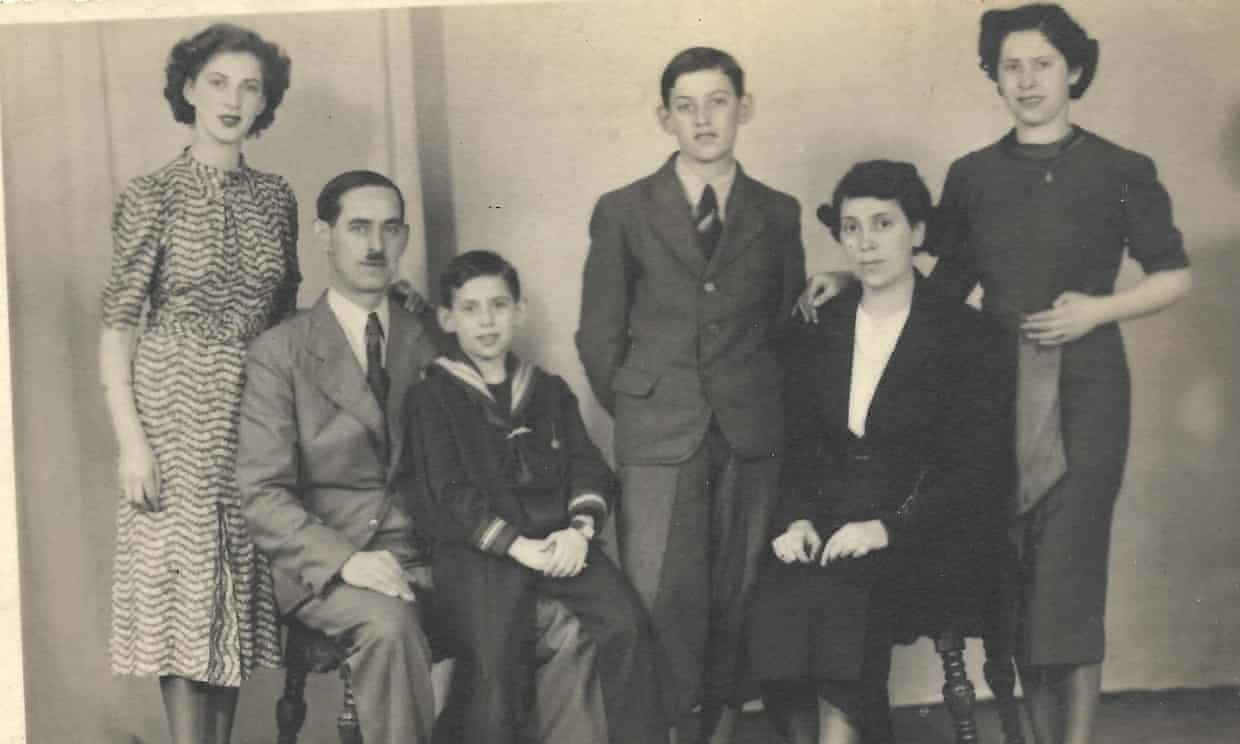 |
The Kleinmann family in 1938 includes Gustav (second from left) and Fritz (fourth from left). Photo: Peter Patten/Guardian . |
Father-son bond amidst brutal war
Gustav Kleinmann was a devoted father, a loving husband, and a gentle man living in Vienna with his wife and four children. When the Nazis annexed Austria in 1938, his family—like millions of other Jews—quickly became targets of persecution.
Along with his son Fritz, who was only 14 years old at the time, Gustav was arrested and taken to the Buchenwald concentration camp – one of the "precursors" of later death camps.
The book's unique aspect lies in a deeply moving choice: when Gustav is transferred to Auschwitz—known as a killing machine—he is separated from his son and sent alone. But Fritz, with extraordinary love and courage, volunteers to accompany his father to Auschwitz, where most prisoners never survive or leave.
That choice was not merely an act of familial affection, but an affirmation of human value amidst the darkness of inhumanity. While death loomed ever closer, father and son always found ways to survive, to support each other physically and mentally. They held hands tightly through the harshest prisons: Buchenwald, Auschwitz, Mauthausen… for nearly seven years.
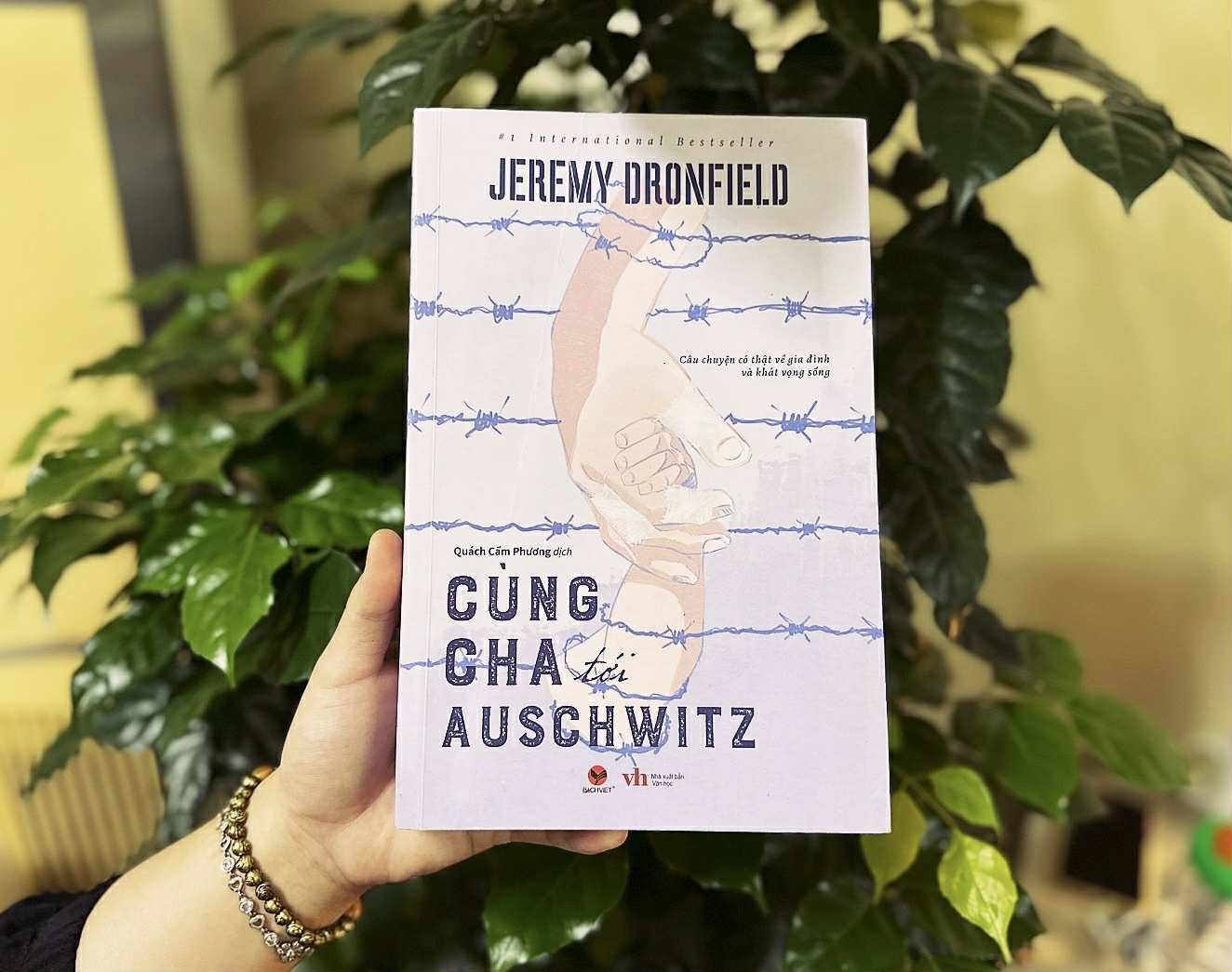 |
The book "Together with Father to Auschwitz" . |
Recreating history through emotional and detailed storytelling.
The book doesn't simply recount historical events, but recreates life inside concentration camps in brutal detail: from forced labor and constant starvation to inhumane forms of torture and execution. Above all, Dronfield skillfully weaves into the story the spirit of resistance, the way in which people deprived of all basic rights still preserved their humanity, hope, and sense of belonging.
Dronfield's writing style combines authentic historical material with a novelistic narrative. Readers don't feel like they're reading a dry documentary, but rather witnessing a chillingly realistic documentary. Each character—from Gustav and Fritz to the other prisoners—is vividly portrayed, with their own distinct psychological depth and fate.
More than just a story about the Holocaust, *Together with Father to Auschwitz * is an epic about family love, courage, resilience, and human dignity in the most tragic circumstances. The bond between Gustav and Fritz is never diminished by the shadow of death; on the contrary, it further illustrates the strength of kinship.
Current influence and value
Upon its release, the book was warmly received by readers and critics worldwide. It not only offered a more authentic perspective on the Holocaust but also highlighted the universal value of love and human resilience.
In a modern world still rife with injustice, violence, and racial discrimination, the story of Gustav and his son Fritz Kleinmann is a powerful wake-up call. It reminds us that even in the darkest moments of human history, there are people who refuse to lose their humanity – and it is this very quality that saves them, even when life hangs by a thread.
Accompanying Father to Auschwitz is a difficult book to read—not because of its complex language, but because of the pain it evokes. But it is a necessary pain. It makes us unable to turn a blind eye to the atrocities of history, while at the same time appreciating more deeply the human values that we sometimes forget in modern life.
Not only suitable for history enthusiasts, this book should also be read by parents, teachers, and teenagers—as a way to gain a deeper understanding of the power of family bonds and moral responsibility in uncertain times.
With *To Auschwitz with My Father* , Jeremy Dronfield not only recounts an extraordinary story but also emphasizes the simplest thing: love can overcome even death. The book is not just a historical memoir but also a mirror reflecting human conscience – something that should never be lost, under any circumstances.
Source: https://znews.vn/tinh-cha-con-cam-dong-giua-dia-nguc-tran-gian-post1560293.html



























































































Comment (0)