

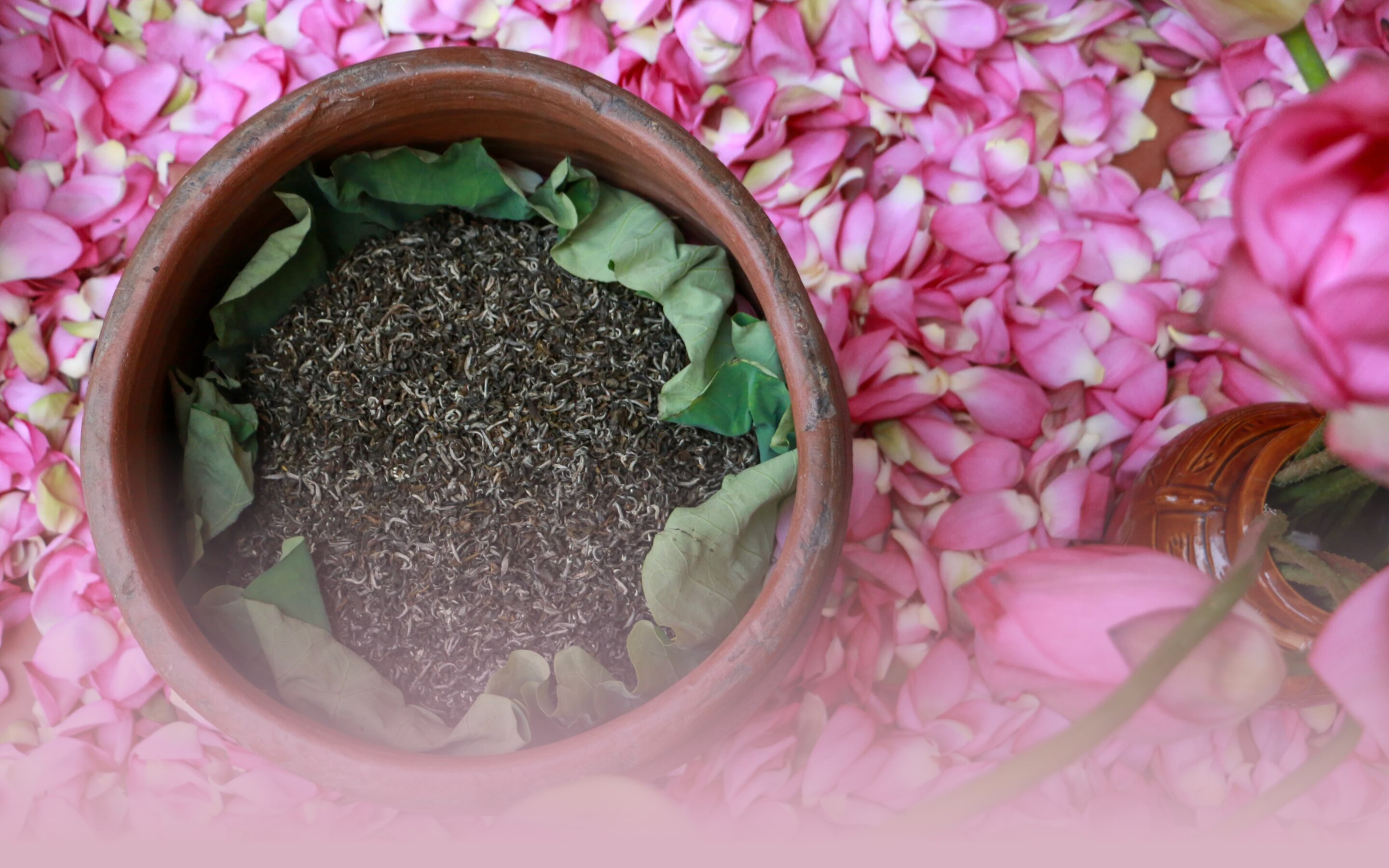
The best and most fragrant lotus for infusing tea is the hundred-petaled lotus from West Lake, which the people still praise with the saying: "There's gold, here's black copper / There's the honeysuckle flower, here's the West Lake lotus." In the past, housewives in the Old Quarter would infuse tea with lotus every season. Those with discerning palates would often choose lotuses harvested at the beginning of the season. The people of West Lake would pick lotuses from the Tri and Thuy Su ponds at dawn, when the blossoms were just beginning to open. By sunrise, everything had to be ready. If the petals opened any more, the fragrance would be lost. These lotuses were quickly picked and transported to the city for the ladies.
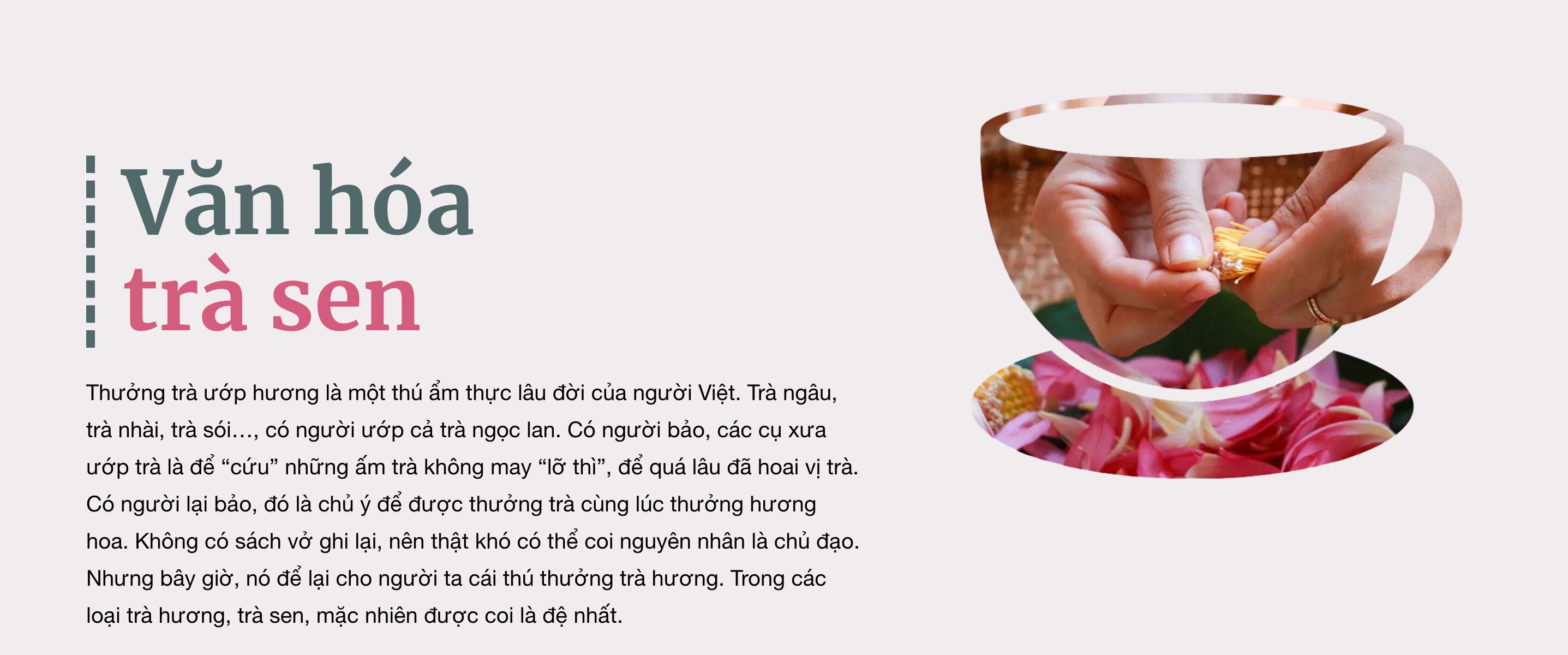
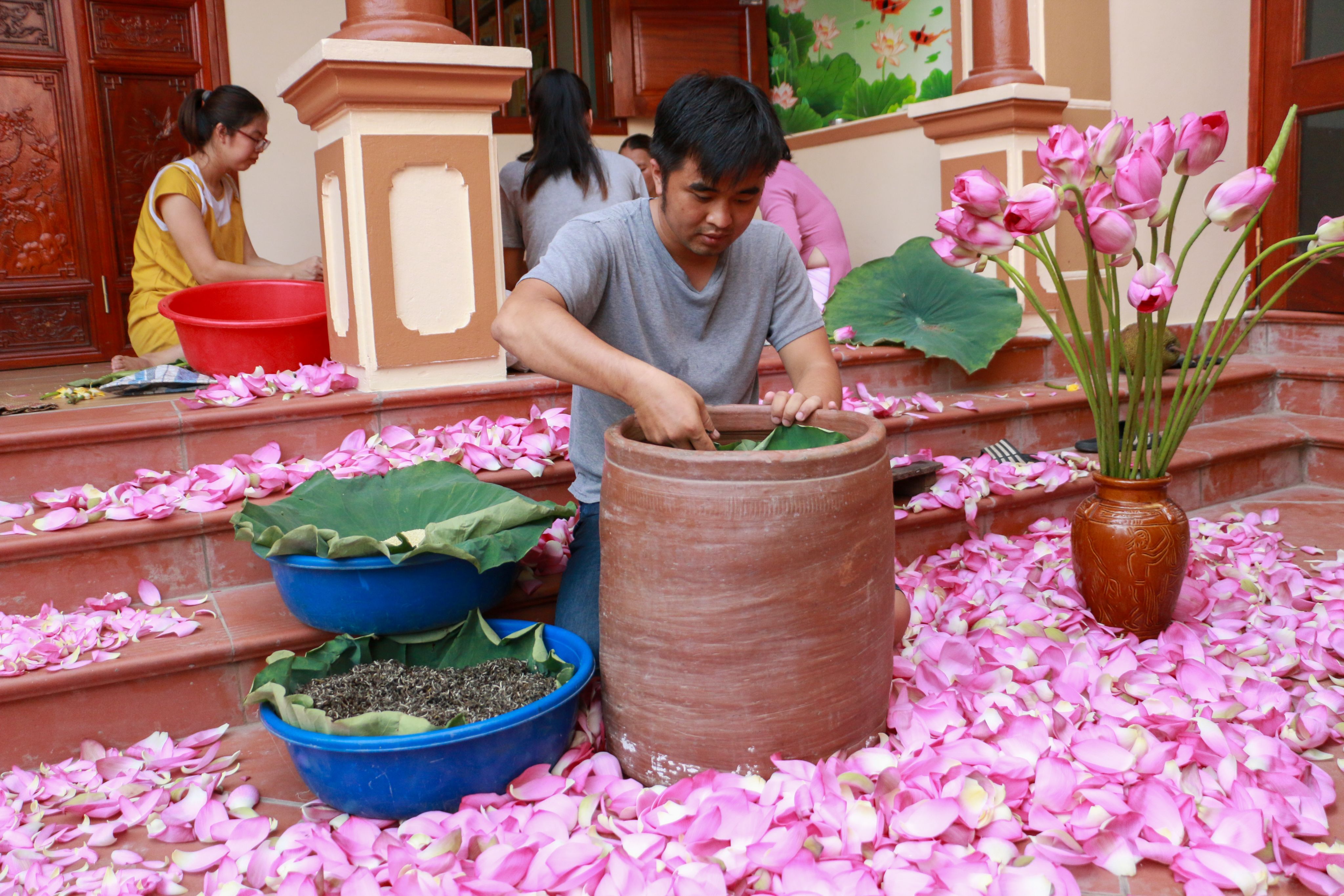
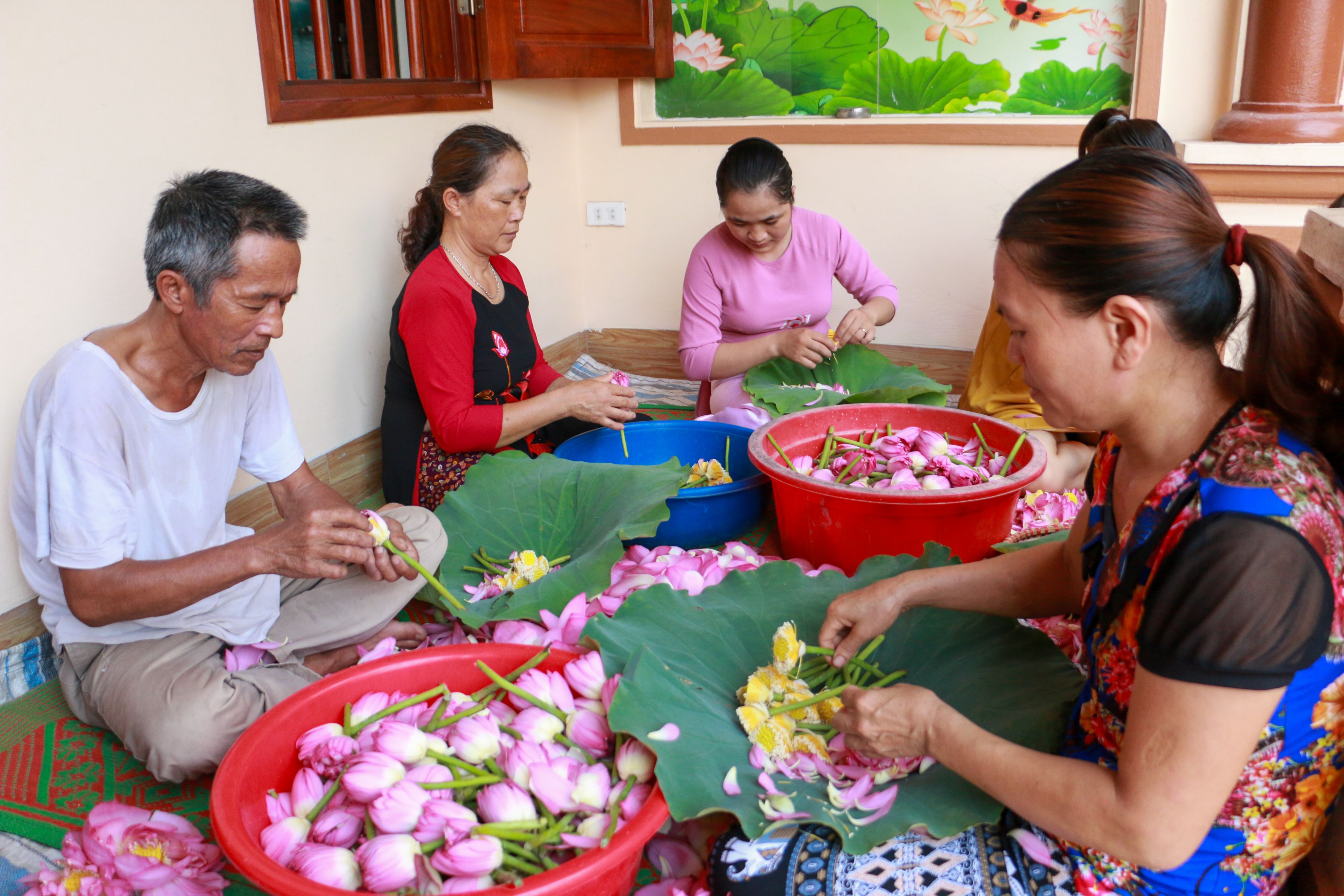
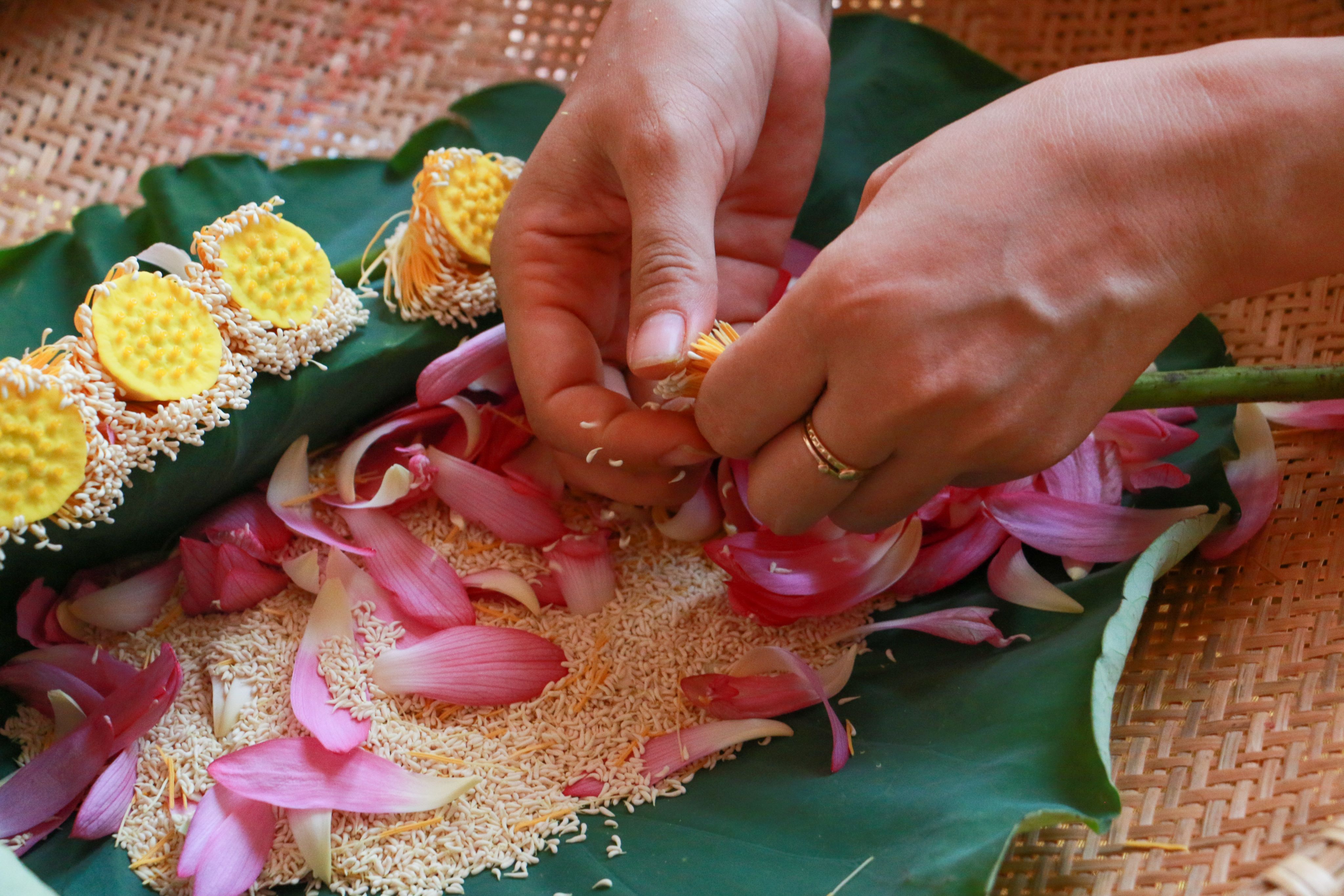
Having just received the lotus blossoms still covered in dew, people quickly gather around to remove the lotus seeds. Lotus seeds are the "fragrance sac" of the lotus flower.
Then, depending on each family's circumstances, they would infuse more or less. The finished tea packages were carefully stored, only used to entertain honored guests, during ancestral worship ceremonies, and especially during Tet (Lunar New Year). Journalist Vu Thi Tuyet Nhung was born and raised on Nguyen Huu Huan Street (Hoan Kiem District). She recounts that, when she was a child, whenever her father infused tea, the house would be filled with the scent of lotus flowers, like a fairy's cave. Her father always brewed a pot of lotus tea on the morning of the first day of Tet, or during the offering ceremony before a major ancestral worship ceremony, carefully pouring it into a teapot and offering it to the altar.
The culture of lotus tea is deeply ingrained in the lifestyle of Hanoians . Every day, people drink many different kinds of tea, including scented teas. But when there are honored guests, or when giving gifts, lotus tea is a must. Hanoians of the past often made their own lotus tea to give as gifts to relatives or cherished friends.

While tea drinking isn't as elaborate as in Japan, it still requires some learning to make a good cup of tea. The teapot must be steeped in boiling water to retain heat before brewing the tea. Many people now lean their noses close to the teacup to inhale the aroma. In the past, doing so would have been considered crude.
The teacup is still hot; bring it to your lips, slowly tilting it at a 45-degree angle. At that moment, the delicate aroma of lotus and tea will gently waft up. Enjoy it with both your taste and your sense of smell. The fleeting fragrance, like a journey through mountains and rivers, is truly exquisite. Perhaps because of this connection and subtlety, while lotus tea is found in many places across the country, it is implicitly considered to embody the essence of Hanoi.

Nowadays, families who traditionally infuse tea with lotus flowers by hand are almost nonexistent. The craft of infusing tea with lotus flowers is mainly maintained by families who have been practicing it professionally for generations. Among them, the craft of making lotus tea is most prevalent in the Nhat Tan and Quang An wards of Tay Ho district.
Quang An Ward, with its advantageous location bordering West Lake on three sides, boasts 157 hectares of West Lake's surface area, encompassing 11 ponds, lakes, and swamps with fertile soil and a thick layer of mud, making it ideal for the growth of the hundred-petaled lotus. It's no coincidence that the West Lake lotus holds a "superior" position, unmatched by lotuses from other regions. This is because the West Lake lotus is nourished by a layer of mud accumulated over millennia, ranging from 0.7 to 1.2 meters thick – a rarity among swamps.

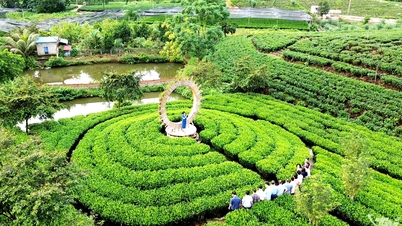
Since ancient times, the people of Quang An have used the hundred-petaled lotus to create lotus tea, and the knowledge of making lotus tea has been passed down and preserved for generations. Similar to the way people in the old town make lotus tea, the lotuses are harvested early in the morning to separate the seeds, which are then used to infuse the tea. Nowadays, most lotus tea makers use Thai Nguyen tea for infusion.
Previously, those who made lotus tea often used tea from Ha Giang because its large leaves absorbed the fragrance very well. When infused with lotus rice, Ha Giang tea produced a fragrant lotus tea with a long-lasting aroma. However, the biggest drawback of tea from this region is its reddish color and lack of strong flavor. Today's lotus tea connoisseurs demand not only fragrant tea but also tea with a beautiful color, good taste, and a consistent brew. Therefore, from around the early 1990s, people in Quang An began switching to Thai Nguyen tea. Thai Nguyen tea is considered by the people of Quang An to be of high quality, meeting the general preferences of tea connoisseurs.
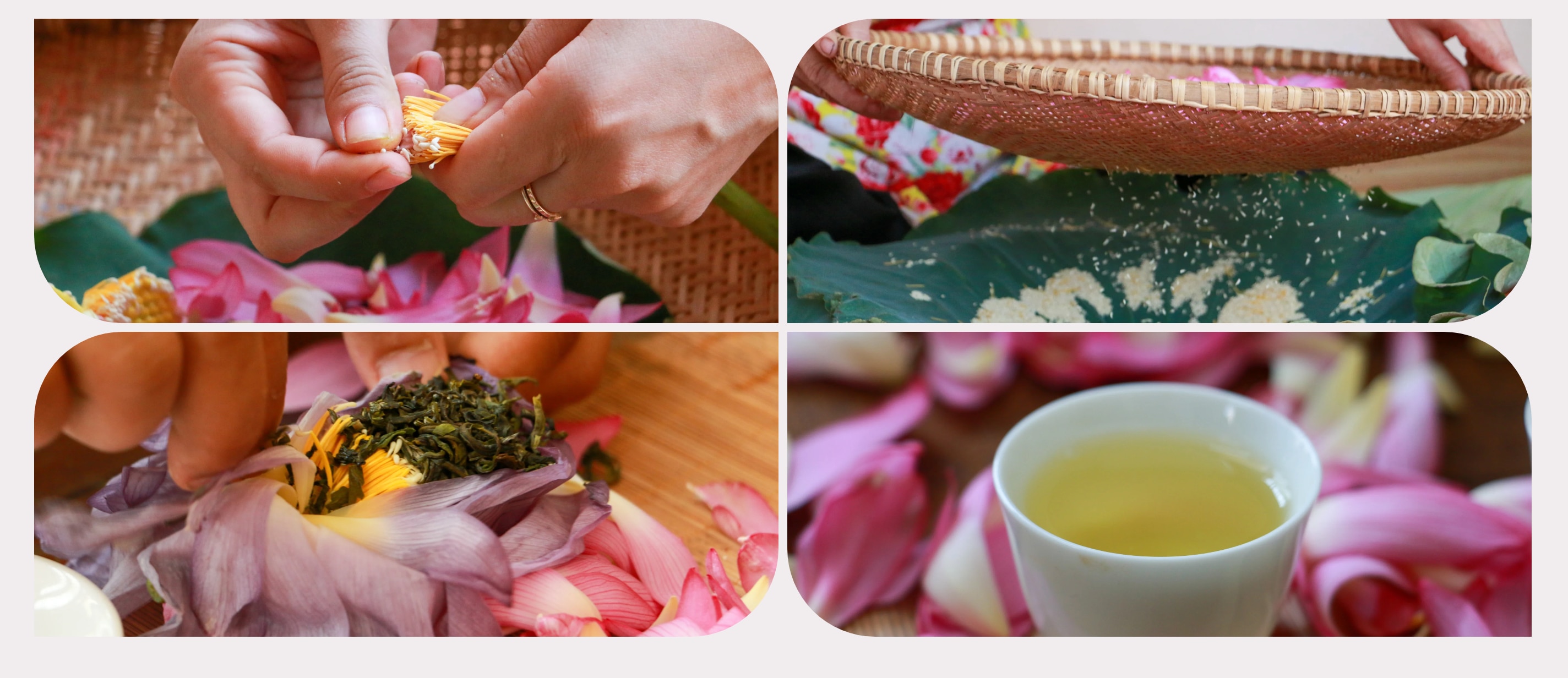
According to Mr. Nguyen Hong Xiem, owner of Hien Xiem lotus tea processing facility (Quang An ward, Tay Ho district), the faster the lotus rice is separated, the better the aroma is preserved. To achieve high efficiency, each person is assigned a specific task. The first person separates the outermost, larger lotus petals and passes them to the second person to separate the smaller petals. The last person, usually the most experienced, handles the separation of the lotus rice. It's crucial to handle them gently to prevent the rice grains from being scratched or broken, which would lead to loss of aroma and spoilage of the tea. After separation, the rice is sifted to remove any remaining lotus stems and petals, ensuring the rice is free of impurities.
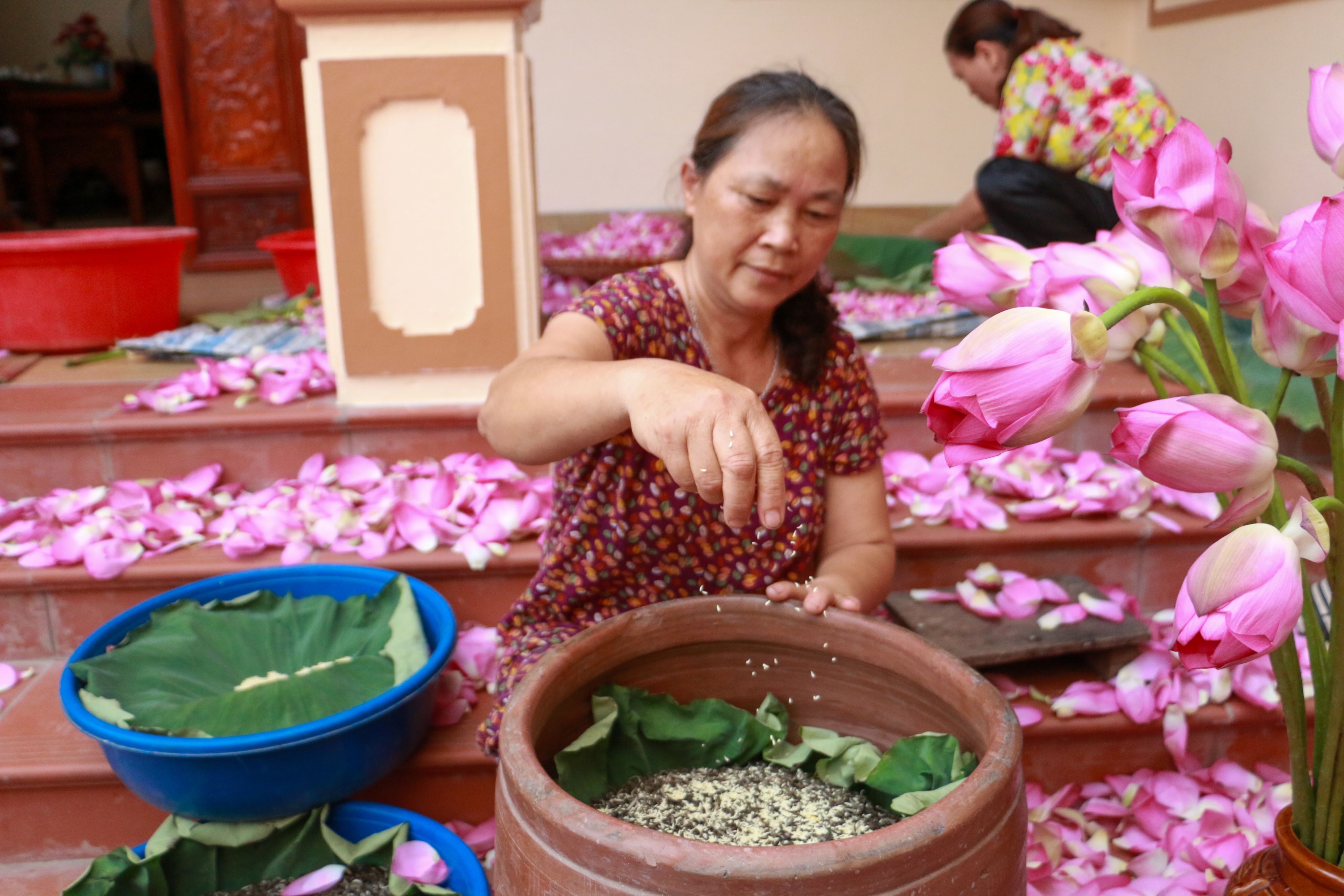
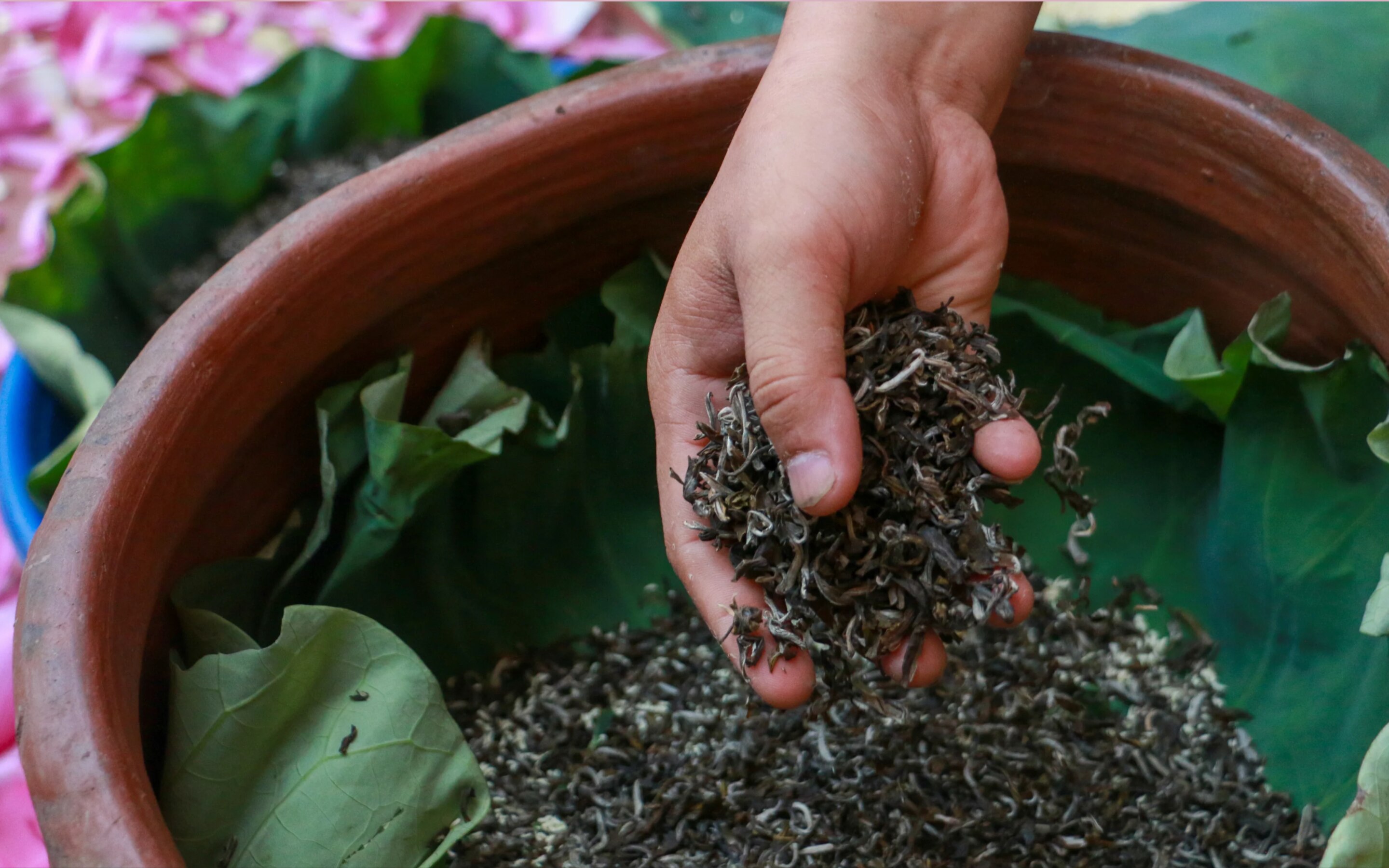
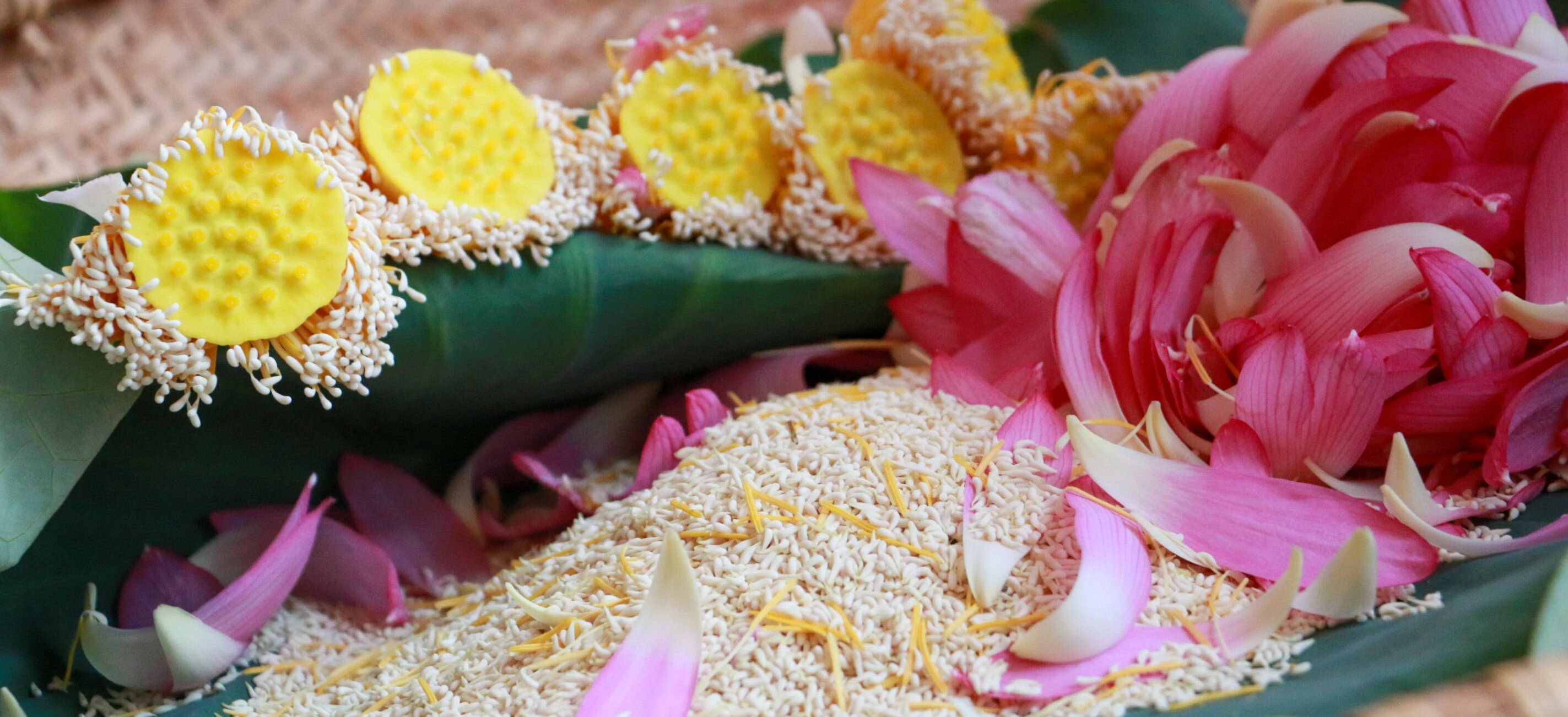
After the lotus rice is separated, the lotus tea maker quickly proceeds with the tea infusion process. Infusion involves adding lotus rice to the tea and letting it steep for 3 days (approximately 45 to 50 hours) to allow the tea to absorb the lotus fragrance. The infusion process begins by layering tea leaves with lotus rice, repeating until all the tea is used. Dried lotus tea undergoes multiple infusions. Previously, dried lotus tea was typically infused seven times (approximately 21 days). To produce one kilogram of dried lotus tea, approximately one kilogram of lotus rice (equivalent to 1,200 to 1,500 lotus blossoms) is used, divided among seven infusions.
Drying the tea is another step in the process of drying the tea after each infusion. This step is crucial to the success of a batch of lotus tea and is therefore only performed by those with many years of experience. Currently, lotus tea makers in Quang An are using three drying methods: drying with charcoal, drying with hot water, and drying with an electric stove. Of these, drying with charcoal is considered the most difficult technique, as even a slight mistake can burn the tea. However, many people believe that drying tea with charcoal produces the highest quality finished product.

The traditional craft of infusing tea with lotus flowers in Quang An has recently been added to the list of National Intangible Cultural Heritage. According to Bui Thi Huong Thuy, Deputy Head of the Heritage Management Department (Hanoi Department of Culture and Sports ): “It would be a mistake not to mention a special step in the Quang An tradition: ‘washing the tea.’”
"Washing the tea," a term unique to the tea makers of Quang An, is the process of creating moisture to soften the tea leaves, allowing them to easily absorb the aroma when infused with lotus rice. Instead of using water to wash the tea, the people of Quang An use the innermost layer of lotus petals from the cypress flower, which is both clean and retains a hint of fragrance. Before washing the tea, they sift it to remove any tea dust. They then sprinkle a layer of lotus petals over each layer of tea."

There was a time when some lotus ponds along West Lake were polluted, preventing the lotus plants from growing. In early spring 2024, the People's Committee of Tay Ho District, in coordination with the Central Research Institute of Vegetables and Fruits and the Hanoi Agricultural Extension Center, implemented the project "Building a model for lotus production linked to ecotourism development along the value chain in Tay Ho - Hanoi".
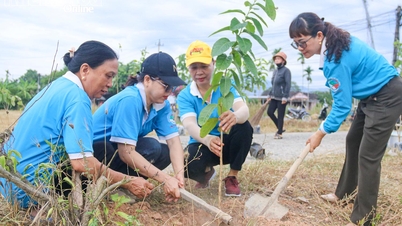
Technical experts and local residents had to clean up the mud and conduct trial plantings. Ms. Tran Thi Thuy, one of the households participating in the project, shared: “Initially, we planted a small amount. If the lotus didn't grow well, we would have to plant a different variety. But luckily, the lotus seedlings grew very well, so we planted them on a large scale. The lotuses grew beautifully and could be used to infuse tea right from the first harvest.” The total area of the project is currently over 7.5 hectares, laying the foundation for the revival of West Lake lotus.
In addition, many households have been cultivating the hundred-petaled lotus in various districts and counties across Hanoi, such as Bac Tu Liem, Me Linh, and Chuong My, covering a total area of hundreds of hectares. Due to the large cultivation area, people in Quang An and Nhat Tan have a reliable supply of lotus tea raw materials.
According to Nguyen Thanh Tinh, Vice Chairman of the Tay Ho District People's Committee, there are currently 129 people working in the lotus tea-making profession in the district, mainly concentrated in Quang An ward, with nearly 100 people capable of teaching the trade. Tay Ho is also the largest center for lotus tea in the country, producing 600-800 kg of dried lotus tea annually, not including tens of thousands of lotus-infused tea products supplied to the market.
Besides dried lotus tea, Hanoians now also make lotus flower tea. While the process of making lotus flower tea is less elaborate than making dried lotus tea, tea makers have their own secrets and skills to produce a delicious and fragrant tea. The tea used for lotus flower tea is usually young tea buds. After the tea is infused once with lotus rice, it is placed inside a lotus flower, about 15 grams per flower. They gently separate the petals to avoid breaking or crushing them and skillfully place the tea in the center of the flower. Then, they smooth the petals together to wrap the tea. Water-soaked bamboo strips are used to tie the lotus petals, ensuring a secure hold without crushing them. To prevent the fragrance from escaping, tea makers also wrap an additional layer of lotus leaves around the outside.
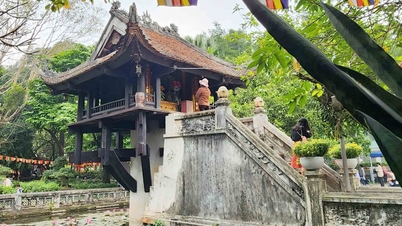
The Quang An area, home to the lotus tea craft, is situated in harmonious harmony with the sky and waters of West Lake – the capital's most beautiful scenic spot, surrounded by numerous historical sites and cultural heritage. These include Tay Ho Palace, associated with the encounter between Scholar Phung Khac Khoan and Mother Lieu Hanh during one of the Holy Mother's incarnations; Kim Lien Pagoda – a unique architectural masterpiece, worthy of being called a "golden lotus" by West Lake; and a series of ancient craft villages: Nhat Tan peach orchards, Tu Lien kumquat orchards, Phu Thuong sticky rice villages, and more.
This provides a foundation for Tay Ho district to exploit the value of lotus plants and lotus tea, linking them with other scenic spots and heritage sites in the area to develop the cultural industry. A highlight of the activities honoring and exploiting this value is the Hanoi Lotus Festival and the introduction of OCOP products associated with the culture of the northern mountainous provinces in July 2024, which was held in mid-July 2024.
Currently, Hanoi is focusing on developing lotus cultivation as part of its agricultural restructuring strategy, linked to urban agriculture and tourism development. However, to achieve this, it must begin with the lotus itself. Around West Lake, there are still 18 ponds and wetlands, covering tens of hectares. Tay Ho District will "cover" the entire system of ponds and wetlands with the vibrant colors of the hundred-petaled lotus. Meanwhile, the total area planted with lotus in the city currently reaches 600 hectares.

In the future, the lotus cultivation area will be increased by 1.5 times, to over 900 hectares, with the West Lake hundred-petaled lotus being the priority variety for widespread cultivation. With the lotus flower becoming an integral part of daily life, not only are people in Quang An making lotus tea, but many other lotus tea production facilities have also emerged, and many families are now personally infusing tea, reviving an ancient culinary tradition. The beauty of lotus tea as a culinary tradition is being preserved and spread.

Nhandan.vn
Source: https://special.nhandan.vn/tinh-hoa-trong-moi-chen-tra/index.html














































































Comment (0)