

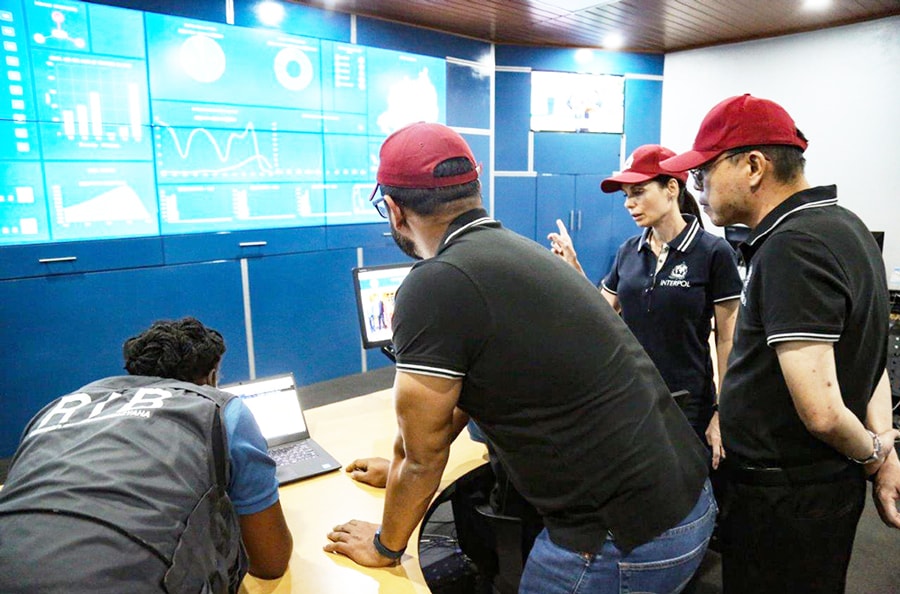
In the context of rapid digitalization, transnational fraud is emerging as one of the most serious threats to the socio -economic security of many countries. No longer limited to conventional online scams, cybercrime today has expanded in scale, becoming more sophisticated, forming tightly knit "criminal syndicates," and exploiting legal loopholes between countries.
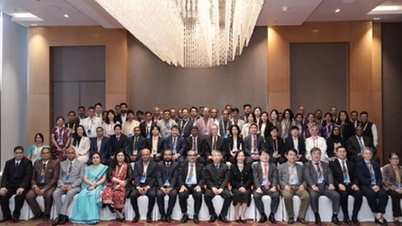
At the 93rd Interpol General Assembly, delegates from more than 190 member countries shared alarming figures on the losses caused by fraud, estimated at trillions of dollars annually.
Reports indicate that many criminal organizations are exploiting the development of digital technology and global connectivity to carry out sophisticated scams, ranging from impersonating government agencies and financial investment fraud to phishing attacks via social media and text messages. Their cross-border nature makes it difficult for countries to respond unilaterally.
Interpol has issued a special warning about the threat from transnational fraud centers. These are organized crime rings specializing in online scams to steal assets using high-tech methods or manipulate the market through cryptocurrencies. Notably, many victims are lured to other countries under the guise of "high-paying jobs," only to be coerced into directly participating in fraudulent activities.
According to Interpol, these centers are expanding to many regions around the world , from Southeast Asia to Africa, Central America, and the Middle East. Victims of these scams have been recorded in 66 countries, reflecting the global scale and complexity of this type of crime.
In a recent comprehensive operation, Interpol, in collaboration with authorities in 18 African countries, apprehended 1,209 cybercriminals targeting nearly 88,000 victims. The operation recovered $97.4 million and destroyed 11,432 malicious infrastructures. These figures highlight the urgent need for cross-border cooperation to disrupt these rapidly expanding phishing networks.
The complexity of high-tech crime poses enormous challenges for law enforcement agencies. Legal differences between countries, limitations in extradition, and cross-border investigation coordination make apprehending and prosecuting criminals extremely difficult. Meanwhile, criminals are constantly innovating their methods, leveraging artificial intelligence (AI) and caller ID spoofing technology to carry out sophisticated, large-scale scams. Without strong measures, cybercrime will continue to escalate, becoming a "crime pandemic" threatening all nations.
At this forum, Interpol announced a series of initiatives aimed at realizing its strategic goals. Among them, enhancing the sharing of global databases on phishing websites and the identities of cybercriminals was identified as a top priority. In addition, coordinated regional and global crime crackdown campaigns need to be intensified, targeting "hot spots" and organized crime networks, alongside monitoring and freezing illicit assets and cutting off revenue streams from phishing networks.
In addition, countries should also focus on establishing emergency procedures for searching, rescuing, and repatriating victims; coordinating and organizing global awareness campaigns…
In the context of increasingly sophisticated technology-based crime, Interpol also recommends that countries invest more heavily in data analytics capabilities, inter-agency coordination, and specialized training for law enforcement personnel.
Interpol Secretary General Valdecy Urquiza emphasized: "No country can stand outside this fight. Through Interpol, countries can build a strong fortress where police officers from member countries can access information and support each other quickly and effectively."
Source: https://hanoimoi.vn/toi-pham-lua-dao-xuyen-bien-gioi-moi-nguy-cua-toan-cau-trong-thoi-dai-so-725187.html
![[Image] Close-up view of the interchange connecting the two expressways and Long Thanh Airport.](https://vphoto.vietnam.vn/thumb/1200x675/vietnam/resource/IMAGE/2026/05/25/1779703378210_ndo_br_z7863716673926-224453a31600126cce10622af6290afd-4549-jpg.webp)

![[Image] Hanoi's urban life under the challenge of a "scorching hot" environment](https://vphoto.vietnam.vn/thumb/1200x675/vietnam/resource/IMAGE/2026/05/25/1779706979265_nang-nong-t5-2026-minh-duy-7-4636-jpg.webp)






























































































Comment (0)