

Tech giants are flocking to the market.
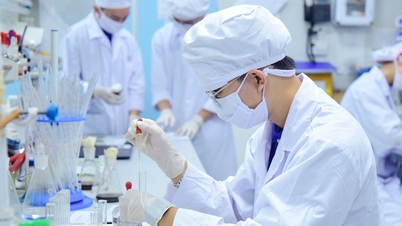
According to Mr. Nguyen Ky Phung, Head of the Management Board of Ho Chi Minh City High-Tech Park (SHTP), the new wave of investment is strongly focused on data centers, artificial intelligence (AI), semiconductors, and research and development (R&D) – the core foundations of the digital economy .
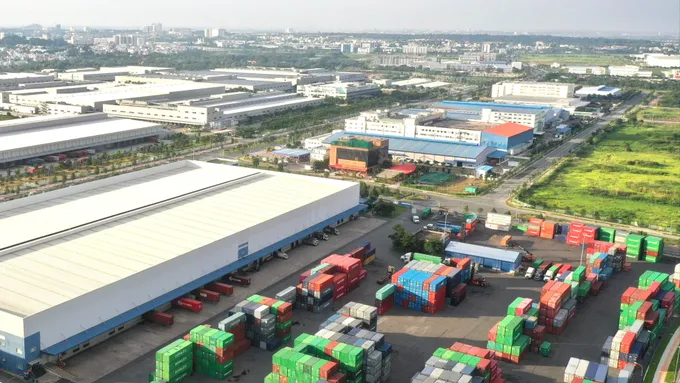
In late April 2026 alone, the Ho Chi Minh City People's Committee granted investment registration certificates to four high-tech projects in the Saigon Hi-Tech Park (SHTP) with a total capital of over US$1.23 billion. Notably, two mega-scale data center projects, totaling nearly US$1 billion, are: the Evolution DC VN HCMC Data Center project, invested by a consortium of Singaporean investors Hathor, Frontier, and Evolution Data Centres; and the Starmason Data Center Complex, invested by Starmason Joint Stock Company. These projects are expected to create the infrastructure foundation for AI, cloud computing, and big data processing in Ho Chi Minh City.
Regarding this issue, Darren Webb, CEO of the Evolution DC VN HCMC Data Center Project, stated that while industrial parks previously competed based on labor and land, data infrastructure is now becoming a decisive factor in the competitiveness of the economy. Investing in a large-scale data center in Ho Chi Minh City not only meets the growing demand for data processing but also contributes to the formation of a digital infrastructure foundation for a new growth phase.
Along with data infrastructure, international technology corporations are also expanding their presence in Ho Chi Minh City. China's Techtronic Industries (TTI) continues to invest an additional $81 million in its Techtronic Tools Vietnam factory at the Ho Chi Minh City High-Tech Park (SHTP), bringing its total investment to over $730 million. The project focuses on manufacturing smart electronic devices, IoT-integrated mechatronics, high-performance lithium batteries, and precision circuit boards, aiming to establish a high-tech "Make in Vietnam" supply chain.
As of June 1st, Ho Chi Minh City had attracted $6.6 billion in FDI. According to information from the Ho Chi Minh City Department of Finance, as of June 1st, the total value of registered foreign direct investment (FDI) in Ho Chi Minh City, including new projects, capital adjustments, and capital contributions, share purchases, and equity purchases, reached over US$6.6 billion, equivalent to approximately 60% of the FDI attraction plan for 2026. Two large projects have completed licensing procedures and recorded investment capital recently: the Evolution DC VN HCMC Joint Stock Company project (newly licensed project), with a capital scale of over US$508 million, completed on March 30th; and the Berjaya Vietnam International University City project (capital adjustment project, increasing by US$2.8 billion), completed on June 1st. According to Hoang Vu Thanh, Director of the Ho Chi Minh City Department of Finance, the Can Gio International Transshipment Port project has a scale of over US$4.9 billion; the Nha Be Metrocity GS project has increased its capital by approximately US$2.2 billion; the Smart Complex project in Functional Area 2a of the Thu Thiem New Urban Area has increased its capital by US$1.2 billion; and the AI Data Center project in Tan Phu Trung Industrial Park has a scale of US$2.1 billion. If these projects complete the procedures according to regulations, the total FDI attracted in 2026 could reach approximately US$17 billion, equivalent to about 154.5% of the annual plan... |
Previously, Ho Chi Minh City also recorded many large investment commitments in digital infrastructure and the semiconductor industry. G42 Group (United Arab Emirates) plans to invest approximately $2 billion to develop a data center. Meanwhile, Intel Corporation (USA) is considering moving part of its operations from Costa Rica to Ho Chi Minh City to produce high-performance computing chips.
The trend of capital flow shifts is clearly reflected in the city's FDI landscape. As of early June 2026, Ho Chi Minh City had attracted over US$6.6 billion in FDI, reaching 60% of the 2026 plan. To date, the city has over 20,800 active FDI projects with a total registered capital of approximately US$142 billion from 152 countries and territories. Notably, the majority of new projects focus on high technology, AI, data centers, semiconductors, digital infrastructure, and logistics, demonstrating a clear shift from attracting broad-based investment to projects with high technological content and added value.
Shift from "waiting for investment" to "hunting for investment".
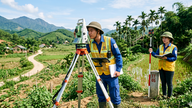
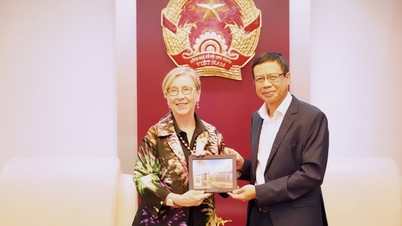
Explaining this trend, at a recent meeting with a delegation of businesses from Zhejiang Province (China), the Standing Vice Chairman of the Ho Chi Minh City People's Committee, Nguyen Loc Ha, stated that the city is actively perfecting special mechanisms, including proposing the development of a Law on Special Cities, to create more room for development, enhance competitiveness, and attract high-quality FDI projects. Furthermore, Ho Chi Minh City is building a transparent and open investment environment with technical infrastructure approaching international standards, while also implementing many support policies to create favorable conditions for strategic investors.
Sharing more about the direction of attracting high-tech investment, Mr. Nguyen Ky Phung said that the city is prioritizing attracting projects in the fields of microchips, semiconductors, AI, IoT, blockchain, robotics, 5G technology, data centers, and smart cities... Ho Chi Minh City also aims to develop approximately 3,800 hectares of smart technology zones and over 1,000 hectares of concentrated information technology and digital technology zones. At the same time, it promotes a model of linkage between the state - universities - businesses to train high-quality human resources for strategic technology sectors.
It is clear that Ho Chi Minh City is entering a completely different phase of attracting investment than before. While previously the city mainly waited for businesses to approach it, now it is proactively engaging with leading global technology corporations to promote investment. Along with accelerating administrative reforms aimed at shortening processing times, the city is also implementing numerous preferential mechanisms regarding taxes, land lease fees, high-tech equipment imports, and R&D support. The city hopes to create more opportunities to enhance its attractiveness to global technology corporations.
- Mr. Lam Dinh Thang , Director of the Department of Science and Technology of Ho Chi Minh City: Shift from an investment incentive mindset to building a complete innovation ecosystem. 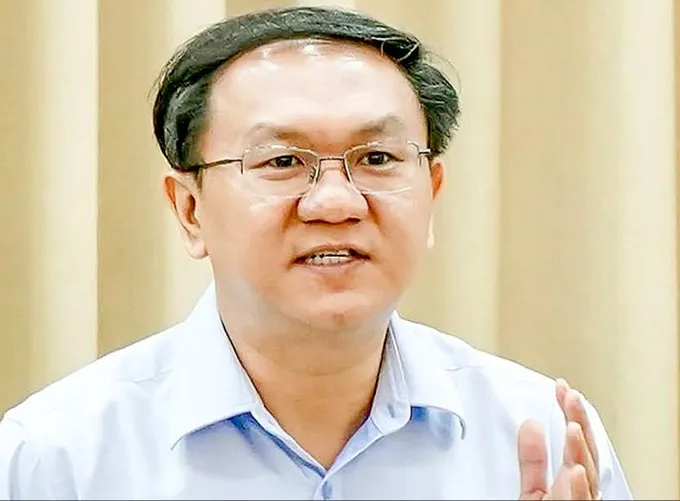 To attract high-quality investment capital in the new phase, the city needs to shift from a traditional investment incentive mindset to building a complete innovation ecosystem. The establishment of the Ho Chi Minh City Venture Capital Fund with a "seed capital" mechanism from the budget combined with private resources will create an additional channel for raising capital for high-tech, digital technology, artificial intelligence, semiconductor, and biotechnology projects. Along with this, the implementation of testing mechanisms (sandboxes) under Resolution 98 will create a favorable environment to attract R&D centers, technology startups, and international investment funds, thereby forming a competitive innovation ecosystem in the region. - Dr. Can Van Luc, Chief Economist of BIDV, member of the National Financial and Monetary Policy Advisory Council: Complete the inter-regional connectivity infrastructure as soon as possible. 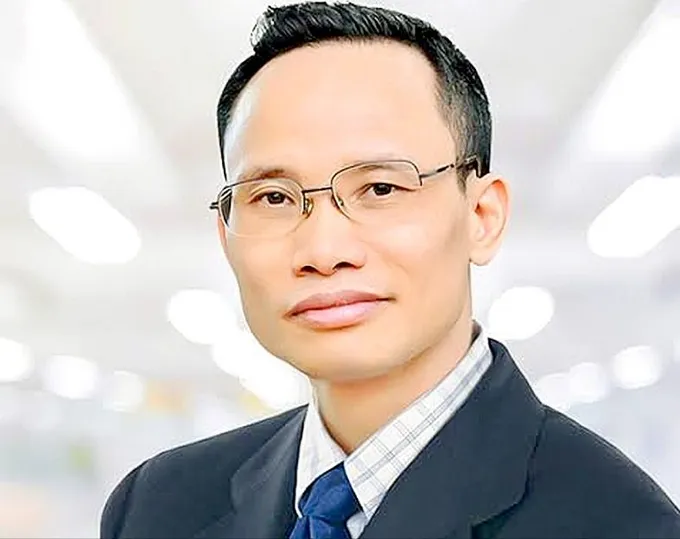 The biggest advantage of Ho Chi Minh City after expanding its development space is its ability to form a new growth pole with a full range of industrial, port, logistics, financial, and service components. To translate that advantage into tangible investment appeal, the city needs to accelerate the completion of inter-regional connectivity infrastructure, especially the transportation system connecting seaports, industrial zones, logistics centers, and airports. In addition, improving the investment and business environment, reducing compliance costs, and enhancing access to land, capital, technology, and high-quality human resources will contribute to improving the city's competitiveness in attracting international investment. - Mr. Robert Kraybill, Investment Director of Impact Investment Exchange (Singapore): Risk-sharing mechanisms need to be strengthened. You may also like  Hanoi will experience hot weather for the next 3 days.Over the next three days (June 5th to 7th), Hanoi will experience hot weather, with some areas experiencing intense heat and maximum temperatures of 36-38 degrees Celsius. Afterwards, the city will have thunderstorms, bringing cooler temperatures. 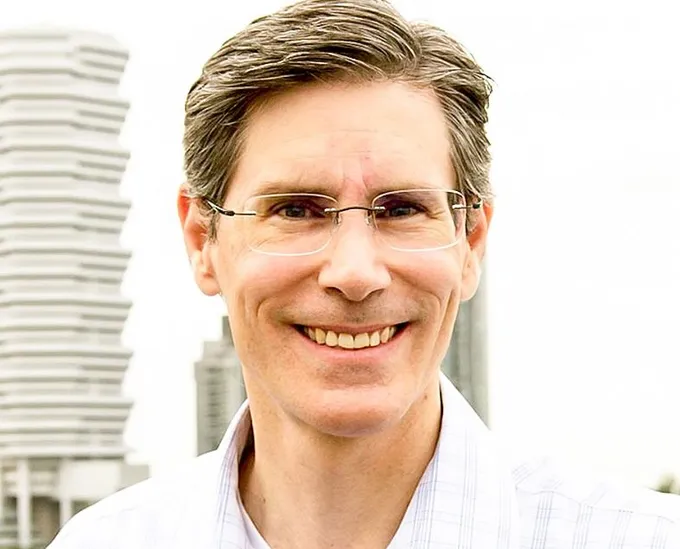 Vietnam in general, and Ho Chi Minh City in particular, have a solid economic foundation and are among the most attractive investment destinations in Southeast Asia. However, to attract large capital flows in high-tech, green transformation, climate change, and innovation, it is necessary to strengthen risk-sharing mechanisms between the public and private sectors. Using public funds or capital from development finance institutions as an initial risk buffer will help increase investor confidence, thereby mobilizing more private capital for new projects. In addition, it is necessary to expand credit guarantee mechanisms, preferential capital, and simplify investment procedures; while supporting businesses in improving governance capacity and information transparency. By meeting good governance and sustainable development standards, Vietnamese businesses will have easier access to international capital and participate more deeply in global supply chains. |
Source: sggp.org.vn
Source: https://baodongthap.vn/tp-ho-chi-minh-day-manh-thu-hut-dau-tu-cong-nghe-cao-a241636.html

































![[Video] Sunset at Lap An Lagoon – Where the sun sets over the fishing nets](https://vphoto.vietnam.vn/thumb/1200x675/vietnam/resource/IMAGE/2026/05/31/1780192137701_beach-landscape-sea-water-nature-grass-745871-pxhere-com.jpeg)























Comment (0)