

What was predicted but not expected happened. In the early hours of October 26, Israel launched an airstrike on multiple military targets in Tehran and several other Iranian cities. This retaliatory attack by Israel has notable aspects and raises several questions.
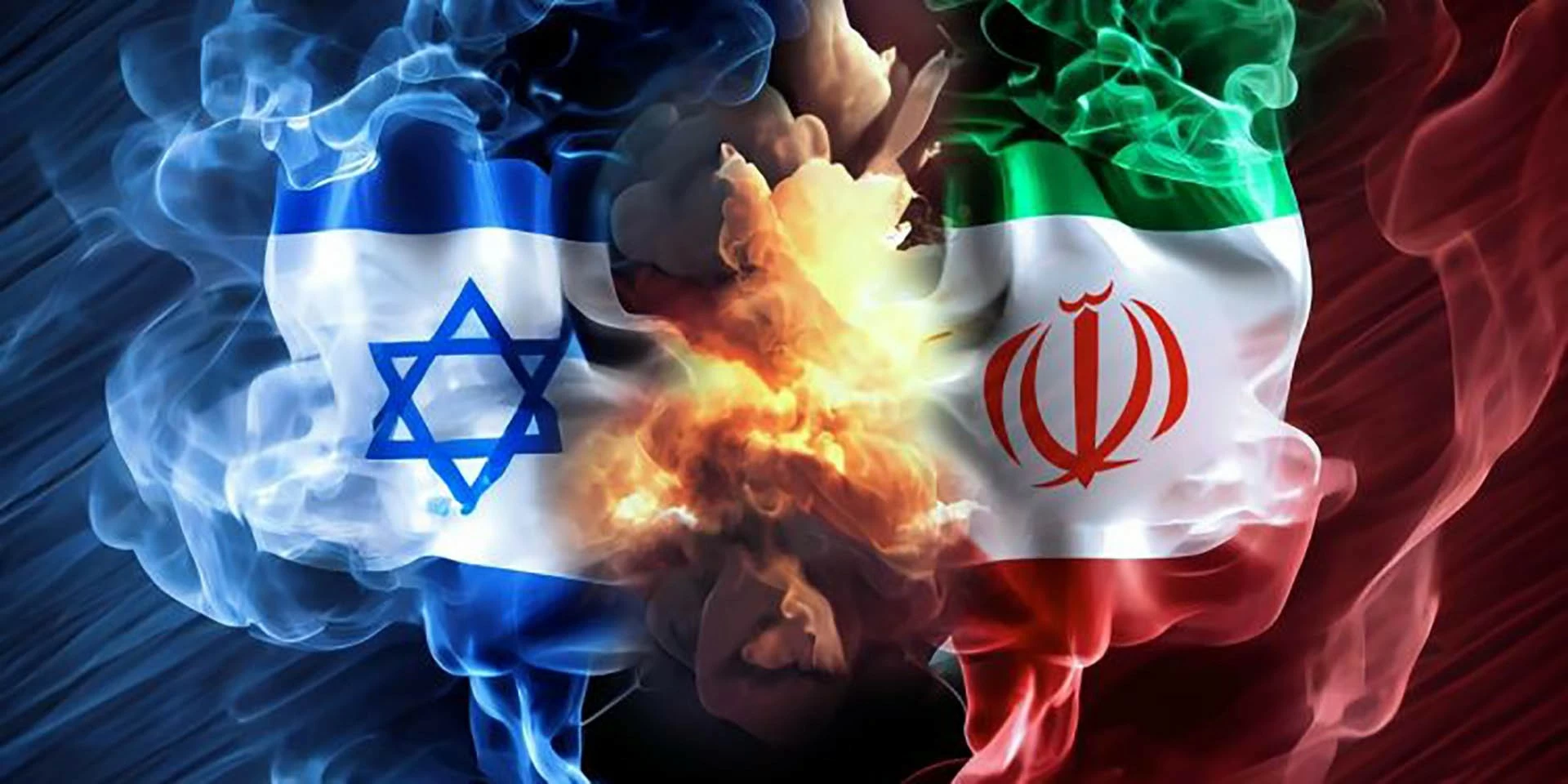 |
| The tit-for-tat airstrikes between Israel and Iran are always carefully calculated. (Source: Al Jazeera) |
Key points to note
Firstly, this attack occurred 25 days after Iran's October 1st raid. This shows that Tel Aviv meticulously planned and prepared in many aspects, consulting with the US on the plan, scale, targets, timing of the attack, and conducting drills. Israel also needed time to build public opinion and garner international and domestic support, especially in light of the reactions to the expansion of the attack in Lebanon, targeting even UN peacekeeping and relief forces, and causing civilian casualties.
Therefore, the timing of the retaliatory attack did not occur just days after Iran's attack, but also not too long, close to or after the US presidential election. There are rumors that Israel delayed retaliation because top-secret US intelligence documents related to the attack plan were leaked online. This was quite unexpected, leading to various interpretations. This information has neither been confirmed nor denied.
Second, Tel Aviv deployed over a hundred advanced aircraft, including F-35 stealth fighters, in an attack lasting approximately three hours, targeting key military targets such as missile defense systems, missile production facilities, missile launch bases, and drones in Tehran.
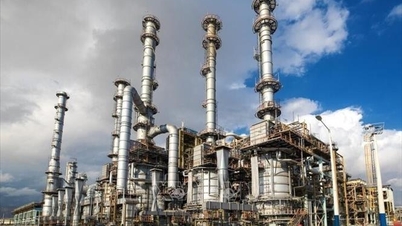
The retaliatory strike was strong enough to inflict losses on the opponent, demonstrating deterrence and proving Israel's ability to launch more forceful attacks on all necessary targets. However, it wasn't as catastrophic as some feared, such as Tel Aviv attacking and destroying Tehran's nuclear and oil facilities, its military and economic symbols. Israel's actual actions and statements show that they attacked just enough to retaliate, while also leaving a "way out" for Iran.
Third, media reports were contradictory regarding the attack. Israeli Prime Minister Benjamin Netanyahu asserted that the airstrike was "precise and powerful," "achieved all targets," and inflicted serious damage, making it difficult for Iran to continue its attacks. The Israeli military stated that it destroyed 4-5 S-300 defense systems, encountered no significant resistance, and that the aircraft returned safely.
Conversely, Iran claims the scale of the attack was not as large as Israel claimed, that they fought back effectively, and suffered negligible losses. There are unverified claims that Tel Aviv deliberately "leaked" information about the attack to Tehran! Contradictory information is common in media warfare, often with ulterior motives for subsequent actions and reactions.
Explanation and prediction
It can be said that Israel's retaliatory measures have achieved their basic objectives. Currently, Israel still wants to avoid a full-scale confrontation with Iran due to the unpredictable consequences, in order to focus its efforts on eradicating the forces of Hamas, Hezbollah, and the Houthi rebels. These organizations are suffering serious losses, and their ability to receive support and assistance from Iran has significantly weakened.
The situation is currently favorable for Israel. Once the proxy forces are subdued and Iran's "wingmen" are cut off, returning to the conflict to weaken and eliminate the opponent's influence, and redrawing the political and security map in the Middle East, would not be too late and would result in the least losses.
The US played a crucial role in Israel's "restraint" in this response. Washington firmly supported Tel Aviv, deploying the advanced THAAD missile defense system along with 100 troops to Israel. On the other hand, they advised Tel Aviv not to attack Tehran's nuclear and oil facilities, avoiding drawing the Middle East into a full-scale, uncontrollable war.
A full-scale war would signify the failure of the US Middle East strategy. Washington would face even greater difficulties as tensions simultaneously escalate in Ukraine and the Korean Peninsula, significantly disadvantaging the Democratic Party with the election fast approaching.
The context places Iran in a dilemma, a difficult choice. An immediate response would escalate tensions, risking a full-scale war in which Tehran would be at a disadvantage militarily and economically. Without appropriate action, Iran's position would weaken, losing its role within the "axis of resistance" and in the region.
This is reflected in the statement by Iran's Supreme Leader Ali Khamenei: the crimes committed by Israel on October 26 should neither belittled nor exaggerated; strength must be demonstrated to the adversary. At the same time, he instructed the government and military to determine "what needs to be done in the best interests of the people and the country." This stance is somewhat more moderate than his usual hardline approach.
Based on these developments, it can be predicted that Iran will not retaliate fiercely immediately after Israel's attack. Any reaction would likely be at an acceptable level and at an appropriate time. The best option for Tehran is probably to continue supporting the "axis of resistance," strengthening its forces and maintaining military operations, putting Tel Aviv in a state of insecurity and forcing it to deploy troops on multiple fronts.
This means that a scenario of direct military confrontation between two powerful forces, triggering a full-scale war in the Middle East, is unlikely. However, the region remains tense. Israel continues its fierce conflict in Lebanon and the Gaza Strip, potentially expanding to Yemen and Syria; Hezbollah and Hamas continue to seek counterattacks; and the risk of escalating conflict remains.
Strong deterrence from all sides, positive international public opinion, and diplomatic efforts with a balanced and comprehensive approach have somewhat restrained the outbreak of a full-scale war, but the Middle East issue is far from being fundamentally and thoroughly resolved.
Source: https://baoquocte.vn/israel-iran-tra-dua-trong-tinh-toan-292037.html
![[Photo] General Secretary and President To Lam presides over a working session with the Central Policy and Strategy Committee on the development of the materials industry.](https://vphoto.vietnam.vn/thumb/1200x675/vietnam/resource/IMAGE/2026/05/21/1779359935432_a3-bnd-3129-1412-jpg.webp)


![[Photo] National Assembly Chairman Tran Thanh Man working with the Standing Committee of the Law and Justice Committee](https://vphoto.vietnam.vn/thumb/1200x675/vietnam/resource/IMAGE/2026/05/21/1779378929214_ndo_br_1-4610-jpg.webp)


















































































Comment (0)