

SGGP
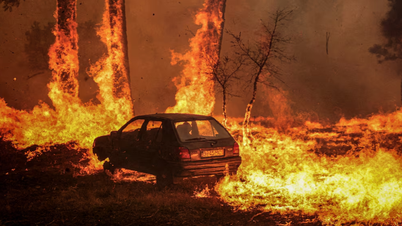
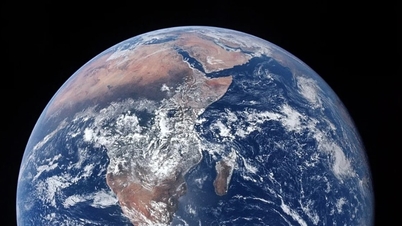
United Nations Secretary-General Antonio Guterres has called for urgent action against climate change, emphasizing that record temperatures in July show the Earth has moved from a warming phase to a “boiling era”.
 |
| Children play with water during an unusually hot weather in Europe. Photo: The Guardian. |
It's warming up too quickly.
According to the World Meteorological Organization and the European Union's Copernicus Climate Change Monitoring Agency, this July could be recorded as the hottest month in world history and possibly the hottest month in thousands of years.
Mr. Guterres expressed concern over the intense heatwave across the Northern Hemisphere during this harsh summer, making July the hottest month on record. He also emphasized that climate change is already happening, causing serious impacts, and that this is only the beginning. The extreme impacts of climate change are consistent with predictions and numerous warnings from scientists . However, the speed at which this phenomenon is occurring is astonishing. Given this alarming reality, Mr. Guterres reiterated his call for swift and far-reaching action, particularly to minimize the use of fossil fuels.
Ahead of the climate summit scheduled for September, UN Secretary-General Antonio Guterres called on developed countries to commit to achieving carbon neutrality by 2040 and for emerging economies by 2050. He stressed that instead of despairing over the negative impacts, humanity needs to act urgently to prevent the worst consequences, transforming a scorching hot year into an ambitious one. The President of the 28th Conference of the Parties to the UN Framework Convention on Climate Change (COP28), Sultan Al Jaber, also called on the Group of 20 leading developed and emerging economies (G20) to take a leading role in efforts to mitigate climate change.
Action is needed immediately.
Global warming will far exceed the 1.5 ° C limit. However, governments have yet to implement policies to ensure the achievement of the 2015 Paris Agreement on climate change. This is the assessment of Jim Skea, the new chairman of the UN Intergovernmental Panel on Climate Change (IPCC), in an interview with Reuters. Explaining this assessment, Mr. Skea argued that governments remaining stuck with current plans will cause global temperatures to rise by nearly 3 ° C compared to pre-industrial levels.
The new IPCC Chair believes that to achieve the goals of the Paris Agreement, governments need to implement strong and swift policies to reduce greenhouse gas emissions. This is the time for governments to deploy their policy tools, such as investing more in renewable energy like wind and solar power, and ending investment in fossil fuels. The new IPCC Chair also believes the world will need to develop more technological solutions to capture and store CO2 , in order to reduce greenhouse gas emissions that contribute to global warming.
Source


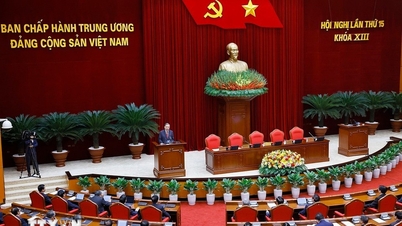
![[Photo] Closing Ceremony of the 15th Conference of the Central Committee of the 13th Party Congress](/_next/image?url=https%3A%2F%2Fvphoto.vietnam.vn%2Fthumb%2F1200x675%2Fvietnam%2Fresource%2FIMAGE%2F2025%2F12%2F23%2F1766462841764_a1-bnd-3731-1647-jpg.webp&w=3840&q=75)



























































































Comment (0)