

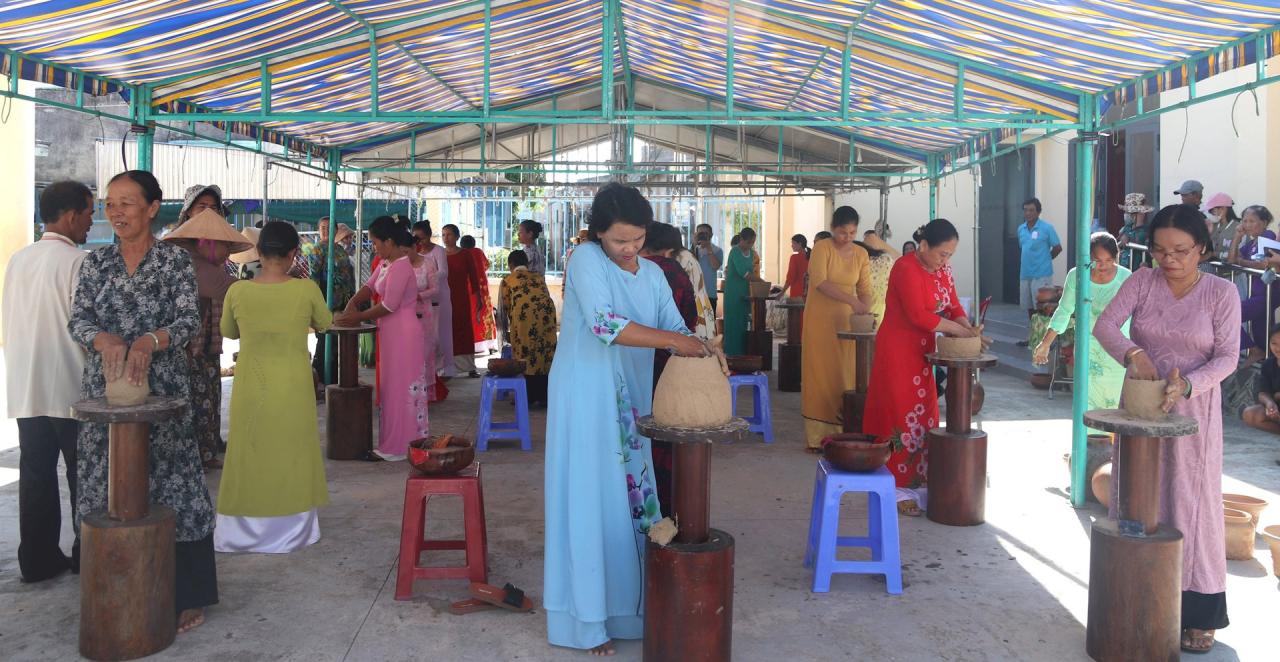
A class without projectors, paper, or ink, not confined to a formal classroom, where throughout the session, the hands of both the instructor and the students are stained with mud. There is only the sound of voices and the joyful atmosphere. This is a special class held in the heart of Binh Duc pottery village (Phan Hiep commune, Bac Binh district) for the children of the village.
Apprentice
The sunlight, filtering through the makeshift umbrella, flushed Tien Thi Kim Lai's face and drew beads of sweat. All her senses seemed focused on the pot on the sculpting table. Her feet moved slowly and rhythmically, her fingertips gently stroking the clay. The touch was light and smooth. This was her tenth product after the first lesson, exceeding her target. “Born in the traditional pottery village of Binh Duc, I only knew the simplest steps like scraping clay and decorating with color. Now I’m learning to make pots and vases. These are truly difficult steps, because even the way you hold the clay must be precise to create the desired shape, and your feet must move back and forth evenly to prevent the product from becoming distorted. Furthermore, handmade pottery doesn’t have a potter’s wheel, so you have to move around in circles continuously, which was quite overwhelming at first,” Tien shared.
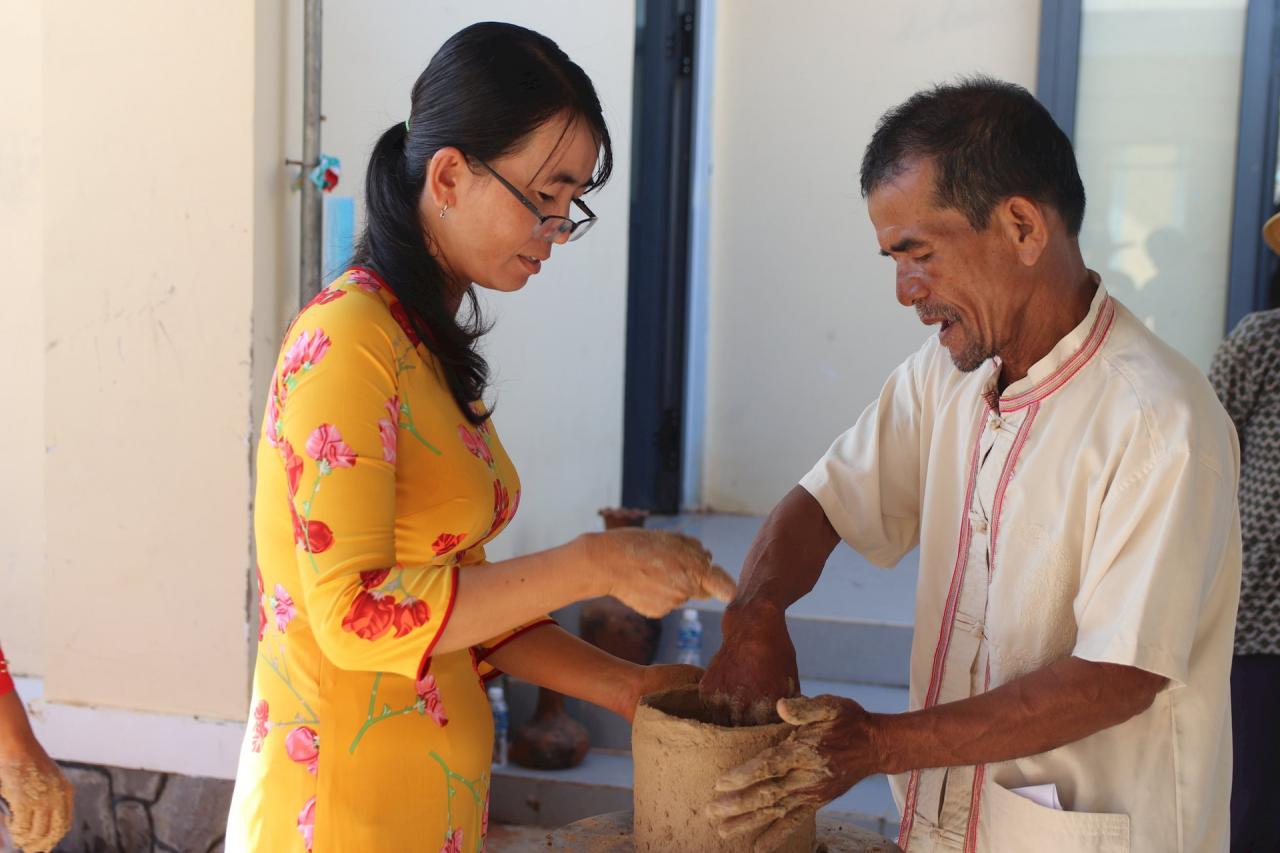
The workshop, organized by the Binh Thuan Provincial Museum in collaboration with the Phan Hiep Commune People's Committee, took place from November 1-4, 2023. Participants received hands-on training and went on an experiential learning trip to Bau Truc pottery village (Phuoc Dan town, Ninh Phuoc district, Ninh Thuan province) to learn the techniques of making fine art pottery. This was part of the project "Preserving and promoting the valuable traditional culture of ethnic minorities in conjunction with tourism development," under the National Target Program for socio -economic development of ethnic minority and mountainous areas in the province for the period 2021-2030. Interestingly, all five instructors and 35 trainees were residents of Binh Duc village. The trainees were of various ages, including one as young as 13. This demonstrates that each participant was aware of their responsibility in learning to preserve and develop the traditional craft.
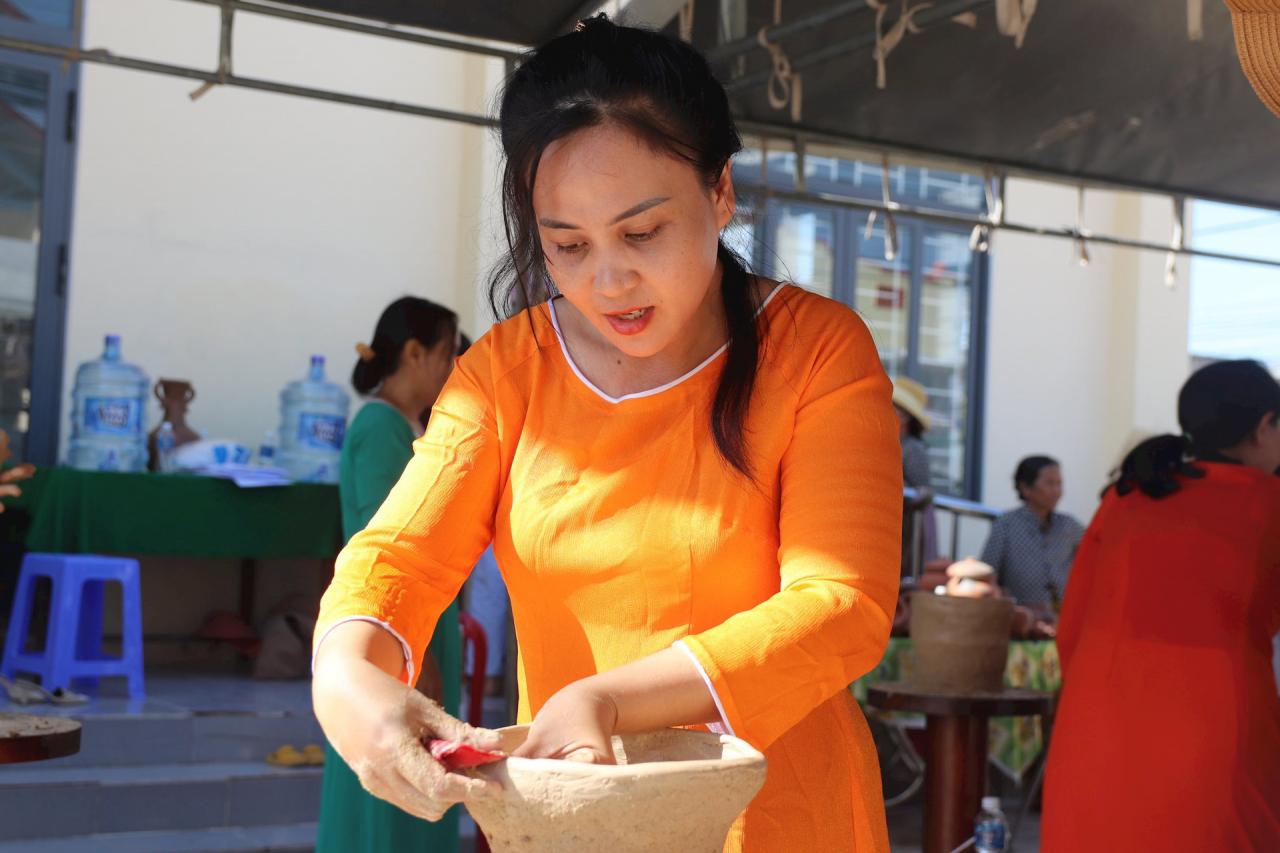
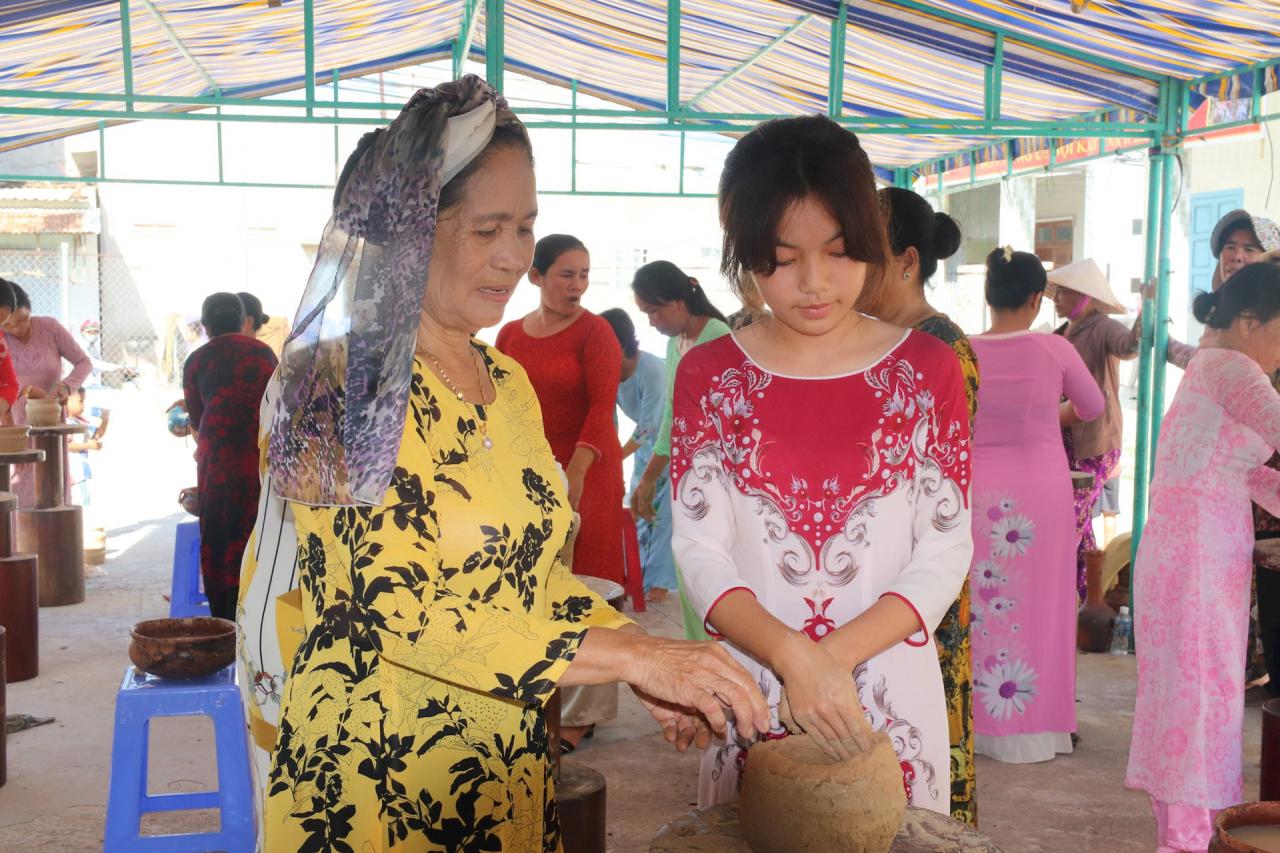
Watching the class, Ms. Nguyen Thi Huyen Trang, Vice Chairman of the People's Committee of Phan Hiep commune, could not hide her joy because this is not only a vocational training class for women, but also contributes to preserving the traditional craft of the local people. Currently, the number of households still involved in traditional pottery making in the commune is not large. Only 43 households (accounting for about 11% of the Cham households in the village) with 46 people still regularly maintain the craft. Most of the households practicing the craft are elderly, and if it is not passed down between generations, the village's pottery craft will fade away and disappear in the not-too-distant future.
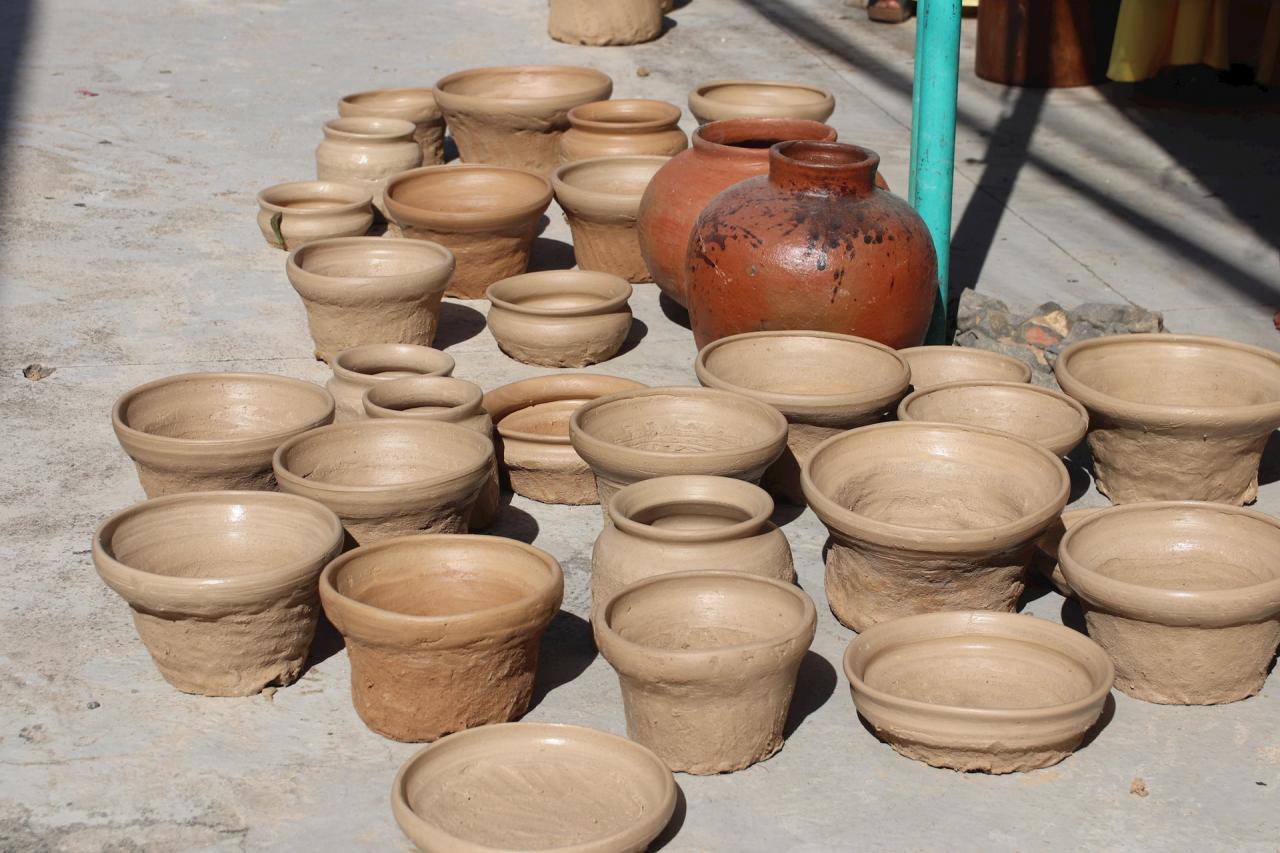
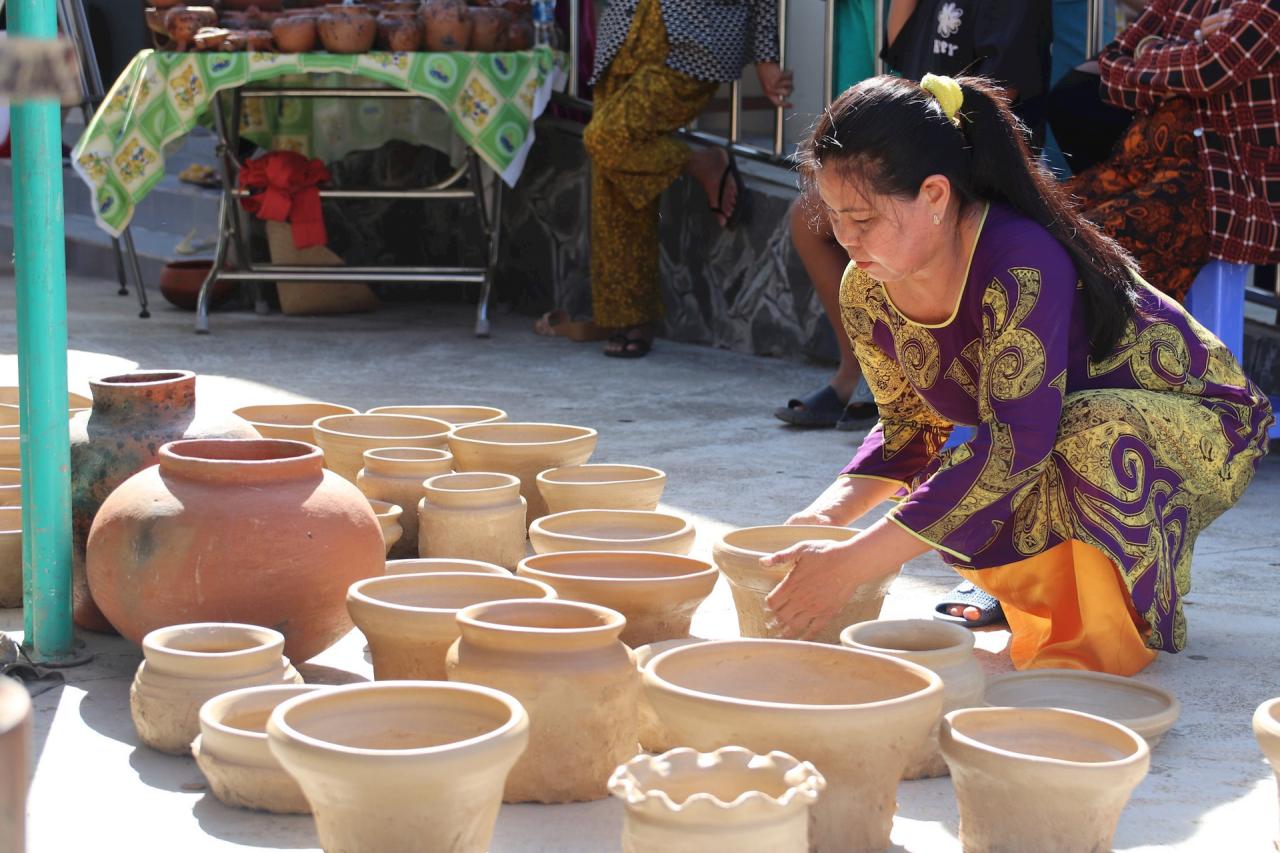
Hands of Heritage
Watching the hands of the women knead the clay, shape it, trim the edges, and decorate it, one realizes that holding a finished product in one's hands is not simple at all, without the skill and meticulousness of a true craftsman. Artisan Lam Hung Soi said: “The difficulties in pottery making and the market mechanism have impacted young artisans, causing them to lose their passion and love for the craft, and lacking diligence and perseverance. Therefore, passing on the craft to the younger generation makes me very happy, so that the children of Cham Binh Duc village and anyone passionate about traditional pottery can firmly grasp the techniques of practicing the craft.”
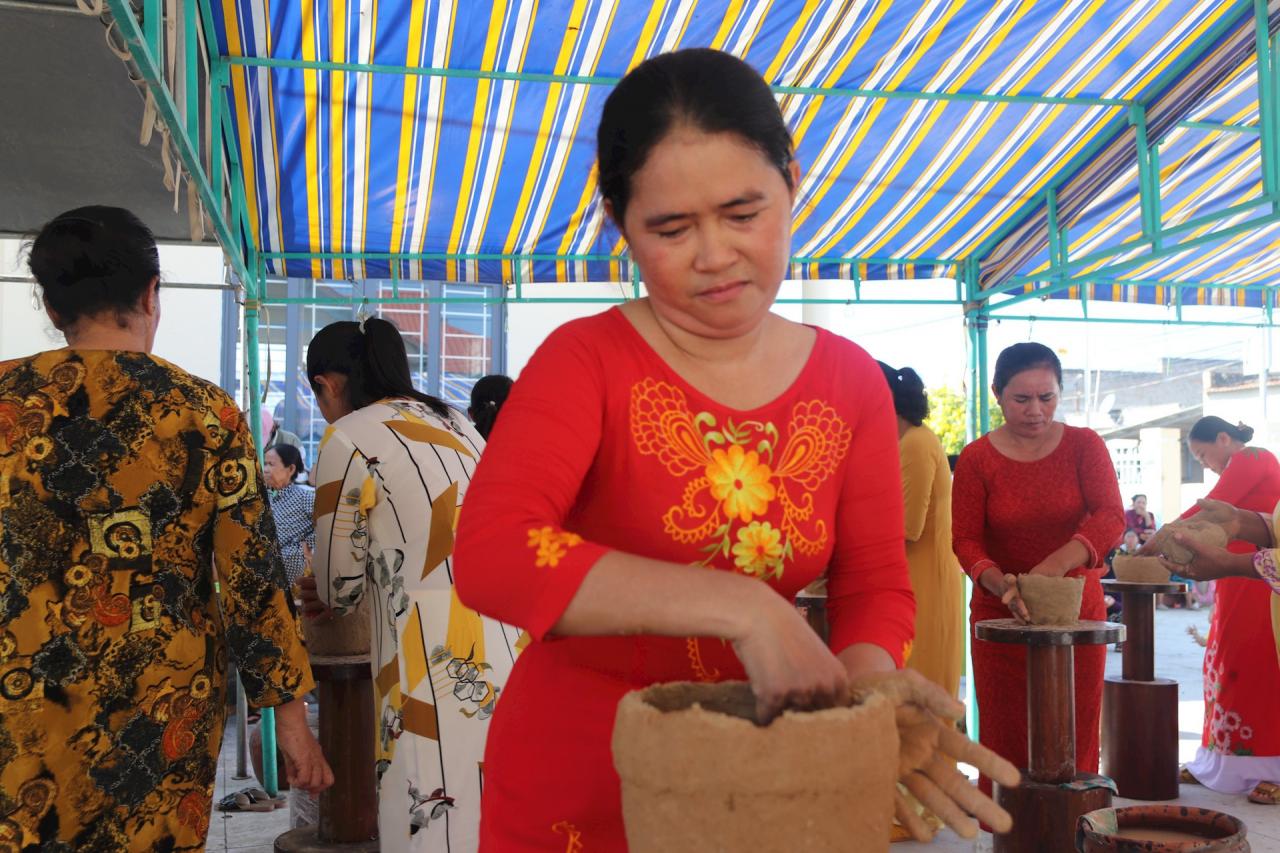
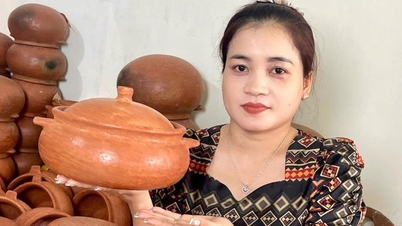
Born in a pottery village, the children of the village are immersed in sculpting games with clay from a young age. Therefore, according to the artisans, learning and making traditional pottery products is not difficult; the most challenging aspect requires the learner to have genuine passion, love for the craft, diligence, and perseverance. With these qualities, within a few months, a craftsman can make products ranging from simple items like stoves, braziers, and molds for pancakes and rice cakes, to more technically sophisticated items such as pots, kettles, large and small jars, basins, and spittoons.
The Cham pottery art was officially inscribed by UNESCO (United Nations Educational , Scientific and Cultural Organization) on the List of Intangible Cultural Heritage in Need of Urgent Safeguarding on November 29, 2022. Along with the joy and pride, the local government and the Cham community in Binh Duc village are aware of their responsibility to work together to preserve, conserve, and promote the value of this heritage. Therefore, vocational training classes will serve as an impetus for young people with a passion for entrepreneurship, aiming to exploit the local tourism potential.
“The life of the village is closely tied to the craft. Traditional Cham pottery products have special features in culinary culture. Therefore, the traditional pottery craft will not fade away; it will continue from generation to generation,” affirmed Meritorious Artisan Don Thi Hieu.
Source






















![[Photo] Reception to welcome General Secretary and President To Lam and his wife on their State visit to the Philippines](https://vphoto.vietnam.vn/thumb/1200x675/vietnam/resource/IMAGE/2026/06/01/1780295488620_vna-potal-chieu-dai-chao-mung-tong-bi-thu-chu-tich-nuoc-to-lam-va-phu-nhan-tham-cap-nha-nuoc-toi-philippines-8798060-7855-jpg.webp)


























































Comment (0)