

Children who are slow to grow and frequently get sick may be deficient in micronutrients, especially iron and zinc. Parents need to supplement these nutrients to boost their children's immunity.
On September 14th, Associate Professor Dr. Nguyen Thi Dieu Thuy, Head of the Pediatrics Department at Hanoi Medical University Hospital, stated that iron is involved in the production of T lymphocytes, immune cells that help fight against viral and bacterial attacks. Therefore, when a child's body is deficient in iron, their immune system will weaken.
Zinc also plays a crucial role in the immune system because it is both a component and a catalyst, enhancing the production of immune factors (cellular immunity, adaptive immunity), thereby creating a defense system that helps the body fight against pathogens.
"If children are deficient in zinc and iron, they will suffer from malnutrition, stunted growth, and increased susceptibility to infections and viral diseases," Dr. Thuy said, adding that children may experience fatigue, frequent yawning, drowsiness, lack of concentration, and irritability. In more severe cases, children may suffer from sleep disorders, poor absorption, stunted growth, and increased susceptibility to skin diseases.
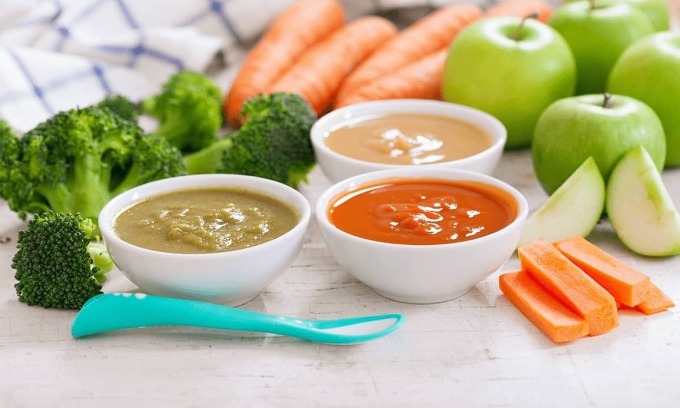
Parents are increasing their children's intake of beef, eggs, oysters, clams, crab, and some leafy green vegetables to supplement iron and zinc. (Photo: Gentlenursery)
Statistics from the National Institute of Nutrition show that the rate of zinc deficiency in children is severe, with one in three children also having iron deficiency. Notably, zinc deficiency often goes hand in hand with iron deficiency and vice versa. Meanwhile, zinc, iron, and vitamin A have been proven to play important roles in improving immunity.
Therefore, to supplement iron and zinc, Dr. Thuy recommends that parents feed their children foods such as beef, eggs, oysters, clams, crabs, and some leafy green vegetables. Initially, families should introduce these foods in small amounts, then gradually increase the quantity.
The absorption rate of iron and zinc from food is quite low. In a daily diet, the body only absorbs 5-15% of the iron and 10-30% of the zinc from food. Therefore, after 6 months, the rate of zinc and iron deficiency in children increases significantly, often with both deficiencies occurring simultaneously. Consequently, there is an iron-zinc gap in children aged 6 months to 2 years. Parents should proactively supplement their children's diets to prevent prolonged iron and zinc deficiencies that can affect their growth rate.
"Supplementing micronutrients with sufficient zinc and iron is a key factor in doubling a child's immunity, alongside external support measures such as increased play and physical activity, and a clean living environment," Ms. Thuy said.
People should consult a nutritionist to choose products that contain enough iron and zinc to meet their daily needs without causing excess. For example, they can choose products that contain sufficient zinc and iron in a 1:1 ratio.
Since the 1980s, Vietnam has implemented a program to prevent anemia and iron deficiency, led by the National Institute of Nutrition. As a result, the rate of iron deficiency in children has decreased, but it remains high. Currently, there is no program to prevent zinc deficiency.
Therefore, according to Dr. Thuy, it is necessary to strengthen communication about ensuring adequate supplementation of micronutrients, especially iron and zinc, because these two micronutrients play a crucial role in the health and overall development of young children.
Le Nga
Source link

![[Photo] Standing Committee member of the Party Central Committee Tran Cam Tu presents the Decision appointing the Secretary of the Party Committee of the Ho Chi Minh National Academy of Politics.](/_next/image?url=https%3A%2F%2Fvphoto.vietnam.vn%2Fthumb%2F1200x675%2Fvietnam%2Fresource%2FIMAGE%2F2026%2F02%2F02%2F1770039902160_le-cong-bo-bt-hvctqg-11-7880-jpg.webp&w=3840&q=75)


![OCOP during Tet season: [Part 3] Ultra-thin rice paper takes off.](/_next/image?url=https%3A%2F%2Fvphoto.vietnam.vn%2Fthumb%2F402x226%2Fvietnam%2Fresource%2FIMAGE%2F2026%2F01%2F28%2F1769562783429_004-194121_651-081010.jpeg&w=3840&q=75)



Comment (0)