

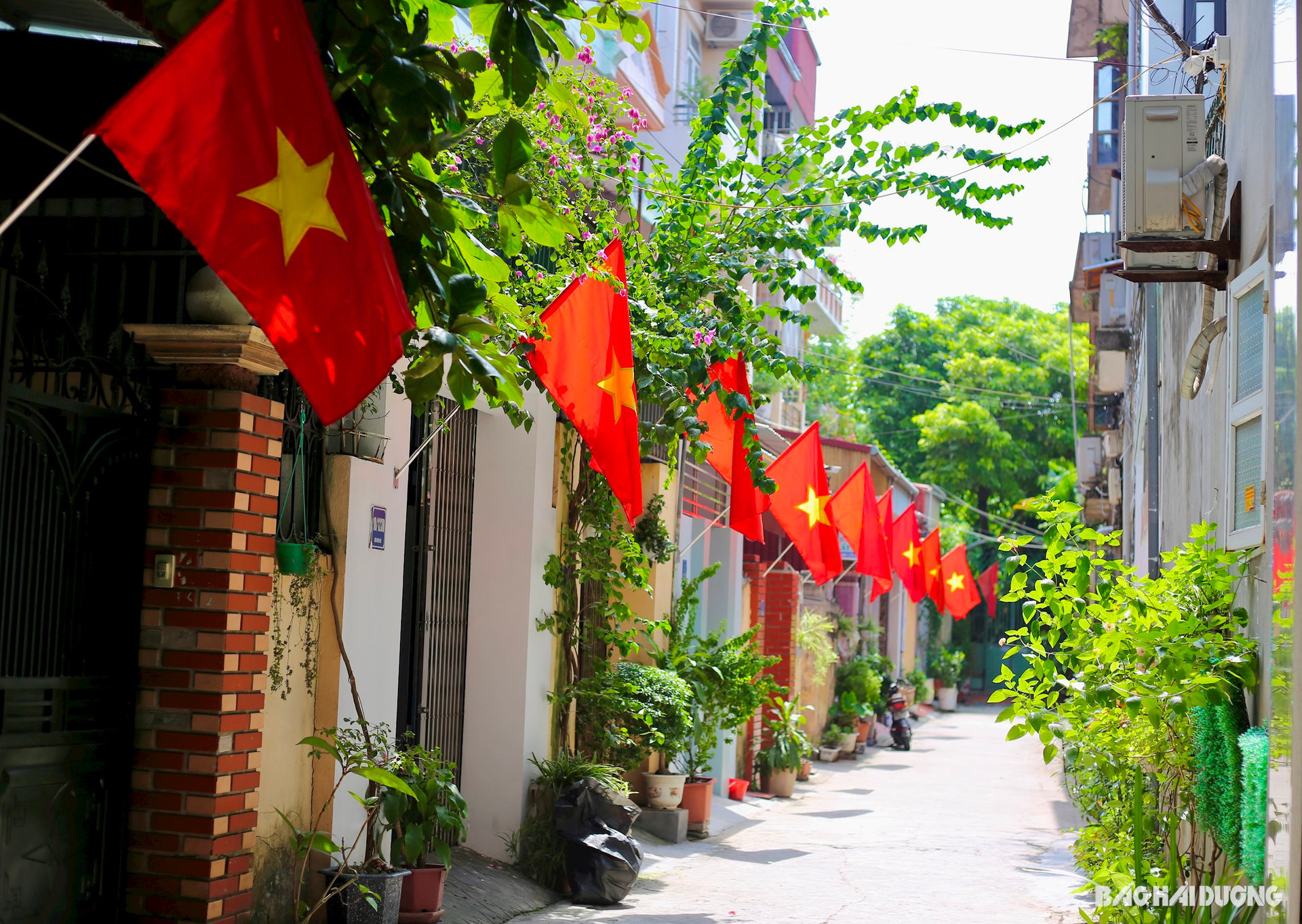
When and where should the national flag be flown?
Currently, regulations on displaying the national flag are implemented according to Guideline No. 3420/HD-BVHTTDL dated October 2, 2012, issued by the Ministry of Culture, Sports and Tourism, regarding the use of the national flag, national emblem, national anthem, and portrait of President Ho Chi Minh.
The national flag is displayed in meeting rooms and auditoriums of all levels of government, state agencies, and organizations during solemn meetings.
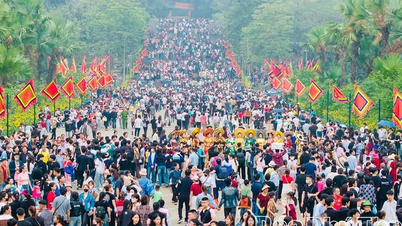
The national flag is flown outdoors on major holidays, political events, the traditional Lunar New Year, and as announced by the central and local authorities:
+ New Year's Day
+ Lunar New Year
+ Commemorating the general election: January 6th
+ International Labor Day: May 1st
+ Commemorating President Ho Chi Minh's birthday: May 19th
+ Commemoration of the August Revolution: August 19th
National Day: September 2nd
The national flag is displayed or carried in places where rallies, parades, mass mobilization, production emulation campaigns are launched, and revolutionary movements are carried out.
State agencies, schools (including academies), armed forces units, border checkpoints, and international ports must have flagpoles and display the national flag in front of their offices or in a prominent place in front of the office entrance. The national flag must meet the standards regarding size and color as stipulated in the Constitution.
The Presidential Palace, the National Assembly, the Ho Chi Minh Mausoleum, the Government headquarters, the Supreme People's Court, the Supreme People's Procuratorate, the Ministry of Foreign Affairs, Vietnamese embassies in other countries, the Hanoi flagpole, the headquarters of People's Committees at all levels, border gates and international ports fly the national flag 24 hours a day.
The headquarters of ministries, ministerial-level agencies, armed forces units, and schools display the national flag from 6 AM to 6 PM daily.
All the aforementioned agencies and units, especially foreign affairs agencies, must display the national flag of the foreign guest at the ministerial level or higher on official visits, alongside the national flag of Vietnam.
How to properly display the national flag?
Article 13 of the 2013 Constitution stipulates the following regarding the Vietnamese national flag:
- The national flag of the Socialist Republic of Vietnam is rectangular, with a width equal to 2/3 of its length, a red background, and a five-pointed yellow star in the center.
- The national emblem of the Socialist Republic of Vietnam is circular, with a red background, a five-pointed golden star in the center, surrounded by rice stalks, and at the bottom a half-toothed wheel and the words "Socialist Republic of Vietnam".
Accordingly, the Vietnamese national flag will be rectangular, with the width equal to 2/3 of the length, a red background, and a five-pointed yellow star in the center.
- The center point of the golden star is placed exactly at the center (the intersection of the two diagonals) of the national flag.
- The distance from the center of the star to the tip of each point is one-fifth the length of the national flag.
- One point of the star has an axis perpendicular to the long edge of the national flag and points straight upwards towards the top of the flagpole.
- Star shape: From the tip of one star's wing to the tip of the opposite star's wing, there is a straight line, not bulging in the middle, and the star's wings are not rounded.
- Both sides of the national flag have stars that perfectly align.
- The national flag has a bright red background and a bright yellow star.
In fact, there are several typical sizes of the national flag such as: 60 x 90 cm, 70 x 105 cm, 80 x 120 cm, 90 x 140 cm, 120 x 180 cm, 140 x 210 cm. Larger sizes of the national flag include: 2 x 3 m, 4 x 6 m, 6 x 9 m...
People who want to follow the trend of painting the national flag on their rooftops can use the above proportions to ensure they paint correctly and avoid violating regulations.
Regulations regarding the display of the national flag.
1. General regulations
- The national flag can be displayed using a flagpole or a flag rope, but the size, length, and hanging angle must be ensured.
- When hoisting a flag, its size must be proportionate to the flagpole or flagpole. The flagpole, flagpole, and flag rope must be aesthetically pleasing, with a uniform length of 2 meters for both the flagpole and flag rope. Do not use miscellaneous ropes to tie to the flagpole or flagpole. Use wire, nylon, or parachute cord that matches the size and color of the flagpole and flagpole.
- Flags that are faded, torn, or punctured must be replaced. Flags that are crumpled or have curled corners must be straightened before being hung.
2. Specific regulations
Depending on the architecture, location, and size of the headquarters of agencies, units, businesses, schools, buildings, high-rise apartments, and private houses, the location for displaying the national flag must be designed appropriately and comply with the following regulations:
a) Display the national flag at agencies, units, schools, businesses, high-rise buildings and apartment complexes.
- The national flag displayed in front of headquarters, on the rooftops of agencies, units, schools, businesses, and high-rise apartment buildings must be in the most prominent position.
- When displaying the national flag and the Party flag, the national flag should be on the left and the Party flag on the right (facing the main entrance of the headquarters towards the street).
- For agencies, units, schools, businesses, and high-rise buildings that already have flagpoles, the national flag should be hoisted at the top of the flagpole.
b) Display the national flag at family homes.
- Families hang the national flag in front of their houses.
- The flagpole should be at least 2 meters above the ground. The national flag should be hoisted at an angle of 35-45 degrees (350-450) relative to the hoisting point so that the flag is always spread wide.
- For families with a front gate, the national flag should be hung on the gate. For families with walls but no gate, the national flag should be hung on the front wall of the house. For families living in multi-story houses, the national flag should be hung on the balcony of the first floor of the house.
c) Display the national flag at religious and belief establishments and areas where festivals are held.
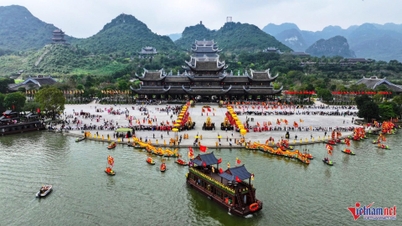
The national flag displayed at religious and faith-based establishments and in festival areas must be hung in a prominent place and higher than other types of festival flags or religious flags.
3. Prohibited regulations
- Using the national flag in a manner that violates regulations regarding size and design.
- Using a national flag that is faded, torn, or punctured.
- Plant the national flag on sidewalks and walkways.
- Hang flags in hidden, dark places. Hang flags under signs and advertisements for food and beverage businesses, guesthouses, commercial establishments, and bars. Hang flags under unsightly items such as curtains, sunshades, dust covers, clotheslines, etc.
Currently, there are no regulations specifying whether failing to display the national flag is punishable, nor are there any regulations specifying the penalties for this act. The law provides general guidelines on flag display practices, encouraging citizens to comply.
Over the years, the tradition of displaying the national flag during holidays, Tet (Lunar New Year), and to celebrate important national anniversaries has become a beautiful cultural practice and an opportunity for every Vietnamese citizen to express their patriotism and national pride. Therefore, it needs to be preserved and promoted as a cultural tradition, a beautiful custom of displaying the national flag, and become a sense of responsibility for every Vietnamese citizen.
PV (compiled)Source: https://baohaiduong.vn/treo-co-to-quoc-sao-cho-dung-390441.html













































































Comment (0)