Digging up graves, waiting for the first month of the year.
like budding flowers waiting in the leaf axils
In the twelfth lunar month, the old man sits waiting for the first lunar month.
(Poem by Tran Thien Thi)
Although the scenery can easily evoke feelings of melancholy and sadness, I still love winter days like these, when the golden sunlight filters through the crisp cold, seeping into every branch and blade of grass.
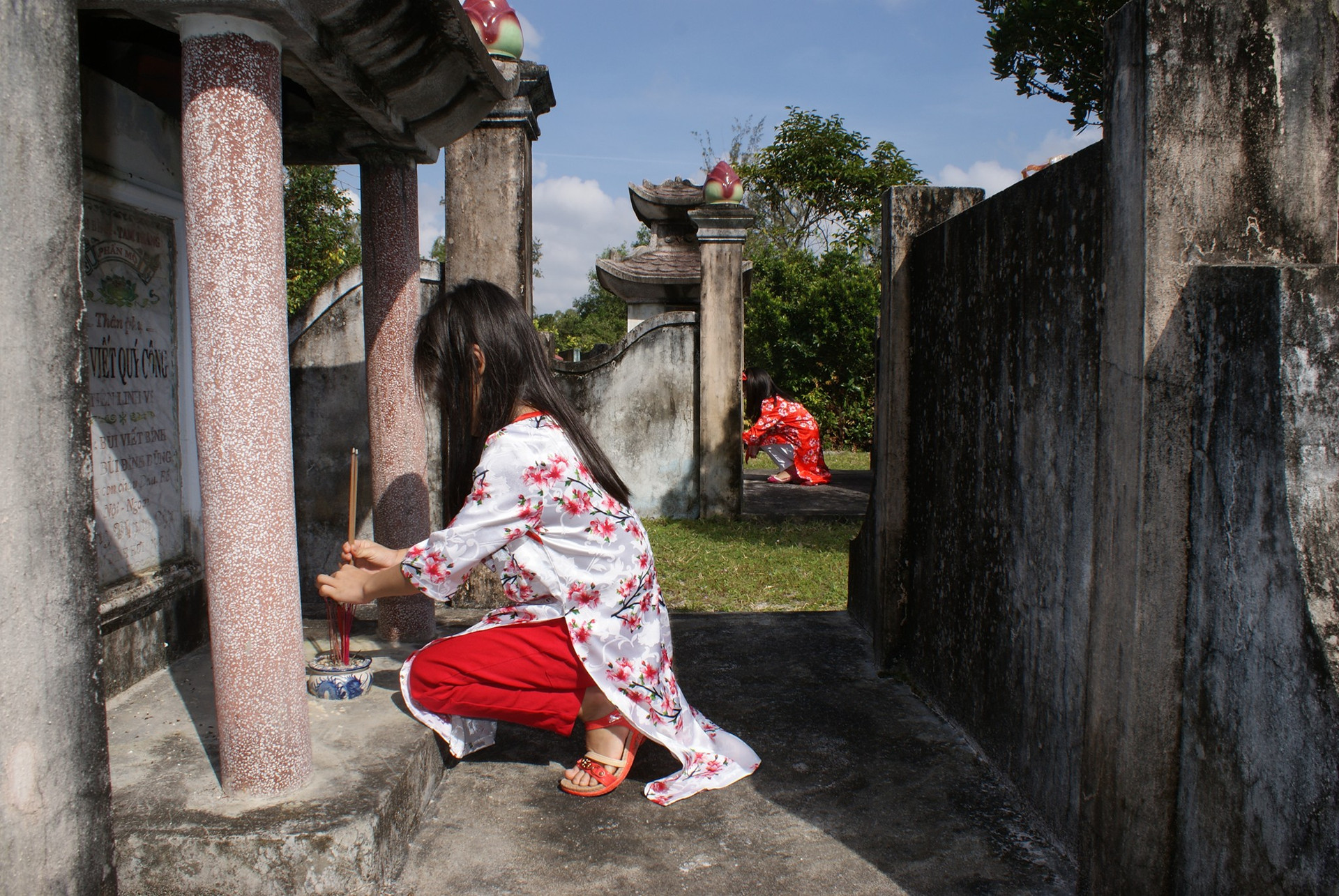
With hoes and rakes slung over my shoulder, a broom in one hand and a machete in the other, I strolled through the cemetery forest behind the village. I was cleaning the graves, waiting for the Lunar New Year to arrive.
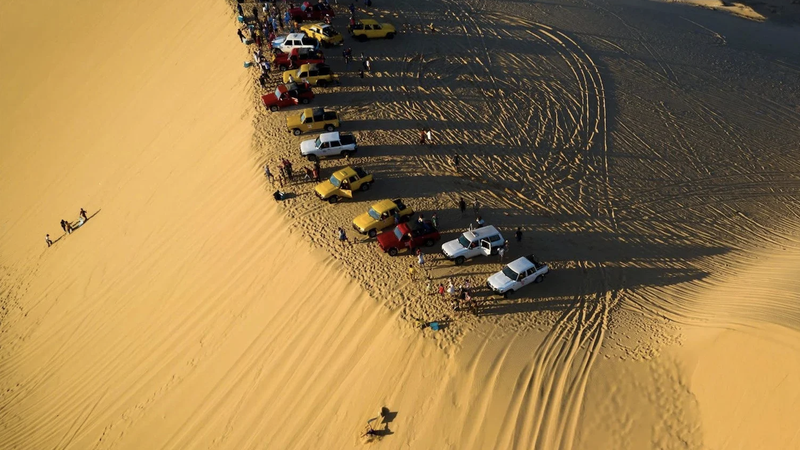
It's called a forest, as my鄉村 people call it, but in reality, it's a wide, high strip of sand stretching behind the village slope, overgrown with bushes taller than a person's head, interspersed with the graves of ancestors from many clans spanning generations.
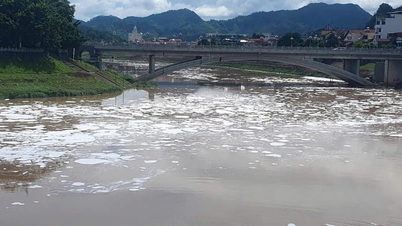
It is unknown whether our ancestors chose this land randomly or after careful consideration of feng shui, but the forest provides a protective backdrop for the village, while a river flows in front, nourishing it year-round.
And as usual, around the end of November and the beginning of December, the villagers would gather here to clean up.
It is a precious time for descendants to come together to clean and tidy the resting places of their loved ones and ancestors; it is an opportunity for the younger generation to learn about their predecessors and redefine themselves.
Memories are a magical thread connecting love; as long as the heart can still feel, fragments of the past will gradually remind us and bring us back together.
Walking through the nostalgic forest, my heart recalls the distant days of the Lunar New Year when I was a child, following the adults to the back of the forest as if on playful excursions, to hear stories about the deceased whom I had never met, about the history of each ancient tomb, and the life stories of those resting deep within the earth.
By carefully observing the cemetery, one can gain some insight into the circumstances and family background of the deceased.
Alongside the grand and imposing tombs, there are also simple, rustic mounds of sand marked by nameless mountain stones.
And it was from one of those wanderings that I was able to picture what my grandfather looked like, according to my uncle's account: "Your grandfather used to be the most skilled craftsman in the region, an expert in carpentry and blacksmithing, but he always had a refined and relaxed demeanor, wearing a white traditional Vietnamese blouse with a scarf draped over his shoulder, carrying an umbrella and a walking stick..."
Flavors of celebration


The ancestral worship season is a beautiful and humane custom that reflects the Vietnamese people's sense of origin.
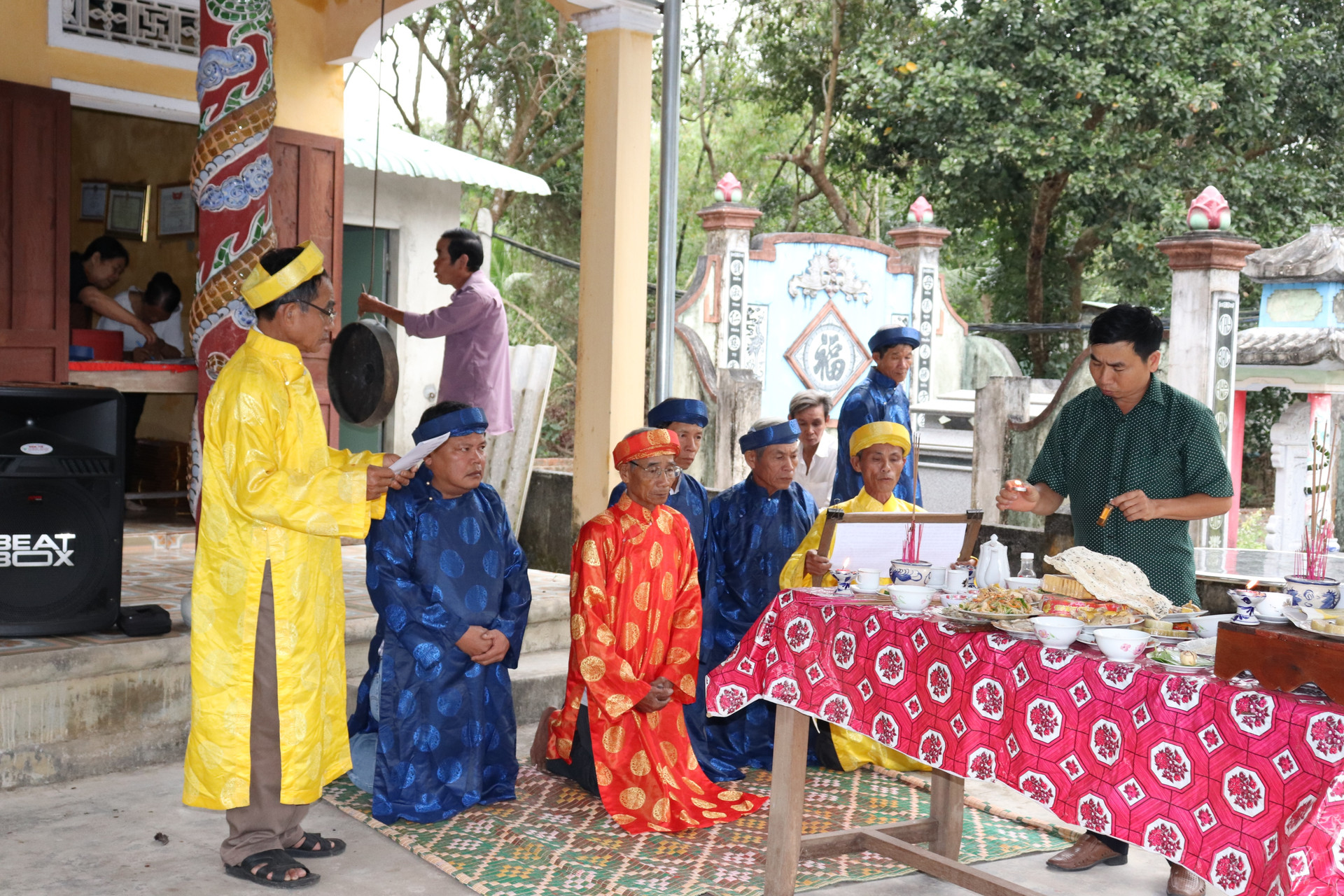
In a warm, inviting atmosphere, both sacred and intimate, isn't this the best way to remind future generations of the importance of filial piety?
From ancient times to the present day, we should both clean the graves of our ancestors and learn from the signs of the past to understand who we are, and then resolve to adjust our behavior to be righteous.
When we personally clean and repaint the scroll patterns on the screen, or redraw the faded inscriptions on the tombstone, we truly feel the sacredness of the word "origin."
For that reason, many people who leave their hometowns to make a living in foreign lands may not return home for Tet (Lunar New Year), but they always gather together for the ancestral worship ceremonies.
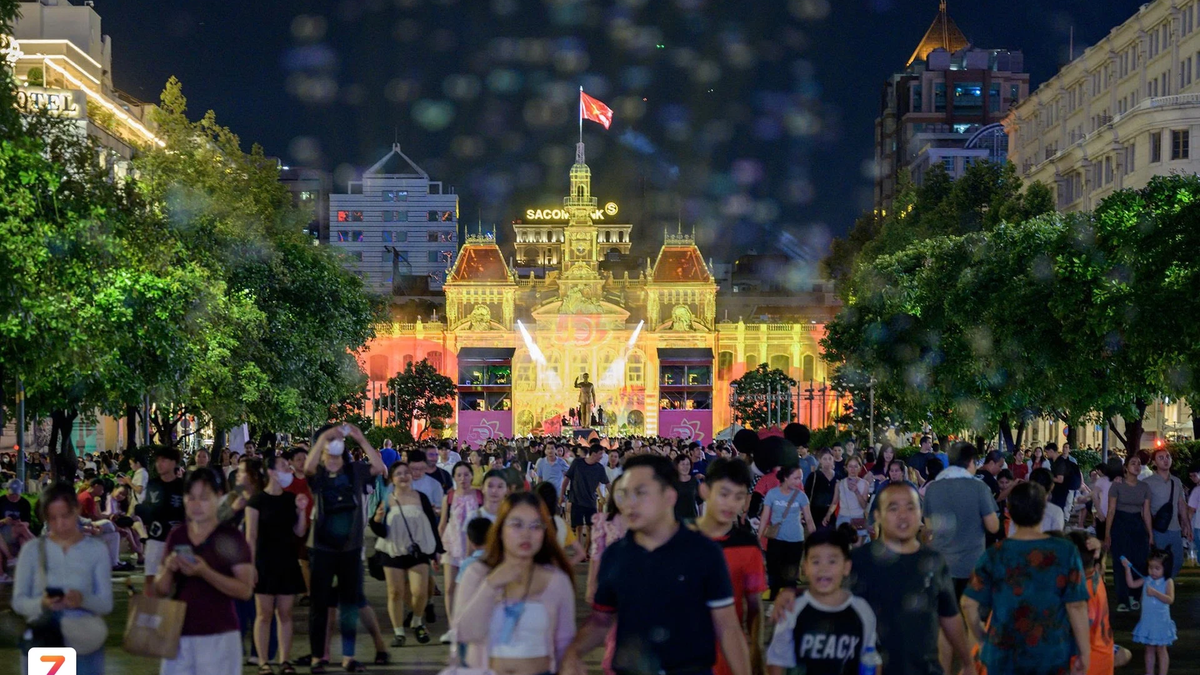
I remember the old days of the lunar calendar, when the village was bustling with people coming and going, and the busy, excited atmosphere before Tet was even better than Tet itself.
During the "new economic migration" period after liberation, almost every family and clan had members who left their hometowns to migrate to other provinces and cities.
From Dak Lak , Gia Lai to Dong Nai or Phu Khanh, Ninh Thuan, Saigon, and then at the end of the year, they pack their bags and return to their villages.
People in the yard, whether plucking leaves from apricot blossoms or casually tidying up, suddenly became noisy, calling out greetings to each other when they saw someone passing by the end of the lane.
Now that there are hardly any of the old-timers left, fewer and fewer people are returning.
Alongside cleaning and renovating the graves, each clan in the village chooses a specific day for the ancestral worship ceremony within the first week of the twelfth lunar month, so that descendants can gather together.
Then, within the clan, there may be separate commemorative days for each branch, sub-branch, or smaller lineage.
The cleaning of graves is always done before the ancestral worship ceremony, as explained by the elders, similar to how the living repaint their houses to welcome the spring.
Throughout the days of ancestral worship ceremonies, the sounds of gongs and drums from the clan temples echo throughout the village, like a call to return the children who have gone far away, reminding them of a seemingly invisible but strong bond that anchors the roots of human life.
But not every grave has relatives to take care of it.

For various reasons related to the times, war, or the circumstances within each family, there are still many unmarked, nameless graves that hold significance.
And the villagers once again have a special day dedicated to "cleaning the graves."
On that day, the young men of the village gathered to clean the neglected graves.
I wonder if other people who are far from home feel the same sense of anticipation, longing, or excitement to return to their familiar hometown during ancestral worship ceremonies or the Lunar New Year?
But for me personally, even though many years have passed since the days of traveling back and forth by train and bus, every December, hearing the train whistle still fills me with a sense of longing.
Like a child, I still cherish the flavors of old traditions, such as ancestral worship ceremonies or the bustling atmosphere of Tet (Lunar New Year)...
Source: https://baodanang.vn/trong-nang-vang-chieu-nay-3323446.html