

For the first time, 200 artifacts from the subsidy period are being displayed at the Hai Duong Provincial Museum, introducing to the public memories of that era.

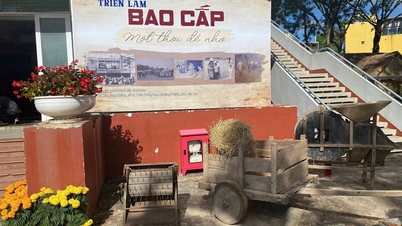
The exhibition "Remembering the Subsidy Period," commemorating Vietnam Cultural Heritage Day (November 23), is being held by the Hai Duong Museum from November 21, 2023 to February 20, 2024.
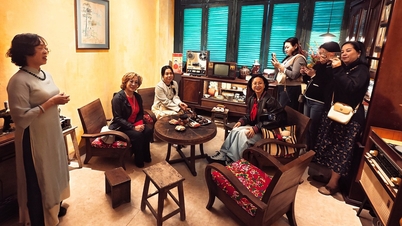
Nearly 200 documents, artifacts, and images vividly and authentically recreate the difficult and deprived lives of people during the subsidy period.

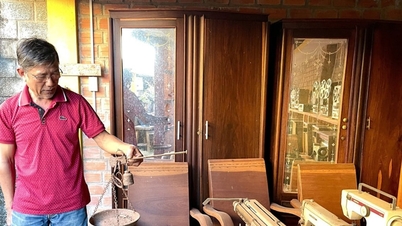
Mr. An Van Mau, 64 years old, from Hai Duong City, reenacts the scene of "reserving a spot" at a state-owned store during the subsidy era.
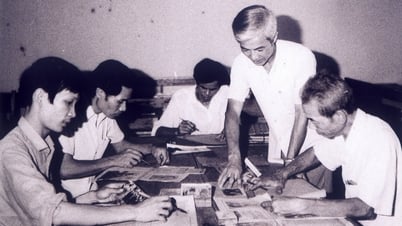
The subsidy period was from 1964-1975 in the North and from 1976-1986 nationwide. During that time, the energy and intellect of millions of people were focused on queuing to buy food, groceries, and essential goods. "Placing a brick to reserve a spot" became a symbol of that era.

Rice, peanuts, milk, sugar, enamel-coated iron bowls, aluminum trays... these were common items in state-run stores during the subsidy period.
During this period, most economic activities were subsidized by the state through a planned economy. Rice ration books and coupons were used to allocate essential goods such as rice, meat, condiments, and fuel. Each family, depending on their job position, occupation, and seniority, was specified which items and quantities they were allowed to purchase.

Mr. Dang Van Xuyen (right) talks about the peacock-patterned blanket, similar to the one he received as a wedding gift nearly 40 years ago.
According to Mr. Xuyen, during the subsidy period, many families owned peacock-patterned blankets, the kind with vibrant colors and designs of two peacocks affectionately embracing each other or four peacocks dancing.
Families who owned peacock-patterned blankets were generally considered well-off. Therefore, these blankets were often given as gifts, especially at weddings.

An undershirt, the standard for a man "worth loving" during the subsidy era, as described in the poem: "First, I love that you have an undershirt. Second, I love that you have dried fish to eat gradually. Third, I love that you wash your face with a towel. Fourth, I love that you have two pairs of pants to change into..."

A living room from the subsidy era, featuring a set of oak wood sofas, a display cabinet, a Japanese black and white television, a cassette player, and a sewing machine.


Before refrigerators and modern kitchen cabinets, every house had a cupboard made of wood or bamboo.
Kitchen cupboards are typically built with three tiers, regardless of size. The bottom tier is open, for storing pots and pans; the middle tier has widely spaced wooden slats for stacking dishes; and the top tier has a mesh screen to prevent flies and mosquitoes from getting into the food stored inside. A bamboo basket holding chopsticks, ladles, and spoons is always hung on the side of the cupboard.

![[Photo] General Secretary and President To Lam meets with National Assembly delegates from ethnic minorities.](https://vphoto.vietnam.vn/thumb/1200x675/vietnam/resource/IMAGE/2026/04/20/1776696701056_a1-bnd-8331-3342-jpg.webp)
![[Image] National Assembly discusses the implementation of the socio-economic development plan.](https://vphoto.vietnam.vn/thumb/1200x675/vietnam/resource/IMAGE/2026/04/20/1776696707422_ndo_br_img-20260420-185419-jpg.webp)























































Comment (0)