

Farming using technology
Under the scorching July midday sun, the guava orchard of Mr. Tran Dinh Long, Director of the Tan Yen Guava Consumption Cooperative in Lan Thinh village, Phuc Hoa commune ( Bac Ninh province), remains cool thanks to the rhythmic misting from the smart irrigation system. With a satisfied smile, he said: “Before, watering by hand took all day. Now, with just one tap on my phone, the trees are watered evenly, saving water and yielding higher results.”
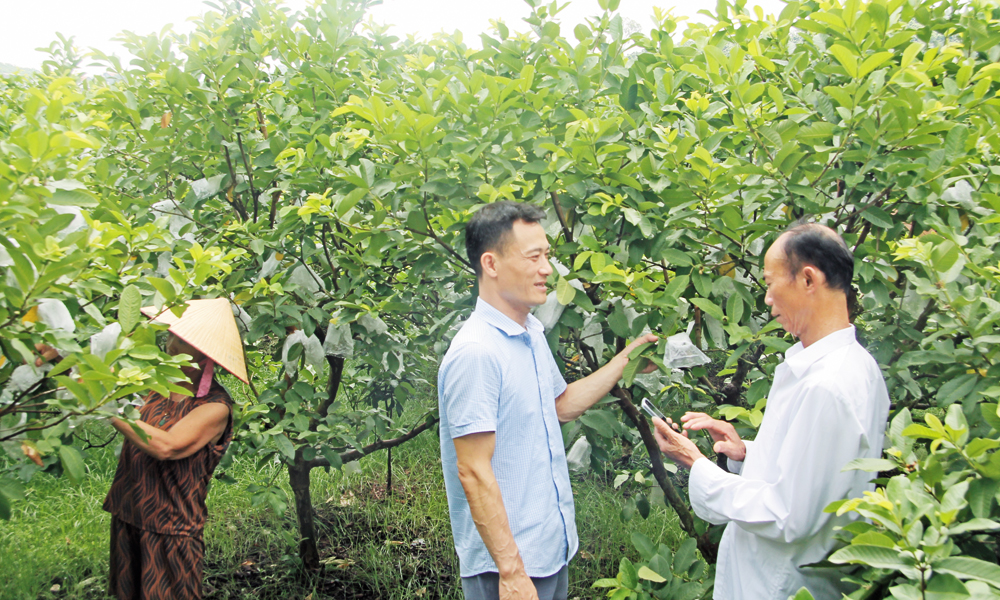 |
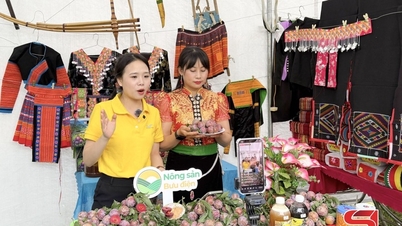
Mr. Tran Dinh Long (far right) applies digital technology in the production and consumption of pear guava. |
Mr. Tran Dinh Long's family owns over 2,000 pear guava trees and 200 early-ripening lychee trees. Since 2022, thanks to 70% of the cost subsidized by the local government, he invested in a smart irrigation system worth 65 million VND. This system allows for remote irrigation, with humidity sensors automatically adjusting the necessary amount of water, helping the trees grow evenly and healthily. On average, the cooperative supplies the market with 200 to 300 tons of pear guava annually, including regular orders from large supermarket chains such as DABACO.
Beyond just irrigation technology, the people of Lan Thinh have boldly applied mobile phone applications to manage pests and diseases, monitor crop growth, plan harvests, and especially distribute agricultural products through online platforms. Thanks to these applications, their pear-shaped guavas – a new signature product of the locality – have reached many provinces and cities, gaining popularity among consumers for their quality and unique flavor.
Phuc Hoa commune, famous for its early-ripening lychee, is one of three localities nationwide selected to pilot the "e-commerce commune" model for the 2023-2025 period. Lan Thinh village was chosen as the starting point for this model. A digital map of local agricultural products has been built, connecting with cultural landmarks and major production areas, creating an effective network for promotion and trade facilitation. To date, nearly 200 farmer stalls in the commune have been listed on e-commerce platforms such as Postmart, Voso, ShopeeFarm, etc. No longer facing the "bumper harvest, low prices" situation or dependence on middlemen, farmers are now proactively approaching and understanding consumer preferences and being more flexible in production. As a result, income has increased, and the market has become more stable and sustainable.
Not only in Lan Thinh smart village, but other localities such as Kha Ly Thuong (Van Ha ward), Nam Dong (Hiep Hoa commune), Tam Hop (Tu Lan ward), Cam Xuyen (Xuan Cam commune)... are also gradually "smartifying" rural areas. Internet coverage is widespread, from village cultural centers and health stations to schools. People can easily access wireless networks to update information, study, work remotely, or contact public services. In the fields, rice transplanters, drones spraying pesticides, and smart sensors monitoring soil moisture, nutrients, and plant diseases are no longer new. Technologies previously only seen in urban areas or high-tech agricultural models are now infiltrating even the smallest plots of land.
"Digitizing" rural areas
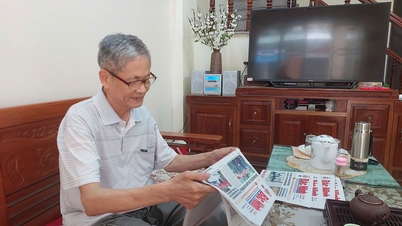
Digital transformation not only improves production but also contributes to raising the quality of life in rural areas. Elderly people can now use smartphones proficiently. They read online newspapers, watch their favorite programs such as traditional opera and folk music, listen to folk songs, and make video calls to their children and grandchildren working far away.
| Thanks to digital technology, farmers now hear not only the sound of kite flutes or rooster crowing, but also phone calls reminding them of watering schedules, messages about new orders from e-commerce platforms, and video calls filled with the laughter of their children and grandchildren far away. |
Ms. Chu Thi Yen, 72 years old, living in Kha Ly Thuong residential area (Van Ha ward), shared: “My child works in Taiwan (China), and calls me via video every week. It feels like my child is right next to me. Before, we had to write letters and wait for months to see each other; now, with just one click, we can see each other's faces.” Home-installed cameras also help children and grandchildren feel more secure knowing they can monitor their loved ones remotely. Care and family bonding are maintained regularly, regardless of geographical distance.
Instead of having to queue at the commune or ward People's Committee, people can now complete many administrative procedures right on their phones. Digital document management systems and online public services have been widely implemented, making administrative work more transparent, reducing procedures, and saving time for citizens. In particular, digital skills training classes are organized in many villages and communes. People are guided on how to use smartphones, access the internet safely, sell goods online, and promote local agricultural products; young people are encouraged to start digital businesses based on traditional products; and rural women are taught how to protect their rights online and participate equally in community activities.
Amidst the rapidly spreading wave of technology, the traditional cultural values of the countryside are still preserved. The Quan Ho folk songs of Bac Ninh still resonate, the melodious Chèo opera still echoes under the village communal house, and the green bamboo groves remain as symbols of resilience. But now, the sounds in the ears of farmers are not only the sound of kite flutes or rooster crowing, but also phone calls reminding them of watering schedules, messages announcing new orders from e-commerce platforms, and video calls filled with the laughter of distant children... From traditional villages to smart hamlets is a journey that not only changes infrastructure and technology but also transforms the mindset, awareness, and habits of rural people. It is a harmonious blend of traditional "roots" and modern "newness," between enduring cultural values and the power of digital transformation. This is the foundation for building rural areas that are not only prosperous and civilized but also smart and sustainable in the digital age.
Source: https://baobacninhtv.vn/tu-lang-truyen-thong-den-thon-thong-minh-postid422707.bbg

![[Image] National Assembly discusses the implementation of the socio-economic development plan.](https://vphoto.vietnam.vn/thumb/1200x675/vietnam/resource/IMAGE/2026/04/20/1776696707422_ndo_br_img-20260420-185419-jpg.webp)
![[Photo] General Secretary and President To Lam meets with National Assembly delegates from ethnic minorities.](https://vphoto.vietnam.vn/thumb/1200x675/vietnam/resource/IMAGE/2026/04/20/1776696701056_a1-bnd-8331-3342-jpg.webp)



































































Comment (0)