

- The beauty of the cultural tradition of worshipping Heaven.
- The unique longevity noodles of the Chinese people.
- Unlocking the tourism potential of traditional Chinese pastries.
From the guardian deity in legends to the stone lion statues found in temples, assembly halls, and many homes, the Gate God has become a symbol of peace and the aspiration for goodness.
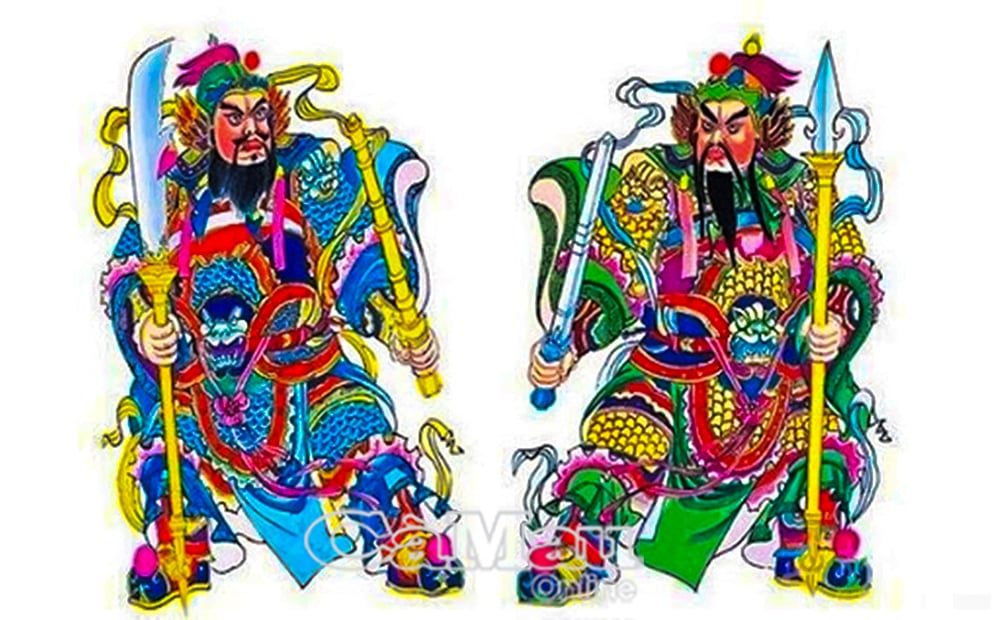 Images of the two Gate Gods according to folklore.
The worship of Gate Gods has a long history in Chinese culture. Initially, Gate Gods did not have a specific form; later, they appeared in the form of animal heads guarding gates, created by Lu Ban during the Spring and Autumn period, and then in reliefs during the Eastern Han dynasty. Legend tells of two divine generals, Shen Tu and Yu Lei, human deities with the power to ward off evil, considered the earliest Gate Gods. By the Sui and Tang dynasties, the images of the two military generals Qin Shubao and Yu Chi Gong became popular and were considered the standard for Gate God paintings.
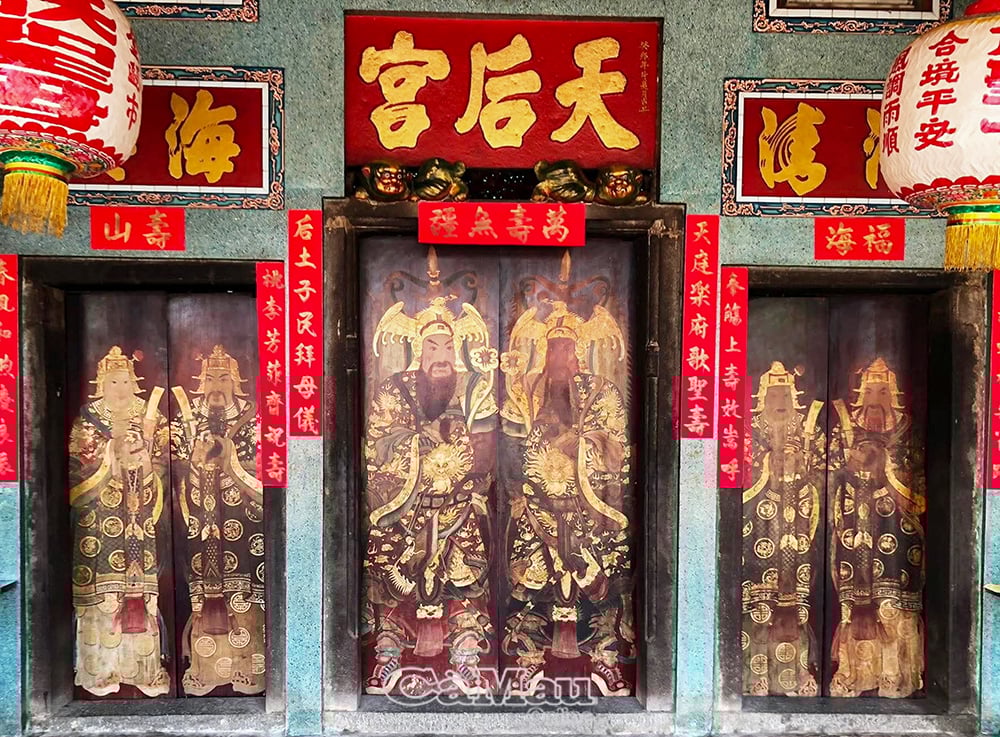 The guardian deity is depicted on the door of the Thien Hau Temple.
In Ca Mau , the worship of the Gate God is clearly present in the assembly halls and temples of the Chinese community, such as the Thien Hau Temple and the Ong Bon Temple, as well as some temples of the Kinh people, such as the Than Minh Temple (An Xuyen ward). In these religious institutions, the Gate God is often represented by stone lion statues placed on either side of the gate, symbolizing the balance of yin and yang, and signifying protection and safeguarding. In many Chinese families, especially those of the Cantonese and Teochew lineages, paintings of the Gate God depicting two military generals are still displayed on the main door.
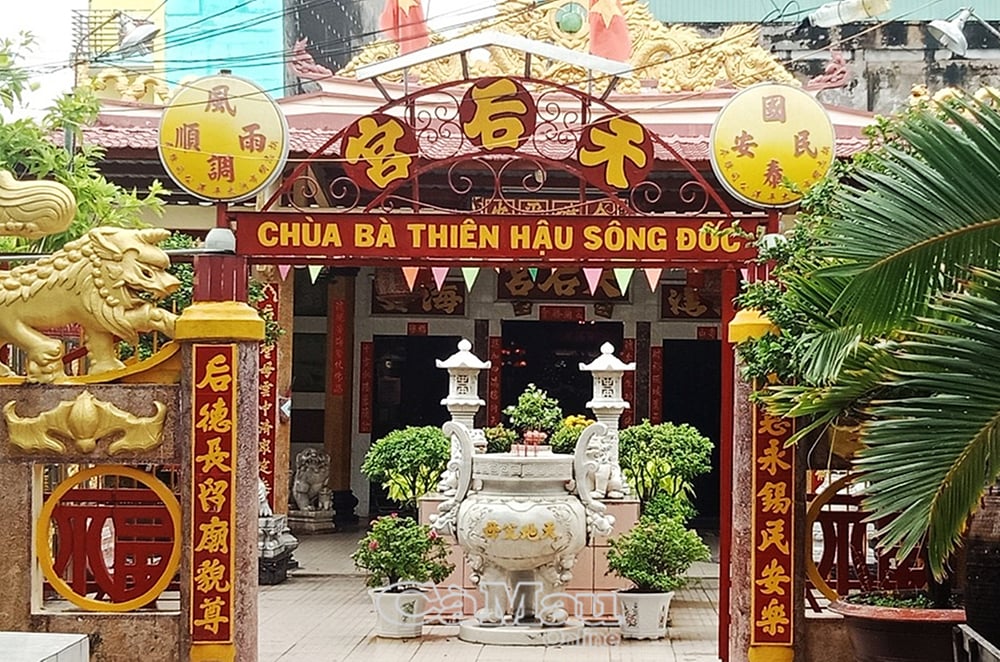 The Thien Hau Temple in Song Doc is one of the places that practices the worship of the Gate Goddess.
Nowadays, the worship of the Gate God is no longer as large-scale as before, mainly maintained in the form of lighting incense in front of the door and making offerings on the 2nd and 16th days of the lunar month. The offerings usually include fruits, tea, wine, incense, and candles, expressing sincerity in praying for peace.
The worship of the Gate God embodies many Eastern cultural values: from the anthropomorphic conception of deities and the emphasis on harmony, to the belief that good triumphs over evil and the aspiration for peace within the community. In a multicultural environment like Ca Mau, this belief contributes to the unique identity of Chinese architectural spaces and serves as important material for the study of history, culture, and traditional education .
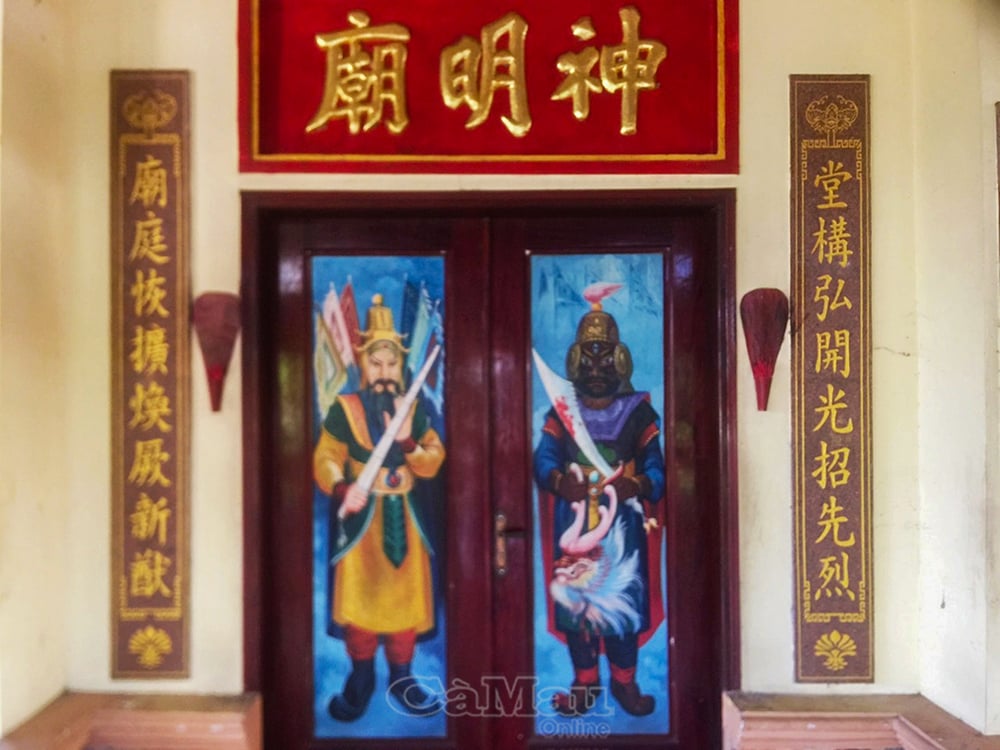 Images of the two Gate Gods on the door of the Than Minh Temple in An Xuyen ward.
Despite being simplified over time, the presence of stone lion statues, paintings of the Gate God, and worship practices still show that this belief has not faded away. The worship of the Gate God not only enriches the spiritual life of the Chinese community but also has the potential to become a highlight in the development of cultural and religious tourism in Ca Mau.
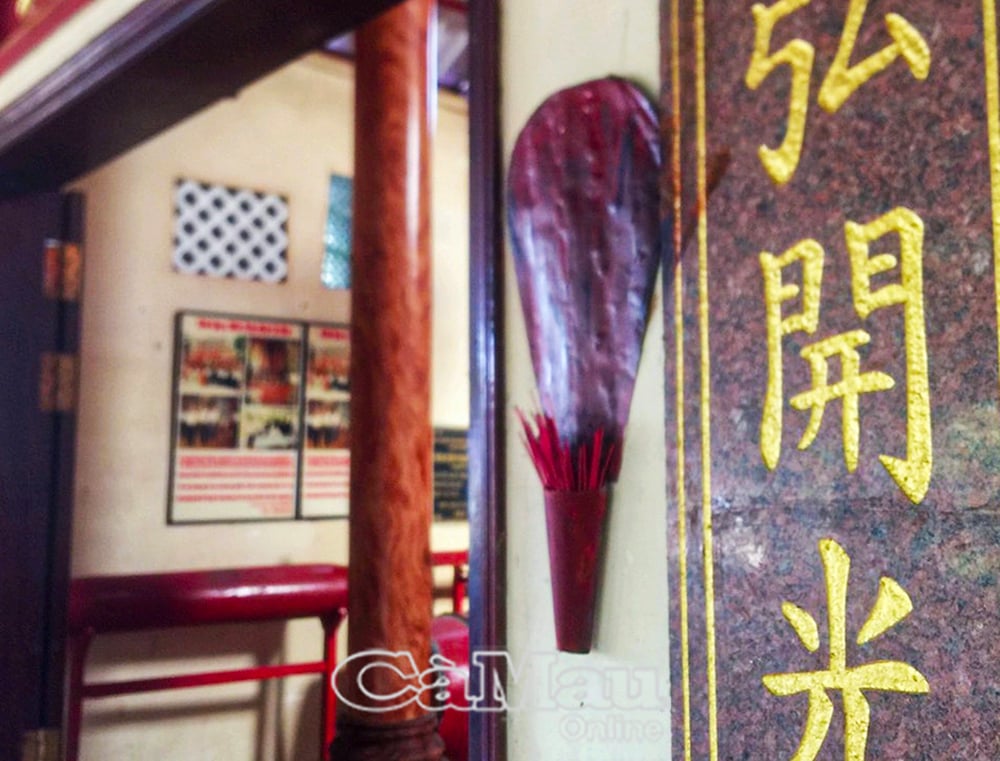 The place for offering incense to the guardian deity at the temple entrance.
Preserving and promoting the value of the Gate God worship tradition is essential to safeguarding the cultural identity of the Chinese community and contributing to enriching the diverse cultural landscape of Ca Mau and the Southern region of Vietnam.
Dang Minh
Source: https://baocamau.vn/tuc-tho-mon-than-cua-nguoi-hoa-a124562.html

![[Photo] General Secretary and President To Lam and the President of the Philippines hold talks.](https://vphoto.vietnam.vn/thumb/1200x675/vietnam/resource/IMAGE/2026/06/01/1780283481955_vna-potal-tong-bi-thu-chu-tich-nuoc-to-lam-va-tong-thong-philippines-hoi-dam-8797519-1429-jpg.webp)

















![[Image] Hanoi Police officially crowned champions of V-League 2025/2026](https://vphoto.vietnam.vn/thumb/1200x675/vietnam/resource/IMAGE/2026/05/31/1780244769054_ndo_br_039d561b692be875b13a-jpg.webp)
![[Photo] The General Secretary, President and his wife begin their state visit to the Philippines.](https://vphoto.vietnam.vn/thumb/1200x675/vietnam/resource/IMAGE/2026/05/31/1780230559452_anh-man-hinh-2026-05-31-luc-19-28-11.png)
















































Comment (0)