In an interview with Fox News on June 10, President Trump described the incident as "a miracle," with both crew members surviving what he believes could have been a disaster.
According to Trump, the Apache helicopter was flying at a low altitude near Iranian territory when it was struck by a suicide drone. The drone became stuck in the cockpit, between the two pilots.
"The UAV caught fire but didn't explode. The two pilots had to find a way to land the helicopter in conditions where the temperature inside the cabin rose very high," Trump recounted. Finally, the helicopter landed on the sea surface and both pilots were safely rescued.
Speaking later at the White House, the US President went on to emphasize that the UAV had become stuck in the cockpit and caught fire, but the warhead did not detonate.
"It was truly a miracle. The two pilots showed incredible skill, but they were also very lucky," Trump said, praising the rescue operation as "amazing."
Mystery surrounding the mid-air collision
President Trump did not specify the type of UAV involved. However, some sources familiar with the matter said the aircraft was believed to be a Shahed suicide drone developed by Iran, a type of weapon that has appeared numerous times in conflicts in the Middle East and Eastern Europe.
The U.S. Central Command (CENTCOM) has not yet issued an official conclusion regarding the cause of the incident. The agency stated that an investigation is underway to determine exactly what happened.
According to sources cited by CNN , US officials are also unable to confirm whether the Iranian UAV intentionally targeted the Apache or whether it was merely an unintentional collision under complex combat conditions.
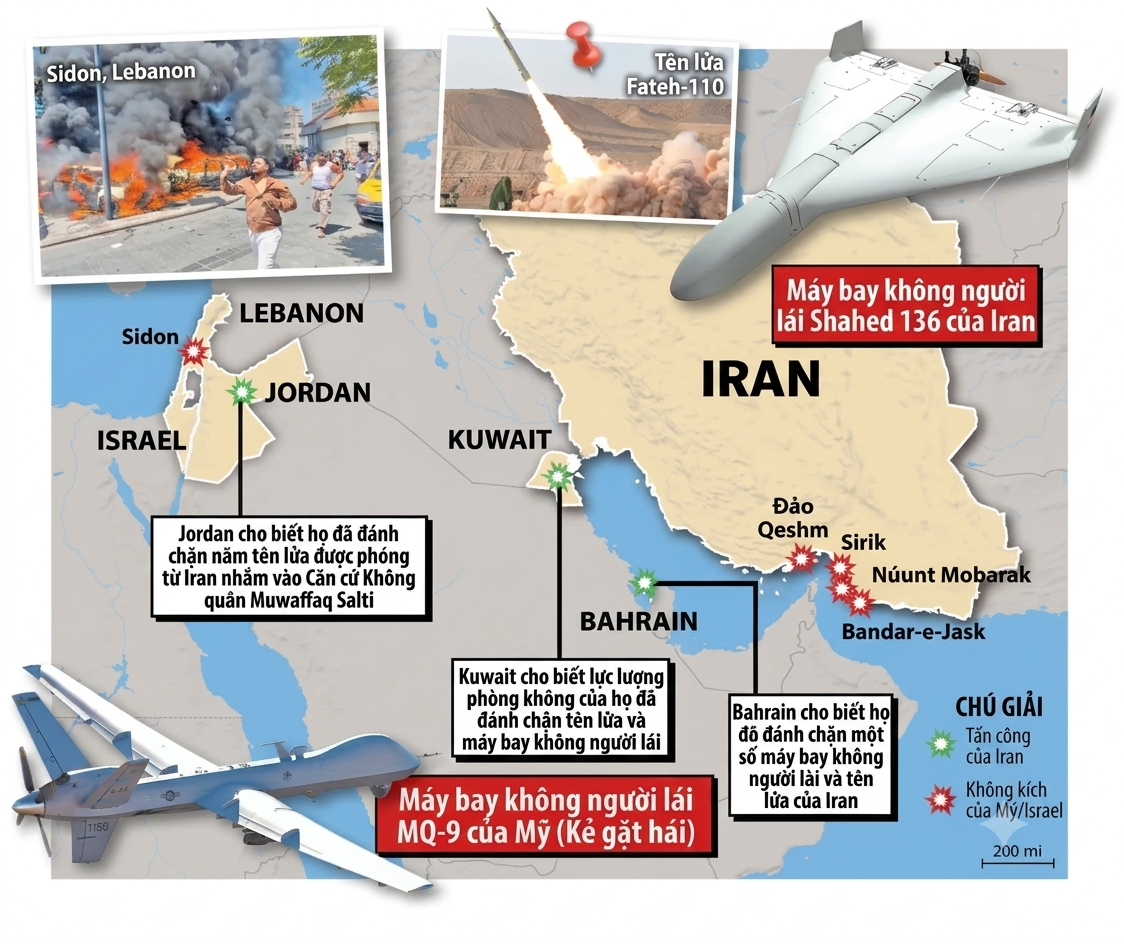 |
The Central Command (CENTCOM) announced that the U.S. launched new attacks targeting multiple locations in Iran on June 10. Photo: New York Post. |
Tehran, for its part, has not claimed responsibility for the incident. Foreign Minister Abbas Araghchi hinted that it could be an accident or a consequence of US military activity near Iranian territory.
"Foreign forces operating too close to our territory always face the risk of human error, accidents, or even being hit by stray bullets," Araghchi stated.
Why did the Apache cockpit withstand the impact?
One of the questions that has particularly interested observers is how the two pilots managed to survive when a suicide drone carrying explosives crashed directly into the cockpit area.
According to military technical documents, the AH-64 Apache is designed with a very high level of crew protection. The cockpit uses boron carbide composite armor plates combined with a Kevlar lining to absorb and prevent shrapnel.
This design allows the Apache to withstand large-caliber rounds from heavy machine guns or anti-aircraft artillery shrapnel. The two pilots are also housed in separate compartments, separated by thick acrylic and polycarbonate material, ensuring that one pilot can still control the aircraft if the other is hit by gunfire.
However, experts say that the case of a UAV getting stuck in the cockpit without exploding is an extremely rare situation.
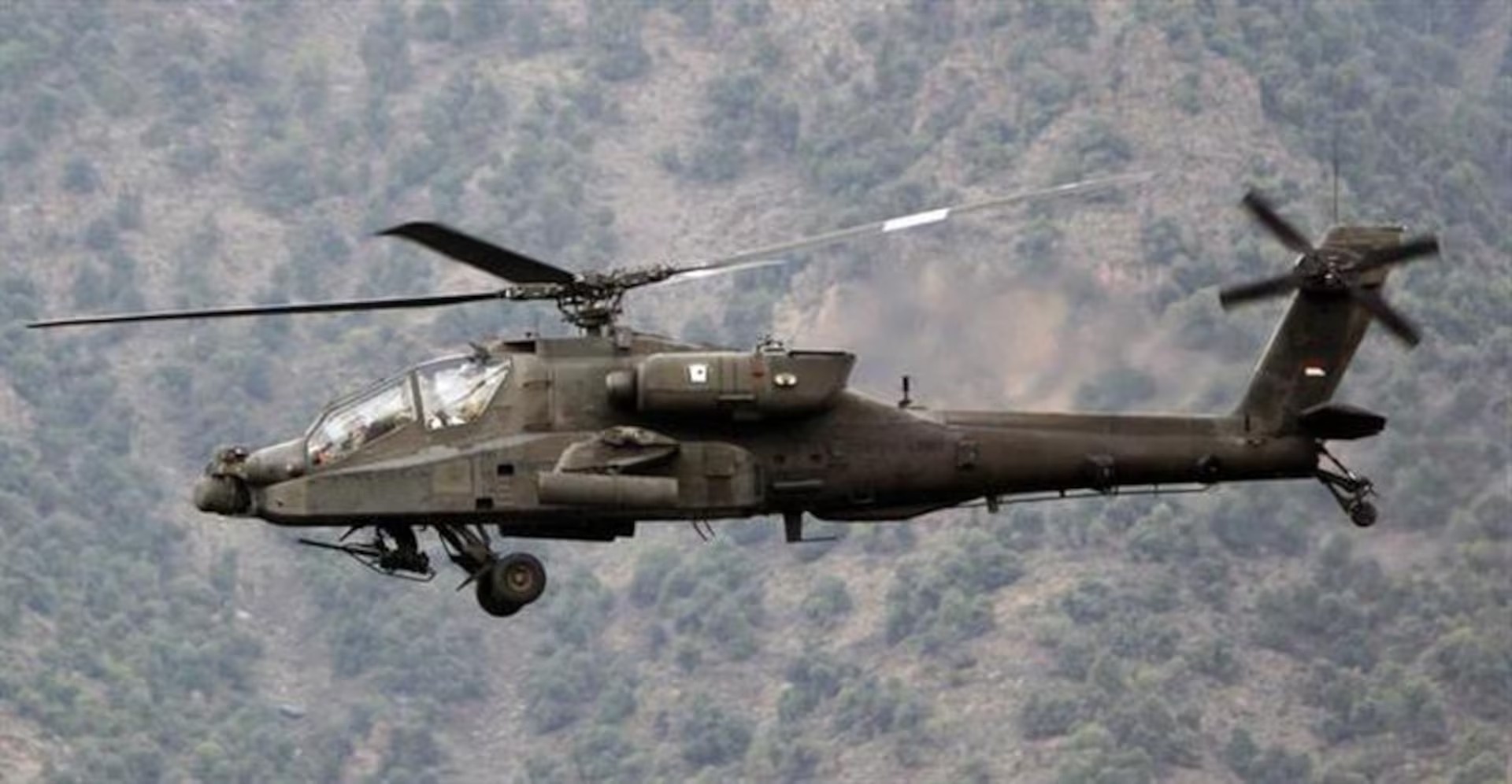 |
US AH-64E helicopter. Photo: Reuters. |
Cameron Chell, CEO of defense technology company Draganfly, believes there are several possible causes for the incident. He suggests the Apache could have collided with the UAV during interception, flown into debris after the target was shot down, or experienced a technical malfunction while pursuing the UAV.
"Apache regularly performs anti-UAV missions. In nighttime combat conditions or with limited visibility, unintended collisions are entirely possible," he said.

To date, CENTCOM has not released the final results of its investigation. However, what has been revealed suggests this is one of the rarest military aviation incidents since US-Iran tensions escalated recently.
Source: https://znews.vn/uav-iran-mac-ket-giua-hai-phi-cong-apache-my-post1658785.html
![[Image] Ho Chi Minh City: Ma Lang area, Chicken-Rice Market about to change its appearance](https://vphoto.vietnam.vn/thumb/1200x675/vietnam/resource/IMAGE/2026/06/25/1782377698627_ndo_br_m1-jpg.webp)

![[Image] Schools organize meetings and introduce teaching models to students admitted to grade 10.](https://vphoto.vietnam.vn/thumb/1200x675/vietnam/resource/IMAGE/2026/06/25/1782368077271_ndo_br_z7970052192242-1ec8daeb77a6eed1a4e9f58c564ddd3e-jpg.webp)
![[Photo] General Secretary and President To Lam receives Palestinian Ambassador Saadi Salama](https://vphoto.vietnam.vn/thumb/1200x675/vietnam/resource/IMAGE/2026/06/25/1782365384740_a1-bnd-9423-8322-jpg.webp)