


Recently, the application of artificial intelligence (AI) to scientific research serving regional development has yielded outstanding results, helping to enhance the region's capacity to respond to the challenges and constant changes in economic and social life.
Since 2022, the Politburo has issued six resolutions on regional economic development until 2030, with a vision to 2045. Accordingly, each region is linked to a different important strategic goal. To formulate policies that align with the direction set by the Party and the State, reliable and accurate scientific data from a team of social and humanities scientists is needed. Traditional research methods reveal many limitations when handling the enormous and complex volume of data in the fields of economics, culture, society, and environment. Thanks to the assistance of AI, the quality and efficiency of research have been significantly improved.
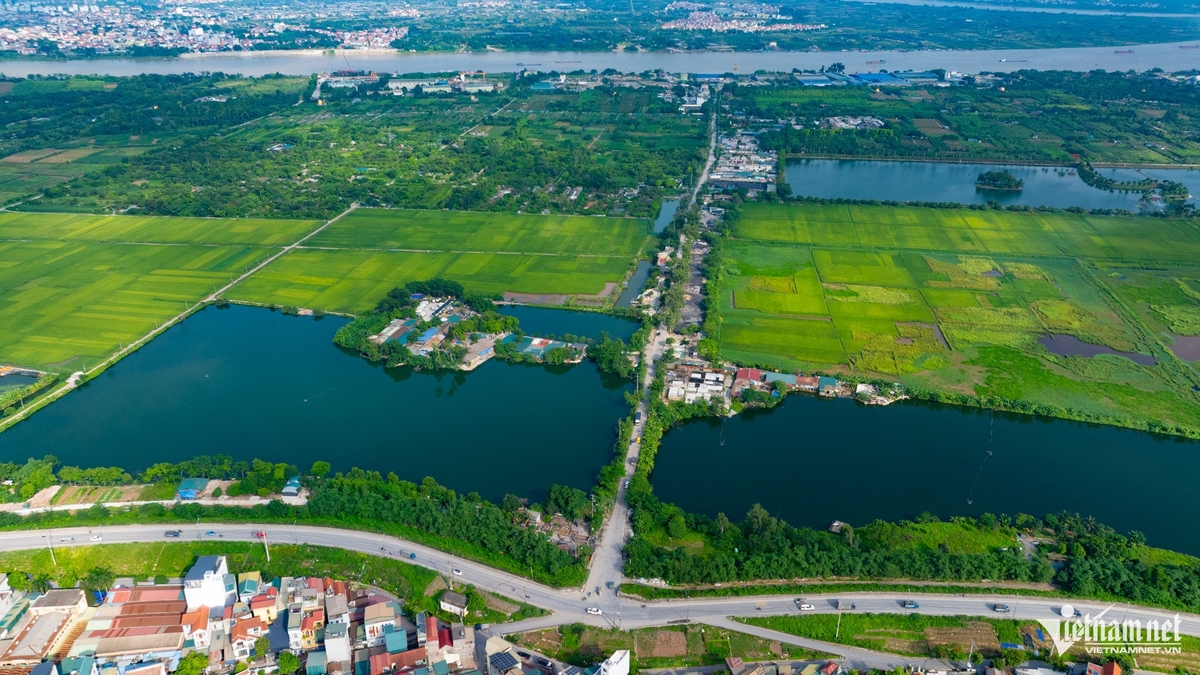
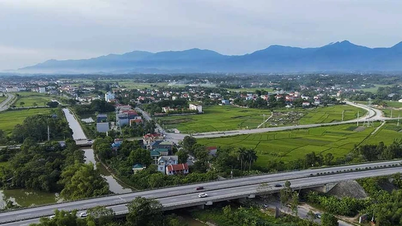
A prominent area where AI is involved in regional research is spatial data analysis and monitoring. Algorithms help analyze images to detect changes in land use and forest area over time. From this data, AI helps to map and monitor land use changes effectively. The combination of Geographic Information Systems (GIS) and AI opens up new avenues in spatial analysis for regional development.
This method helps researchers identify geographical and economic problem clusters, recognize socially vulnerable areas, and provides arguments for planners to determine priority areas when formulating policies. AI can also predict urban expansion or population decline in a region years in advance, enabling proactive rather than reactive management.
One of the major challenges in regional development today relates to the environment and climate change. AI is proving to be a very useful tool through its ability to analyze big data from monitoring stations, sensors, and satellite imagery. Monitoring changes such as deforestation, soil erosion, and urban expansion becomes easier and more effective. This is of great significance in protecting regional ecosystems, as intervention policies can be designed more quickly. For example, AI's early prediction of floods and landslides will help localities better evacuate residents and provide timely relief.
With its ability to integrate interdisciplinary knowledge, AI can identify emerging industries, analyze and find areas where a region has an advantage, and provide practical suggestions for building a local economic development structure. In addition, AI tools can help process citizen feedback on online platforms and forums, enhancing information transparency and encouraging community participation in policy-making.
The use of AI in scientific research in general, and regional development research in particular, is an irreversible trend. However, experts from the Institute of Social Sciences of the Central and Central Highlands regions warn that the misuse of AI could distort the research of scientists.
Current AI tools are trained on massive amounts of data from the internet, but this is not always reliable. Some of the information AI provides may seem plausible at first glance, but it may actually be inaccurate or unverified. Meanwhile, data in regional development science research is often diverse and heterogeneous, including both qualitative data and scattered literature from various sources.
Therefore, researchers must filter and verify the data provided by AI by closely combining background knowledge, understanding of society, history, and regional characteristics to assess whether the AI's results are reasonable. Subjectivity will compromise the reliability of research results, leading to policy recommendations based on biased findings that can have unpredictable consequences when applied in practice. Ultimately, AI is merely a tool; humans are the subjects of scientific research.
Source: https://nhandan.vn/ung-dung-ai-vao-nghien-cuu-phat-trien-vung-post961968.html







![[GALLERY] The super-cheap Claude AI API turns out to be selling user data.](https://vphoto.vietnam.vn/thumb/402x226/vietnam/resource/IMAGE/2026/05/25/1779691077049_cl-6-png.webp)




![[GALLERY] A completely different iPhone for the 20th anniversary edition](https://vphoto.vietnam.vn/thumb/402x226/vietnam/resource/IMAGE/2026/05/25/1779686871893_212-jpg.webp)








































































Comment (0)