


Both Vietnam and China are located in the heart of the Asia- Pacific region, experiencing strong economic growth and a growing demand for food, especially livestock products. Both countries possess some of the largest livestock populations in the region and the world.
Dr. Nguyen Xuan Duong, President of the Vietnam Livestock Association, shared: “The forum is not only an opportunity to exchange knowledge but also a platform for cooperation and sustainable development of the pig farming industry in the region. Technology and AI will create new opportunities, helping to improve productivity, quality, and minimize disease risks.”
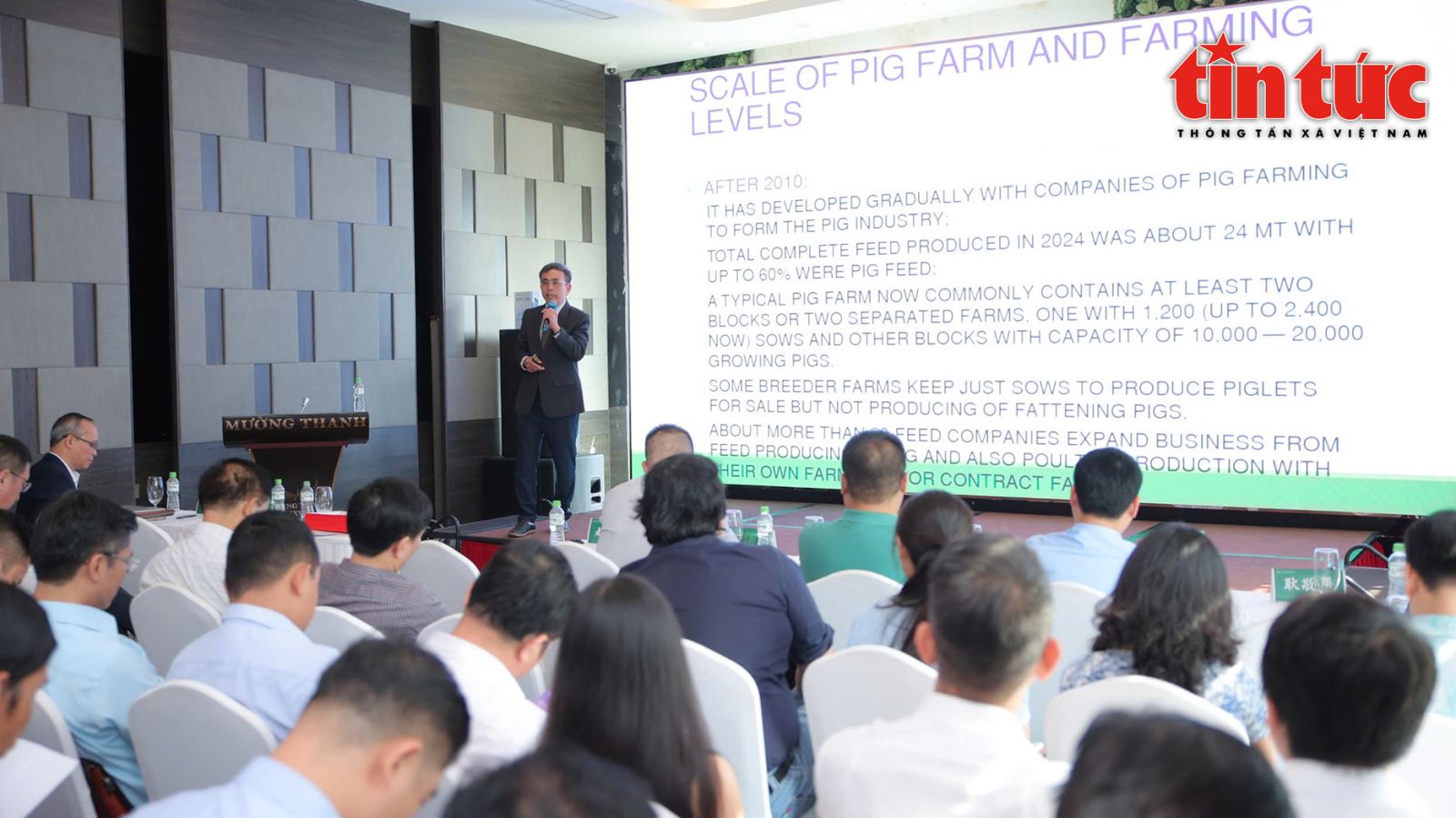
Experts also presented solutions for applying digital technology in the livestock industry, including using AI to monitor the health of pig herds, analyzing big data to optimize farming processes, and controlling diseases more effectively. One of the highlights was the application of AI in predicting the health status of pigs, thereby helping pig farmers take timely intervention measures and minimize losses due to diseases such as African Swine Fever (ASF).
The program also discussed the state of the livestock industry and advancements in technology application in China. China currently has the world's largest pig herd with 640 million pigs, while Vietnam ranks sixth globally with approximately 50 million. Vietnam is also the world's second-largest poultry producer, after China.
Associate Professor Dr. Le Van Phan from the Vietnam Academy of Agriculture emphasized the importance of technology in controlling diseases, especially African swine fever. Dr. Phan stated that rapid testing technology, smart monitoring, and new prevention methods have helped minimize the spread of the disease and create a safer farming environment.
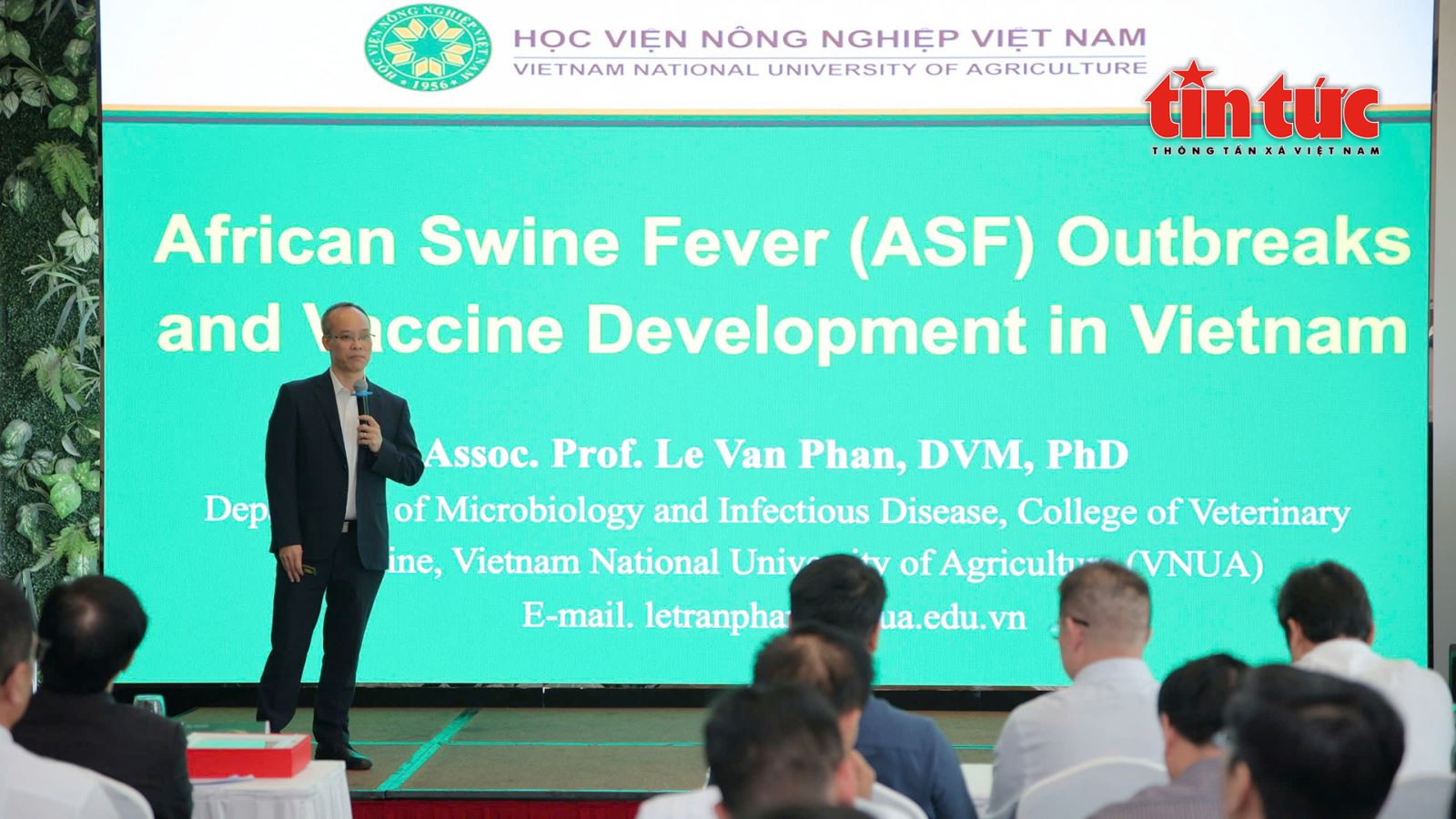
The forum provides an opportunity for scientists, experts, and partners from China and Vietnam to share experiences on breeding management, nutrition, disease prevention, and technology application in the livestock industry. These solutions will help improve productivity, product quality, and the sustainable development of the pig farming industry in both countries in the future.


![[Photo] Prime Minister Pham Minh Chinh presides over a meeting on private sector economic development.](/_next/image?url=https%3A%2F%2Fvphoto.vietnam.vn%2Fthumb%2F1200x675%2Fvietnam%2Fresource%2FIMAGE%2F2025%2F12%2F20%2F1766237501876_thiet-ke-chua-co-ten-40-png.webp&w=3840&q=75)


































































![[Infographic] Controlling rabies in pet dogs and cats](https://vphoto.vietnam.vn/thumb/402x226/vietnam/resource/IMAGE/2025/12/21/1766288809667_infographic-kiem-soat-benh-dai-tren-dan-cho-meo-nuoi20251221091138.webp)




















Comment (0)