

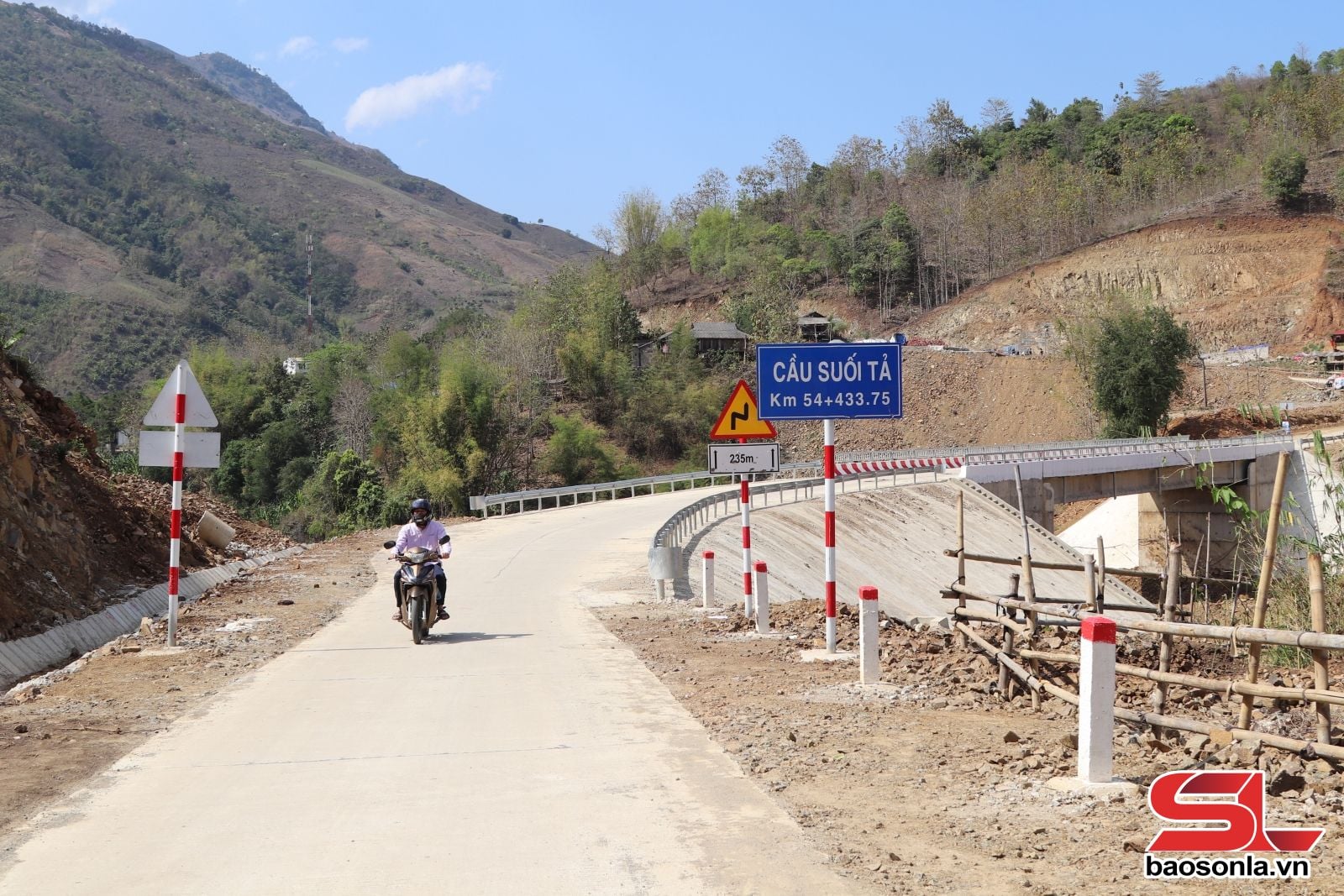
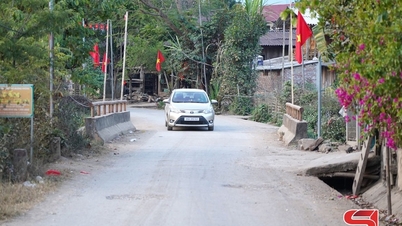
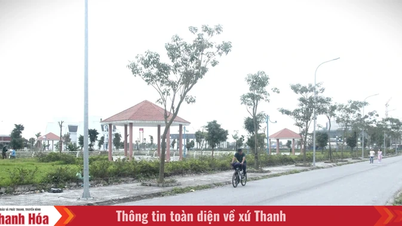
I remember a few years ago, our trip to Chieng Hoa commune was a long and arduous one. On our motorbike, we traveled along narrow dirt roads with many remote forest sections; sudden rains made the already difficult road even more slippery and muddy. Returning to Chieng Hoa this time, we are delighted to see that the road connecting the center of Muong La commune to Chieng Hoa commune (part of the National Highway 279D project connecting to National Highway 37) is 98% complete, making travel much more convenient for the local people.
After the completion of the National Highway 279D project connecting to National Highway 37, it will be a "lifeline" helping Chieng Hoa escape its isolation, connecting it with other areas, facilitating travel and trade for the people, and promoting economic development in the area. Ms. Giang Thi Thanh, from Mao village, Chieng Hoa commune, happily said: "We are very happy. The road is paved, making travel much easier. Especially when someone in the family is sick and needs to go to the hospital, it only takes about 30 minutes, no longer needing to take a boat to Ta Bu area and then loop up to Muong La like before, which took a lot of time."
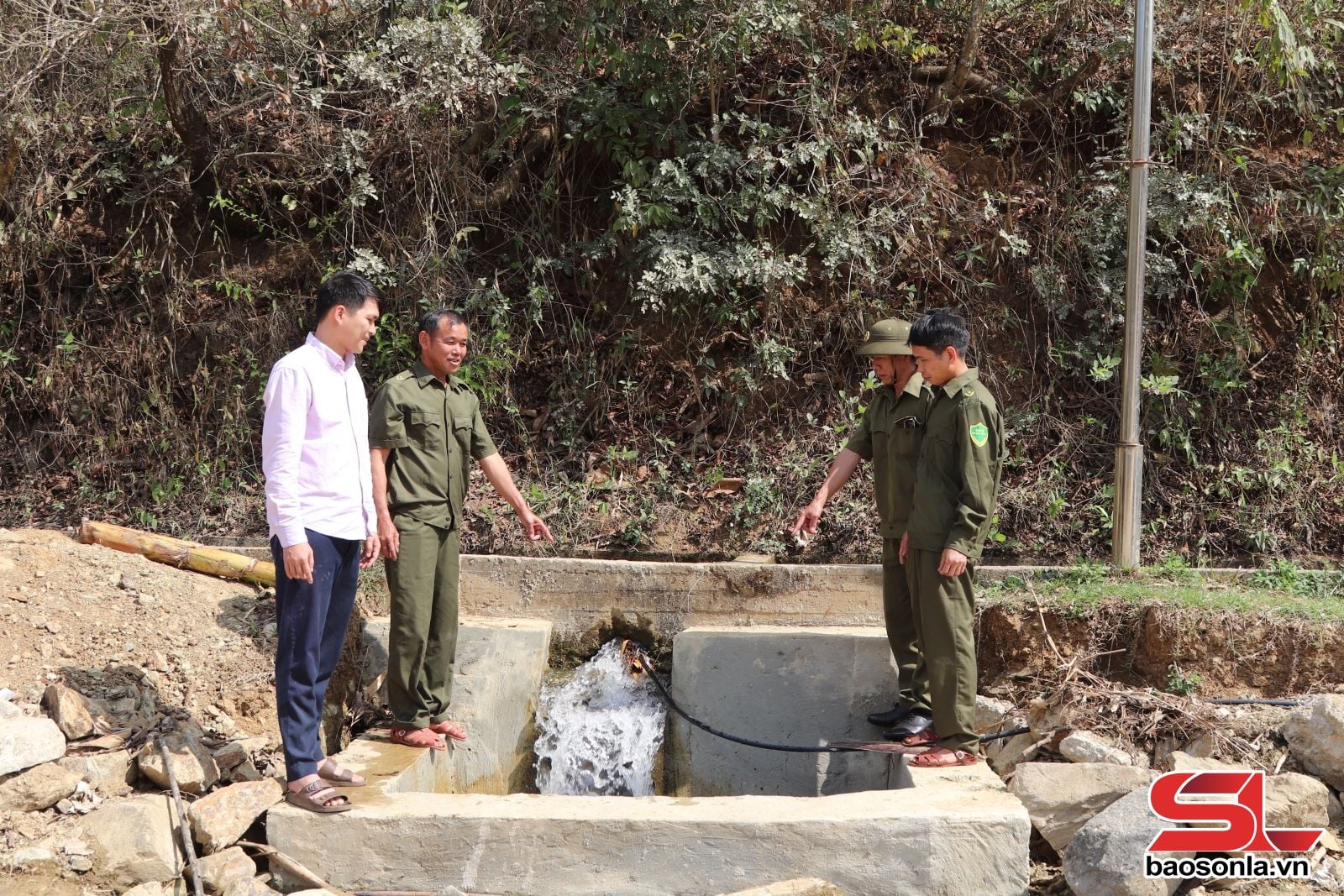
After the merger, Chiềng Hoa commune has a natural area of over 29,000 hectares. Located along the Đà River, it has many particularly difficult-to-access highland villages. Most roads leading to these villages are still dirt roads, steep, prone to landslides, and isolated during the rainy season. Immediately after the merger, the commune reviewed the entire state of rural infrastructure in the area, especially transportation, and effectively implemented infrastructure investment projects when allocated funds from national target programs. At the same time, the commune prioritized investment resources for essential infrastructure in remote villages, such as paving roads, irrigation systems; building school buildings, community cultural centers, etc. It directed villages within the commune to implement projects, raising awareness and mobilizing people to voluntarily donate land and labor to ensure the projects are completed as soon as possible.
Currently, the entire commune has 397.5 km of roads, of which only 39.5 km of commune roads and 25.8 km of village roads have been paved; the remaining 332 km of commune roads, village roads, and inter-village roads have not yet been paved. From 2025 to the present, the commune has received investment for 10 rural infrastructure projects, including 5 road maintenance and repair projects; 4 irrigation projects for 15 hectares of double-cropping rice; and 1 water supply project, with a total investment of over 20 billion VND. To date, these projects have been handed over and put into use, serving the lives and activities of the people.
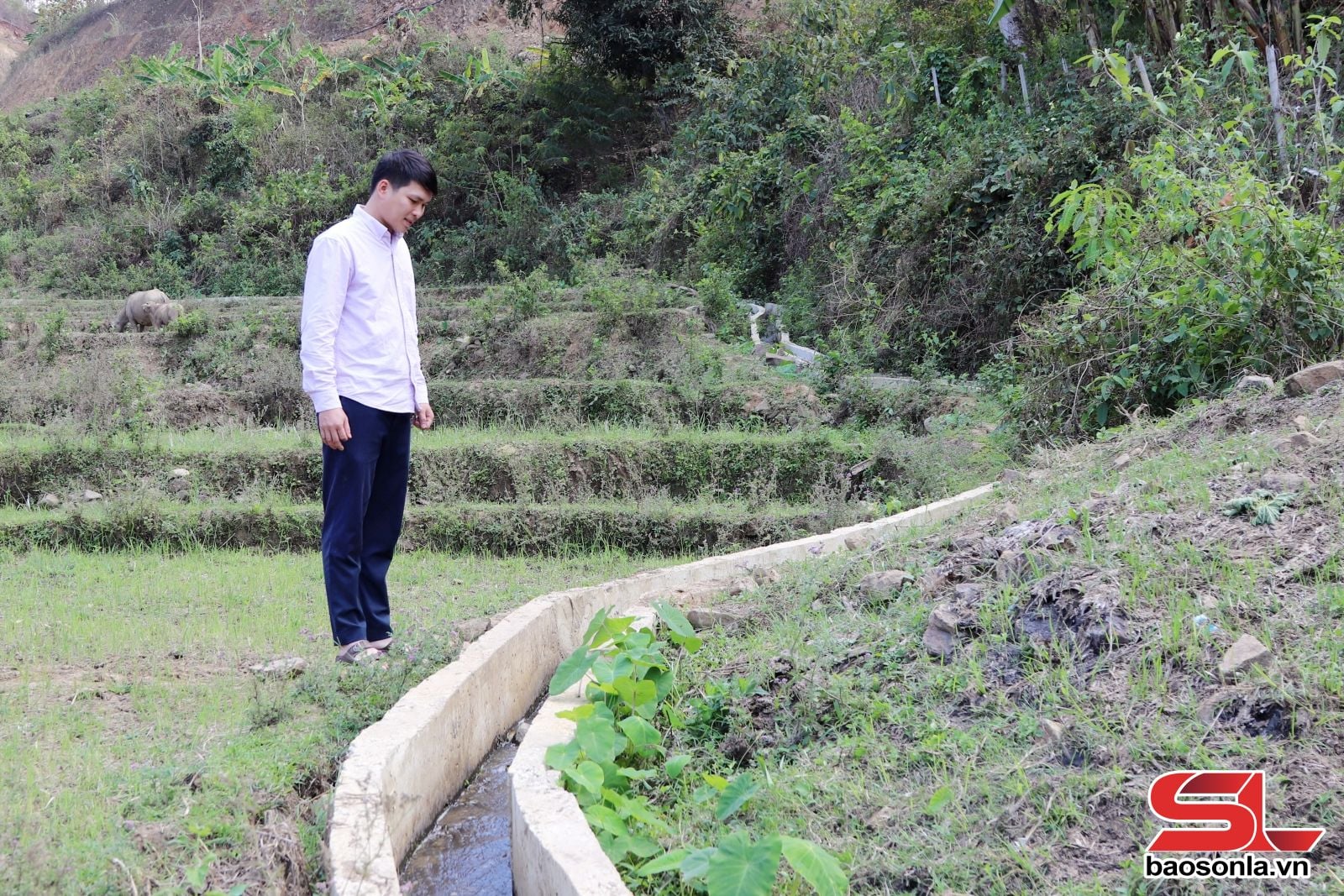
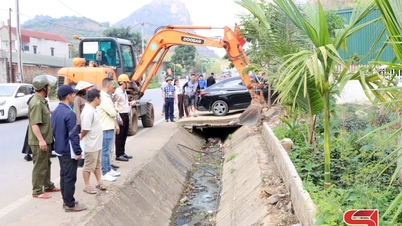
The irrigation canal in Ta village, Chieng Hoa commune, was started and completed in December 2025. With a length of 1 km, it provides irrigation water for 10 hectares of rice fields for two seasons. Mr. Tong Van Thuong, Party Secretary and Head of Ta village, said: "The villagers are very happy that the project has been invested in and improved to serve agricultural production, helping us no longer have to worry about waiting for water for planting as before. Thanks to this, the spring rice crop this year is developing well, and we hope for a bountiful harvest."
Chieng Hoa is a particularly disadvantaged commune with no local revenue sources, so 100% of its infrastructure investment relies on support from state programs and projects. The income of the people is low, mainly subsistence agriculture, so mobilizing cash contributions for rural road construction under the "State and people working together" principle is limited. In addition, the terrain is fragmented by hills, mountains, rivers, and streams; many villages are located in high-altitude areas with steep slopes and deep ravines, creating many difficulties in the process of building rural infrastructure.
Mr. Cứ A Dạng, Chairman of the People's Committee of Chiềng Hoa commune, informed: To overcome these difficulties, the commune has proactively integrated capital from national target programs to focus investment on essential infrastructure projects for the people, avoiding scattered investments and resolving each project definitively. Priority is given to designing projects that adapt to the terrain, with an emphasis on designing mountainous roads with deep drainage ditches and reinforcing slopes at points prone to landslides to extend the lifespan of the structures. Resources are concentrated on upgrading key infrastructure and roads connecting the Chiềng Ân - Chiềng Công area to the commune center to facilitate administrative procedures for the people.
Infrastructure projects currently under investment are bright spots bringing new vitality to the rural landscape of Chieng Hoa. To overcome difficulties and provide more effective support for Chieng Hoa's development, further attention and priority from the province and relevant agencies are needed in allocating investment capital for the main transportation system connecting with neighboring areas. This will gradually alleviate difficulties for the people in trade, production, and daily life, contributing to improved living standards and sustainable poverty reduction for the local population.
Source: https://baosonla.vn/kinh-te/uu-tien-phat-trien-co-so-ha-tang-xACCea5vR.html


















































































Comment (0)