

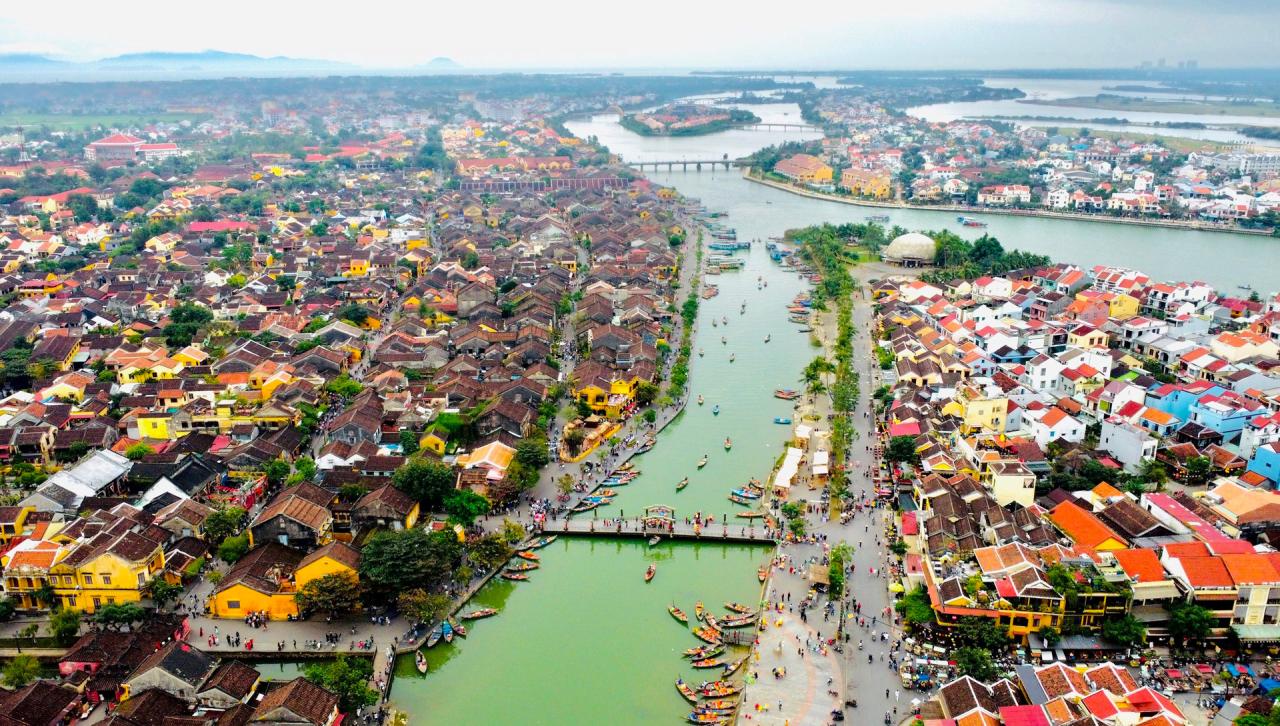
Port city culture
The Vietnamese people in Hoi An lived in the estuary and coastal area, primarily cultivating rice and vegetables, and engaging in river and sea-related occupations. The advantage of living in a port city, coupled with the open foreign trade policies of the Nguyen lords, led to significant changes in the traditional agricultural occupations of the inhabitants.
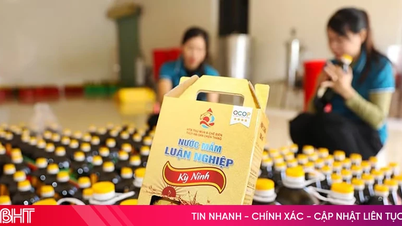
First, the people of Hoi An learned from the Cham people how to make fish sauce. The craft of building seagoing boats and the traditional cargo boats for river and sea transport were typical examples. Even the concept of "agriculture as the foundation" gradually took on a "preference for commerce" among the inhabitants of this port city culture.
Large-scale migrations of Japanese and Chinese (over 1,000 Japanese in the early 17th century and 6,000 Chinese in the late 17th century), along with the Nguyen lords' policy of establishing villages and towns and promoting settlement for trade, caused the port city culture of the commercial population to gradually overshadow the riverside culture of the agricultural, fishing, and handicraft communities.
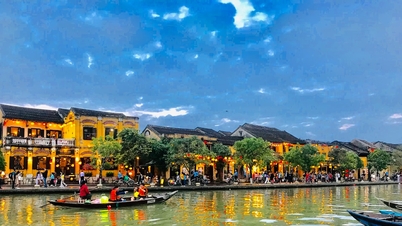
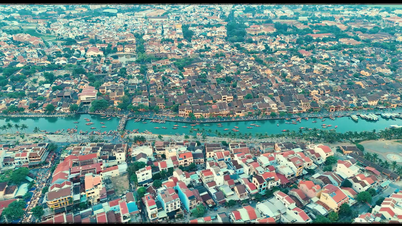
Port city culture became the dominant cultural trend for centuries, transforming Hoi An into a bustling metropolis where "everything could be found" (Le Quy Don). Even as late as the 1930s, Nguyen Tuan noted that Hoi An harbor had "a forest of masts and boats crowded together" (in his essay "Cua Dai").
The Hoi An - Dinh Chiem cultural axis is also recognized as the place, along with Tourane ( Da Nang ), where the missionary work of Catholicism began in Vietnam. At the same time, it is one of the localities that contributed to the formation of the Vietnamese Quốc ngữ script, with the pioneering efforts of Western missionaries…
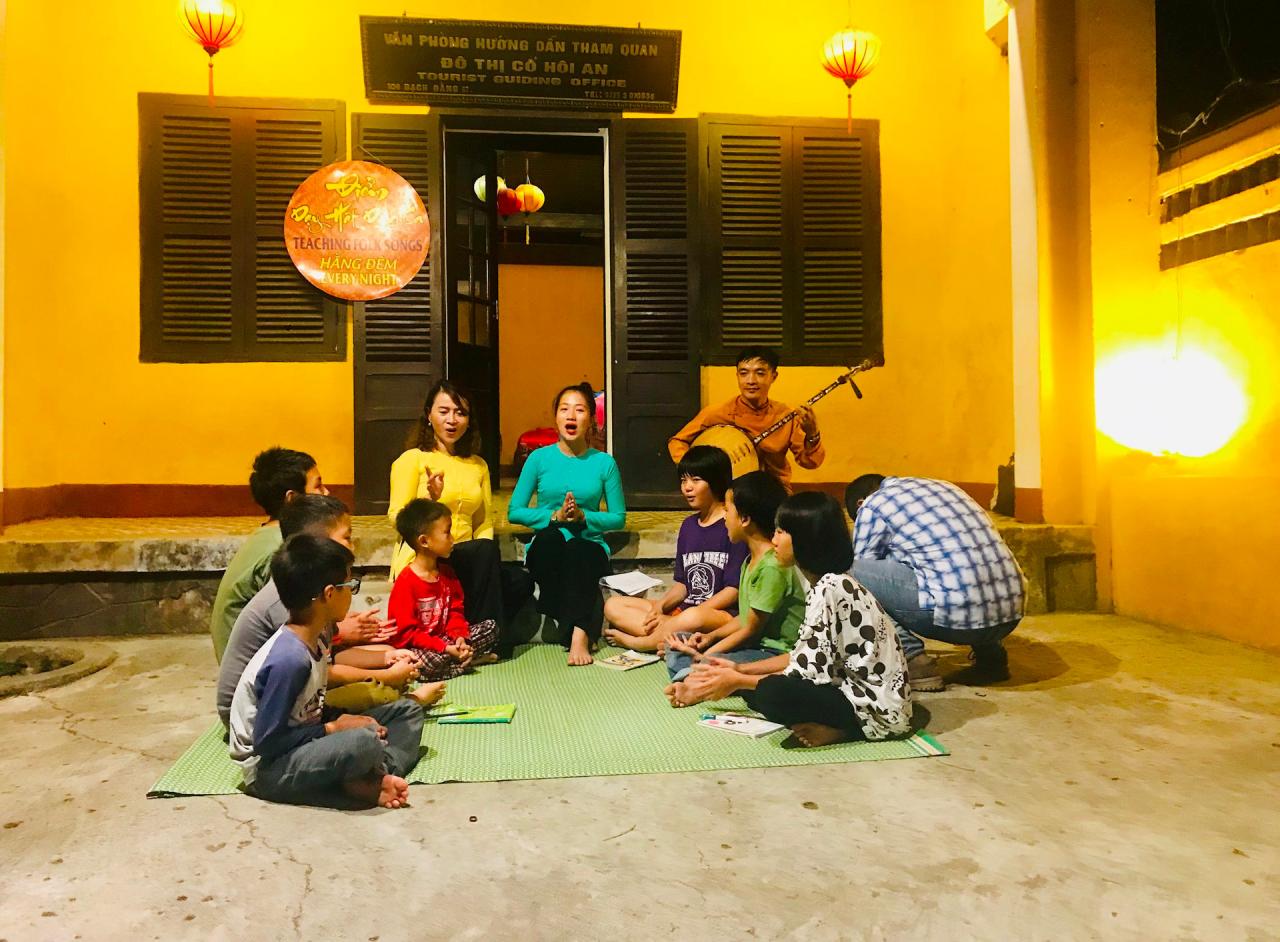
In addition to tangible cultural heritage acquired through interaction with the Champa people, such as traditional boats, ancient wells, and Champa archaeological sites, the people of Hoi An have chosen to adapt Vietnamese culture in a way that is "different but compatible" with other cultures.
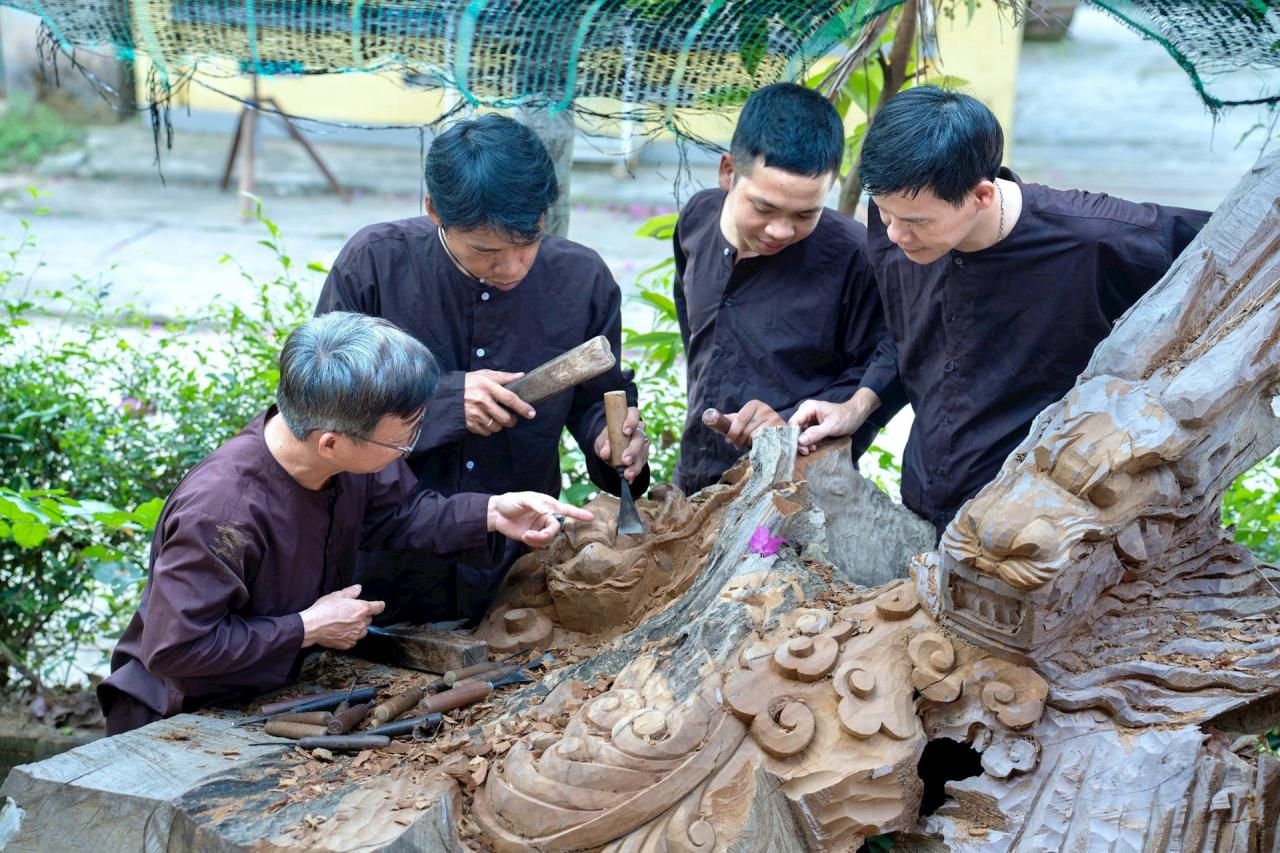
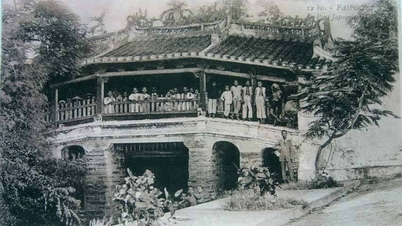
In terms of architecture, we can see typical examples such as the Vietnamese "three-bay, two-wing" house with added "false beam and truss" roofing in the Southern Chinese style; the roof is covered with yin-yang tiles instead of fish-scale tiles or curved tiles; the old town has a system of ancient houses that "combine" Vietnamese, Chinese, and Japanese styles in spatial layout, architectural style, and even in the details of artistic carvings.
According to researchers, the "hidden column and crossbeam" truss system (Vietnamese style) still exists logically alongside the "stacked beam and false support" truss system (Chinese style) and the balustrade system (French style) within the same house…
The urban planning of Hoi An in the 19th century – using Le Loi Street as the main axis to connect with other streets, on a level slope from top to bottom to allow water to drain into the river – was also a harmonious blend of Eastern and Western cultures.
The Quang style in the people of Hoi An
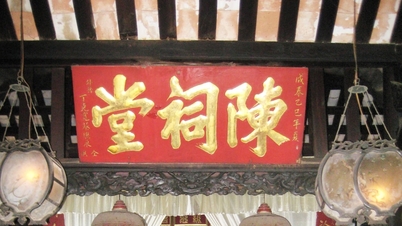
Historically, despite a long period of using Chinese characters in administrative documents and historical records (inscriptions, prayers, religious texts, ceremonial texts, etc.), the people of Hoi An have maintained their "Quang Nam accent" in their spoken language throughout the centuries. Currently, even the Chinese community rarely uses Chinese in communication except during festivals.
People in Hoi An often possess a stronger capacity for argumentation or social debate than some other localities in Quang Nam province. This may be due to the extensive and direct cultural exchange with people from other cultures, resulting in a greater element of openness and naturalness.
As early as the 17th century, the Italian missionary Cristoforo Borri (1583-1632), in his work "The Land of Cochinchina," observed that, regarding their character, "they are gentler and more polite in conversation than any other Eastern people... In short, they are very sociable, courteous, and friendly towards us..." and "they value both martial arts and literature depending on the opportunity."
The people of Hoi An, with their dynamic and open nature typical of a port city, having been exposed to both East and West from an early age, are proud to have produced many pioneering artists of modern Vietnamese music, such as La Hoi with his song "Spring and Youth"; and the "Tu Luc Literary Group" (originally from Hoi An) in pre-1945 literature…
This dynamic process of cultural exchange also "conceals" a "reverse impact"—as writer Nguyen Ngoc put it. The people of Hoi An are inherently "aware of the limits" in order to maintain their cultural identity in a "moderate"/neutral way. Therefore, on the other hand, because they are too moderate, they become afraid of risks and shortcomings—for example, in business, they are hesitant to "do big business," to "do business in the open sea," and gradually fall into a "conservative" nature.
Some researchers argue that the people of Hoi An tend towards a "sentimental" way of behaving, believing that "a hundred reasons are not worth a single ounce of affection." Living within this sentimental mindset, stemming from a long period of communal living, creates inertia in promoting and developing traditional cultural values.
Despite changes in traditional behavior, the people of Hoi An still inherit the dynamic, open, friendly, and bold way of thinking, speaking, and acting characteristic of the people of Quang Nam. However, the "awareness of moderation" on the other hand gives them a new awareness – an awareness of "adaptive change." This is perhaps the root cause of Hoi An preserving and developing tourism products from handicrafts and folk art, while simultaneously becoming a creative city of the world.
Source: https://baoquangnam.vn/vai-cam-nhan-ve-van-hoa-hoi-an-3139045.html

![[Image] National Assembly discusses the implementation of the socio-economic development plan.](https://vphoto.vietnam.vn/thumb/1200x675/vietnam/resource/IMAGE/2026/04/20/1776696707422_ndo_br_img-20260420-185419-jpg.webp)


![[Photo] General Secretary and President To Lam meets with National Assembly delegates from ethnic minorities.](https://vphoto.vietnam.vn/thumb/1200x675/vietnam/resource/IMAGE/2026/04/20/1776696701056_a1-bnd-8331-3342-jpg.webp)

























































Comment (0)