

On the summit of Truc Mountain, in Truc Phe village (now Zone 3), Hung Hoa town, Tam Nong district, there once stood the Hung Hoa Provincial Confucian Temple, a relatively grand structure symbolizing scholarship and the tradition of respecting teachers among the local people at that time.
Although the Hung Hoa Provincial Confucian Temple currently only exists in historical documents, it will serve as an important guide for Tam Nong district in planning the restoration of this rare historical and cultural landmark.
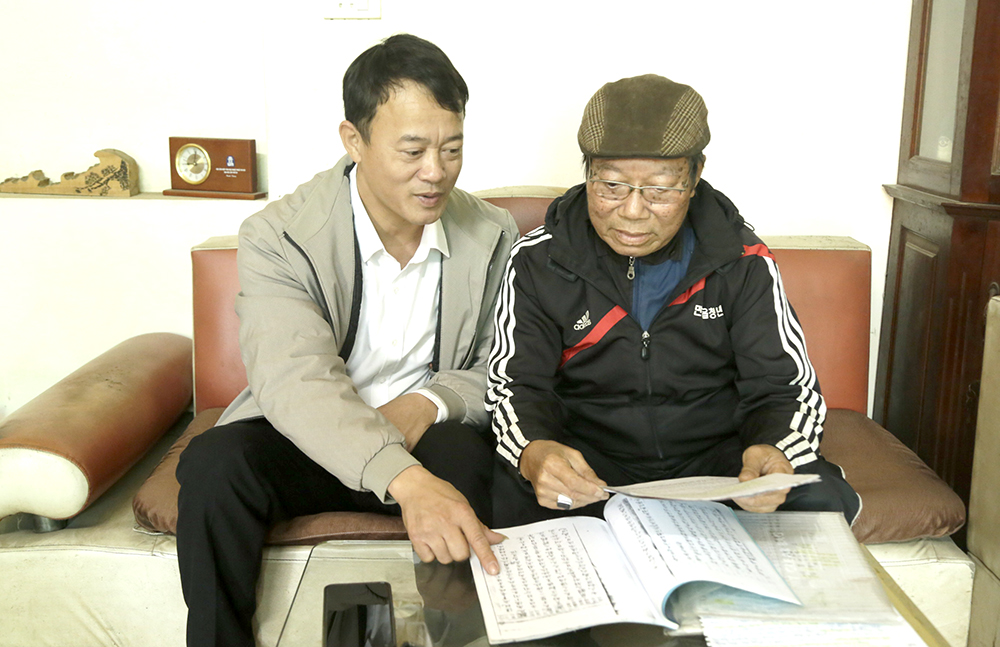
Folklore researcher Nguyen Trong Binh, along with leaders of Hung Hoa town, studied documents and records about the Hung Hoa Provincial Confucius Temple.
According to the book "Hung Hoa Ky Luoc" (A Brief History of Hung Hoa) compiled in Chinese characters by Pham Than Duyat in the year Binh Thin 1856, Hung Hoa was one of the 13 administrative divisions established during the Quang Thuan reign of King Le Thanh Tong. By the beginning of the Nguyen dynasty, in the 12th year of Minh Menh (1831), Hung Hoa was a province with 3 prefectures, 5 districts, and 16 sub-districts, with a fairly large territory encompassing most of the land of present-day Phu Tho, Yen Bai, Tuyen Quang, Lai Chau , and Son La provinces.
During our search for historical documents and traces of the ancient Hung Hoa Provincial Confucian Temple, we met folk art researcher Nguyen Trong Binh. He is a member of the Hanoi City Folk Art Association and a native of Hung Hoa. After retiring to his hometown, he and many other elders diligently collected documents proving that the Hung Hoa Provincial Confucian Temple was a historical architectural structure, one of 28 provincial-level Confucian temples in Vietnam.
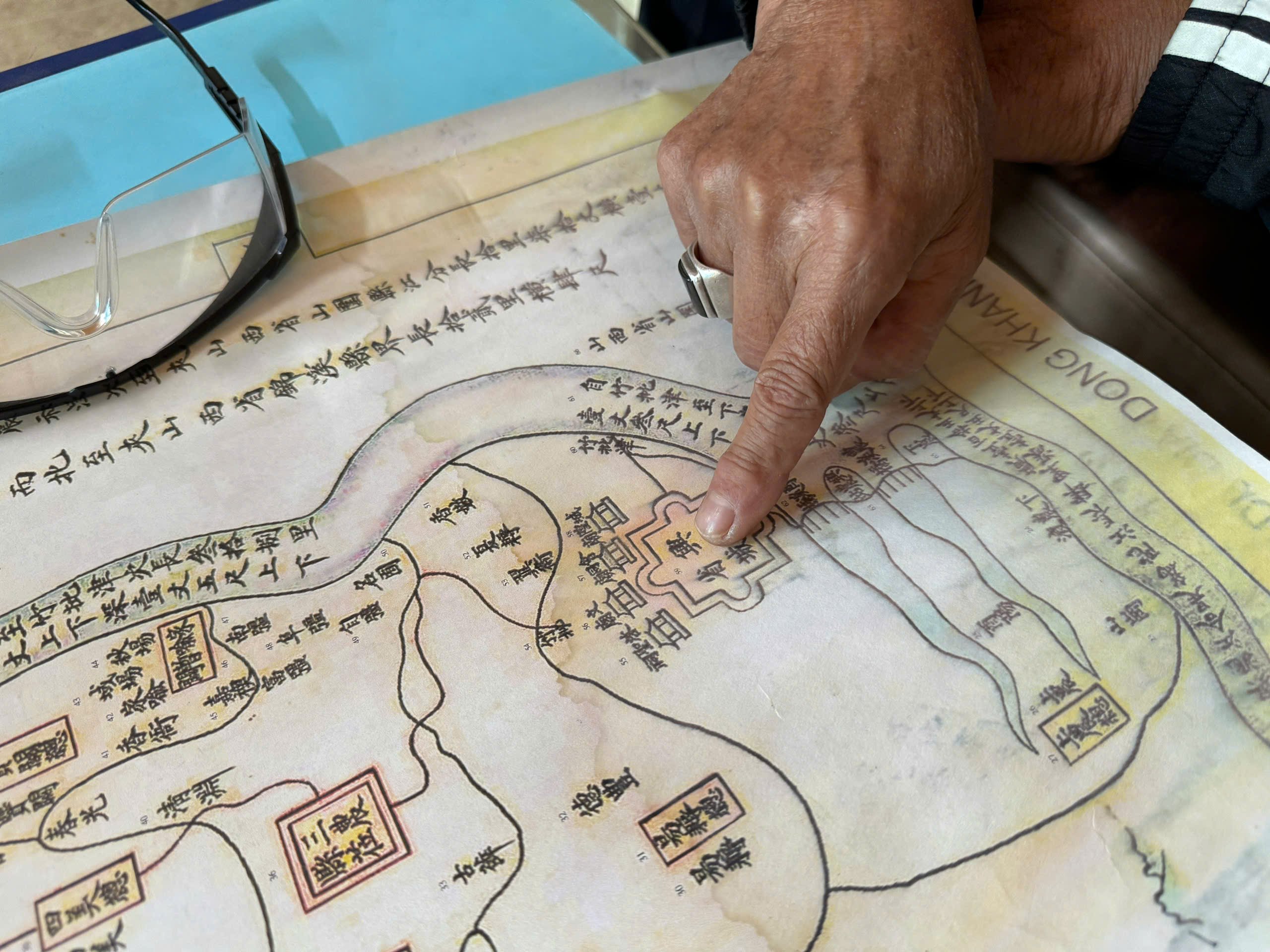
The location of the Temple of Literature within Hung Hoa Citadel is shown on an ancient map of Tam Nong district in the Dong Khanh Geographical Gazetteer (compiled in 1887 during the reign of Emperor Dong Khanh of the Nguyen Dynasty).
According to documents published by the Institute of Han Nom Studies in 1998, the Hung Hoa Provincial Confucian Temple was built on the summit of Truc Mountain, northwest of Hung Hoa provincial capital (Hung Hoa town) in the 11th year of Minh Menh's reign (1830), meaning even before the province was established. The temple was relatively grand in scale. By 1882, war broke out, the provincial capital was destroyed, and the temple was almost completely ruined, with only a few main halls remaining, which the province used as a military encampment. From then on, the smoke and fire of war gradually diminished the offerings of incense to the deities.
In 1892, Governor Le (from Nhan Muc village, Tu Liem district, Hanoi) took office and led his subordinates to visit the old temple. Deeply moved by the dilapidated state of the temple, Governor Le immediately devised a plan to restore it. The work proceeded rapidly, beginning in early June 1893 and completed in mid-July of the same year.
The scale of the Temple of Literature was entirely based on the old grounds, including: the main hall dedicated to the sages, inside which were the throne of the revered master Confucius, the altar of the Four Disciples, the altar of the Seventy-Two Sages, and the altar of the local sages; on either side were two rows of side buildings; in front were the triple-arched gate, bell tower, and drum tower; behind was the water pavilion - where scholars studied; and all four sides were surrounded by laterite brick walls. Upon completion, the provincial officials held an inauguration ceremony and had a stone stele inscribed to record the events. Sadly, today, the Temple of Literature no longer exists, and the stele has been lost.
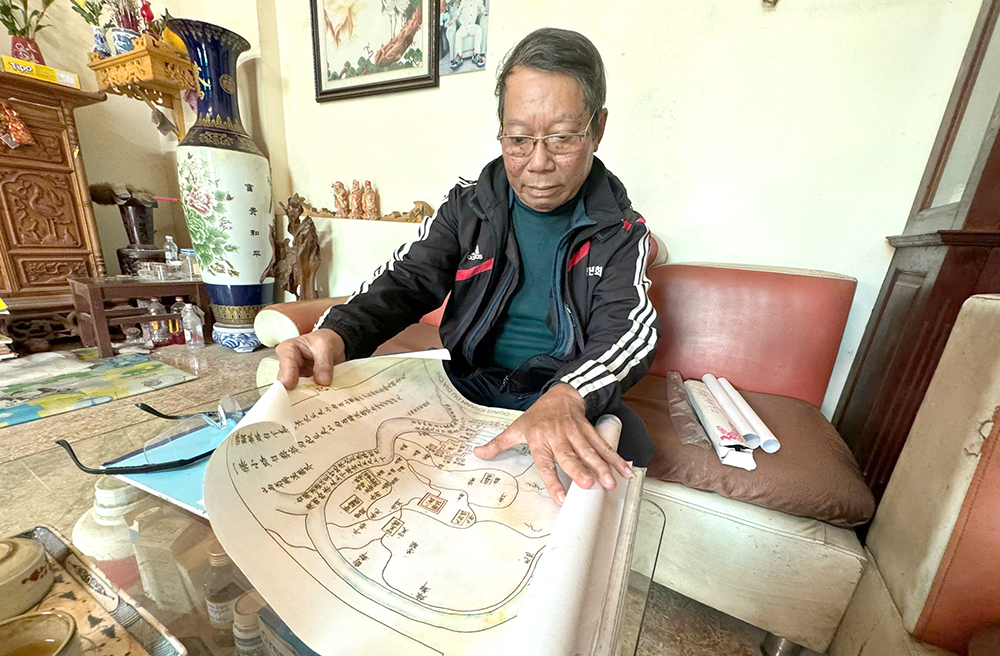
Historical documents about the Temple of Literature in Hung Hoa province are still quite complete and detailed.
In the Sino-Vietnamese book "Sắc vân thi trướng đối liên," a handwritten book by the Lê family (the family of the Lê governor who restored the Temple of Literature in Hưng Hóa province) compiled in 1893, there is a passage recording the content of the stele as follows: “I said to my subordinates: In this world, success and failure, rise and fall, follow one another endlessly. In the past, when the Temple of Literature was first built, who would have thought that later it would become dilapidated and ruined, and even used as a military garrison.”
Who would have thought that we now have the strength to build a new Temple of Literature? The world revolves, all things change. Within this celebration lies a hidden sorrow. Our Way is vast and full of vital energy; it cannot be altered by the rise and fall of fortune. Our existence is not dependent on whether the temple exists or not. It is merely a place for expressing etiquette, intimately connected to the rituals of worship.
Therefore, in each locality, the construction of a Confucian temple is to maintain moral order, and it is necessary to restore dilapidated places. Since the Confucian temple has accidentally fallen into disrepair, it is even more necessary to restore it. So, if the restoration of this Confucian temple is not the responsibility of the land's guardian, then to whom should it be entrusted? It is truly an honor for me, having just arrived in this land, to be entrusted with this responsibility! Then, I ordered stone carvers to engrave these words, so that future visitors to this Confucian temple may know the general details of the matter.”
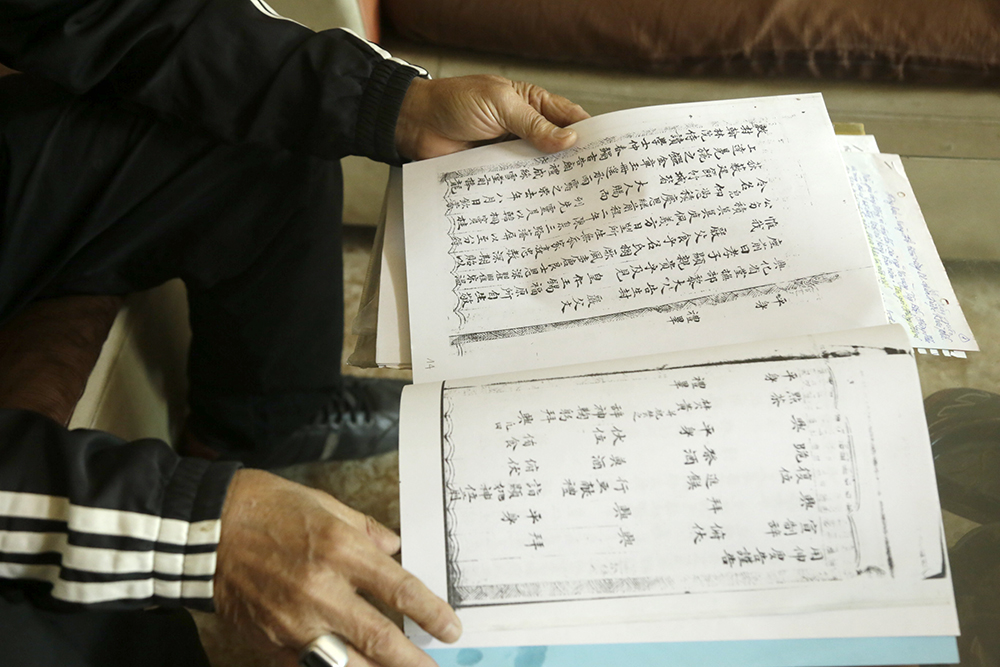
A copy of the book "Sắc vân thi trướng đối liên" records the content of the stele at the Temple of Literature in Hung Hoa province.
The grandeur of the Hung Hoa Provincial Confucian Temple was once evident in the eight horizontal plaques and 58 couplets arranged in 13 worship areas. The book "Sac Van Thi Truong Doi Lien" specifically records the locations of the 58 couplets as follows: "Front hall: 4 pairs, Khai Thanh Hall: 1 pair, Tien Thanh Hall: 6 pairs, East-West side halls: 20 pairs, Main temple: 4 pairs, Khai Mieu Temple: 3 pairs, Tu Phoi Altar: 1 pair, Thap Triet Altar: 2 pairs, Left and Right side halls: 2 pairs, Tam Quan Gate: 3 pairs, Bell Tower: 1 pair, Drum Tower: 1 pair, Water Pavilion: 10 pairs." The arrangement of the couplets in these 13 separate areas gives us a glimpse into the magnificence and grandeur of the Hung Hoa Provincial Confucian Temple at that time.
Folklorist Nguyen Trong Binh stated: “The flourishing of the Hung Hoa Provincial Confucius Temple only lasted 10 years. By 1903, by order of the Governor-General of Indochina, the provincial capital was moved to Phu Tho town and renamed Phu Tho province. The Hung Hoa Provincial Confucius Temple, like some other architectural works, also faded into memory. During the relocation of the provincial capital, no one knows what of the Confucius Temple was taken or left behind, or whether it remains or is lost.”
Mr. Binh led me to the house of Mrs. Nguyen Thi Oanh (Zone 3, Hung Hoa town), which is the former foundation of the Temple of Literature. Mrs. Oanh said: “My family has lived here since 1954. When we were building the house, we discovered many large laterite stones. Each stone was about half the length of an adult's arm span. There was a very large frangipani tree at the gate.”
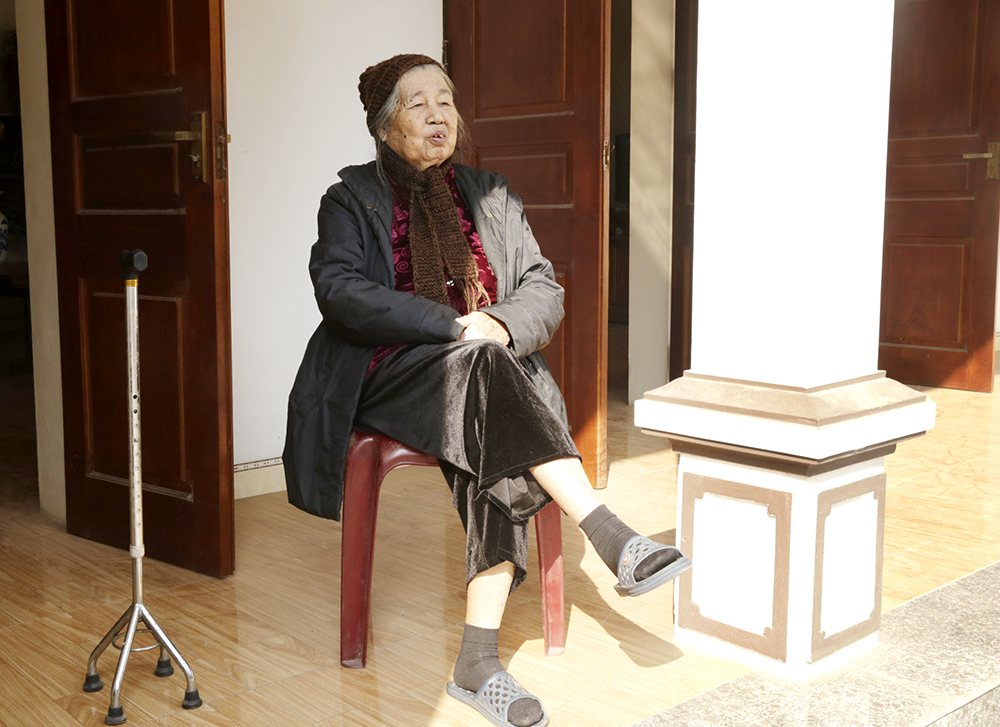
Mrs. Nguyen Thi Oanh - the owner of the house built on the old foundation of the Hung Hoa Provincial Temple.
Numerous historical documents have proven that nearly two centuries ago, the Hung Hoa Provincial Confucius Temple once existed. Tam Nong District is currently very interested in and has initiated a research project to restore the Hung Hoa Provincial Confucius Temple. Mr. Nguyen Ngoc Kien, Vice Chairman of the People's Committee of Hung Hoa Town, Tam Nong District, stated: “The local authorities have sought out researchers and elderly people to collect documents and report to the district to develop a plan for restoring this architectural work of rare historical and cultural value. This will contribute to educating future generations about the tradition of respecting teachers and valuing education, and encourage the strong development of education in the locality.”
According to documents from Associate Professor Dr. Nguyen Ta Nhi - Institute of Han Nom Studies, and Professor Tran Ky - a local resident and author of the couplets at the main hall of the Hung Hoa Provincial Confucius Temple, the following observation was made: "After its restoration, the Hung Hoa Provincial Confucius Temple truly contributed to the revival of scholarship in the locality, encouraging scholars to diligently study so that in several consecutive provincial examinations, students from Hung Hoa were seen with their names posted on the examination board."
Imbued with the philosophy that "Talented people are the lifeblood of the nation," the cause of education has always been highly valued by all levels and sectors. Echoes from the distant past have prompted Tam Nong district to research and plan the restoration of the Hung Hoa Provincial Confucian Temple in what is now Hung Hoa town. This way, future generations will be able to visit, light incense, and pray for the blessings and guidance of their ancestors in their studies, examinations, and contributions to the country.
Thuy Trang
Source: https://baophutho.vn/van-mieu-tinh-hung-hoa-224872.htm
![[Photo] Solemn bathing ceremony and Buddha procession in Hue](https://vphoto.vietnam.vn/thumb/1200x675/vietnam/resource/IMAGE/2026/05/31/1780228263543_1-jpg.webp)
![[Photo] The General Secretary, President and his wife begin their state visit to the Philippines.](https://vphoto.vietnam.vn/thumb/1200x675/vietnam/resource/IMAGE/2026/05/31/1780230559452_anh-man-hinh-2026-05-31-luc-19-28-11.png)
![[Image] Hanoi Police officially crowned champions of V-League 2025/2026](https://vphoto.vietnam.vn/thumb/1200x675/vietnam/resource/IMAGE/2026/05/31/1780244769054_ndo_br_039d561b692be875b13a-jpg.webp)

![[Photo] Admire the coral "masterpiece" amidst the million-year-old heritage of Dak Lak province.](https://vphoto.vietnam.vn/thumb/1200x675/vietnam/resource/IMAGE/2026/05/31/1780221235105_anh-man-hinh-2026-05-31-luc-16-53-27.png)








![[Video] Sunset at Lap An Lagoon – Where the sun sets over the fishing nets](https://vphoto.vietnam.vn/thumb/340x192/vietnam/resource/IMAGE/2026/05/31/1780192137701_beach-landscape-sea-water-nature-grass-745871-pxhere-com.jpeg)































































Comment (0)