

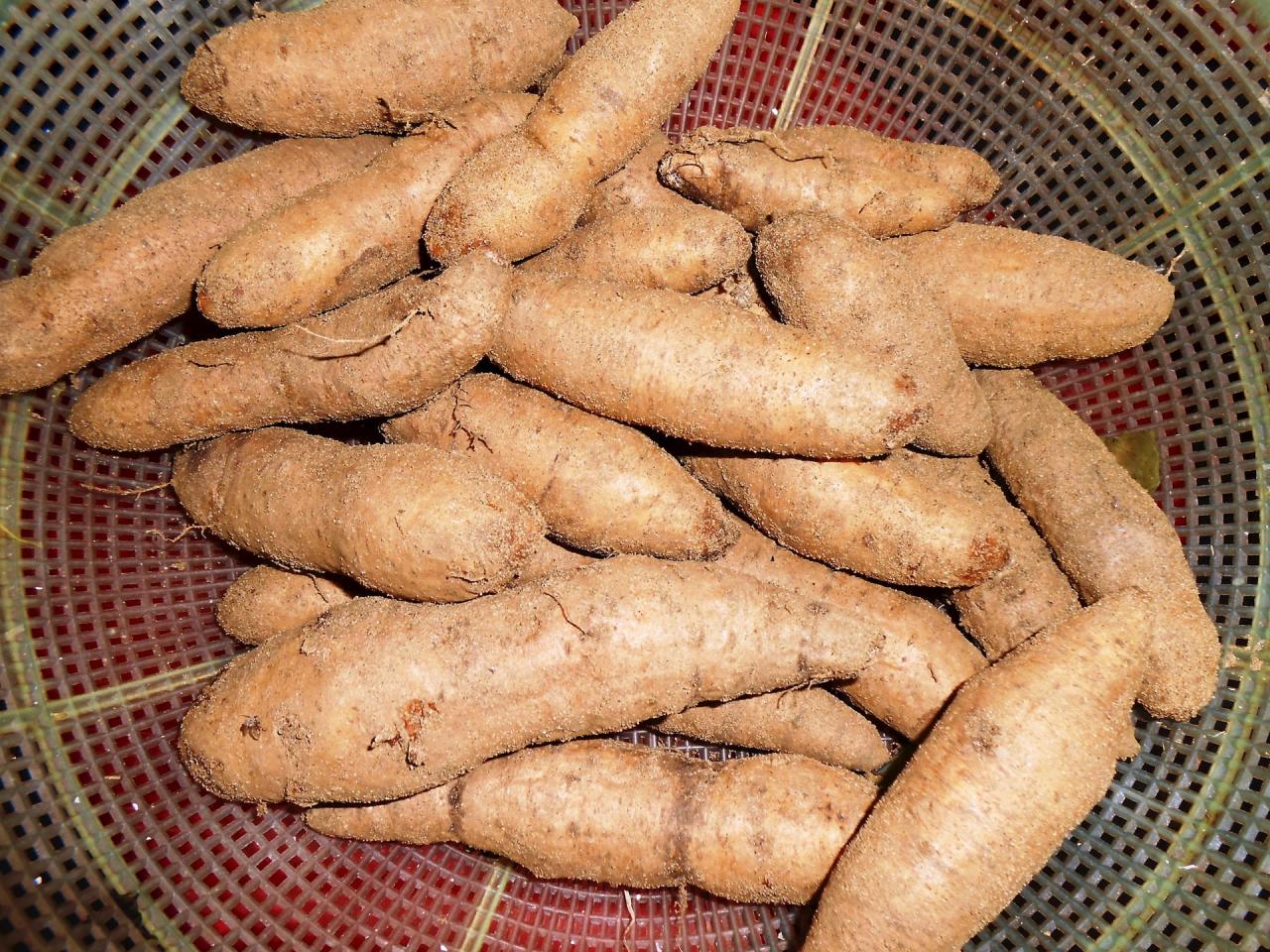
The northerly winds swept in, and before long, the year was over. The small streets and alleys were shrouded in wind. Suddenly, it awakened in me a poignant longing for the rich, fragrant, and delicious taste of a pot of taro root soup.
During harvest season, the taro tubers are carried on people's shoulders and "settle" in the corners of the house, under the bed. Occasionally, when there are honored guests, the women in the countryside simply pull out a few tubers from under the bed, wash off the outer skin, boil them until cooked, and serve them with salt and peanuts.
Quang Nam province has a special dessert called "che cassava" (sweet potato dessert). Sticky rice is simmered with a handful of glutinous rice, and when the taro is tender, sugar is added, along with a little finely grated fresh ginger. The dessert is served in a bowl, and the sweet aroma of taro and ginger blends together perfectly.
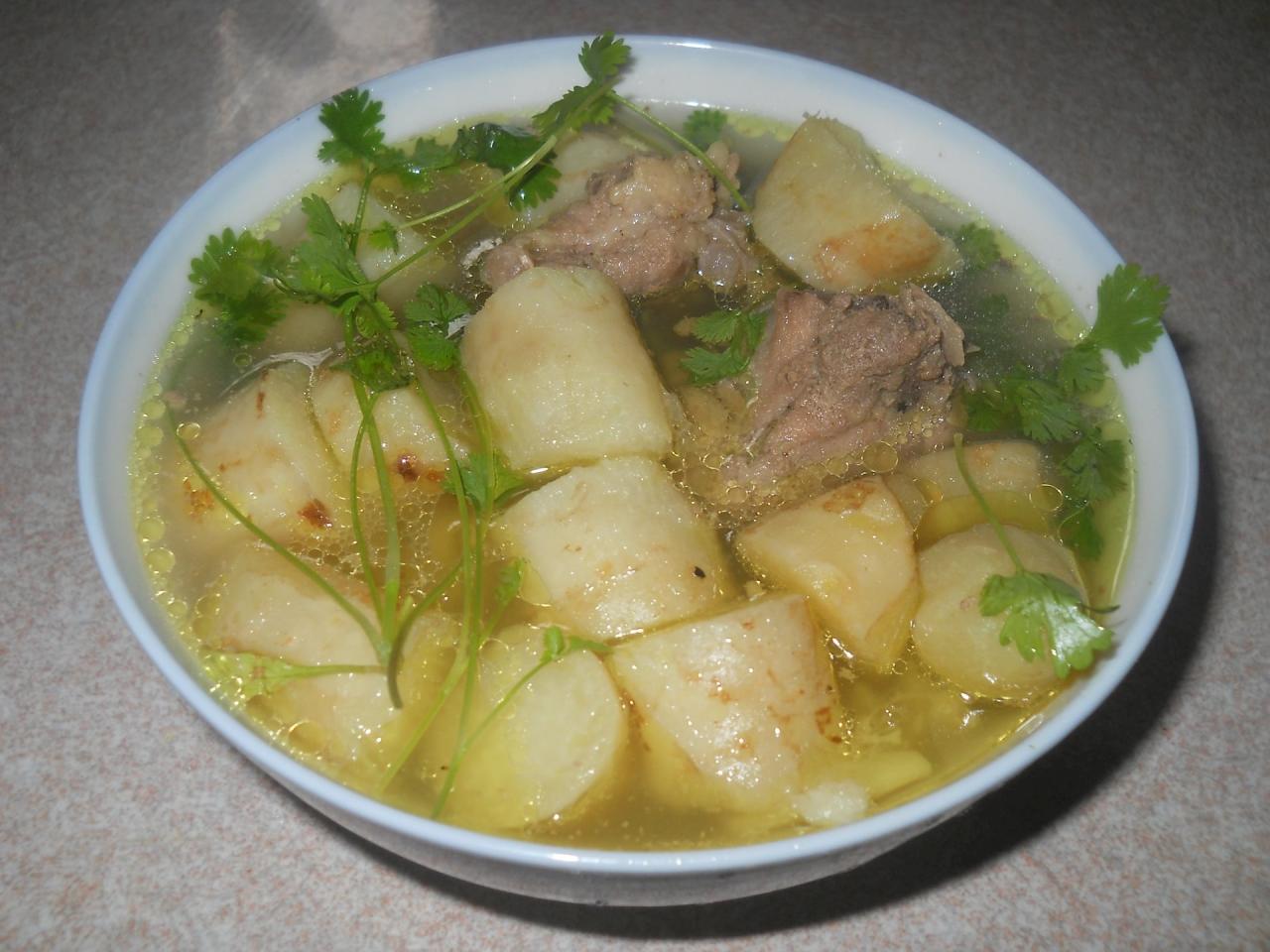
But nothing beats taro root soup with bones. Just holding a bowl of freshly made taro root soup and inhaling its aroma is enough to warm you up.
Cooking taro soup is simple, taking only a couple of dozen minutes in the kitchen. However, to have a delicious and authentic bowl of soup, choosing the right ingredients is quite important. With just a few pork bones, some taro, and various spices, you can have a tasty pot of soup for the whole family.
The first choice for home cooks is to select tubers that are firm, fresh, and free from bruises, dents, cracks, or chips. Peel, wash, and cut the tubers into bite-sized pieces, then drain them.
According to the experience of women in the countryside, before peeling taro, it's best to blanch it briefly in boiling rice water. This helps the peel to come off easily. As for the bones, you must choose leg bones or tail bones.
Over a low fire, the bones are simmered until tender, then the potatoes are added. The heat must be carefully controlled so that the bones and potatoes are cooked until soft but still retain their shape. Add some finely sliced onions and a few sprigs of cilantro, and the whole family enjoys a lively meal together.
There's still over a month until Tet (Vietnamese New Year), but this afternoon's street market corner already has the festive atmosphere of home with its abundance of beans, potatoes, and vegetables. So, without hesitation, I bought a kilogram of taro to make soup and satisfy my longing.
Although it lacks the smoky aroma of wood fire, this simple, hot bowl of taro soup in the city is just as fragrant as the soup from my hometown memories...
Source: https://baoquangnam.vn/ve-an-bat-canh-cu-tu-3146395.html























































































Comment (0)