Cao Linh Pagoda has long been a familiar spiritual destination for locals and visitors alike.
The temple is situated on a plot of land nearly 49,000 m² , facing National Highway 10 in the front and bordering National Highway 5 in the back, creating a spacious, airy, and sacred setting.
According to documents preserved at the temple, Cao Linh Temple is approximately 300 years old and is believed to have been built by the Le Van family in Ha Lien village during the Late Le Dynasty. Initially, the temple consisted of a three-bay front hall, a five-bay ancestral hall, a two-bay rear hall, and a three-bay kitchen.
Cao Linh Pagoda is not only a place of religious worship, but also closely associated with the nation's history of struggle. During the resistance war against the French , it served as a hiding place for Viet Minh cadres and a storage location for food supplies. Because of this, the pagoda was attacked by the French colonialists, and many parts of it were destroyed.
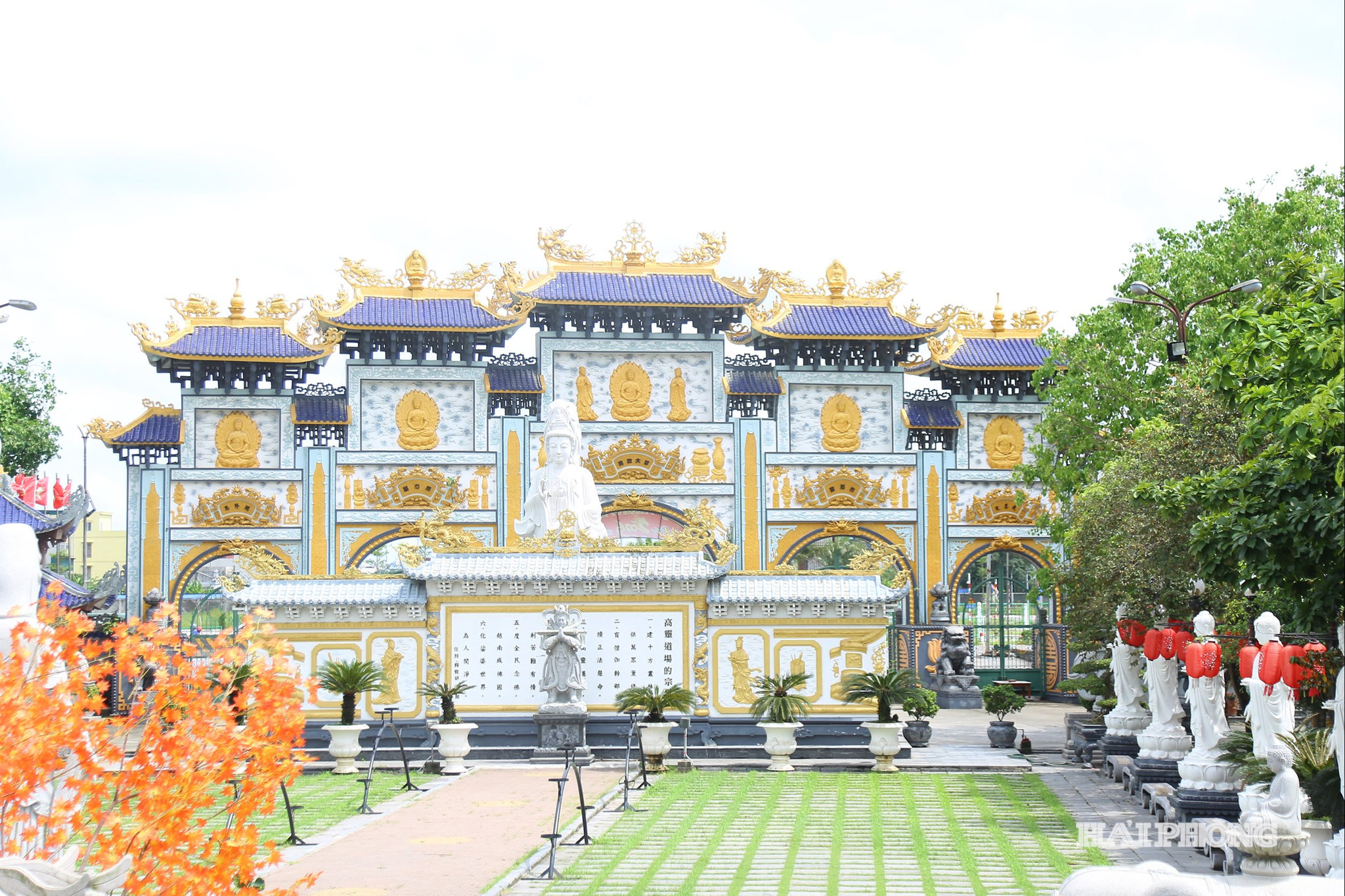
Despite wars and the vicissitudes of time, Cao Linh Pagoda has been preserved by the devotion of generations of monks, nuns, and Buddhist followers.
Since 2011, the temple has begun large-scale renovations, constructing many new structures such as the Five-Gate Entrance, the Great Hall of the Buddha, the stupa garden, the Arhat Hall, and the Hall of Rebirth.
Today, Cao Linh Pagoda is not only a place of worship but also a popular tourist attraction for visitors to Hai Phong .
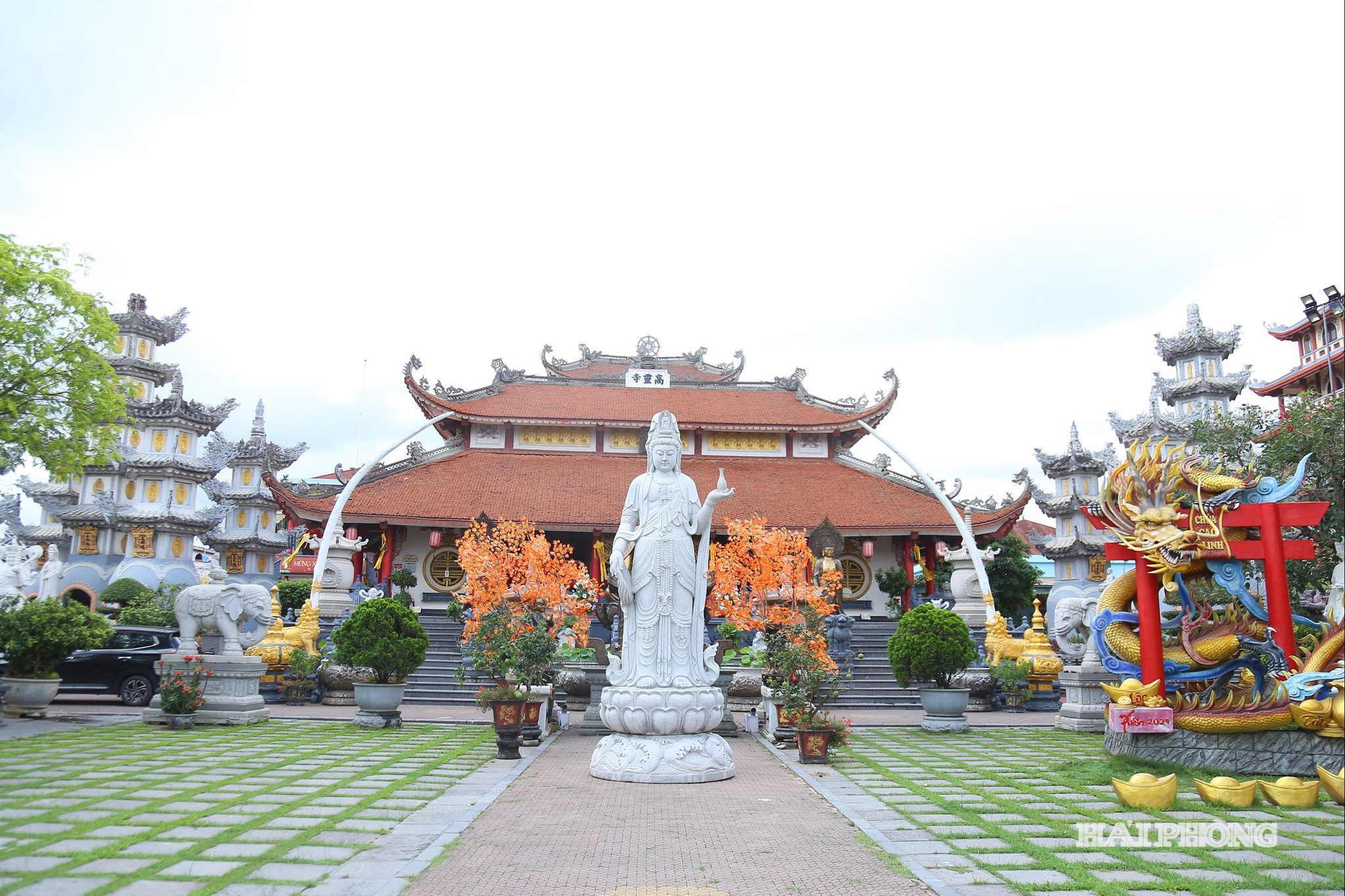
The first impression many visitors have upon arriving at Cao Linh Pagoda is the imposing Five-Gate entrance, striking with its gleaming golden color and exquisite carvings. The gate's roof curves gracefully in the traditional architectural style, topped with a Dharma wheel and a pure lotus flower.



At the foot of the gate are majestic stone statues, creating a feeling that is both solemn and familiar, reflecting East Asian culture. According to Buddhist beliefs, the five gates symbolize the five fundamental virtues of humanity: faith, diligence, mindfulness, meditation, and wisdom.
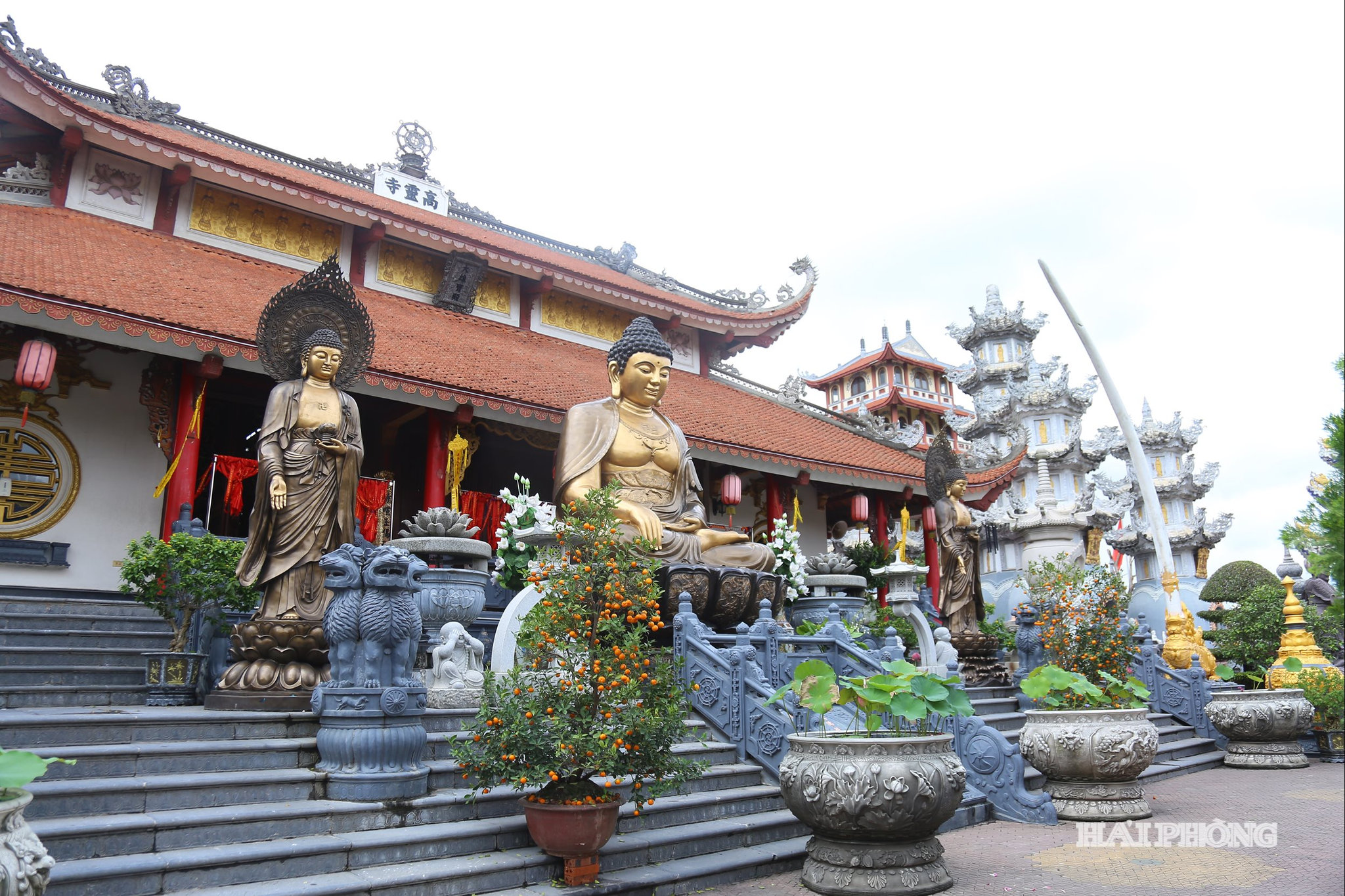
Stepping through the temple gate, visitors easily notice the spacious area with lush greenery, a lake, and harmoniously arranged structures. At the center of the entire complex is the Great Hall of the Buddha, the most important building of the temple. The building is constructed in the shape of the Vietnamese character "Đinh," with three front halls and one rear hall.
Inside the main hall are many large Buddha statues such as Shakyamuni Buddha, Samantabhadra Bodhisattva, and Manjushri Bodhisattva, along with a system of horizontal plaques and couplets arranged solemnly. The soft golden light and the scent of incense create a serene atmosphere for visitors.
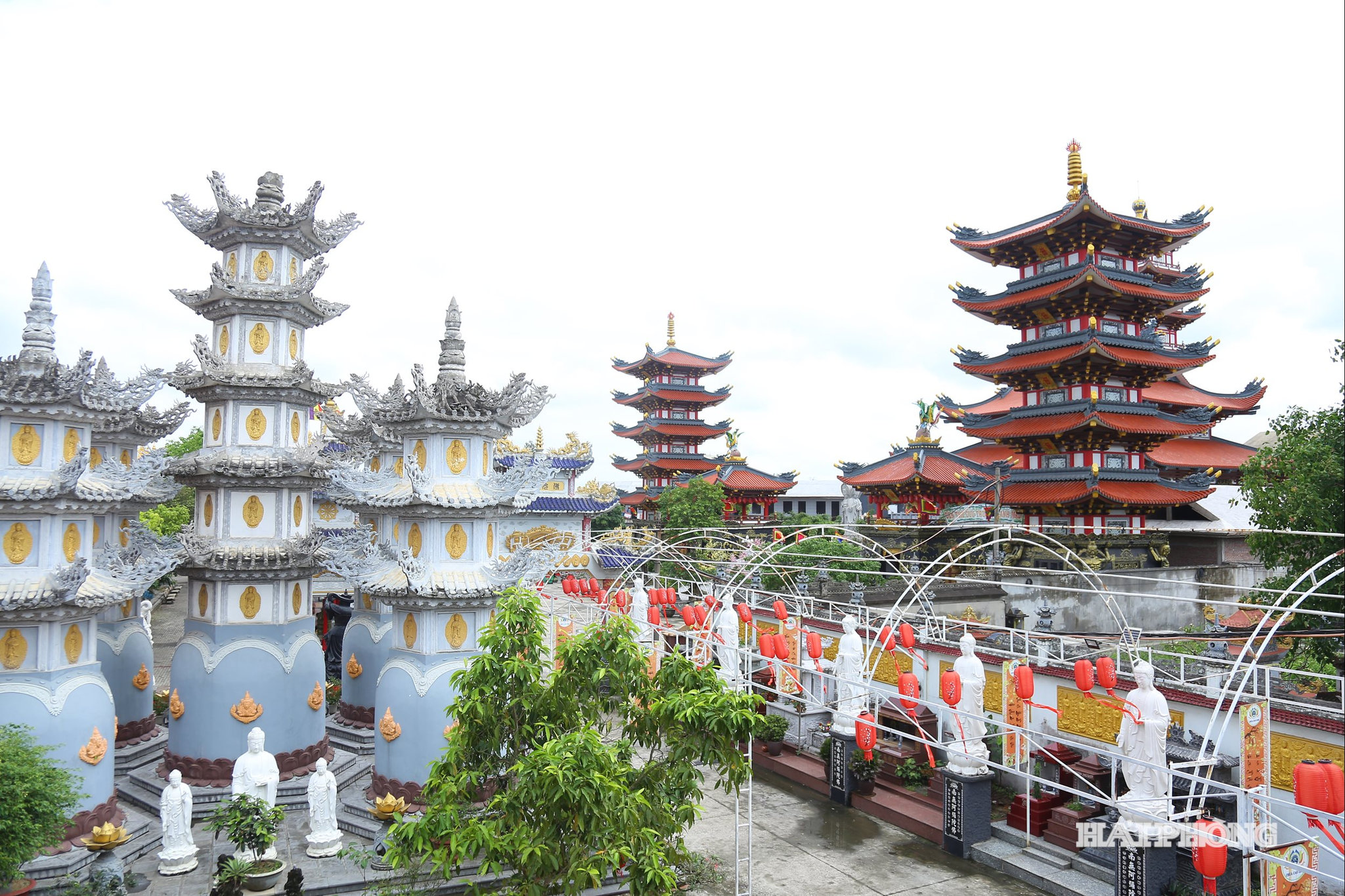
Another special highlight of Cao Linh Pagoda is the garden of stupas located along both sides of the main hall. These elaborately carved stone stupas feature winding dragons, embossed Buddha statues, and exquisite lotus flower motifs. Few people know that inside these stupas are the remains of the pagoda's abbots from many generations.
The temple also boasts many unique structures such as a large bronze bell weighing 3.2 tons, a garden of statues depicting the Buddha preaching, rows of stupas along the surrounding wall, and a Bodhi tree brought from Bodh Gaya in India.
The combination of traditional Buddhist architecture and its large scale has given Cao Linh Pagoda a beauty that is both ancient and majestic, differentiating it from many other pagodas in Hai Phong.
The restoration of the temple is a process of preserving the cultural and historical value of a centuries-old ancient temple. The architectural design has harmonized traditional elements with the spiritual needs of the people.
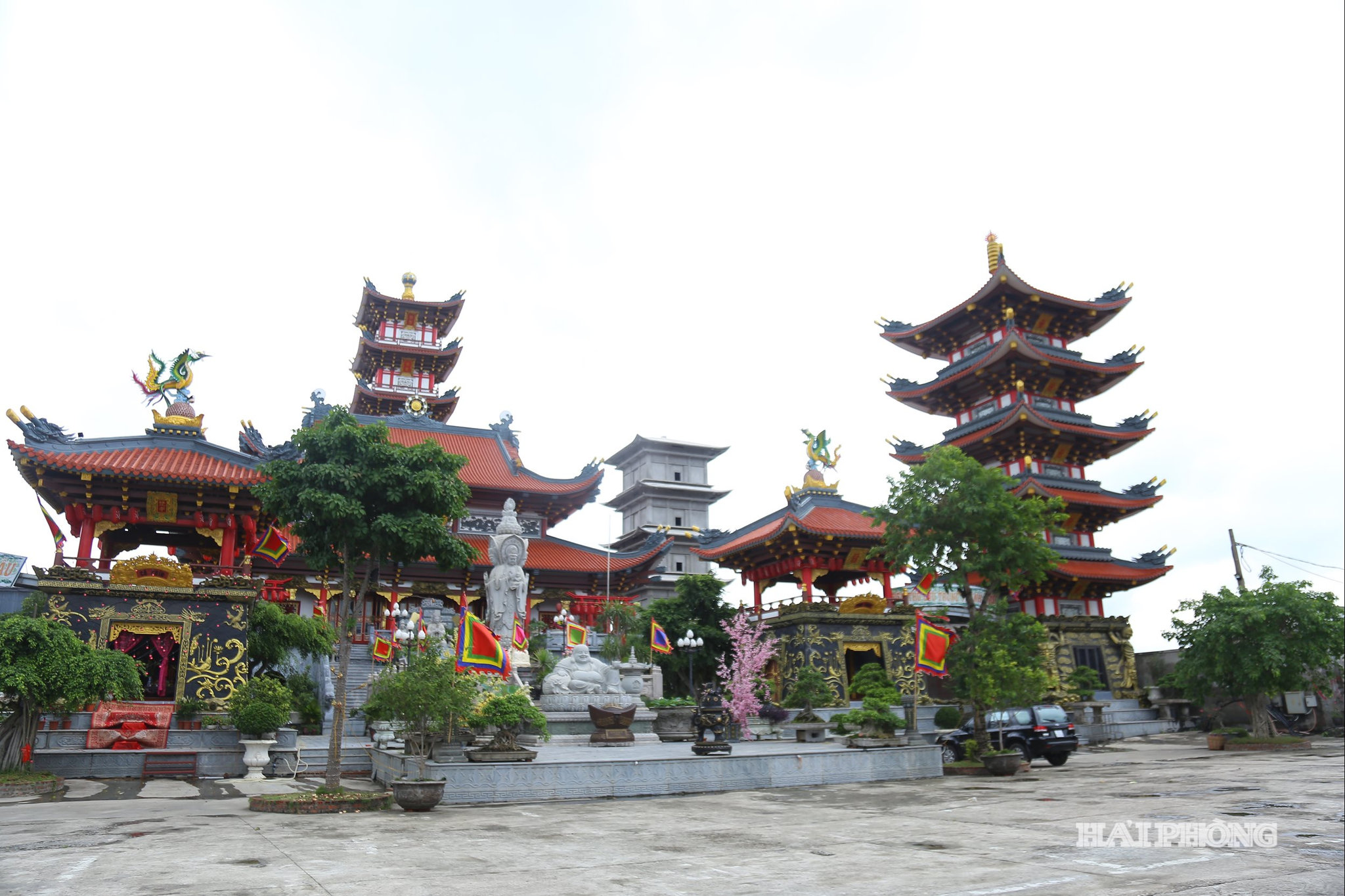
Beyond its Buddhist architecture, the temple grounds also house the shrine of the Nine-Tiered Holy Mother, showcasing the fusion of Mother Goddess worship and Buddhism. The structure is adorned with intricate dragon and phoenix motifs, creating a solemn yet traditional Vietnamese atmosphere.

The Mother Goddess Temple is harmoniously situated within the spacious grounds of the pagoda, creating a serene and peaceful atmosphere for visitors. It is also a place where many people come to pray for peace and prosperity, and to learn more about the Mother Goddess worship – an intangible cultural heritage recognized by UNESCO.
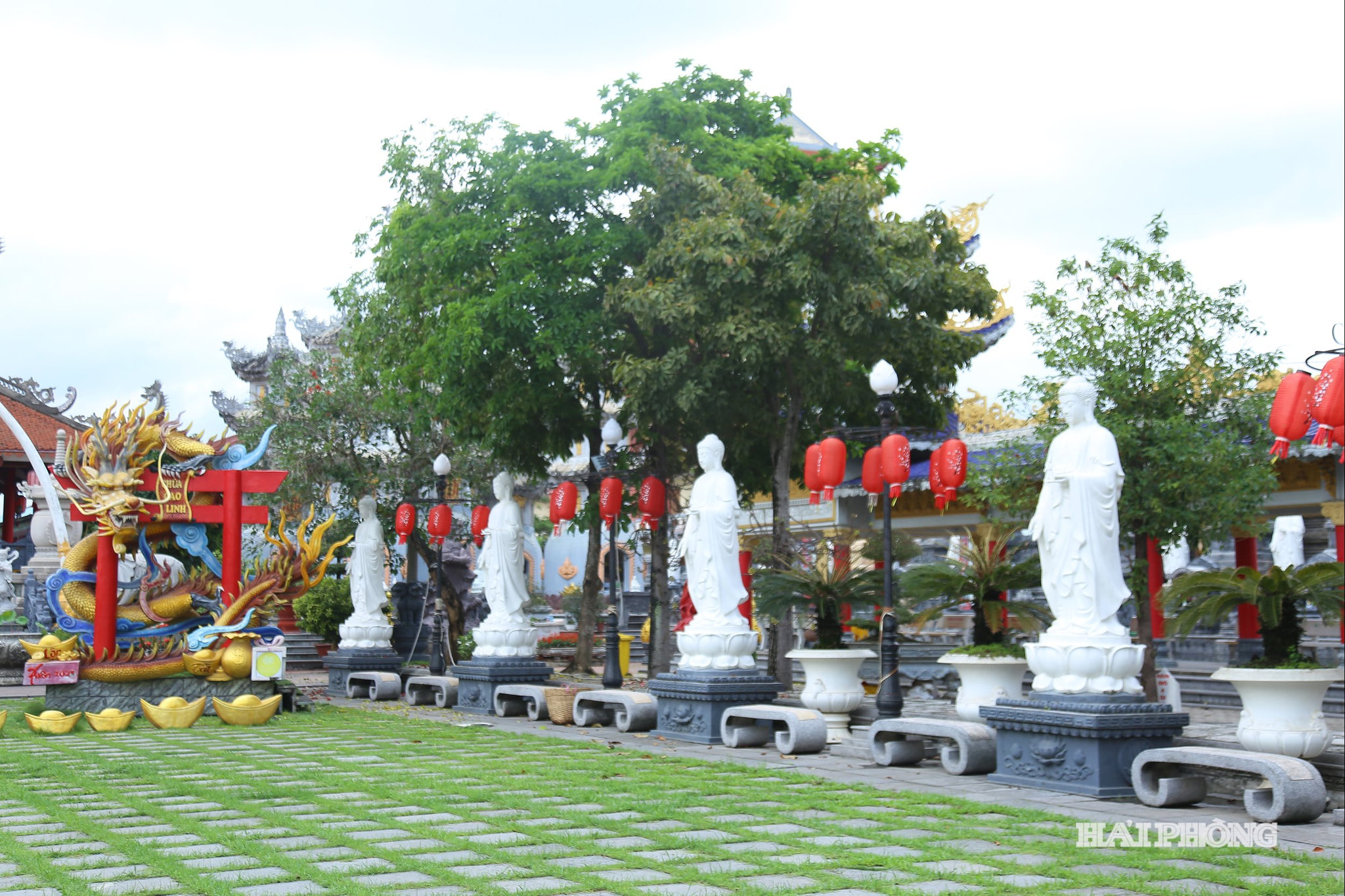
Nowadays, on occasions like the beginning of the year, the Vu Lan festival, or the full moon day, Cao Linh Pagoda welcomes many Buddhist groups and tourists who come to offer incense and pray for peace. Ms. Nguyen Thu Ha, a resident of An Duong ward who came to offer incense at the pagoda, shared: “Every time I come to Cao Linh Pagoda, I feel very peaceful. The space here is spacious, quiet, and very serene. Although the pagoda is well-built, it still retains its unique ancient charm.”
Cao Linh Pagoda contributes to enriching the cultural tourism landscape of Hai Phong. In recent years, many tourists from outside the city have chosen to visit this pagoda as part of their exploration of Hai Phong.
PHUONG LAMSource: https://baohaiphong.vn/ve-dep-chua-cao-linh-543891.html
![[Image] Schools organize meetings and introduce teaching models to students admitted to grade 10.](https://vphoto.vietnam.vn/thumb/1200x675/vietnam/resource/IMAGE/2026/06/25/1782368077271_ndo_br_z7970052192242-1ec8daeb77a6eed1a4e9f58c564ddd3e-jpg.webp)
![[Photo] General Secretary and President To Lam receives Palestinian Ambassador Saadi Salama](https://vphoto.vietnam.vn/thumb/1200x675/vietnam/resource/IMAGE/2026/06/25/1782365384740_a1-bnd-9423-8322-jpg.webp)
![[Image] Ho Chi Minh City: Ma Lang area, Chicken-Rice Market about to change its appearance](https://vphoto.vietnam.vn/thumb/1200x675/vietnam/resource/IMAGE/2026/06/25/1782377698627_ndo_br_m1-jpg.webp)









![[Video] Weather forecast for tonight and tomorrow, June 26, 2026: Northern Vietnam to end heatwave from tomorrow, Central Vietnam to continue experiencing a heatwave.](https://vphoto.vietnam.vn/thumb/402x226/vietnam/resource/IMAGE/2026/06/25/1782392692278_thumb-dem-png.webp)