

Our ancestors believed, "Every land has its guardian spirit, every river has its water deity, and every place has its tutelary deity." Because of this idea, after the village community was established, each village paid close attention to building its communal house. The Tú Luông communal house also came into existence within this social context.
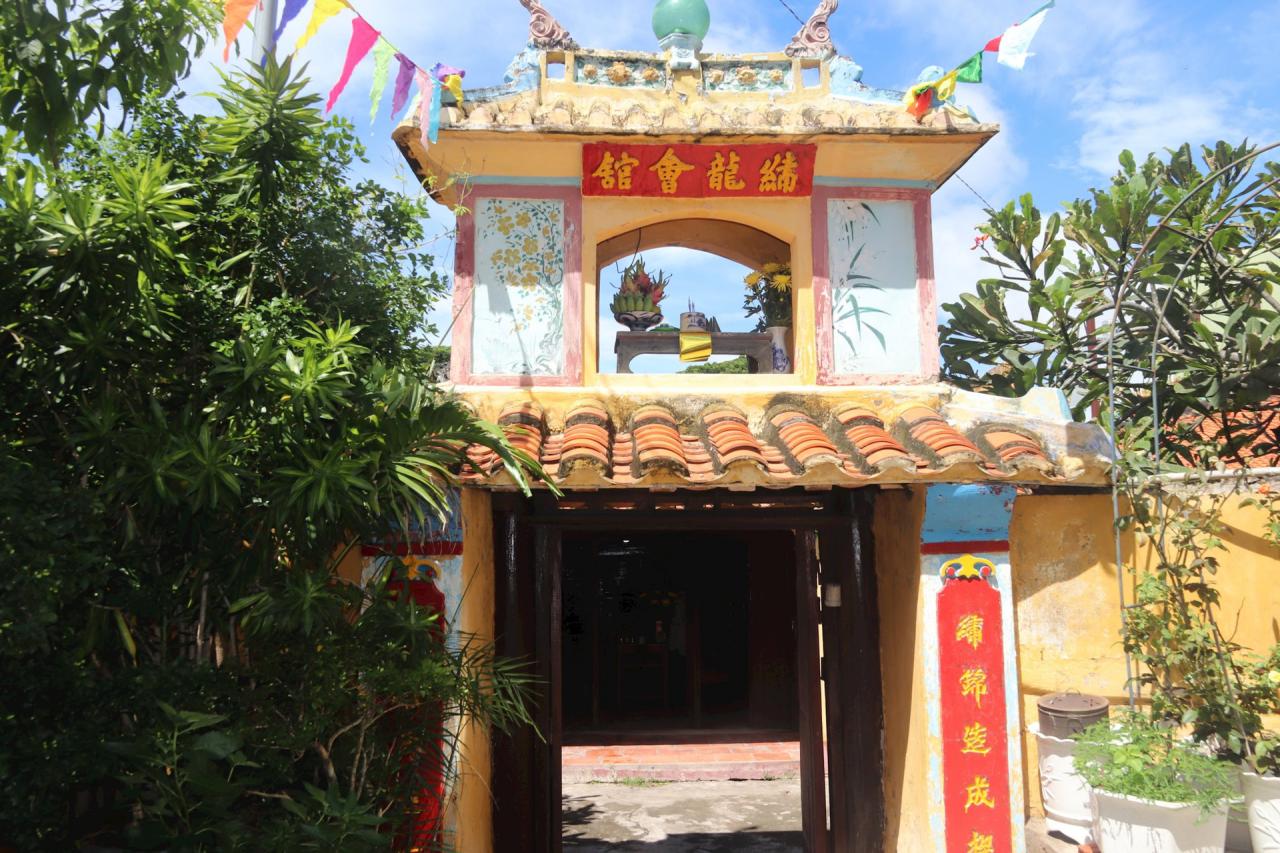
The temple is impressive in its architecture.
Tu Luong Temple is named after the former Tu Luong village. Initially, the temple was a simple structure made of thatch and leaves, and gradually, over several decades, it was renovated into a grand and solemn structure. Like other temples in Binh Thuan, Tu Luong Temple was built through the contributions of all the village officials and people. In 1995-1996, through surveys and comparisons of architectural structure, construction techniques, decorative art, remaining ancient artifacts in the temple, and research into the genealogies of several long-established families in the village, the Museum and the Department of Culture and Information of Binh Thuan determined that Tu Luong Temple was built around the beginning of the 19th century.
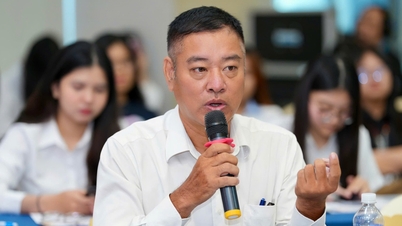
Currently, the communal house is located in Duc Long ward, about 1.5 km southwest of Phan Thiet city center. According to Mr. Nguyen Huu Tu, Head of the Management Board of Tu Luong Village Communal House, when it was first established, Tu Luong was one of the villages with an ideal location, convenient for doing business and living, and quickly achieved economic stability in Phan Thiet. The Tu Luong communal house still preserves an ancient horizontal plaque inscribed with Chinese characters detailing the geography and landscape of the village.
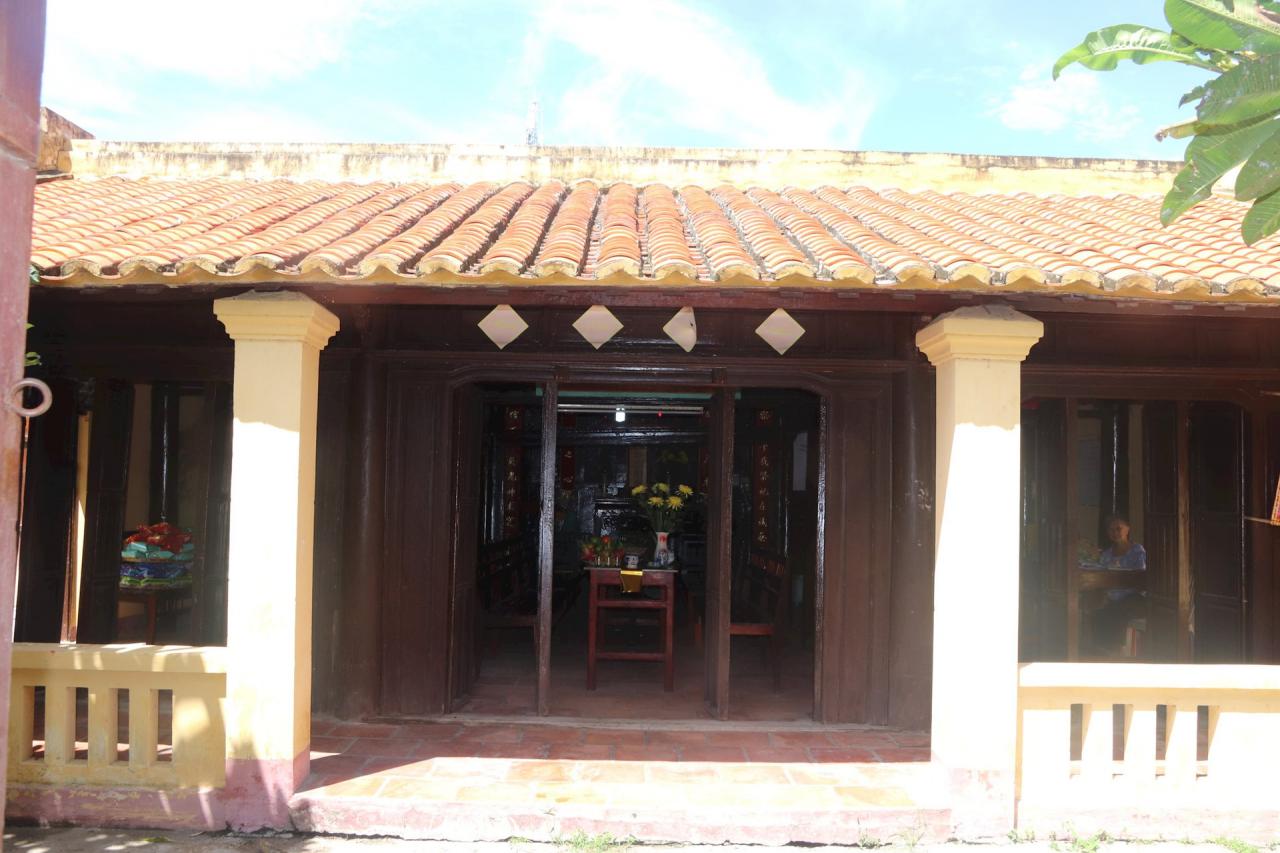
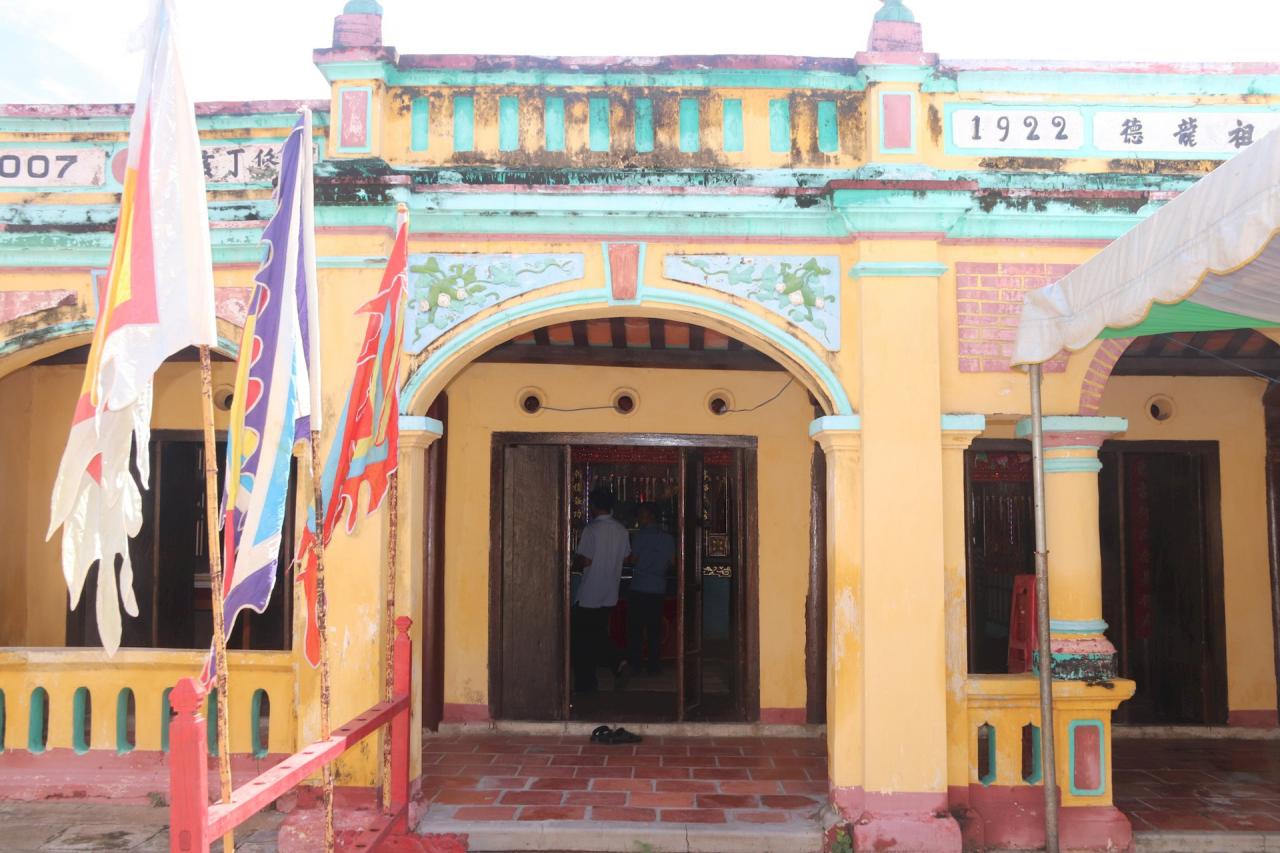
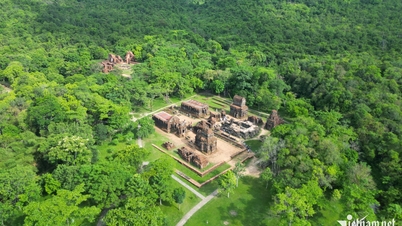
The Tú Luông communal house complex, when first built, was quite large and imposing, including the main hall, the front hall, the triple-arched gate, the screen wall, the ancestral shrine, the performance hall, the group hall, the kitchen, the back gate, and the surrounding wall. Due to the effects of time, the natural environment, war, and partly due to human neglect, many important architectural parts were dismantled and completely collapsed, such as the performance hall, the triple-arched gate, the wall, and the screen wall. Compared to other ancient relics in Binh Thuan, the Tú Luông communal house has a unique architectural structure, simultaneously using two typical local folk architectural forms: the "four-pillar" and "double-roofed" styles. In this architectural structure, wood and brick play important roles. Wood is the primary material used to create the structural framework of each temple roof. Next comes the mortar, a traditional mixture of lime, seashells, sand, molasses, and tree resin, used as a binder to construct the sturdy walls and the solemn, ancient temple roofs. The roofing and flooring materials are still preserved: ancient yin-yang tiles and Bat Trang bricks, commonly used in folk architecture at the time in the area. Hundreds of wooden components, all made from precious woods (such as Cam Xe and Cam Lien) resistant to termites, were meticulously carved, beveled, and elegantly shaped by ancient artisans. These pieces are then fitted together tightly like intricately joined wooden blocks using traditional techniques and folk experience, creating balanced and sturdy frameworks that support the rather heavy temple roofs above.
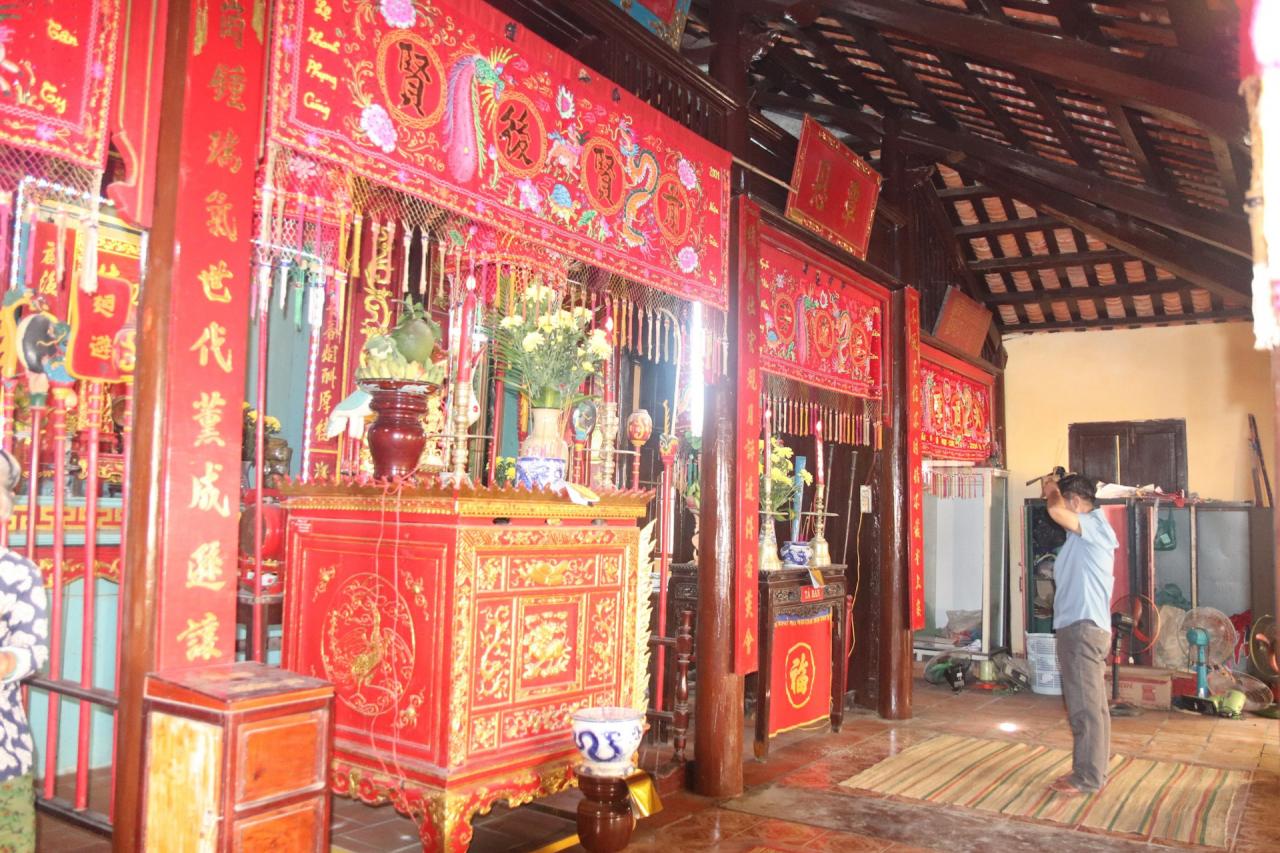
Community cultural institutions in villages and communes.
Tu Luong communal house and several other large communal houses in Binh Thuan were recognized and protected by successive emperors of the Nguyen dynasty, considered cultural institutions of the village community, closely linked to the spiritual and religious life of the people. Currently, the communal house still preserves 10 royal decrees from the Nguyen dynasty emperors.
In addition, the temple also preserves two large bronze bells dating back to the late 19th century. Both bells play an important role in the annual ceremonial music of the temple. Six dragon-shaped altars, four incense altars, three ornate wooden panels, and two writing desks are artifacts made of precious wood, meticulously carved and sculpted. These artifacts play an important role in the interior worship arrangement. Twenty horizontal plaques and sixteen couplets, all intricately carved with ancient Chinese characters on high-quality wood, vary in size, some featuring ornate borders with elegant dragon and floral motifs. The content praises the power of the deities, conveys to descendants the great gratitude owed to ancestors, and instructs future generations on the customs, traditions, and fine arts of the nation…
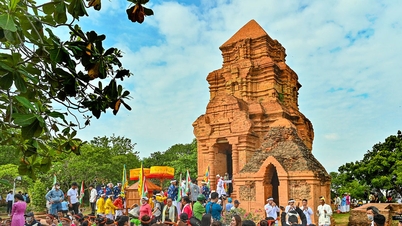
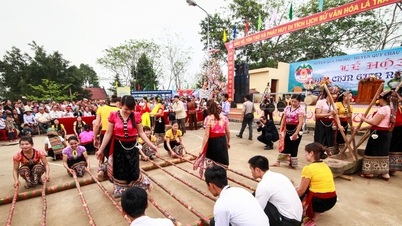
Every year, the temple holds two main festivals (the Spring Festival on the 11th and 12th of the 2nd lunar month, and the Autumn Festival on the 16th and 17th of the 8th lunar month) to express gratitude to the tutelary deity, the village elders, and ancestors. This is an opportunity for everyone to connect with their roots, recall traditions, strengthen community bonds, and remind themselves to live a healthy and beneficial life.
Source














































































Comment (0)