

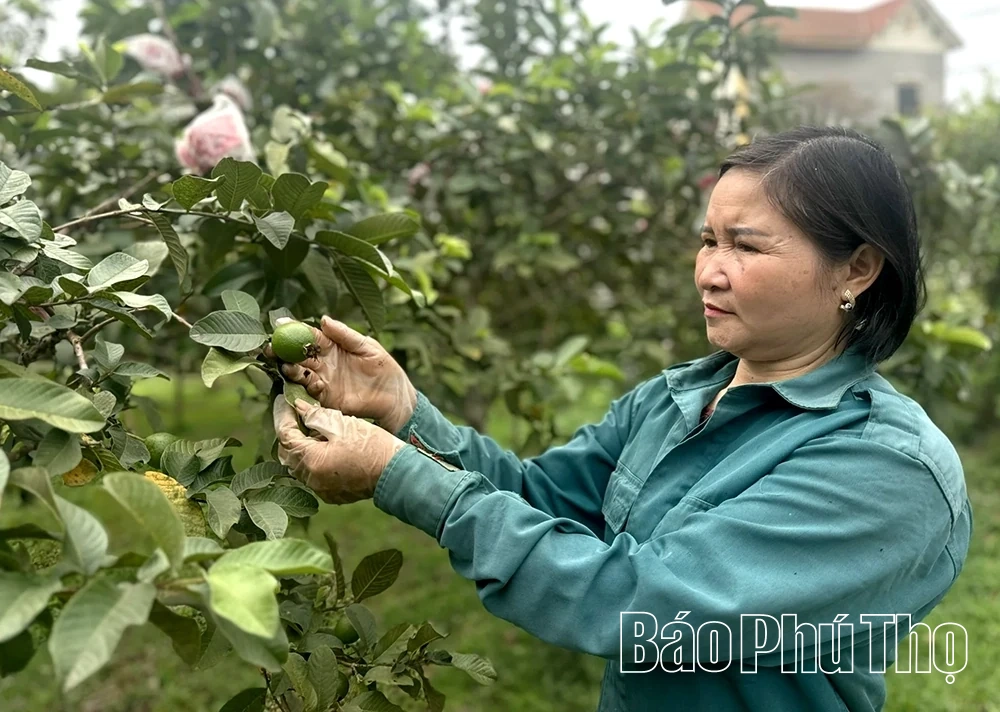
Ms. Nguyen Thi Thu in Tan Hoa village (Luong Son commune) is tending to her new crop of fruit according to VietGAP standards.
After decades of implementing the VietGAP-compliant guava farming model, the economic life of Ms. Nguyen Thi Thu's family in Tan Hoa has steadily improved. An annual income of approximately 500 million VND from the guava orchard is proof of the successful business strategy, the choice of suitable crops, and the farmer's efforts to prosper. Ms. Thu shared: "Previously, this orchard, covering over 7,000 square meters , specialized in tea cultivation. Now, I have focused on improving the soil to switch to guava farming because I see that the investment return will be higher."
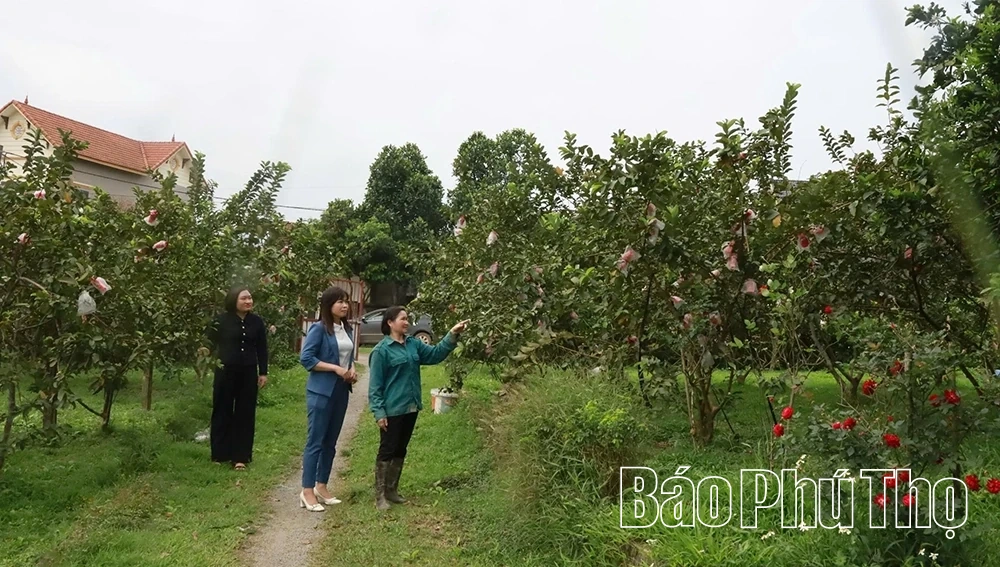
Thanks to the income from guava trees, the lives of households in Tan Hoa village are becoming increasingly prosperous.
Alongside implementing the model, Ms. Thu focused on understanding consumer needs and preferences, prioritizing the selection of high-quality varieties, improving care, and applying scientific and technological advancements to ensure both the quality and yield of her guavas. In addition to guava as her main crop, she also intercropped Taiwanese apples and white lemons, yielding higher profits on the same cultivated area.
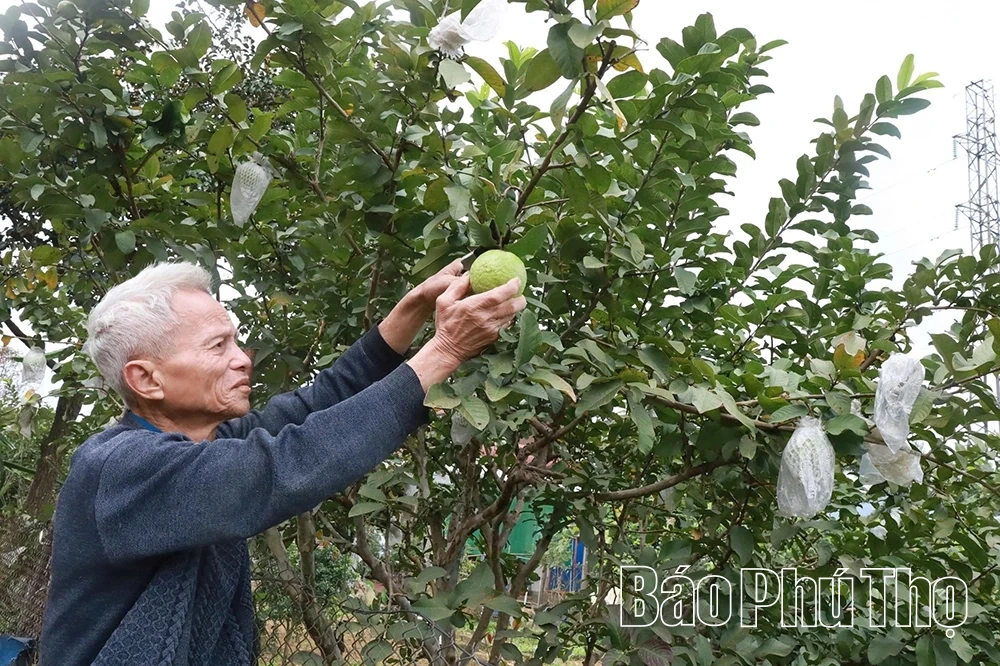
With 70 Taiwanese guava trees, Mr. Do Viet Boi earns 150 million VND per year.
Currently, Taiwanese pear guava is favored by the market due to its superior quality and nutritional value. Instead of the old guava varieties intercropped with pomelo, Mr. Do Viet Boi in Tan Hoa village has converted his entire area to growing Taiwanese pear guava. Mr. Boi said: "Taiwanese pear guava produces large, elongated fruits, with an average weight of 300g – 600g per fruit. The skin is green, slightly rough, the flesh is thick, with few seeds, and the pulp is white, crispy, sweet, and has a characteristic mild aroma. Especially, to ensure the trees thrive, flower, and bear fruit with a high yield and a crispier, sweeter taste, I dedicate a lot of effort to caring for them, meticulously composting fresh fish to create a nutrient-rich organic fertilizer."

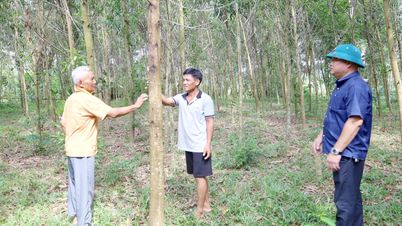
Gardeners in Tan Hoa village share their success in growing Taiwanese pear guava.
This guava variety is highly valued by guava growers for its economic efficiency due to its ease of cultivation, high yield, almost year-round harvest, and higher price compared to common guava varieties. With current scientific and technological advancements, guava growers in Tan Hoa harvest three crops per year, selling at 25,000 VND/kg at the farm. Mr. Do Viet Boi's family cultivates over 70 guava trees, averaging an annual income of approximately 150 million VND.
Tan Hoa village has long been known for its traditional gardening. Taking advantage of its proximity to the Hanoi market, households are actively diversifying their crops, cultivating high-value fruit trees. More than half of their orchards are currently planted with Taiwanese pear guava.
To ensure local agricultural products maintain their position in the market, the VietGAP process is strictly adhered to by households, from selecting disease-free seeds and unpolluted water sources, to using organic fertilizers, integrated pest management (IPM), bagging the fruit, and keeping production logs for traceability. Currently, in addition to supplying restaurants and major markets, guavas originating from Tan Hoa village are also sold retail at local markets.
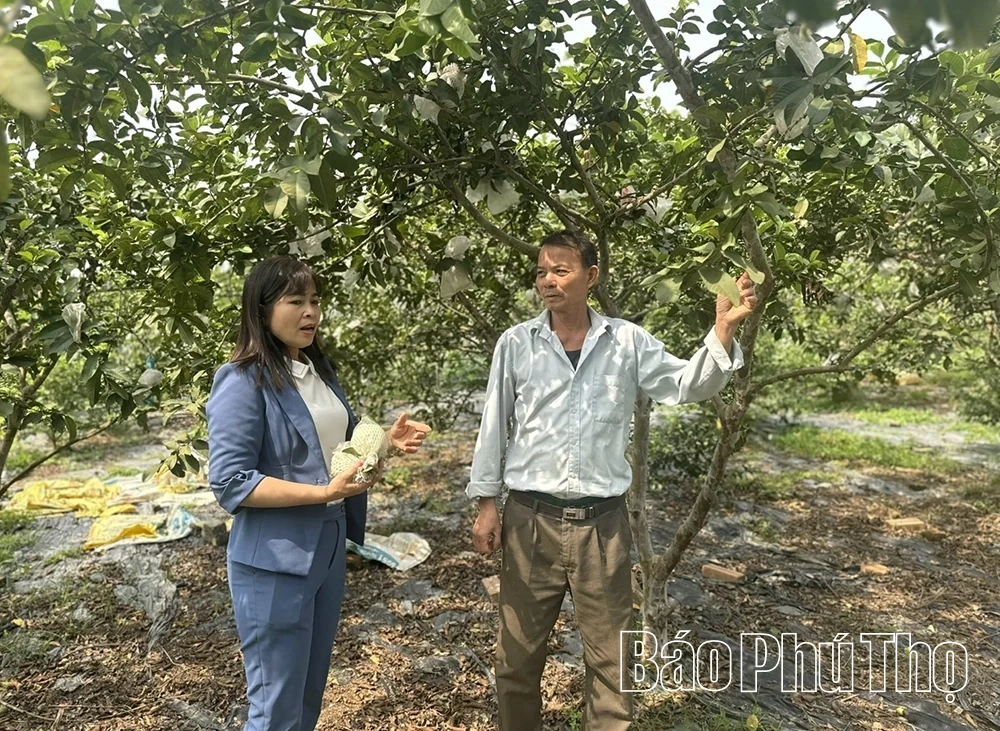
Mr. Doan Dinh Dinh planted over 300 Taiwanese pear guava trees interspersed with white lemons for a sustainable income.
Mr. Ha Duc Dai, head of the Tan Hoa village Farmers' Association, said: "The entire association has 98 member households. In recent years, members have actively renovated their orchards, specializing in planting high-economic-value fruit trees, focusing on applying science and technology in accordance with VietGAP standards. Besides pomelo, oranges, and apples, the main source of income for member households comes from guava trees. Farmers earning hundreds of millions of dong from guava trees have contributed to raising the number of well-off and wealthy households to over 60%, with no more poor member households."
Bui Minh
Source: https://baophutho.vn/vi-ngot-oi-tan-hoa-250346.htm



































































Comment (0)