Artificial intelligence (AI) is profoundly changing how music is created, distributed, and commercialized. By 2026, musicians and producers could generate revenue from AI-powered music in ways that were unimaginable just a few years ago.
However, the proliferation of AI-powered cover channels also poses a challenge for artists in protecting their intellectual property rights.
How AI music makes money
According to Soundverse , there are currently many ways to commercialize AI-generated music, tailored to different skill sets and business models. Creators can sell their music on e-commerce platforms or distribute it through streaming services like Spotify and Apple Music, provided they comply with copyright regulations and AI licensing requirements.
In addition, AI music is widely used in advertising, movie trailers, video games, and media projects. Many businesses now accept AI-generated products, provided that the data used to train the models is legally obtained.
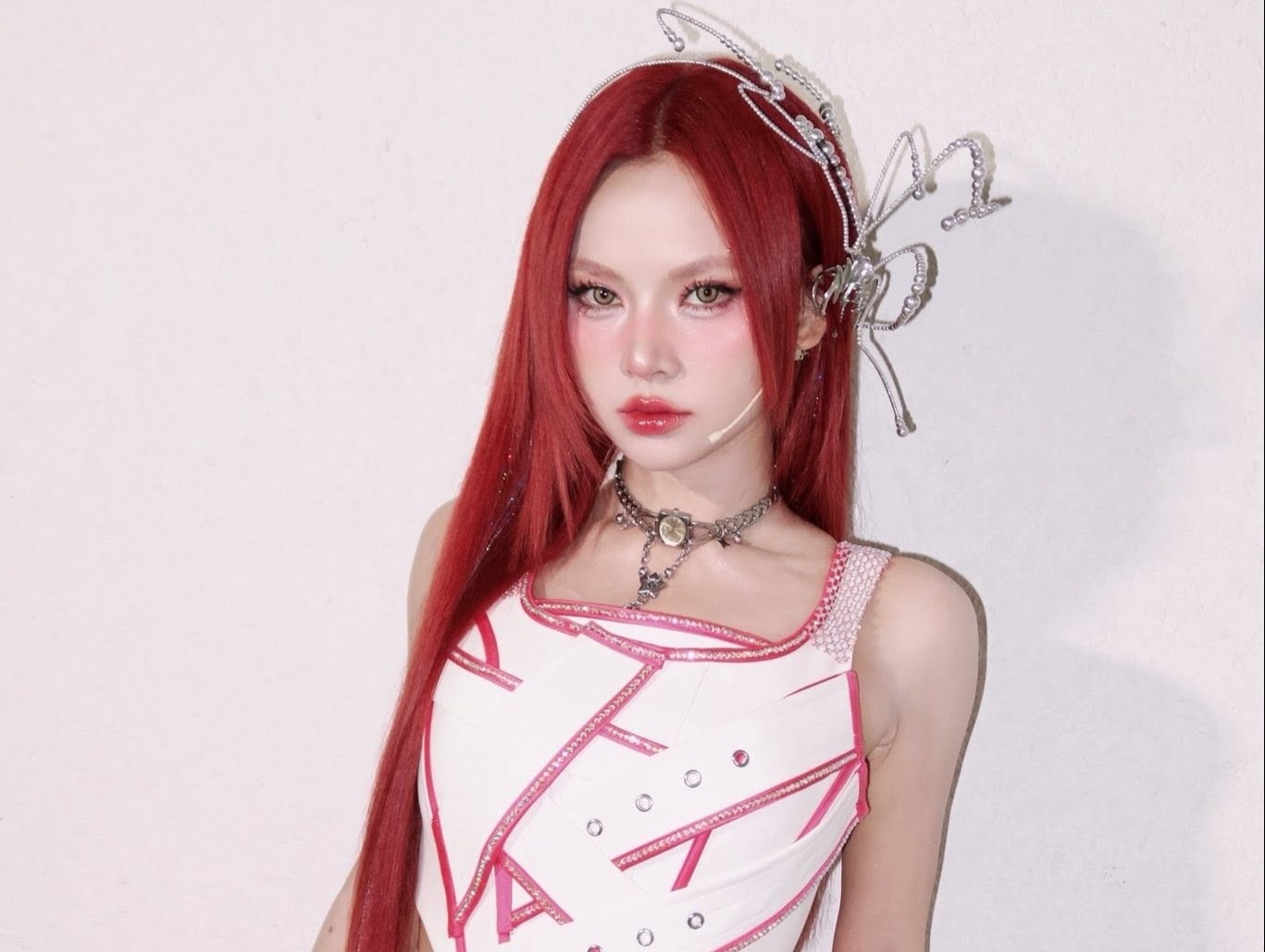 |
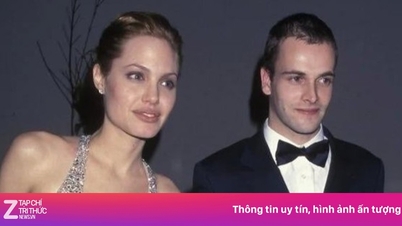
The meticulously crafted artwork by Ngo Lan Huong has been covered using AI and is circulating widely on social media. Photo: FBNV. |
Building themed music libraries such as lofi, meditation, EDM, or relaxing music also helps attract regular customers. Some AI platforms even apply revenue-sharing mechanisms based on the frequency with which music is licensed or used, thereby creating a stable revenue stream without relying entirely on direct sales.
Currently in Vietnam, many channels specializing in AI-generated music have emerged, especially on YouTube. Among them, many channels attract a large following with videos reaching hundreds of thousands, even millions or tens of millions of views. One of the most popular forms is AI-generated voice covers of existing songs. Even classic songs like "Diễm xưa" and "Mưa chiều " can have AI-generated covers.
In a further discussion with Tri Thức - Znews about how AI channels in Vietnam make money, media expert Hong Quang Minh commented: “Some AI channels operate using AI music creation platforms like Suno or Udio with paid packages, usually only around 10-20 USD /month, to create completely new music tracks. Because this is independently created AI content, not using samples or covering any existing songs, the channel owner does not run into YouTube's Content ID mechanism or face copyright issues on Spotify. All revenue from advertising and streaming goes directly to the channel, without having to share with a third party.”



Case 2 involves AI-generated content derived from existing songs. The copyright holder of the original song can file a complaint and claim their rights with the AI-generated account. In that case, revenue is transferred back to the owner of the original song, and the AI-generated music channel receives nothing, and may even face penalties. In return, the channel gains views.
With Spotify, without a valid mechanical license, the account owner will have their tracks removed and will receive no revenue. A mechanical license is understood as the right granted by the copyright owner of a musical work, allowing others to cover, copy, or distribute the song as audio. Some channels circumvent this by obtaining a mechanical license through a legitimate service, but they have to share a portion of the revenue with the copyright owner.
In the case of AI-generated versions, the channel owner must proactively request permission from the copyright holder to create a new version of the song. Only with permission can they proceed. In some cases, popular AI channels with a large following may be contacted by the original song owner to request an AI version to help the song spread further. In that situation, the AI channel receives payment from the original song owner. However, in return, the original song owner receives all revenue from views or a share of the profits as agreed upon.
Currently, YouTube reportedly pays most content creators between $1 and $10 per 1,000 views, equivalent to $1,000 to $20,000 per million views, depending on the type of content. However, channel owners' income also depends on RPM (revenue per thousand views). This figure varies depending on the category, the viewer's geographic location, watch time, and engagement with advertisements.
And in the case of AI channels, the actual amount each channel receives depends on whether that channel releases new music or covers songs by other artists.
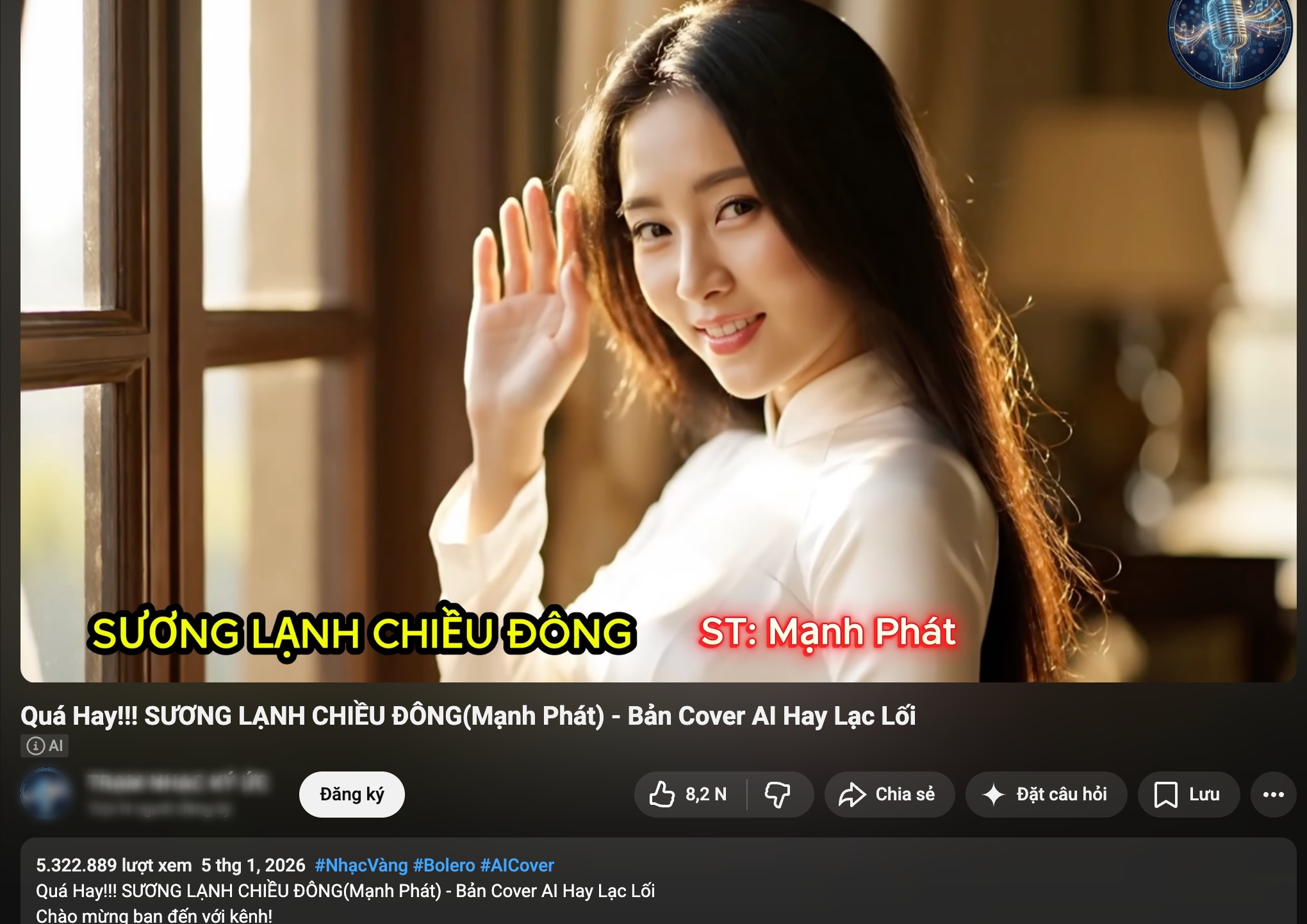 |
One cover version has garnered over 5 million views on YouTube. |
Risks related to intellectual property rights
Recently, several Vietnamese singers, such as Vstra and Ngo Lan Huong, have complained that their songs are being used for AI-generated covers without their permission. According to lawyer Hoang Ha, the practice of AI-generated cover channels using singers' music to make money without the copyright owner's permission is rampant in Vpop.
"Legally, in my opinion, an artist's own voice is not necessarily a work eligible for copyright protection, but performances, sound recordings, video recordings, songs, and vocal performances are subject to copyright and related rights protection."
Vocal AI can infringe on copyright by using recordings, performances, or the artist's voice to train, copy, separate, or create AI covers without permission. If the AI reuses the melody, lyrics, arrangement, recording, or distinctive style of the singer, it can simultaneously infringe on the copyright of the song and the related rights of the performer and the record producer. Current intellectual property law protects property rights to works and the rights of performers, and considers infringement of these rights as infringement of related rights,” the lawyer said.



Currently, Vietnamese law does not have a specific legal provision called "AI vocals," "AI covers," or "AI-based voice copying." These cases are currently handled by existing regulations in the Intellectual Property Law, the Civil Code, personal data laws, and administrative and criminal sanctions.
Regarding copyright, if AI uses songs, melodies, lyrics, or arrangements to create new products, then copyright for the musical works must be considered. Regarding related rights, if recordings, performances, or vocals already established in audio or video recordings are used for training, copying, distributing, or uploading online without permission, it may infringe on the rights of the performers and producers of the audio or video recordings under the Intellectual Property Law and Decree 17/2023/ND-CP.
Currently, the law does not protect a singer's "voice" or "vocal color" as an independent copyright object. However, if voice imitation leads the public to mistakenly believe that the singer is participating in, agreeing to, or promoting a product, or causes harm to their honor, reputation, or commercial interests, it may be considered from the perspective of personal rights, rights to image, honor, dignity, and reputation according to the Civil Code.
Depending on the severity, the infringing party may be required to remove the infringing material, apologize, issue a correction, or pay compensation; they may also face administrative penalties for copyright and related rights violations. More serious cases may result in criminal prosecution under Article 225 of the 2015 Penal Code.
Source: https://znews.vn/vi-sao-nhac-viet-keu-cuu-post1661023.html