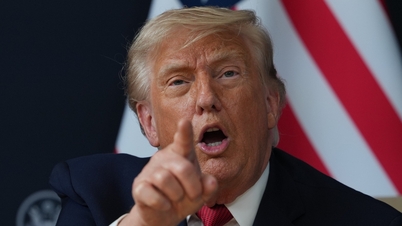
The last thing President Trump wants is another blow to consumers' wallets. However, policymakers have few tools to quickly address the memory chip shortage, the underlying cause of Apple's recent price hike.
Currently, only a handful of companies manufacture memory and storage chips, while building new factories takes years.
Samsung Electronics, SK Hynix, and Micron Technology are currently the three dominant players in the DRAM memory chip market. However, the biggest problem for these three giants is that they are dedicating most of their production capacity to the artificial intelligence (AI) industry, thereby stifling the supply for consumer technology companies.
The Ghost of Crisis
U.S. lawmakers have approved tens of billions of dollars in grants and tax credits to expand domestic semiconductor manufacturing capacity.
A prime example is the memory chip factories that Micron is rapidly constructing in Boise, Idaho, and Clay, New York. Ironically, the first facility in Idaho won't be operational until mid-2027, while the New York plant won't be able to start production until 2030.
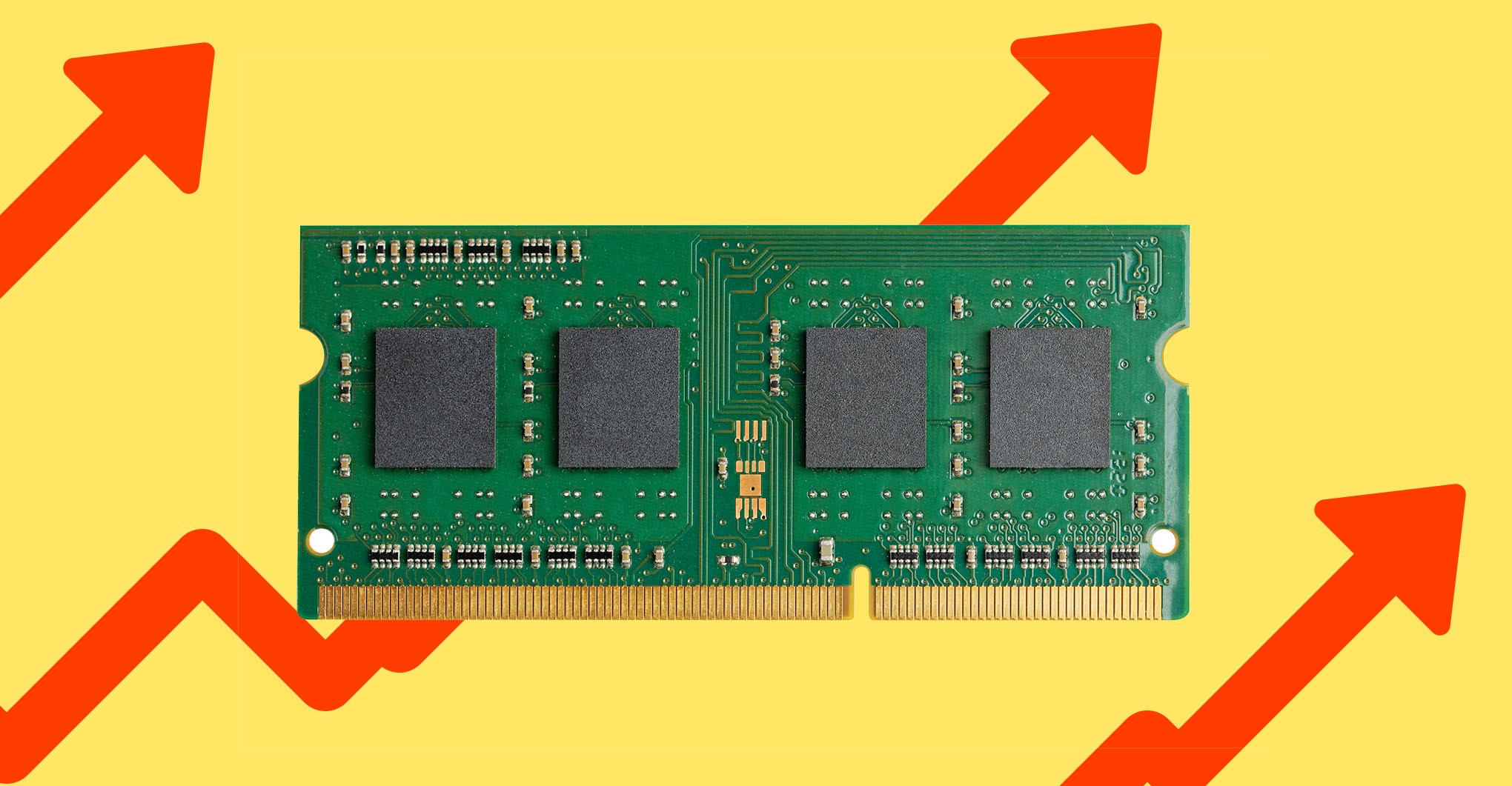 |
Despite numerous policy support efforts, memory chip prices continue to rise due to a severe supply crisis. Photo: The Verge. |
"You're witnessing a technological shift at breakneck speed, but it's being held back by slow physical systems like manufacturing plants," said Kathryn Mitchell, a technology policy advisor at the law firm DLA Piper, which works with the U.S. Department of Commerce.
Besides technical challenges, major memory chip manufacturers are also being cautious about the risk of creating a new supply surplus.
In fact, the memory chip market has experienced boom-bust cycles in the past. Just in 2023, South Korea's SK Hynix – now valued at over $1 trillion , on par with Samsung and Micron – was losing billions of dollars and had to cut production amid an industry downturn. That same year, Micron also laid off 15% of its workforce.
It wasn't until the AI craze exploded that the demand for specialized memory chips for training and querying AI models on servers skyrocketed. During this boom, AI data centers also consumed a huge amount of traditional memory chips.
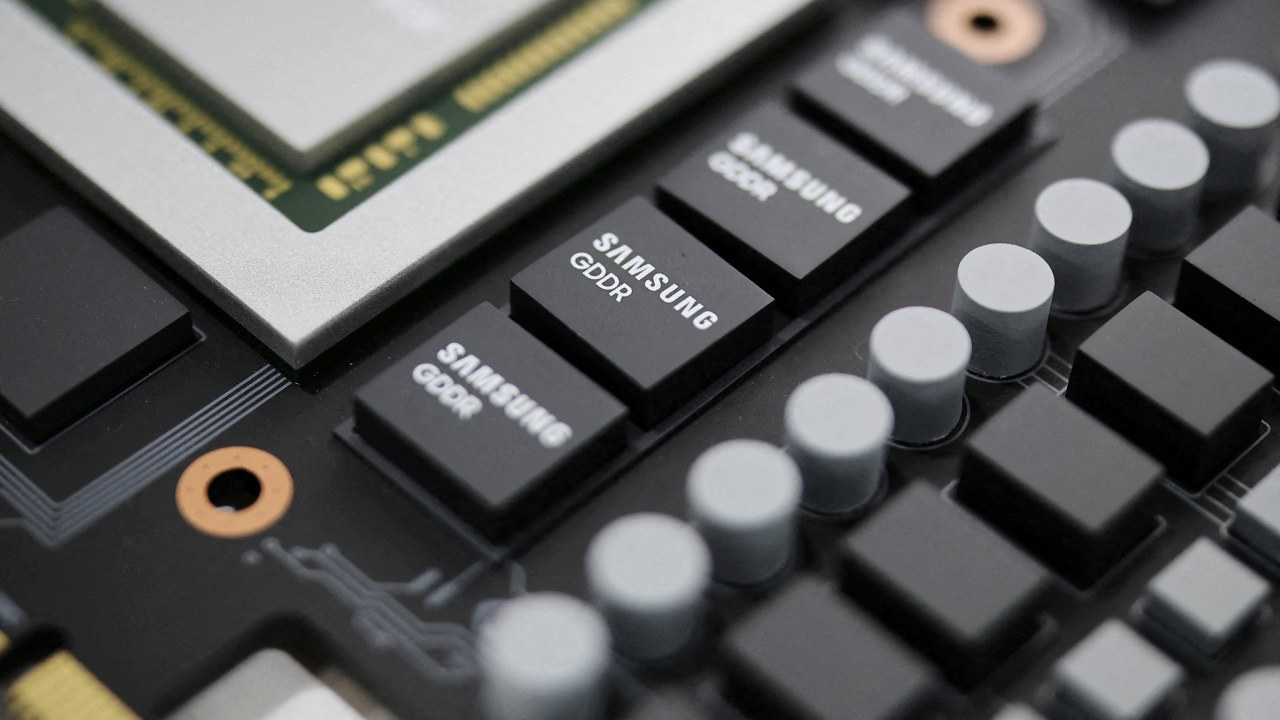 |
Despite record growth, major memory chip manufacturers are also showing caution regarding the risk of creating a new supply surplus. Photo: Reuters. You may also like  Chinese boss warns robots will eventually replace delivery workers.The explosion of automation technology in China is threatening the livelihoods of millions of workers, causing considerable concern among policymakers.  Meta unveils new product that "disrupts" the smart glasses market.Meta's smart glasses allow users to take photos, record videos, listen to music, make calls, and interact with the built-in AI assistant, including live translation in 14 languages.  Digital transformation contributes to safeguarding border sovereignty.In the border villages of Nghe An province, QR codes deployed by the Border Guard are becoming a "digital bridge" helping people easily provide information and report crimes. Through innovative digital transformation models, the strength of the entire population is unleashed, contributing to protecting sovereignty and maintaining peace in the border areas of the Fatherland. |
"AI companies are the players with the deepest pockets in the economy , and they're paying more than anyone else to acquire memory chips. The rest of us simply have to accept the cost," said Jim Secreto, a consultant who previously worked at the U.S. Department of Commerce under the Biden administration.
Mr. Trump could direct manufacturers to allocate a certain percentage of memory chip production to consumer technology products.
However, according to industry executives and analysts, such an arrangement would be difficult to implement and could lead to severe supply disruptions in other market segments.
"China as a card" and the national security line.
China currently offers the closest solution to the concept of a "quick fix" for the chip shortage, but it is only a piecemeal fix.
Currently, two Chinese chip manufacturers, CXMT (the country's leading DRAM producer) and Yangtze Memory Technologies - YMTC (specializing in NAND storage chips), are growing at a phenomenal pace and are eager to expand their global customer base.
The Wall Street Journal, citing sources close to the matter, reported that YMTC is building three new factories in China, expected to more than double its current capacity by the end of 2027.
Meanwhile, CXMT is aggressively building factories and seeking to raise $4 billion in an IPO in Shanghai. CXMT's revenue in the first quarter of 2026 increased by more than 700% year-on-year, although the company acknowledges that its products still lag behind Samsung Electronics, SK Hynix, and Micron Technology.
However, the biggest problem is that U.S. national security regulations are making it difficult for American technology companies to cooperate with Chinese chip manufacturers.
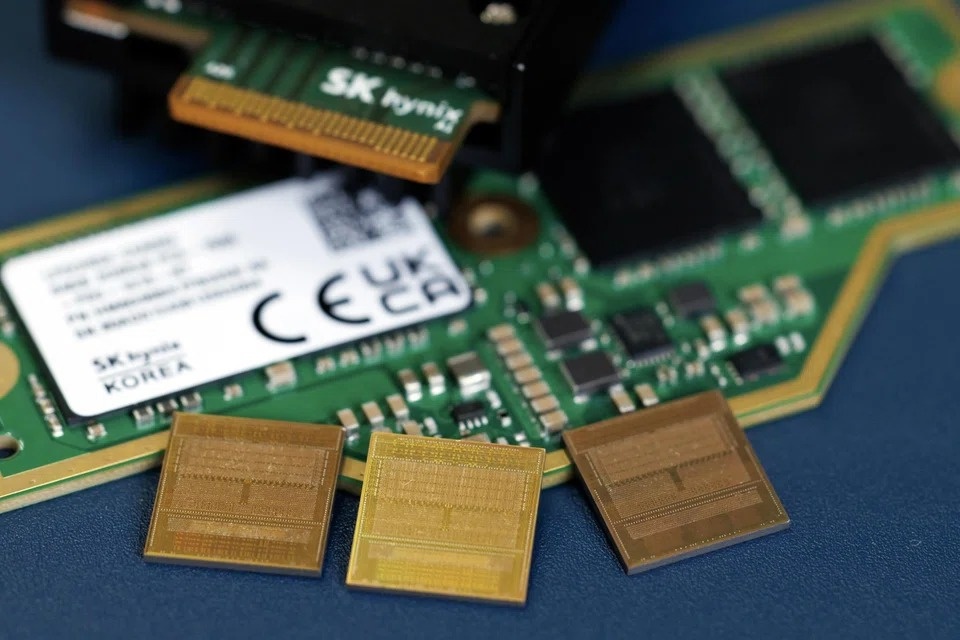 |
China may offer a quick fix for the chip shortage, but that door is locked shut by U.S. national security concerns. Photo: Bloomberg. |
Washington's goal is to protect core technological secrets while maintaining market positions for Micron and other suppliers from South Korea and Japan.
"Which threat is greater: component shortages or supporting China's production of advanced memory?" Kevin Wolf, a lawyer at the law firm Akin Gump, points out the dilemma facing policymakers.


From Wolf's perspective, backing China would be a bad move for national security.
However, the memory chip shortage has worsened to the point where some of the giant consumer technology companies have had to plead with US officials to ease restrictions on cooperation with Beijing.
These companies also want Washington to make it easier for Samsung and SK Hynix to increase production at their mainland facilities.
In fact, in 2022, Apple partnered with YMTC to make the Chinese NAND chip manufacturer one of its flash memory suppliers for its devices. However, Apple was later forced to cancel the plan due to fierce opposition from lawmakers.
Source: https://znews.vn/vi-sao-ram-khong-the-ngung-tang-gia-post1661949.html


![[Photo] Prime Minister Le Minh Hung presides over the thematic session on promoting science and technology development and innovation.](https://vphoto.vietnam.vn/thumb/1200x675/vietnam/resource/IMAGE/2026/06/23/1782207872934_ndo_br_dsc-1724-jpg.webp)


![[Image] Paris's oldest bridge goes viral after transforming into a giant cave.](https://vphoto.vietnam.vn/thumb/1200x675/vietnam/resource/IMAGE/2026/06/24/1782283441197_ndo_br_dsc05314-jpg.webp)