

Studies show that babies born via cesarean section have weaker immune systems than babies born vaginally due to three main reasons: a deficiency in natural antibodies because they do not receive all the essential antibodies from their mother, reducing their immediate defense capabilities; low iron reserves due to the premature clamping of the umbilical cord, which is common in cesarean sections; and a weakened gut immune barrier due to lack of contact with beneficial bacteria in the mother's vaginal canal.
Poor immunity due to a deficiency of baseline antibodies.
Immunoglobulin G is one of the most important antibodies of the immune system, making up the highest proportion in human serum. During pregnancy, it is the only antibody that can cross the placenta from mother to child to protect the infant during the first few months of life. This process is particularly potent in the final weeks of pregnancy and is optimized during labor.

For babies born by cesarean section, not experiencing natural labor (especially in elective cesarean sections) affects the passive transfer of immune factors from mother to child. Scientific studies have noted a significant decrease in antibody levels and antibody-secreting cells in babies born by cesarean section compared to those born vaginally. Specifically, umbilical cord blood tests show that IgG levels in babies born by cesarean section can be up to 45% lower than in babies born vaginally[1]. This is one of the main reasons why the child's immune system is less resilient to pathogens.
On the other hand, IgA, particularly secretory IgA (sIgA), plays a crucial role in protecting the intestinal mucosa – the body's first line of defense. However, newborns cannot produce enough IgA themselves and rely almost entirely on sIgA from colostrum and breast milk during the first few weeks and months of life. In babies born via cesarean section, delayed breastfeeding, difficulty feeding, or slow milk let-down often occur, disrupting sIgA supplementation and making the intestinal mucosa more vulnerable to bacterial and viral infections.
Weak intestinal barrier
Over 70% of the body's immune cells are concentrated in the gut. Therefore, a healthy digestive system is the foundation for a strong immune system. During vaginal delivery, babies receive their first "gift" of microorganisms from their mother – beneficial bacteria such as Bifidobacterium and Lactobacillus – which help establish a protective barrier in the gut, prevent harmful bacteria from entering, and stimulate the baby's body to learn how to build its own immunity.
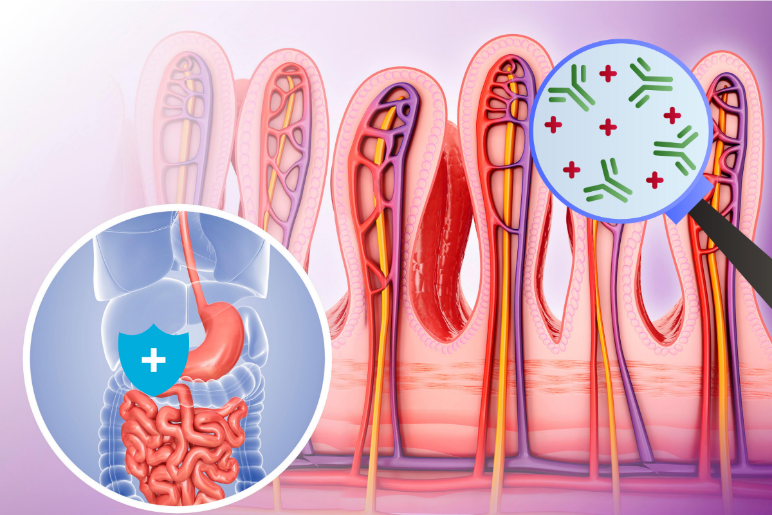
Conversely, babies born via cesarean section miss out on this initial "probiotic contact," instead receiving more common harmful bacteria. This reduces the diversity of the gut microbiota in infants, causing an imbalance that leads to impaired immune function and development compared to babies born vaginally. Furthermore, delayed breastfeeding or insufficient breast milk deprives infants of the essential nutrients needed to nourish beneficial bacteria.
As a result, the gut immune barrier in children born via cesarean section is weak, increasing the risk of infections, digestive disorders, and allergic diseases in the first few years of life.
Low iron reserves – a fragile foundation for immunity.
Iron is not only essential for blood formation but also a crucial micronutrient for the functioning of the immune system. Maternal iron transfer to the fetus is the sole source of iron reserves for the child during the first six months of life. Babies born via cesarean section have lower iron reserves due to early clamping of the umbilical cord and not receiving the strong iron transfer during natural labor.
Iron deficiency makes it difficult for a child's body to mobilize enough immune cells to fight off pathogens, thereby affecting not only their immunity but also their long-term growth and development.
A strong immune system – A priceless gift in early life.
Although babies born via cesarean section face several "immunological disadvantages," their immune systems can still adapt and recover strongly if properly supported, such as through skin-to-skin care, breastfeeding, delaying umbilical cord clamping if possible, and a scientifically sound nutritional regimen.
With love, understanding, and timely intervention, parents can completely overcome any immune deficiencies in their children. A strong immune system is an invaluable gift in early life, a springboard that helps children overcome all obstacles to catch up with growth and develop healthily and comprehensively in the future.
Source: https://cand.com.vn/y-te/vi-sao-tre-sinh-mo-mien-dich-yeu-i794987/



![[Photo] General Secretary and President To Lam presides over a meeting on preparations for the review of one year of operation of the three-tiered government system.](https://vphoto.vietnam.vn/thumb/1200x675/vietnam/resource/IMAGE/2026/06/02/1780391821195_a1-bnd-4595-9717-jpg.webp)



















































































Comment (0)