Vietnamese people, especially those in Hanoi, are captivated by the lotus flower, a flower that blooms in summer , vibrant under the summer sun. Nature has miraculously nurtured the lotus to become a companion of summer, much like the chrysanthemum of autumn or the peach blossom of spring. While the tropical sun might deter other flowers, the lotus becomes more radiant and its fragrance more intense the more intense the sun.
Vietnamese people love the lotus not only for its shape, fragrance, and spiritual significance, but also for its boundless devotion, like the immeasurable generosity of the Buddha. No part of the lotus is useless, from the lotus root or stem lying in the mud to the lotus flower, seed pod, lotus rice, lotus seeds, and lotus leaves. Even the thorny stem of the lotus provides the lotus silk used to weave precious fabrics for scarves and clothes.
From the lotus ponds of the Northern Delta to the lotus lakes in the heart of Hue, the vast lotus fields of the Southwestern Mekong Delta, from Buddhist architecture to poetry, painting, music , and cuisine, the lotus is present as an integral part of Vietnamese cultural identity. Few plants have entered the lives of the Vietnamese people so profoundly.
In this context, Vietnam Airlines' choice of lotus as the theme for its summer culinary journey is a highly symbolic idea. Interestingly, this culinary journey doesn't stand alone but is subtly "mixed" to create a complete brand identity.
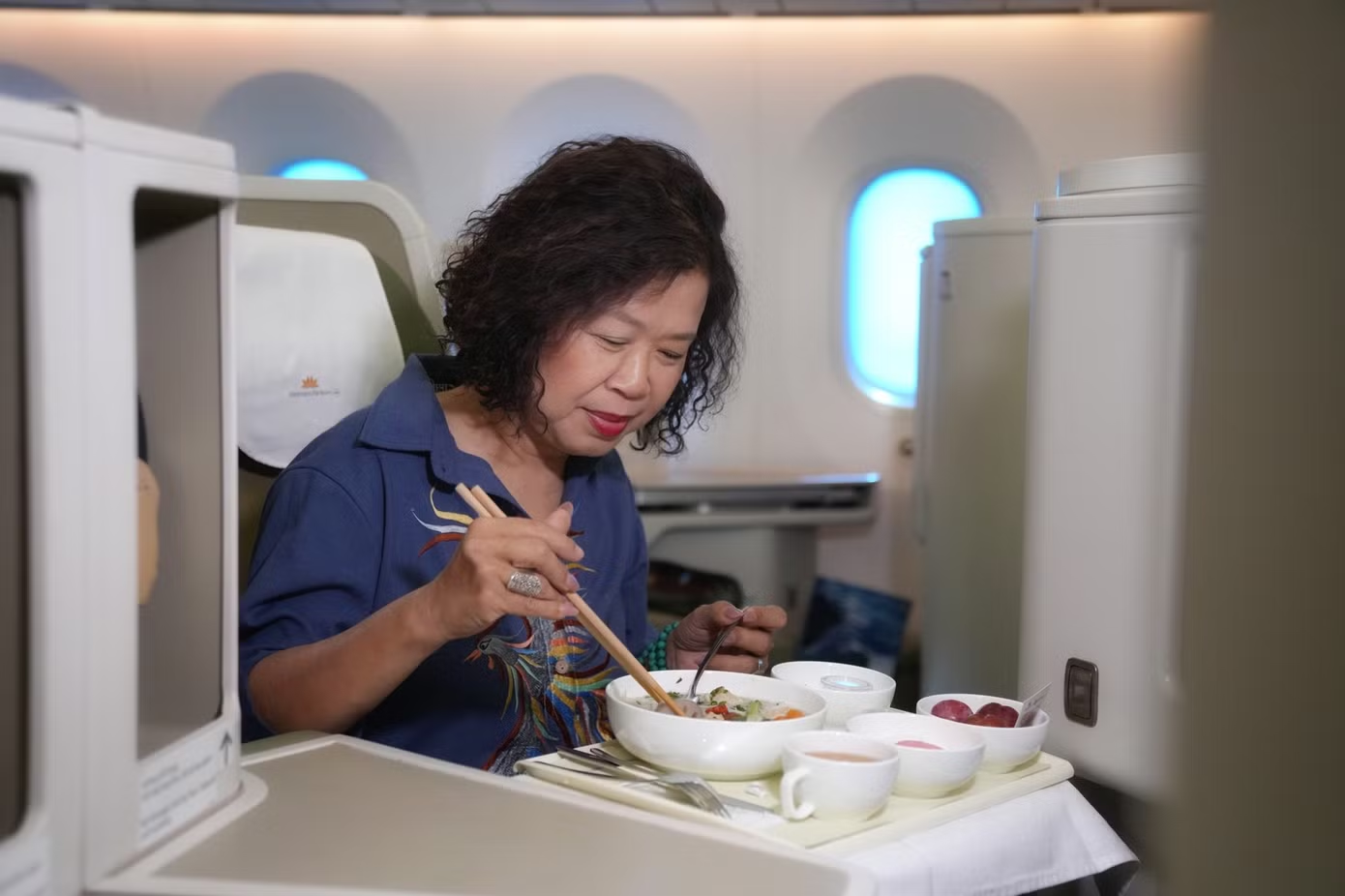

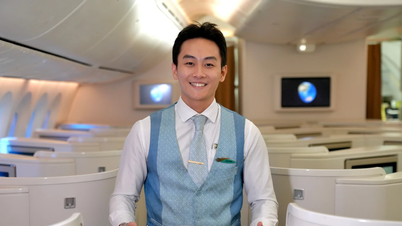
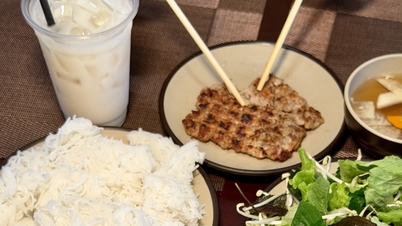
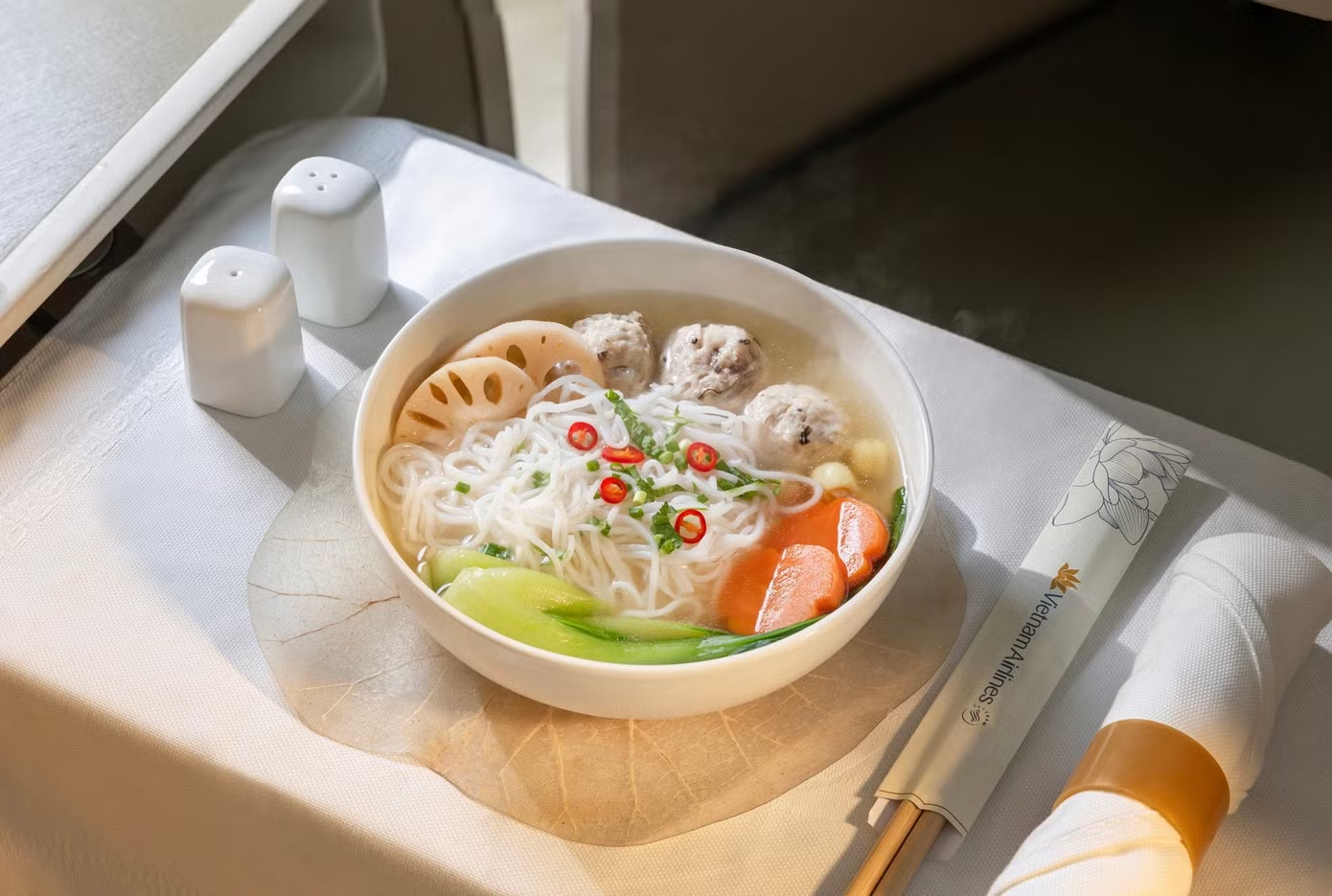
As we approached the runway, we saw the golden lotus emblem on the aircraft's fuselage. A little closer, we saw the young, vibrant flight attendants with the Vietnam Airlines lotus logo on their uniforms. Stepping into the cabin, we were greeted by the subtle, alluring scent of lotus. And when the food and drinks made with lotus were served, we couldn't help but exclaim in delight at the rich menu of nearly 30 dishes, a harmonious blend of tradition and modernity. There were lotus tea with fresh starfruit, fresh cream, lotus-filled mochi, lotus noodle soup, Hue-style lotus seed rice with roasted chicken and lotus root salad, lotus seed and coconut milk dessert, lotus seed green tea… all visually appealing and delicious.
From the lotus flower symbol, the logos pinned to the flight attendants' uniforms, to the subtle scent of lotus blossoms in the cabin, and now the lotus-flavored dishes – all these elements combine to form a cohesive story. A story about Vietnam. Interestingly, this story isn't just told through taste. It's told through layers of emotion. From the image of the lotus flower – the airline's brand symbol – to the distinctive fragrance on board, from the lotus-flavored dishes to the sense of relaxation passengers experience throughout the journey. It's a deliberately designed multi-sensory experience.
I particularly like this design because it shows a huge shift in the mindset of tourism promotion. In the past, we often introduced culture through information and explanations, but today, the world wants to experience it rather than just be told about it. An international passenger might not remember everything in a travel guide, but they will remember the feeling of enjoying a dish with lotus flavor while at an altitude of over ten thousand meters. They will remember the gentle scent of lotus in the airplane cabin, the image of lotus flowers appearing subtly throughout the journey, as well as the grace and politeness of the flight attendants.
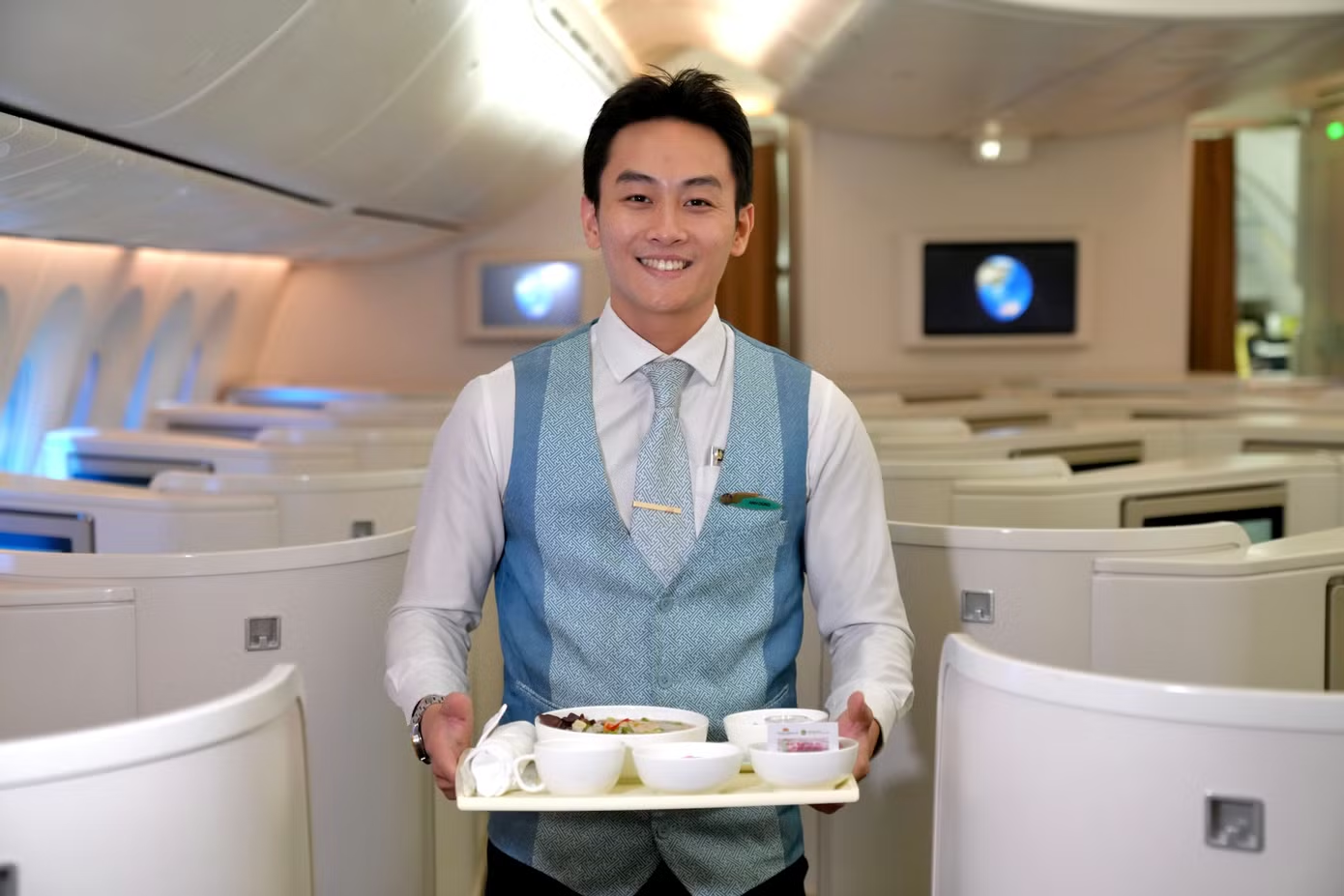
And that's why leading national airlines around the world always consider each flight as part of the travel experience, not simply a means of transportation. In many cases, the aircraft cabin is the first "point of contact" between international travelers and Vietnamese culture. Before even setting foot in the airport, they see the image of that country through the service, the design language, the music, the aromas, and the chosen dishes. In other words, each flight is a miniature cultural space. And within that space, Vietnam Airlines is choosing to tell the story of Vietnam through the lotus flower. It's a smart choice. Because the lotus is familiar enough for any Vietnamese person to feel a connection with, and also special enough to become an unforgettable mark for international friends.
From a familiar summer flower, Vietnam Airlines has transformed the lotus into a multi-sensory experience, where sight, smell, taste, and emotion intertwine. Beyond that, it offers a thought-provoking perspective on how Vietnamese tourism should be conducted today. To touch the hearts of tourists, sometimes grand gestures aren't necessary. Simply knowing how to subtly tell the story of one's culture, like a lotus flower blooming amidst the clouds, is enough.


And that approach is what makes the difference. Because ultimately, what makes a national airline valuable is not just the means of transporting passengers from one point to another. More importantly, it's the ability to carry the image of the country on every flight. Vietnam Airlines' approach is a correct direction in promoting tourism and building a national brand in the era of "digital transformation." Because, instead of introducing Vietnam with formal slogans, Vietnam Airlines is choosing a more subtle approach: letting culture speak for itself through the passenger experience.
And when a passenger recalls the scent of lotus blossoms in the clouds, they may not only remember a delicious dish, but more profoundly, the feeling of having touched a part of the Vietnamese soul.
Source: https://tienphong.vn/vi-sen-tren-nhung-tang-may-post1856204.tpo