In An Thanh hamlet, An Truong commune ( Vinh Long province), when asked about rice farming, the locals often sigh. Their worries over the years have not only been about unpredictable weather or rising input costs, but also about organic poisoning – something the locals say means "a single touch can easily lead to total loss."
Mr. Duong Van Cao, head of the An Thach hamlet Farmers' Association, vividly remembers the sudden rainy seasons when straw drying in the middle of drying would be flooded. When the straw got wet, farmers couldn't transport it back to feed their buffaloes and cows, forcing them to bury it in the fields, causing organic poisoning, weakening the rice plants' roots, causing yellowing leaves, and reducing yields.
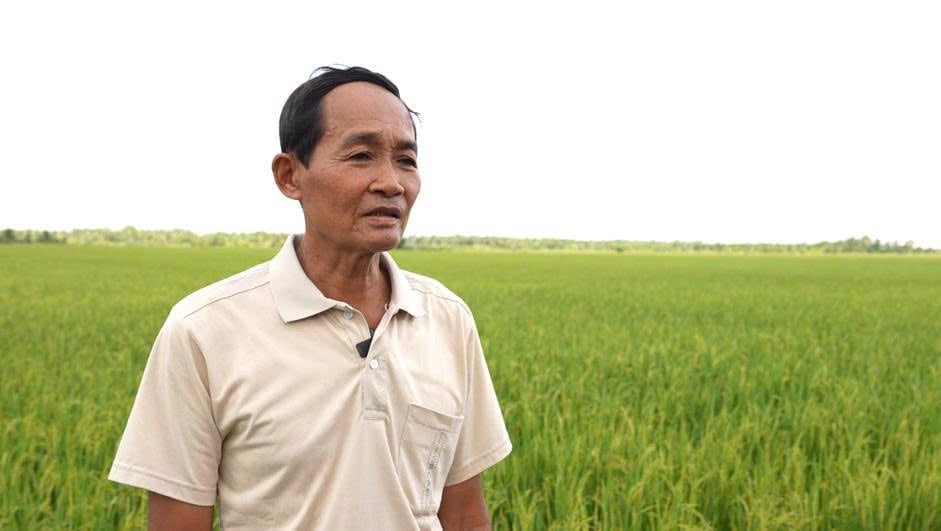
Mr. Duong Van Cao, Head of the An Thach Hamlet Farmers' Association, recounted the difficulties faced before using microbial products to treat rice straw. Photo: SOS Environment.
"In the old days, if the straw was flooded, it was game over; we had to use a lot of fertilizer for the next crop," Mr. Cao recounted. Change only began when the model of treating straw with microbial preparations was implemented, and Mr. Cao was one of the first households to participate. He and 56 other households experimented with this model because they had few other options given the pressure of fertilizer prices and disease outbreaks.
The initial stages were not easy; farmers struggled with using the new product, unsure how to mix it correctly because the product was still thick and difficult to spray with a machine. Only when the formula was adjusted to be more diluted, suitable for the farming conditions, did people notice the first differences.
The soil began to "breathe" after the straw stopped decomposing incompletely under the mud. Each household compared their rice fields with the previous season and saw clear improvements: the rice plants had stronger roots, more upright leaves, fewer pest and disease attacks, and especially, the incidence of wild rice decreased significantly.
After several attempts at treating rice straw with microbial preparations, what pleased Mr. Cao the most was the reduced cost and healthier soil. He excitedly said, "Now, with the microbial treatment, the soil is noticeably healthier, the rice plants are growing evenly, and costs are reduced. The farmers are very happy!"



One of the most promising rice paddies belongs to Mr. Nguyen Van Tu in Van Truong commune (Vinh Long province). Having used chemical fertilizers for many years, Mr. Tu approached his first season applying biological straw treatment with many concerns. But by the second season, the changes were evident in every field: the rice retained water better, the soil was looser, the rice roots were stronger, and the weeds – a problem that had caused him sleepless nights for many years – were significantly reduced. More importantly, compared to his previous use of chemical fertilizers, investment costs were significantly reduced, while yields remained stable.
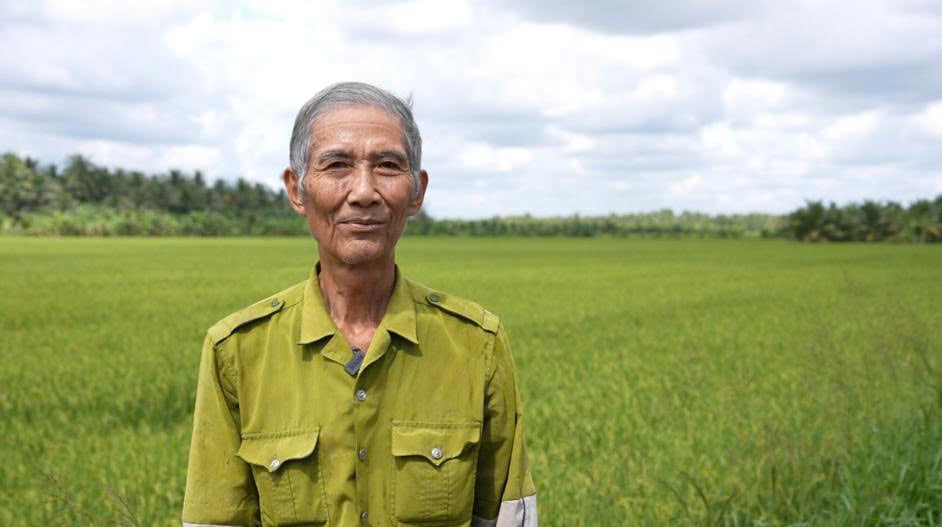
Mr. Nguyen Van Tu in Van Truong commune, Vinh Long province, said that using microbial products to treat rice straw helps the fields retain water better, makes the soil looser, and strengthens rice roots. Photo: SOS Environment.
Without much campaigning, the villagers spread the word. When one person saw another's rice field was greener and had fewer diseases, everyone in the village boldly followed suit, actively using microbial products on their rice fields, and simultaneously spreading the model to neighboring fields.
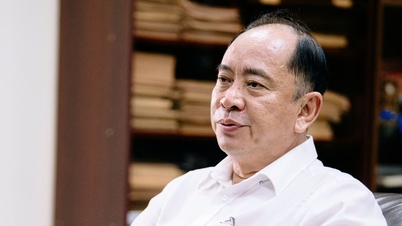
Mr. Tran Van Phong, Head of An Thanh Hamlet (An Truong Commune), believes that the change lies not only in techniques but also in the farming mindset of the people. Many years ago, most farmers sowed rice densely, using a lot of chemical fertilizers and pesticides to "preserve the fields," leading to soil degradation. When flooded, the land was susceptible to rice blast disease, resulting in unstable yields. For many years, the "everyone for themselves" approach, with sowing at the wrong times, also hindered harvesting and caused unstable prices.
According to Mr. Phong, the most convincing thing for people is not workshops or agricultural extension programs, but reality: "The most important thing is that farmers see the results, see healthier rice plants, less soil pollution, less fertilizer, and less pesticide use. That's what's truly convincing. No matter how well you talk, if you don't see results, people won't follow..."
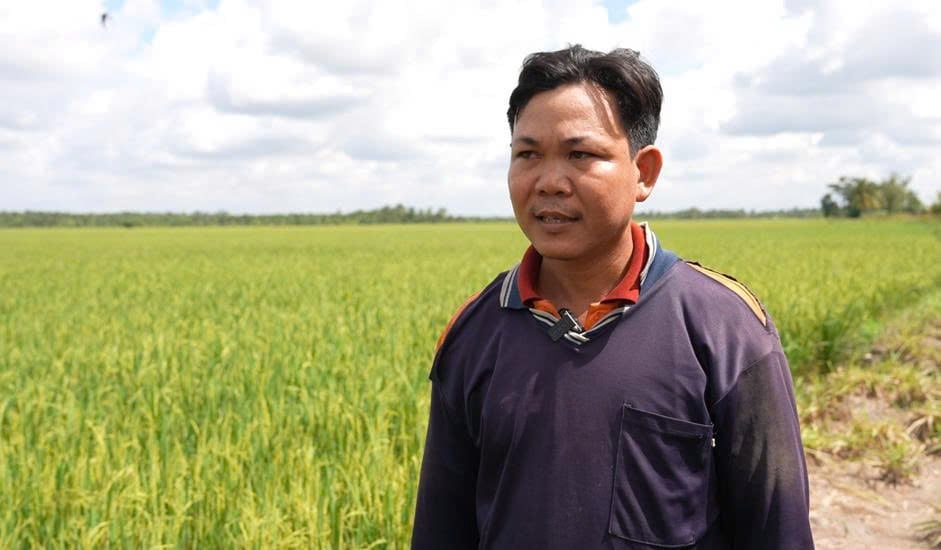
Mr. Tran Van Phong, Head of An Thanh Hamlet, An Truong Commune, emphasized the effectiveness of using microbial products to treat rice straw. Photo: SOS Environment.
Mr. Phong also noted that the effects of using microorganisms only become apparent after 2-3 seasons or more. However, the villagers unanimously agree that this is a sustainable approach, consistent with the requirements for reducing emissions, protecting the environment, and improving the quality of rice grains.


From just a few dozen households initially, the model has expanded to tens of hectares, with many households learning how to utilize rice straw and reduce their reliance on chemicals. Farmers, previously accustomed to chemical fertilizers and pesticides and traditional methods, have now boldly switched. This not only addresses the problem of rice straw after harvest but also builds a rice production ecosystem that is less dependent on chemicals, utilizes by-products, reduces environmental pollution, improves soil health, and enhances crop resistance. This is also a core requirement of the circular agriculture and green agriculture strategy that Vietnam is striving for.
Currently, the model implemented in An Truong commune has completely eliminated rice straw, removing the traditional practice of burning straw which causes air pollution and harms health. The people are delighted to see clean fields, loose soil, uniform rice crops, and reduced pest and disease problems.
The model is gradually being replicated in neighboring localities. In the context of rice production facing pressure from climate change, increasingly stringent export standards, and emission reduction requirements, the story of An Truong commune shows that when farmers receive the right support, they can adapt and transform, contributing to building a higher-quality, greener, and cleaner agricultural sector.
Source: https://nongnghiepmoitruong.vn/vi-sinh-xuong-dong-ruong-het-ngo-doc-d787851.html






















![The Essence of the Viet Bac Villages: [Part 3] The Precious Fragrance of Nghinh Tuong](https://vphoto.vietnam.vn/thumb/402x226/vietnam/resource/IMAGE/2026/05/29/1780020600366_5237-tinh-tuy-ban-lang-viet-bac-bai-3-chuyen-o-nghinh-tuong-050626_700.jpeg)
![The Quintessence of Northern Vietnam's Villages: [Part 2] The Famous Cassava Noodles of Kunming](https://vphoto.vietnam.vn/thumb/402x226/vietnam/resource/IMAGE/2026/05/28/1779937455892_3929-3144-mien-dong-15-nongnghiep-023138.jpeg)