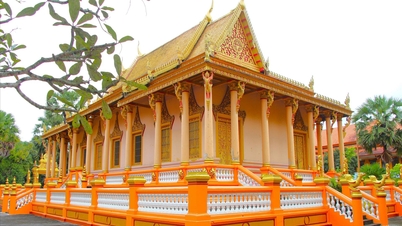
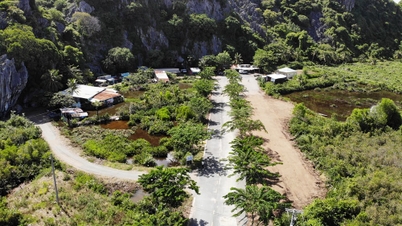
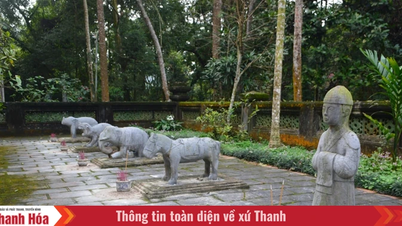
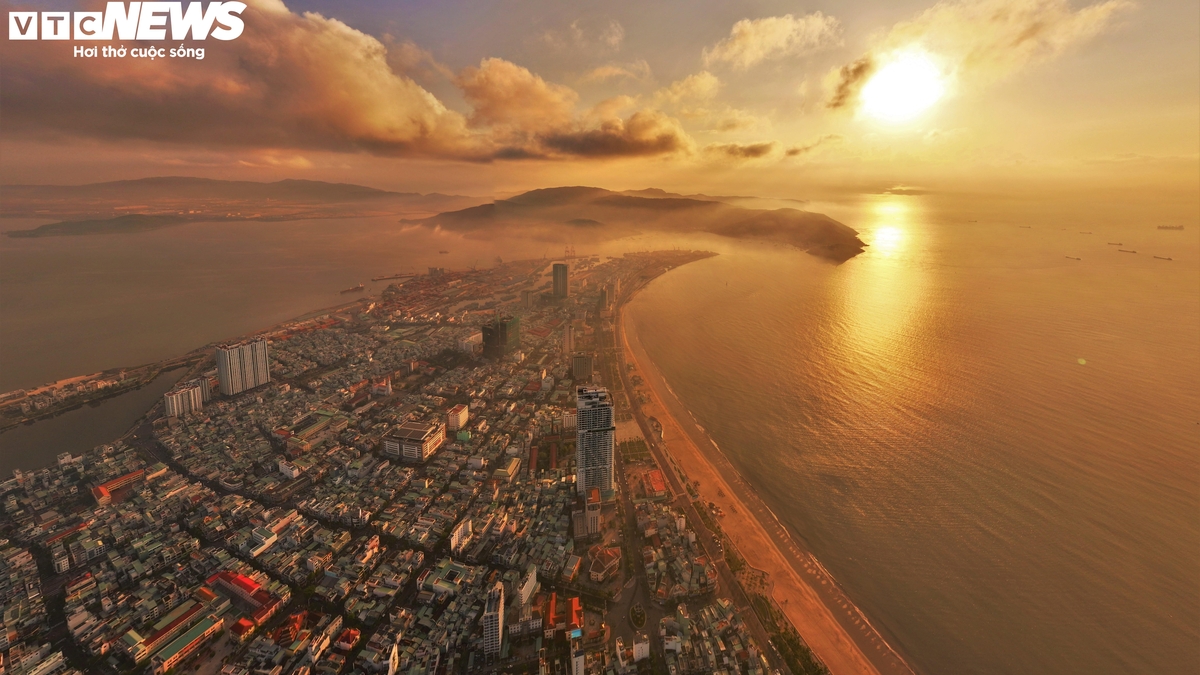
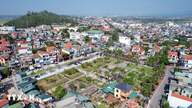
According to the plan, the expanded Quy Nhon urban area will cover approximately 1,200 km² with a population of nearly 900,000 people, including areas formerly belonging to Quy Nhon, Tuy Phuoc, and An Nhon, along with some areas of Canh Vinh, Tay Son, and Phu Cat.
This is not simply a matter of adjusting administrative boundaries or expanding urban space. More than that, it's a strategic move to create a new growth pole, maximizing the potential of the gateway region to the East Sea within the development structure of Gia Lai province after the merger.
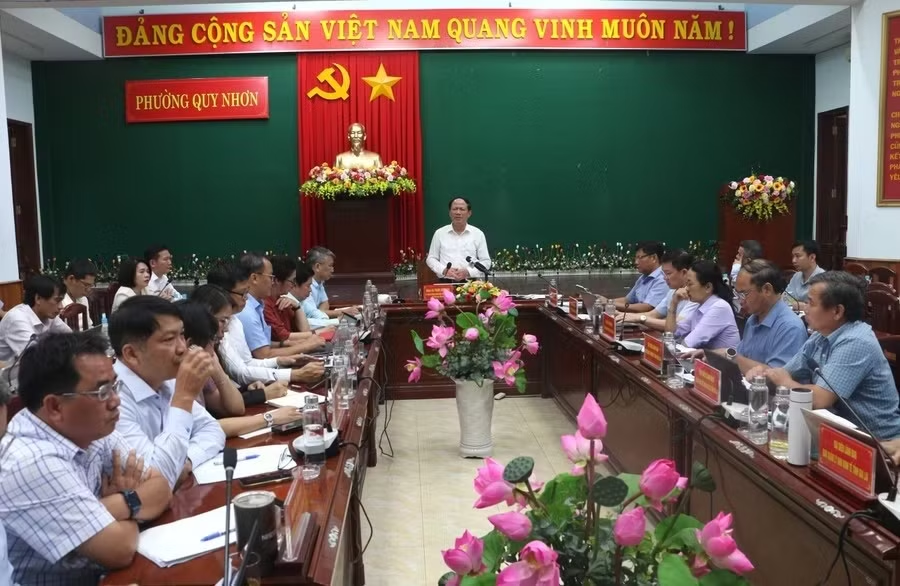
Specifically, Quy Nhon city will be developed to become the political -administrative and comprehensive center of Gia Lai province, oriented towards a green, ecological, and smart city; and at the same time, a center for artificial intelligence, science, commerce, services, tourism, logistics, and high-tech industries, leveraging its advantages as a seaport.
If the old Quy Nhon City had an area of approximately 286 km² with over 522,000 inhabitants, the urban space is now expected to expand by more than four times in area and nearly double in population.
This scale not only opens up new development opportunities but also facilitates the formation of economic corridors, modern service, industrial, and logistics centers, strengthening linkages between the coastal region and the Central Highlands.
It is noteworthy that today's expansion is not a mechanical merging of adjacent localities, but rather somewhat reminiscent of a historical space that once existed in the past. According to documents, in 1602, Lord Nguyen Hoang changed Hoai Nhon Prefecture to Quy Nhon Prefecture. At that time, Quy Nhon Prefecture stretched from Binh De Pass to Cu Mong Pass, holding a strategic position in Central Vietnam.
For over four centuries, despite numerous changes in its geographical boundaries, Quy Nhon has always been a land of special appeal. It is a hub for trade routes, a gateway to the sea for the Central Highlands, and a region that has welcomed many generations of settlers, giving rise to unique cultural values.
Researcher Nguyen Thanh Quang once called this land a "gathering place of spiritual energy and blessings" - a richly metaphorical way of describing the vitality and convergence ability of this region.
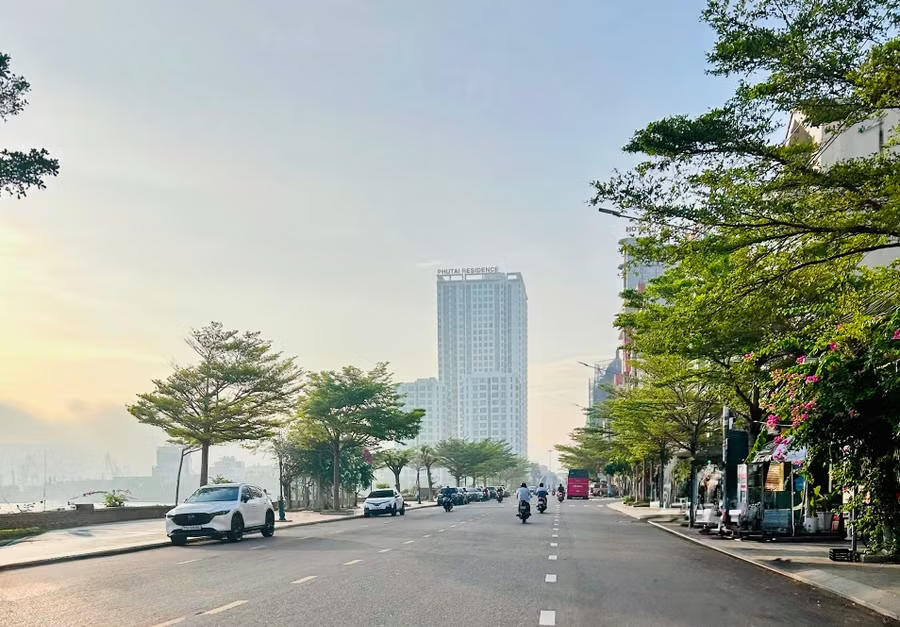
In this new context, Quy Nhon's outstanding advantage lies in its connectivity. The national highway system, the North-South expressway, the future high-speed railway, Phu Cat International Airport, seaports, along with transport-oriented development (TOD), will create a comprehensive transportation network connecting the coast with the highlands, and between domestic and international markets. This also forms the foundation for Quy Nhon to play its role as the gateway to the sea for Gia Lai province and the Central Highlands region.
While it's true that the new planning is only the starting point, realizing the aspiration for development requires continued improvement of infrastructure, attracting investment, developing high-quality human resources, and effectively exploiting existing advantages. However, with the current conditions, there is reason to expect Quy Nhon to enter a new phase of development with greater stature and position.



From a historical land that has gone through many ups and downs, Quy Nhon is now facing an unprecedented opportunity to expand its development space.
If its potential and advantages are fully utilized, this fertile land will continue to attract resources, talent, and new investment flows, becoming one of the important growth drivers of Gia Lai province as well as the South Central Coast - Central Highlands region in the coming years.
Source: https://baogialai.com.vn/vi-the-moi-cho-quy-nhon-post590015.html

![[Image] Paris's oldest bridge goes viral after transforming into a giant cave.](https://vphoto.vietnam.vn/thumb/1200x675/vietnam/resource/IMAGE/2026/06/24/1782283441197_ndo_br_dsc05314-jpg.webp)
![[Photo] Prime Minister Le Minh Hung presides over the thematic session on promoting science and technology development and innovation.](https://vphoto.vietnam.vn/thumb/1200x675/vietnam/resource/IMAGE/2026/06/23/1782207872934_ndo_br_dsc-1724-jpg.webp)