

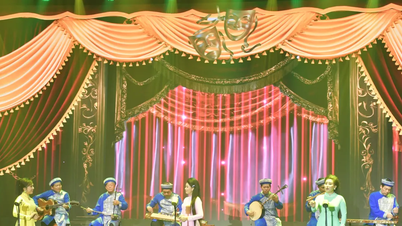
On the evening of November 4th, at the City Theater, the Department of Culture and Sports and the Ho Chi Minh City Theater Association organized an art program featuring the portrait of People's Artist and playwright Vien Chau with the theme "Vien Chau's Lifelong Career in Singing and Music".
A great cultural center of Southern Vietnam.
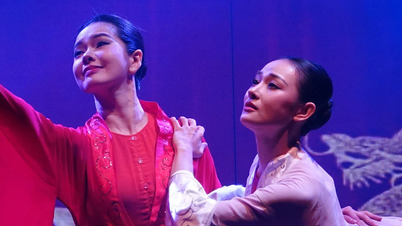
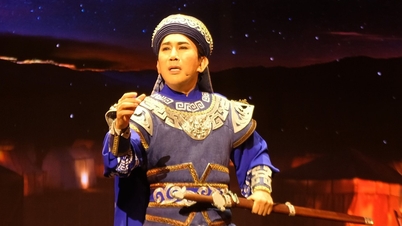
The program aims to commemorate the 100th anniversary of the birth (October 21, 1924 – October 21, 2024) of a talented artist who both played the zither and composed music; it brings together many famous artists of the Cai Luong (Vietnamese traditional opera) stage to perform his famous classical songs and excerpts.
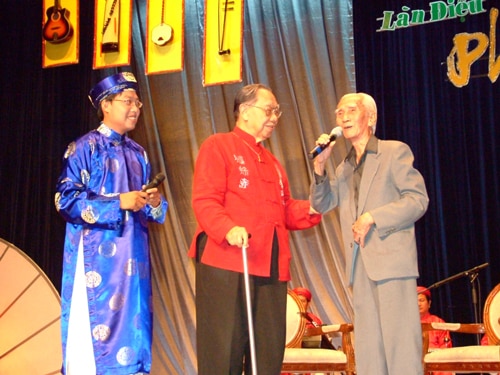
The author of this article and the late Professor Tran Van Khe, and the late People's Artist Vien Chau (right) in the "Southern Melodies" program in 2007 at the City Theater (Ho Chi Minh City). Photo: MINH CHAU
With nearly 70 years dedicated to Cai Luong (Vietnamese traditional opera), the name of playwright and People's Artist Vien Chau – also known by experts as the zither musician Bay Ba – has become synonymous with over 2,000 Vong Co (traditional Vietnamese folk songs) and 70 famous Cai Luong scripts. He is also credited with creating the Tan Co Giao Duyen (modern and traditional folk song) and humorous Vong Co – two songwriting styles that have been beloved by the public for over seven decades.
His real name was Huynh Tri Ba (also known as Bay Ba), from Don Chau commune, Tra Cu district, Tra Vinh province. His connoisseurs often said to each other: "Uncle Bay Ba was born to add more color to Cai Luong (Vietnamese traditional opera)." During his lifetime, Professor Tran Van Khe affirmed that playwright Vien Chau was a true cultural figure of Southern Vietnam. Through the art of Southern Vietnamese folk music and Cai Luong theater, the lyrics in hundreds of Vong Co songs, from individual pieces to literary scripts, he promoted the image of the country, its people, specialties, landmarks, and even the heartfelt sentiments of the people who clung to their land, built a prosperous community life.
In the world of Cai Luong (Vietnamese traditional opera) in the 1960s, the famous trio of musicians – Van Vi (guitar), Bay Ba (zither), and Nam Co (sến) – were beloved by audiences for their talent, showcased in numerous recordings and in the traditional orchestras of Saigon's Cai Luong stages at that time. The renowned record companies of the era instilled in people many beautiful melodies, stemming from traditional songs and Cai Luong scripts featuring the participation of these three renowned musicians in their orchestras, with Vien Chau's zither playing being unmistakable.
People's Artist Ngoc Giau recounted: People's Artist Vien Chau also adapted the remaining six verses of the Vong Co song, specifically verses 1, 2, 5, and 6, to suit the time and space of the performances. He also bridged the gap between the two schools of traditional and modern music to create the Tan Co Giao Duyen song, which was well-received by the public from 1960 onwards. He also composed humorous Vong Co songs – using satirical imagery to mock bad habits and vices, creating simple laughter while sharing feelings and conveying profound educational lessons.
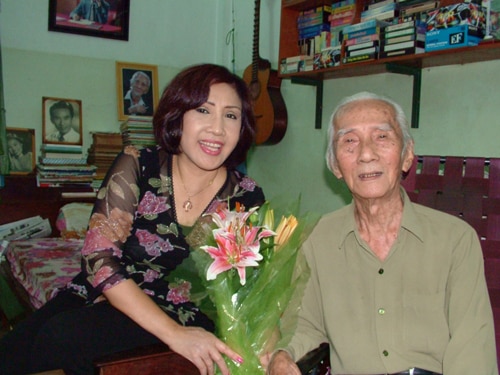
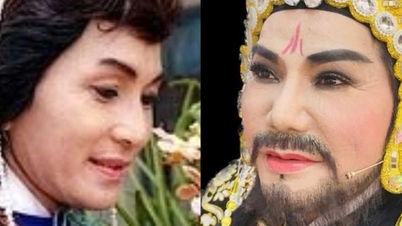
The late People's Artist Viễn Châu and People's Artist Lệ Thủy
According to People's Artist Le Thuy, because People's Artist Vien Chau was born and raised in a land full of hardship and suffering, and felt and understood the burdensome life through his mother's lullabies and the melodies of the countryside, the lyrics in his Vong Co songs and Cai Luong scripts are always gentle and close to all levels of society.
“With his observational skills, Mr. Bay Vien Chau thoroughly understood the strengths of each artist. From there, he composed vong co songs that suited their voices, allowing them to showcase their unique and gifted vocal abilities. He entrusted me with the responsibility of performing the first tan co giao duyen song in 1960, "Who Is He?", inspired by the song of the same name by composer Nguyen Huu Thiet. After that, he pioneered the trend of writing humorous vong co songs, and artist Van Huong became famous from then on under the name "Tu Ech," followed by many composers and artists who made a living performing humorous vong co songs,” – People's Artist Le Thuy informed.
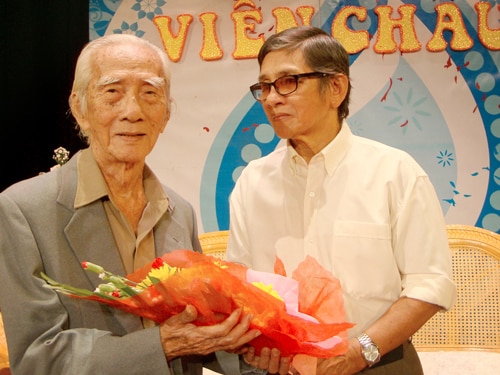
The late People's Artist Viễn Châu (left) Photo: THANH HIỆP
A great personality
Composer Viễn Châu contributed to the fame of many generations of talented artists such as: Út Trà Ôn, Hữu Phước, Tấn Tài, Minh Cảnh, Ngọc Giàu, Út Bạch Lan, Lệ Thủy, Minh Vương, Mỹ Châu… He also composed many humorous Vọng Cổ songs, helping artists like Văn Hường, Hề Sa, Tư Rợm, Kim Quang, Giang Châu… to become famous.
Over 2,000 Vọng Cổ songs by People's Artist Viễn Châu can be divided into main thematic groups such as: Love for homeland and country – “He went far away from his poor hometown”, “My hometown is full of love and affection”, “The waves of Tiền Giang River”…; love between couples – “The mat seller's love”, “The green betel leaf”, “The sworn hair”, “The love story of Lan and Điệp”…; legends of distant lands – “Princess Huyền Trân”, “Tần Quỳnh weeping for her friend”…; sad and happy stories of the stage – “Sorrow lingers in the music”, “The singing and the sound of the strings”, “Behind the velvet curtain”, “The artist with the instrument”…; humorous Vọng Cổ – “The brother-in-law visits the sister-in-law”, “Tư Ếch goes to the Tet market”, “Hề Sa goes to the West”, “I'm afraid of my wife”…
Regardless of the subject matter, the lyrics of People's Artist Vien Chau are simple yet rich in emotion, poetry, and imagery, making them easy to remember and resonate with, creating widespread popularity among various social classes – from erudite intellectuals and wealthy capitalists to rickshaw drivers, construction workers, street vendors, and even farmers with muddy hands and feet. For seven decades, from formal stages and folk art competitions and festivals to even casual gatherings, the Vong Co songs of People's Artist Vien Chau have been sung, captivating and enchanting listeners.
Among his more than 70 Cai Luong (Vietnamese traditional opera) scripts, the most famous are "The Love Story of Lan and Diep," "Hoa Moc Lan," "The Love Story of Han Mac Tu," "The Shattered Flower of the Forest," "One Day as King," "Motherly Love," etc. People's Artist Vien Chau was invited by major Cai Luong troupes such as Kim Thanh - Ut Tra On (1955 - 1958), Thanh Tao (1958 - 1959), Thanh Minh - Thanh Nga (1962 - 1966), Da Ly Huong (1969), Tan Hoa Lan (1969 - 1971)... to participate as a "stage master" (today called a director) to directly stage new plays.
“With his refined writing style, each sentence and lyric containing so much heartfelt emotion, Uncle Bay Vien Chau wrote the song “Rain and Sunshine in the Eastern Region” for me to enter the 1964 Vong Co Singing Contest and win first prize,” People's Artist Minh Vuong said emotionally.
“He was a great personality, a quintessential playwright, a talented artist, yet his life was incredibly simple, down-to-earth, and unpretentious. He left behind a vast legacy in the fields of composition, directing, performing, and training, deserving to be honored as one of the leading figures of Southern Vietnamese Cai Luong theater,” affirmed People's Artist Ngoc Giau.
“He was a shining star in the theatrical sky in particular, and in the literature and arts of Southern Vietnam in general, throughout the latter half of the 20th century. His artistic career is an achievement that all true artists must admire. It is no coincidence that specialized theatrical publications before 1975 bestowed upon him the title “King of Vọng Cổ Songs,” and in 2006, the Guinness Vietnam Organization (VietKings Values 2005-2017) recognized playwright Viễn Châu as “The person who wrote the most Vọng Cổ songs.” He was awarded the title of People's Artist by the State and received the Third-Class Labor Medal,” said Meritorious Artist Ca Lê Hồng.
Source: https://nld.com.vn/vien-chau-tron-doi-nghiep-cam-ca-196241102201838377.htm
![[Photo] “Red Journey” 2026: Vietnamese Youth Continue Building the Bridge of Friendship Between Vietnam and China](https://vphoto.vietnam.vn/thumb/1200x675/vietnam/resource/IMAGE/2026/04/20/1776629730866_4055880775670638308-9618-4200-jpg.webp)


















































Comment (0)