

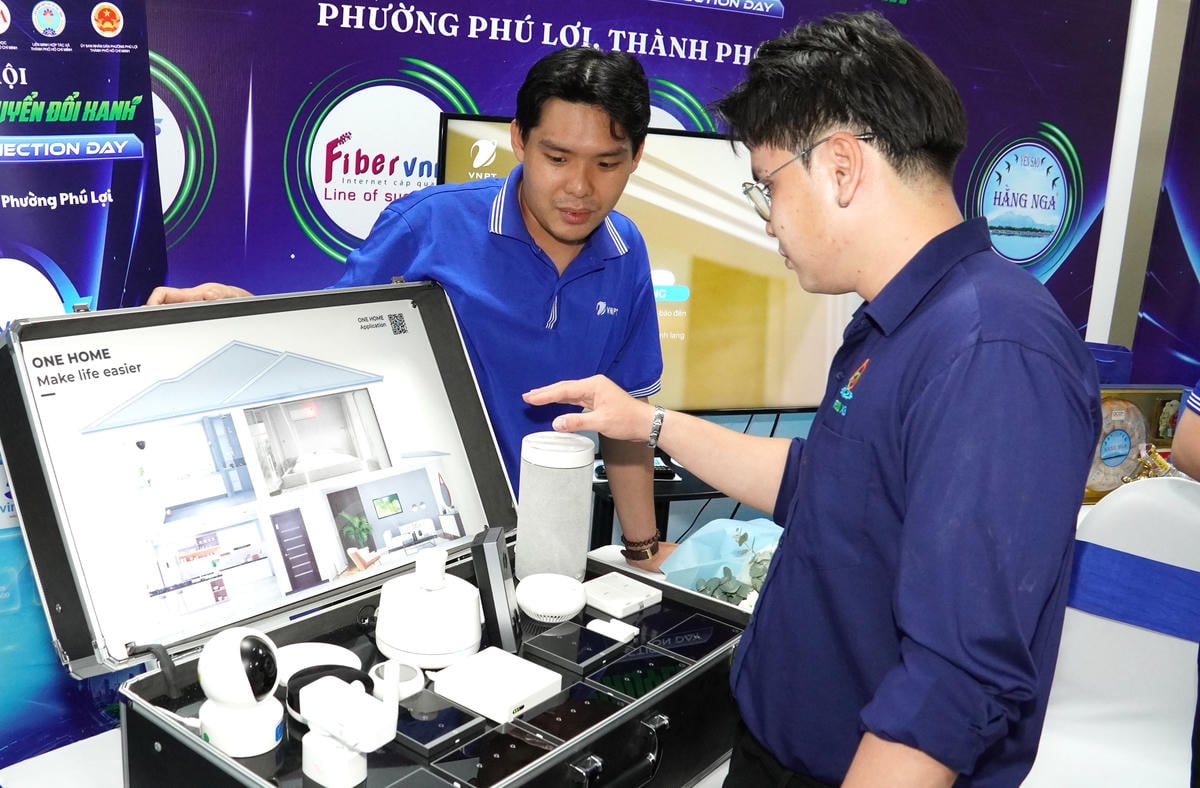
"Seed capital" for the technology startup ecosystem.
According to experts, current capital flows are increasingly focused on early-stage technology companies. Simultaneously, investors are prioritizing large-scale deals over the previously dispersed investments. This trend is occurring as Vietnam attracts growing interest from global technology corporations, R&D centers, and international investment funds. Ms. Vuong Van Anh, Senior Director of Strategy at VinaCapital, stated that the company currently operates two venture capital funds in Hanoi and Ho Chi Minh City to support startups and expand access to capital for the innovation ecosystem.
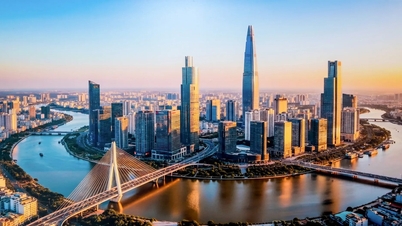
In Ho Chi Minh City, the innovative startup ecosystem continues to hold its position as one of the most dynamic innovation centers in the country, ranking for the first time in the Top 100 global innovative startup ecosystems in 2026 and third in Southeast Asia in terms of ecosystem value. The city has formed a network of more than 30 incubators and business accelerators, nearly 100 investment funds and financial institutions, and a community of over 2,000 innovative startup businesses. Mr. Lam Dinh Thang, Director of the Department of Science and Technology of Ho Chi Minh City, said that the city currently leads the country in the innovative startup ecosystem, attracting nearly 50% of startups and many large-scale technology companies. However, the biggest bottleneck remains the lack of sufficiently strong and flexible venture capital mechanisms and funding to support businesses during their growth phase.
To support investment in innovation, Ho Chi Minh City announced the establishment of a Venture Capital Fund in mid-April. With an expected charter capital of 500 billion VND in 2026, the Fund will be structured with 40% state capital and 60% private capital. This capital will act as "seed capital," aiming to attract 2-3 additional social capital for every 1 VND of state capital invested. In the long term, by 2035, Ho Chi Minh City aims to increase the total charter capital to at least 5,000 billion VND, with the principle of mobilizing social resources accounting for at least 60% of the total funding. The Fund is designed with a "three-party" linkage structure: State - enterprises - investors.
Institutional reforms "pave the way" for innovation.
Based on current developments, experts assess that the digital economy is emerging as a new growth engine for Vietnam. According to the Global Innovation Index (GII) 2025 report, Vietnam currently ranks 44th, among the leading middle-income economies. Vietnam's innovation and startup ecosystem is also among the top 50 emerging startup ecosystems in the world. Notably, in 2025, total private investment in the technology sector in Vietnam is expected to reach approximately US$4.5 billion through 149 deals. Of this, private equity investment will reach approximately US$4 billion, while venture capital investment is projected to increase by about 28% compared to the previous year. AI, fintech, data, digital infrastructure, semiconductors, and green technologies are becoming areas that strongly attract the attention of international investors.
Alongside capital inflows, institutional changes are also laying the foundation for a new phase of development. According to Mr. Dau Anh Tuan, Deputy Secretary General and Head of the Legal Department of the Vietnam Chamber of Commerce and Industry (VCCI), Vietnam is entering a period of institutional reform at an unprecedented pace and scale. A series of major policies on private sector economic development, innovation in lawmaking, and amendments to many laws related to investment, data, digital technology, and e-commerce are opening up new development opportunities for businesses. “The reduction of business conditions, increased decentralization and delegation of power, and the shift from pre-approval to post-approval are expected to significantly reduce market entry costs, while simultaneously promoting capital flows into strategic sectors such as high technology, semiconductors, renewable energy, the green economy, and the digital economy,” Mr. Tuan said.
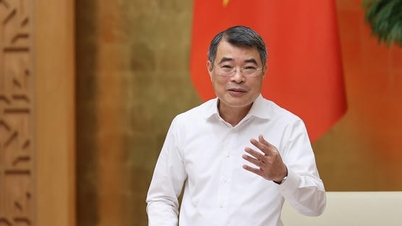
According to Deputy Minister of Finance Le Tan Can, Vietnam aims to be among the top 3 ASEAN countries and the top 50 globally in innovation and digital transformation by 2030; with the digital economy contributing approximately 30% of GDP. By 2025, the total registered FDI capital in Vietnam is expected to exceed US$38 billion, with many large-scale projects focusing on AI, semiconductors, and smart manufacturing. These figures show that Vietnam is no longer just a destination for traditional manufacturing industries. The Ministry of Finance leader affirmed that as capital flows, technology, and institutional reforms converge, the economy is poised to transform from a manufacturing hub into a new regional innovation center. In this journey, Ho Chi Minh City is expected to be the starting point for new growth drivers for the entire economy.
Source: https://daidoanket.vn/viet-nam-thu-hut-dong-von-doi-moi-sang-tao.html



![[Image] Shipbuilders exposed to steel and record-breaking heat.](https://vphoto.vietnam.vn/thumb/1200x675/vietnam/resource/IMAGE/2026/06/04/1780545781745_ndo_br_img-5402-4683-jpg.webp)
















































![[Video] Sunset at Lap An Lagoon – Where the sun sets over the fishing nets](https://vphoto.vietnam.vn/thumb/1200x675/vietnam/resource/IMAGE/2026/05/31/1780192137701_beach-landscape-sea-water-nature-grass-745871-pxhere-com.jpeg)






























Comment (0)