

Half a century preserving the spirit of horse hooves.
For over half a century, Mr. Lam Van U, 64, a Tay ethnic man from Pac Ngam village (Bac Ha commune, Lao Cai province), has been involved with these herbivores. He not only raises horses but also preserves a continuous stream of memories for Bac Ha across generations. To the locals, when they mention him, they affectionately call him by the simple yet endearing name: "U the horseman." Having spent most of his time with these animals, for Mr. U, horses are more than just a means of livelihood. "In the old days, before roads and motorbikes, only those who owned horses could make a living," Mr. U recounted slowly.
In his memory, horses were associated with long journeys into the forest, with the slow but enduring pace of life of the highlanders. A strong horse used to be a measure of prosperity, the "foundation of livelihood" for each family in Bac Ha. Mr. U's childhood was intertwined with horseback riding. At twelve years old, he followed adults riding horses across the mountains and hills, learning to understand horses' nature, care for them, and tame them—skills he called "the craft of the highlanders."
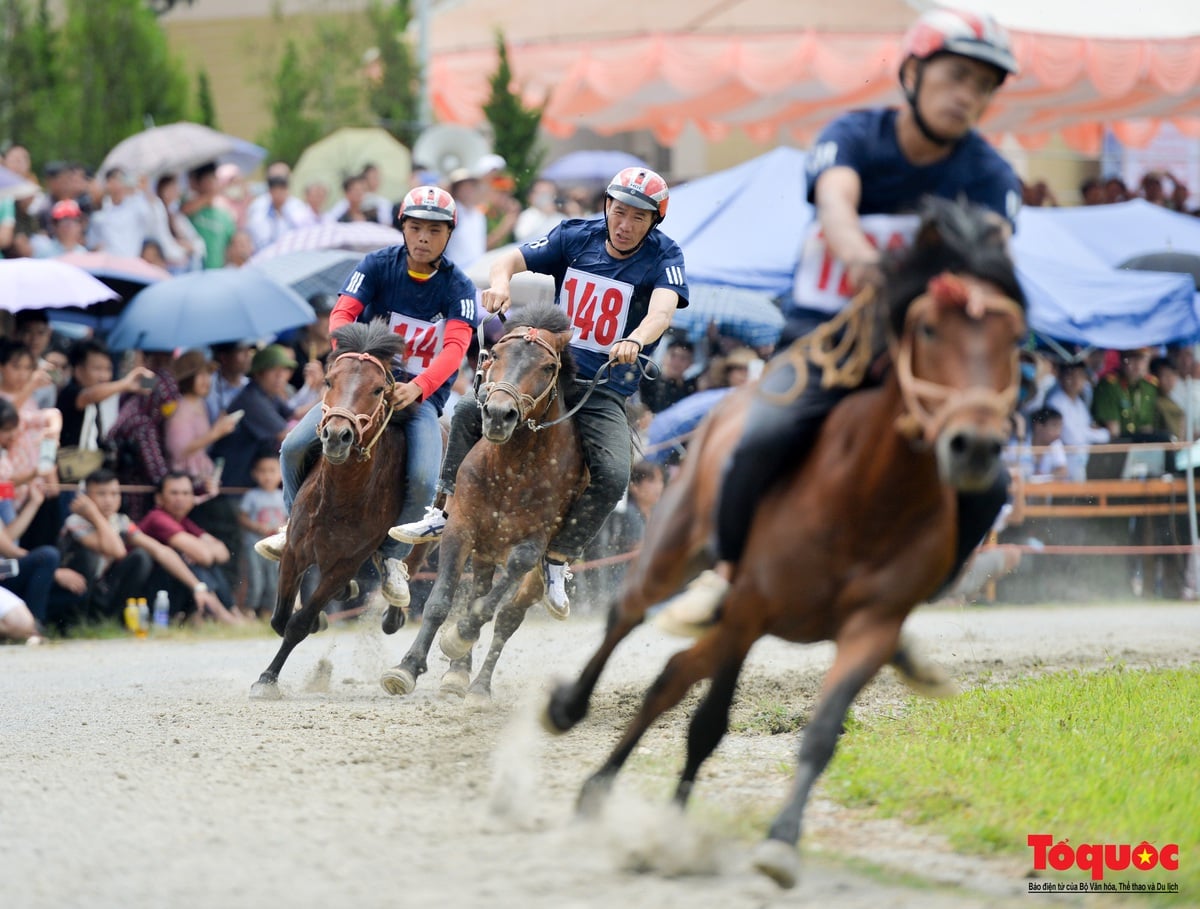
Currently, in Bac Ha commune, horse racing is held every Saturday afternoon.
According to Mr. U, the horses of Bac Ha are not large but are resilient and exceptionally intelligent. As motorized vehicles gradually replaced horse power, horses quietly disappeared from daily life in many places. But in Bac Ha, horses remain steadfastly connected to the lives of the people, albeit in a different form. In recent springs, the sound of horse hooves no longer echoes from cargo transport but has entered the space of festivals, vibrant horse races, and photo spots amidst the white plateau catering to tourists .
"Northern Vietnam's horses are accustomed to the mountains and slopes. Horses of mixed breeds from the lowlands can't carry heavy loads here."
Mr. Lam Van U , 64 years old, a Tay ethnic minority from Pac Ngam village (Bac Ha commune, Lao Cai province)
Mr. U currently owns eight horses, including a white horse that has won numerous top prizes at races held at the Bac Ha market, considered a "rare find" in Bac Ha by horse enthusiasts. Some have offered hundreds of millions of dong for it, but he refuses to sell. "This horse is for preserving the breed, for racing, and to maintain the soul of Bac Ha," Mr. U said with a gentle smile. For Mr. U, raising horses is not just about economics but also a passion. "I feel something is missing if I don't have a horse in the stable," he confided. The horses are allowed to roam freely, grazing on the hillsides, and find their way back home in the evening. They are familiar with the house and the people, so there's no worry about them getting lost.
Mr. U believes that incorporating horses into festivals, races, and nature-based tourism activities has kept the sound of horse hooves echoing across the white plateau. "People in the lowlands talk about buffaloes, but Bac Ha would feel very empty without horses," Mr. U said.
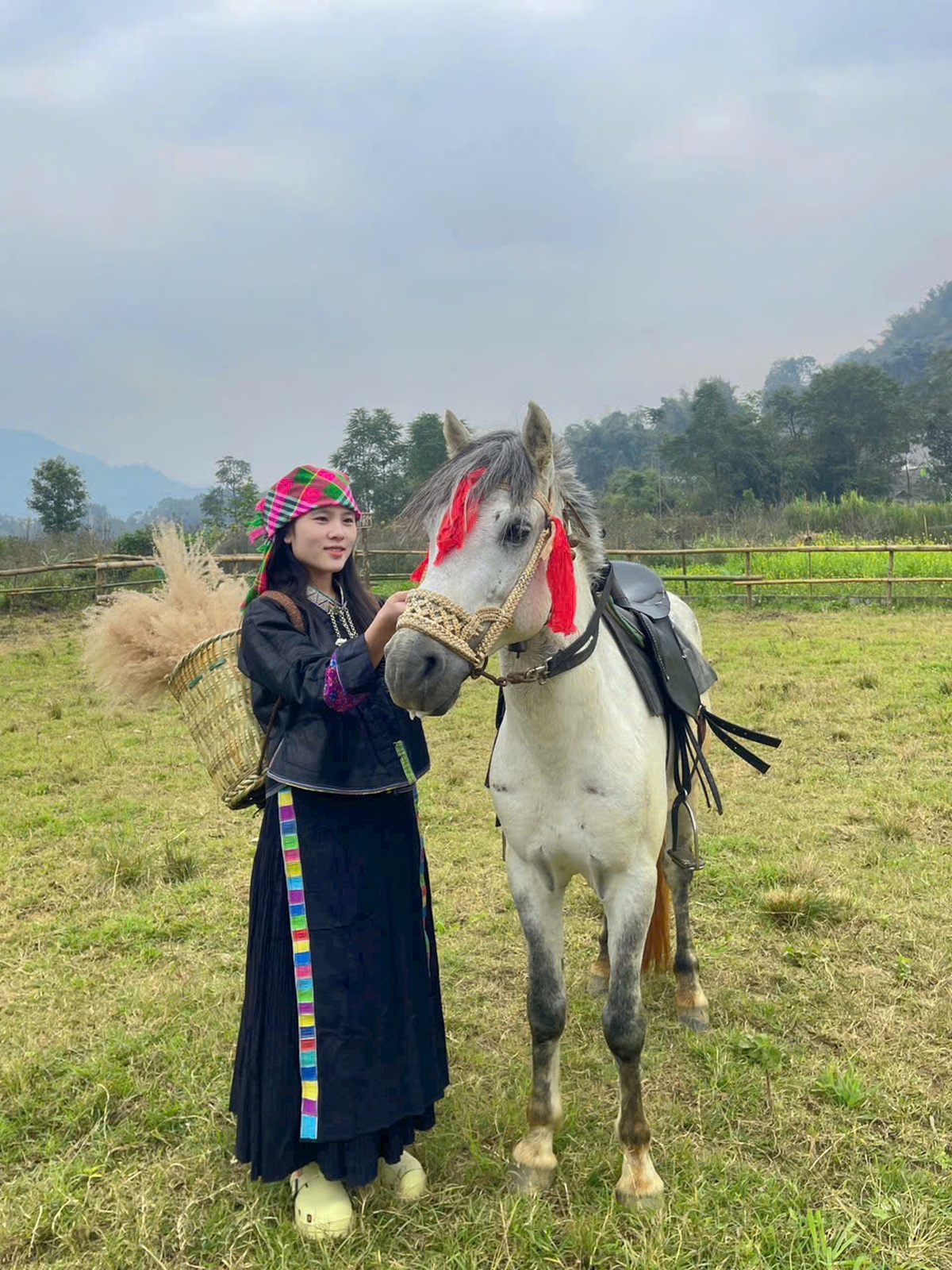
Tourists enjoy taking photos and experiencing horseback riding when visiting Bac Ha commune (Lao Cai province).
Young people and their journey to preserve the horse culture of Bac Ha.
Not only Mr. U, but many young people in Bac Ha today are also striving to preserve the unique culture of the region. Having grown up surrounded by horses, Than Van Duy (born in 2000) began connecting with horse breeders in the area, establishing the Bac Ha Horse Club with about 50 members, where like-minded individuals can meet and share experiences in caring for and training horses. Simultaneously, Duy boldly developed experiential tourism services: taking photos with horses, riding horses up hills to admire the scenery, and teaching horseback riding. Instead of bringing horses to the city, Duy chose to develop tourism services close to nature, amidst the grassy hills, plum orchards, and familiar slopes of the highlands. "Many tourists enjoy hearing stories about horses, personally leading horses, and experiencing the slow, leisurely pace of life on horseback," Duy said.

Mr. Than Van Duy, Chairman of the Bac Ha Horse Club
Behind Duy's innovative business ideas is the presence of his father, Than Van Dung (58 years old), a "horseman" of the Bac Ha plateau. For Mr. Dung, horses are not just livestock but "companions" who have accompanied him throughout half a century of earning a living on the fields. "Bac Ha horses remember the way, are familiar with the mountains, and understand people. You don't need to give many commands, just know how to accompany them," he said. The experience he accumulated in selecting breeds, taming, and caring for horses has become the foundation for his son's development of a horse-raising model linked to tourism. He doesn't directly engage in tourism but silently supports his son, from training horses and teaching riding techniques to telling tourists stories about the "life of horses" on the plateau.
"For the people of Bac Ha, especially the Mong, Tay, Nung, and Phu La ethnic groups, horses were once a valuable asset to each family. They were closely associated with farming, trips to the market, weddings, and festivals… Horses not only helped people earn a living but also served as a measure of prosperity and well-being in their lives."
Ms. Pham Kim Anh , Deputy Head of the Culture and Social Affairs Department of Bac Ha Commune
According to Ms. Pham Kim Anh, Deputy Head of the Culture and Social Affairs Department of Bac Ha commune, in the traditional cultural landscape of this highland region, the horse is not simply a domesticated animal closely associated with the daily lives of the people, but also a cultural symbol. In the memories of many generations, the image of highland people patiently climbing slopes and crossing forests on horseback has become familiar. As motorized vehicles gradually replaced horse power in daily labor, and motorbikes replaced horses for transporting goods, the number of horses here has also decreased significantly.

Tourists enjoy taking photos and experiencing horseback riding when visiting Bac Ha commune (Lao Cai province).
However, the sound of horse hooves did not disappear. As the local tourism industry took off, horse breeders also found new directions for themselves. "When horse breeding is linked to tourism, people are motivated to maintain the herd, preserve the Bac Ha horse gene pool and related folk knowledge such as taming, caring for, and saddle-making… The horse is considered a cultural and tourism symbol of Bac Ha. It represents the free-spirited, strong, and resilient character of the highlanders. When mentioning Bac Ha, people remember the horse market and horse racing, which are very unique cultural features. If it is only put on display, that cultural feature is easily confined," shared Ms. Pham Kim Anh.
Source: https://phunuvietnam.vn/vo-ngua-tren-may-bac-ha-238260215135702411.htm



![[Image] A brilliant symphony and explosive power in the skies of Da Nang.](https://vphoto.vietnam.vn/thumb/1200x675/vietnam/resource/IMAGE/2026/05/31/1780196945787_anh-man-hinh-2026-05-31-luc-10-08-51.png)













![[Video] Sunset at Lap An Lagoon – Where the sun sets over the fishing nets](https://vphoto.vietnam.vn/thumb/340x192/vietnam/resource/IMAGE/2026/05/31/1780192137701_beach-landscape-sea-water-nature-grass-745871-pxhere-com.jpeg)





































































Comment (0)