There are three most important serpent kings in Indian culture: the Naga king, Shesha or Ananta, meaning immortal; and two other serpent kings, Vasuki and Samudra Manthan. In Indian mythology, the serpent king Vasuki is worshipped as the pillar that created the universe during the cosmic upheaval caused by benevolent and malevolent spirits.
The Naga Panchami festival is the name of a traditional Brahmanical festival in India, held annually. During this festival, devotees offer milk and flowers and pray to the Naga serpent god for blessings and protection from snake bites, as well as prosperity, fertility, and a bountiful harvest.
In Buddhist scriptures, the serpent king Nagaraja is frequently mentioned. Serpent kings often appeared to listen to Gautama Buddha's teachings, as well as to protect him when he preached.
In Champa culture, the serpent king Nagaraja appears very early in a stone inscription from the early 5th century discovered at Dong Yen Chau, a site located just over a kilometer west of Tra Kieu.


According to epigraphers, compared to other indigenous Austronesian languages, this is the earliest inscription in Old Cham in Southeast Asia. Notably, the inclusion of the name Nagaraja, the serpent king, in Old Cham indicates that the worship of the serpent king was widespread in Champa in the periods before the 5th century, possibly contemporaneous with King Pham Ho Dat or Bhadravarman, who reigned around 380-413 and established the royal sanctuary of Bhadresvara, also known as My Son.
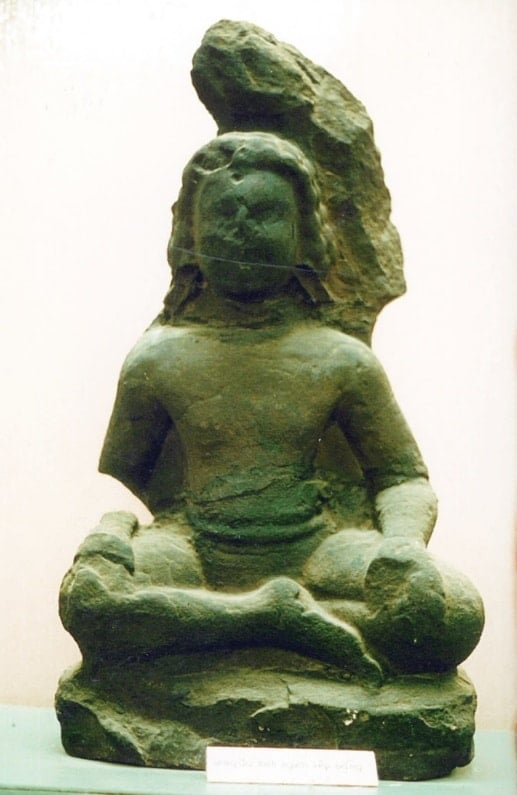
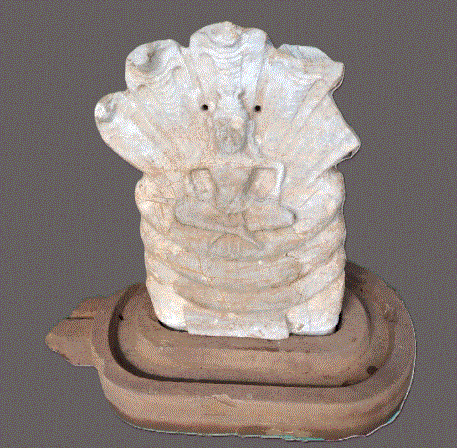
Fortunately, a statue of the serpent king Nagaraja, dating closely to the Dong Yen Chau inscription, was discovered by H. Parmentier in group A of the My Son temple complex in 1903. Recently, this statue was rediscovered by Indian restoration experts in 2019 and is currently preserved at the My Son Museum.
The statue is crafted from a rare type of stone in Cham sculpture, possibly white marble, and rests on a sandstone drainage base. Nagaraja sits beneath a five-headed serpent, in a seated position with his arms outstretched on his thighs, similar to early Cham statues dating from around the 6th-7th centuries. He has his hair styled in a high, twisted bun, and two small holes at the back of his head, perhaps used to attach a piece of jewelry bearing the serpent symbol of the Naga clan, often seen on serpent king statues in Indian art. This is the only Nagaraja statue discovered at My Son.
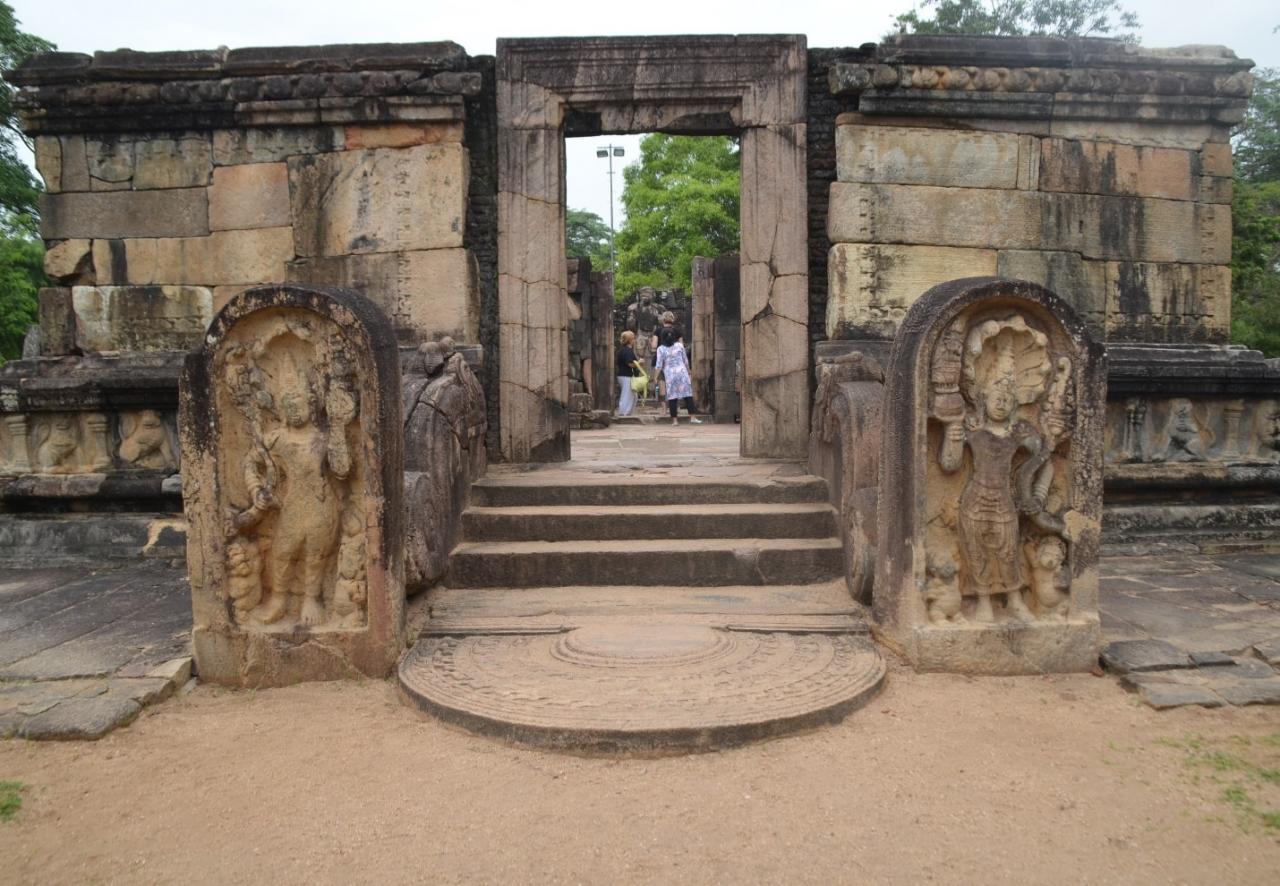
Along with the Nagaraja statue at My Son, another Nagaraja statue was also discovered at the Po Nagar Tower in Nha Trang. This statue was also crafted around the 6th-7th century. Thus, it can be concluded that the serpent king Nagaraja, with his role as protector of the Champa royal family, was worshipped simultaneously at two royal sanctuaries in both the north and south of the kingdom.

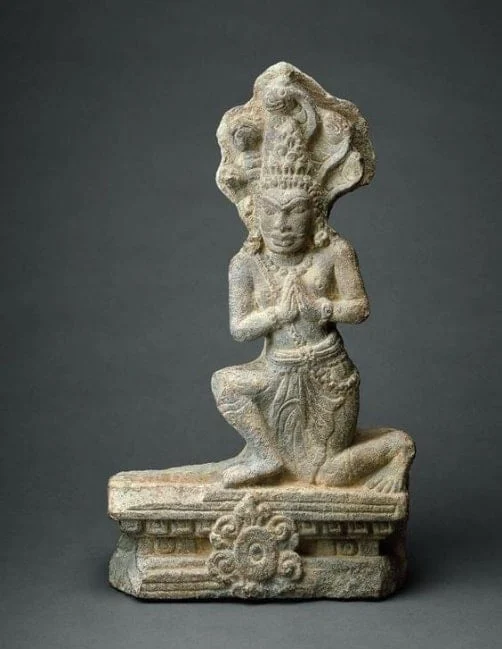
Furthermore, another sandstone Nagaraja statue, possibly discovered in the Quang Nam region around the 8th century, is still clearly visible, depicting the deity in a kneeling position with hands clasped in front of the chest, expressing reverence for the gods or royalty (?). The attire is regal, and the statue is adorned with numerous ornaments. These Nagaraja idols demonstrate that the Nagaraja belief in protecting the Champa monarchy and royal family was widespread in this kingdom for centuries.
In the 7th century, in an inscription at My Son erected during the reign of King Prakāśadharma in 658, the king emphasized his noble lineage from the Brahmin royal family through the marriage between Kaundinya and Soma, whose daughter, Princess Soma, was the daughter of the serpent king Nagaraja.
The king also praised the marriage between his father, King Jaggaddharman, who traveled to Bhavapura in Cambodia to marry his mother, Princess Sri Sarvani, daughter of the Khmer king Isanavarman, and a blood relative of Princess Soma. Therefore, Nagaraja held a prominent position in Champa's royal beliefs.
Source: https://baoquangnam.vn/vua-ran-nagaraja-3148354.html