

The demand for housing is growing.
Survey data from market research organizations shows that in recent years, the number of apartments with an area of 45-70m² has become increasingly scarce. Many new projects focus on developing large-sized apartments with high selling prices to maximize profits, making it difficult for young people, civil servants, intellectuals, and small families to access housing.
One of the identified causes is the regulation on population control in projects. Accordingly, when approving planning, the management agency often bases its decisions on population targets to determine the scale of construction, technical infrastructure, social infrastructure, and population density. Therefore, many investors are forced to reduce the number of small-sized apartments and increase the size of large apartments in order to "keep" the population target within the approved limits.
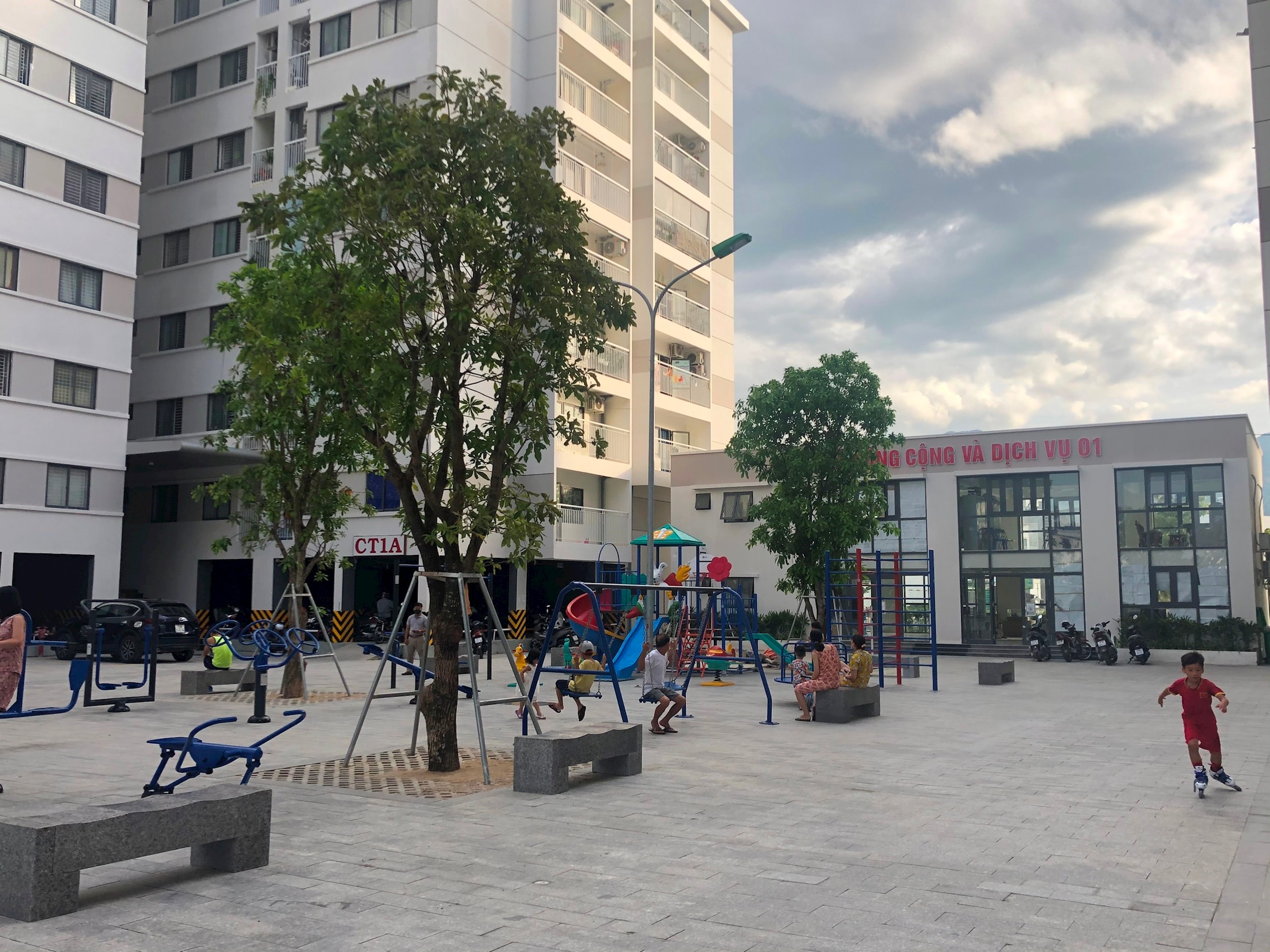
Notably, the current method of determining the population in apartment buildings in many localities still mainly applies a mechanical approach, averaging the number of people per apartment, without a common standard. For example, in Hanoi , based on Decision No. 39/2026/QD-UBND dated April 1, 2026, amending and supplementing some articles of Decision No. 34/2024/QD-UBND dated May 27, 2024, the city stipulates: A one-bedroom apartment with a usable area of 25-45m² counts as 1 person; a two- or three-bedroom apartment with a usable area of over 40-55m² counts as 2 people; an apartment with a usable area of over 55-70m² counts as 3 people; and an apartment with a usable area of over 70-77m² counts as 4 people.
In Ho Chi Minh City, according to Decision No. 32/2025/QD-UBND, effective from January 9, 2026, the regulations stipulate: Apartments with 1 bedroom have an area of 25-56m² , 2 bedrooms have an area of 56-96m² , and 3-4 bedrooms have an area of 96-160m² or more…
According to Le Hoang Chau, Chairman of the Ho Chi Minh City Real Estate Association, in the last 10 years, the trend of "increasing household size to 1-3 people, mainly due to reluctance to get married and have children, and the pressures of life and high living costs, has led to a fertility rate of only 1.91 children per woman in 2024, lower than the replacement level of 2.1 children per woman. This, coupled with the trend of people living longer, has resulted in a rapid aging of the population."
While in 2009, the country had 7.45 million elderly people, this number is expected to increase to 16.1 million by early 2025, accounting for over 16% of the national population. Along with this, there is a growing trend of "extended families" living close together in the same area or project, but with separate spaces, houses, or apartments; and a significant increase in the number of single people, young couples without children, or small families with fewer generations...
"Therefore, determining the population in apartment buildings using a rigid population calculation method will increase the number of 'large apartments' in new projects, only suitable for the needs of a segment of high-income individuals. When applied to mid-range apartment projects, having many 'large apartments' is not suitable for the needs and financial capabilities of the majority of people with average and low incomes, and young people just starting their careers," Mr. Le Hoang Chau analyzed.
We need a flexible and practical approach.
According to experts, instead of rigidly calculating population based on the number of apartments, a more scientific population data system and forecasting model should be developed. Determining population should be based on multiple factors such as apartment size, number of bedrooms, type of residence, regional characteristics, and demographic trends. This would allow businesses to develop more affordable products while still ensuring an appropriate overall population size.
Some experts suggest applying a population calculation method based on actual usage. For example, a studio apartment or a one-bedroom apartment could be calculated for 1-2 people; a two-bedroom apartment for 3-4 people; and a higher coefficient could be applied to larger apartments.
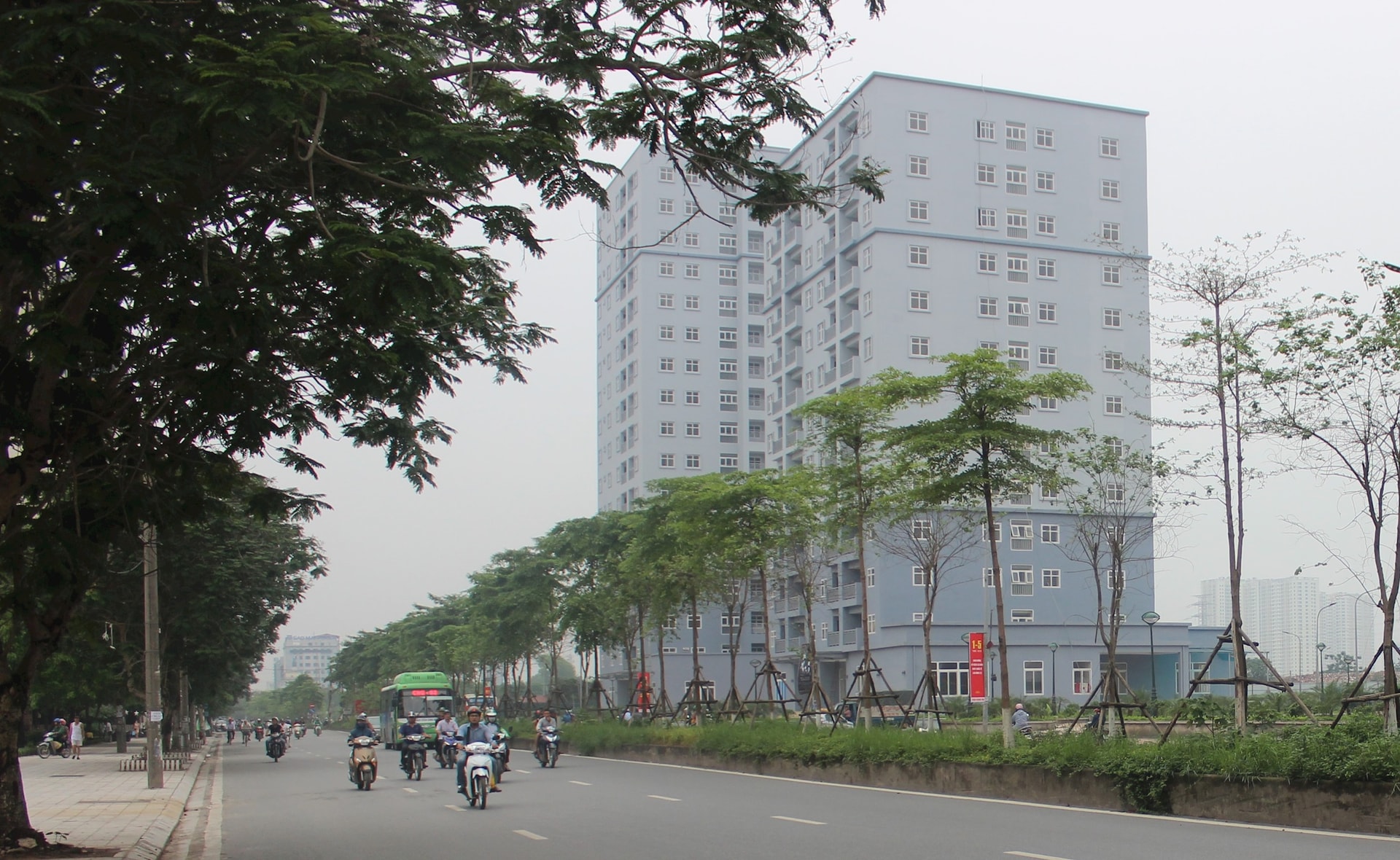
In addition, population density should be linked to the area's infrastructure capacity. If the area has a good transportation system, schools, healthcare facilities, and public spaces, then there can be more flexibility in the apartment structure.
"It's crucial to shift from the mindset of 'restricting small apartments to reduce population density' to a mindset of developing urban infrastructure comprehensively. Because if infrastructure is invested in properly, increasing the number of small and medium-sized apartments will contribute to solving the housing problem for the majority of people without putting too much pressure on the city," said Tran Ngoc Chinh, Chairman of the Vietnam Urban Planning and Development Association.
Sharing the same view, Dr. Nguyen Van Dinh - Vice President of the Vietnam Real Estate Association - believes that it is necessary to develop a set of criteria for classifying apartments according to area and function to apply a more appropriate population coefficient; and to quickly complete the interconnected population and housing database between the construction, planning, and police sectors to make population forecasting more accurate.
Based on this, localities can proactively allocate population targets appropriate to each area, avoiding the situation of applying a single formula to all projects. In addition, the development of small-sized apartments needs to be accompanied by strict standards regarding design, quality of life, and public amenities to avoid the risk of forming high-density residential areas lacking community living space.
At the same time, the government needs to continue building mechanisms to encourage businesses to develop mid-range apartments through preferential policies on land, credit, investment procedures, etc., because the greatest demand in the market today is for apartments that are affordable for middle-income earners. To increase the supply in this segment, it is necessary to simultaneously remove legal, planning, and population-determining bottlenecks.
Source: https://hanoimoi.vn/xac-dinh-dan-so-chung-cu-mo-duong-cho-can-ho-muc-trung-779034.html



























![[Podcast] Content on drafting and issuing implementing documents for the Capital City Law 2026](https://vphoto.vietnam.vn/thumb/402x226/vietnam/resource/IMAGE/2026/05/25/1779672775296_ban-hanh-mot-so-van-ban-quy-pham-phap-luat-theo-co-che-dac-thu.png)










































































Comment (0)