


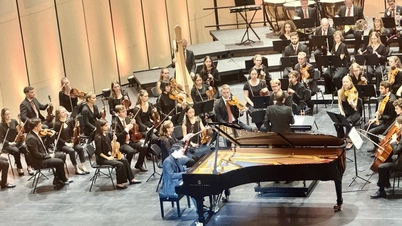
Singer Ha Myo's performance of Xam singing was enthusiastically received by the young audience.
With the spirit of infusing new music with old values while preserving the cultural essence and embracing the spirit of the times, many of them have brought Xẩm to schools, thereby spreading traditional cultural values to young audiences.
Response survey
Having once flourished, Xẩm singing, like many other forms of traditional Vietnamese music, is now facing numerous difficulties and challenges in the digital age. As the economy improves, the traditional performance environment is shrinking, and competition from diverse modern art forms is driving changes in public taste. Audiences have access to a wide variety of new musical genres through various media, inadvertently creating a significant barrier for young people to access Xẩm singing and other traditional art forms.
From this, many people believe that today's audience only likes to listen to modern music and has "turned their backs" on old values. However, this is just a one-sided view, as young people who haven't had many opportunities to be exposed to and learn about traditional music as well as classic works of Vietnamese music can hardly like or love it.
Thankfully, in the contemporary music scene, many young artists remain passionate about traditional music, adapting it with innovative twists. A prime example is singer Ha Myo, who has brought the vibrant and fresh art of Xam singing to the modern stage. She rose to prominence as the first to combine Xam with Rap and EDM. After years of persistently revitalizing folk music, Ha is now nurturing a project to bring Xam into schools. The singer shared: “In reality, folk melodies always have a certain appeal to Vietnamese audiences. After several experimental Xam performances in schools, Ha Myo has seen that students have a very strong and positive affection for traditional music. Therefore, in the near future, Ha will have a series of performances at many schools to further gauge their reaction to Xam music in particular, and folk music in general.”
Persistent rain will eventually soak the ground.
While in the past, Xẩm music was characterized by melancholic and mournful melodies played in the streets and markets, in Hà Myo's musical works, Xẩm becomes vibrant, cheerful, colorful, and more suitable for younger audiences. Therefore, it's easy to understand why songs like "Xẩm Hanoi" and "Xẩm Thập Ân " attract so much attention. However, simply performing the songs isn't enough; she always dedicates a significant amount of time to interacting with the audience. Through this, Hà Myo listens to their thoughts, feelings, and aspirations regarding traditional art. "Hà invites you to try singing Xẩm to see that it's not too difficult, and then you'll understand how beautiful and meaningful Vietnamese Xẩm art is," Hà Myo expressed.
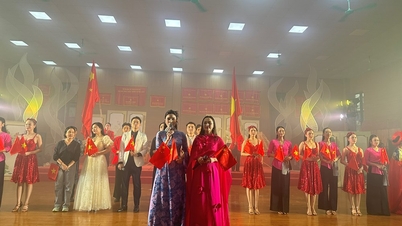
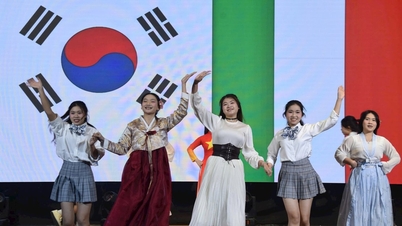
During the recent Vietnam Card Day 2023 - Song Festival at Hanoi Pedagogical University, Ha Myo not only presented colorful performances that blended traditional and modern elements, but also directly guided many students in singing along to Hanoi Xam songs, receiving enthusiastic responses. Even more remarkably, when clips of the Xam singing exchange were posted on social media, many viewers left very positive comments. Some viewers even said that this was their first time encountering Xam singing and were captivated from the very first melody. To date, the Xam singing clips have attracted over 3 million views, with very positive feedback.
Although the journey of bringing traditional art, especially Xam (a type of Vietnamese folk singing), into schools still faces many difficulties in terms of resources, Ha Myo is still striving to go further and longer. “My wish has always remained unchanged: to strongly spread Xam art in particular, and Vietnamese traditional music in general, to young people and, even further, to reach international levels. And when young people show love for traditional values, it means they will love their country more,” the singer shared about her journey of bringing traditional music to schools.
It's not just Ha Myo; many artists have ventured into "revitalizing" traditional Vietnamese music, bringing theatrical projects into schools... However, these projects have also revealed numerous difficulties, and their effectiveness has not met expectations, with a rather modest impact on contemporary audiences. Part of the reason is that professionals place too much emphasis on training young people to become the next generation of performing artists. A comparison is needed to see that overemphasizing artist training while neglecting the audience's enjoyment yields no results. Therefore, bringing traditional Vietnamese music into schools requires clear, consistent direction and substantial, in-depth investment. Similarly, the "revitalization" process needs the right approach, skillful and subtle blend of tradition and modernity to be effective. Continuing to "awaken" the love for traditional music by nurturing appreciation will be like a "small stream" flowing endlessly, contributing to the preservation and dissemination of the country's traditional cultural values in the future.
HONG HANH
Source


![[Photo] Prime Minister Pham Minh Chinh presides over a meeting on private sector economic development.](/_next/image?url=https%3A%2F%2Fvphoto.vietnam.vn%2Fthumb%2F1200x675%2Fvietnam%2Fresource%2FIMAGE%2F2025%2F12%2F20%2F1766237501876_thiet-ke-chua-co-ten-40-png.webp&w=3840&q=75)

























































Comment (0)