

Many bright spots
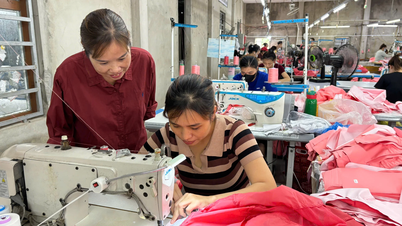
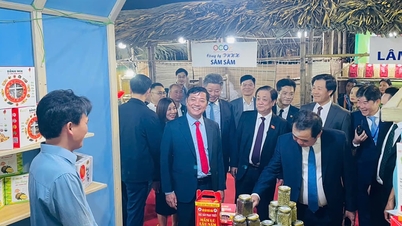
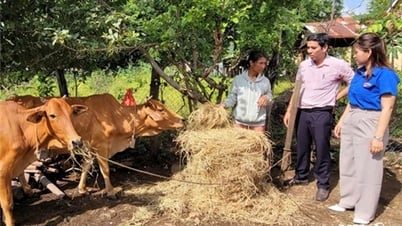
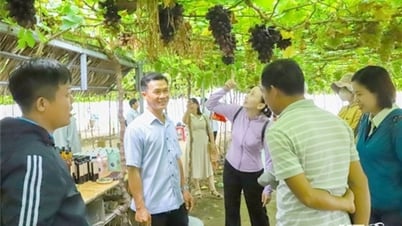
Comrade Dang Kim Cuong, Director of the Department of Agriculture and Environment and Chief of the Provincial Coordination Office for the National Target Program on Building New Rural Areas, stated: Building new rural areas essentially involves implementing specific measures to industrialize and modernize agriculture and rural areas, develop production, increase income, improve healthcare, and enhance the material, cultural, and spiritual lives of rural people. Therefore, the province has determined that building new rural areas must be linked to restructuring the agricultural sector and implementing local socio -economic development plans. By the second quarter of 2025, the entire sector will continue to consolidate and improve the results of 70 product value chain linkages/15,254 hectares; 57 planting area codes/391,128 hectares have been issued; 125 cooperatives have been supported to operate effectively; and young workers have been supported to work in 48 cooperatives from program funds and local budgets. Support is provided to several cooperatives to develop production through production linkage chains led or participated in by the cooperatives. Vocational training for rural laborers is integrated by localities with other national target programs. By 2024, the percentage of communes meeting criterion No. 12 on labor is 95.7% (45/47 communes). To increase people's income and develop the rural economy, localities have implemented specialized programs associated with building new rural areas such as: the OCOP program, the science and technology program, the rural tourism development program, etc.
Another key focus of the program, which has received attention from all sectors and levels, is the development of a comprehensive and modern basic socio-economic infrastructure, ensuring connectivity between rural and urban areas and between different regions. Accordingly, 100% of communes have met the standards for transportation, irrigation, electricity, cultural facilities, information and communication, and rural commercial infrastructure; the school criteria have a relatively high compliance rate of 95.7%...
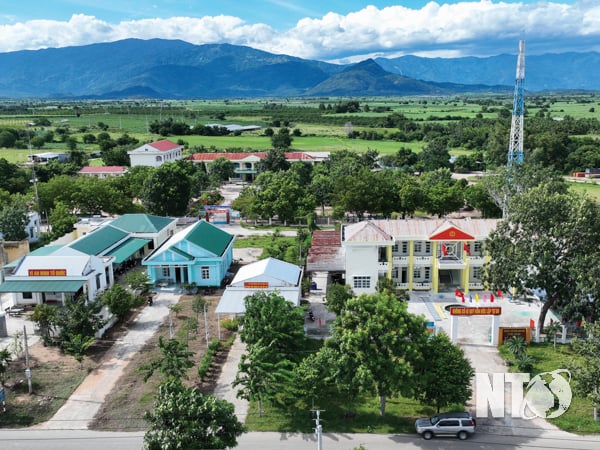
For example, in Ninh Hai district, the district-managed transportation system is 100% asphalted, ensuring convenient car access and connectivity to the administrative centers of the communes; 100% of roads are hardened, with good management, installation of directional signs, lighting systems, and the planting of additional trees and flowerbeds. The inter-commune irrigation system has been invested in comprehensively, with canals and ditches being reinforced and basically meeting the irrigation needs of 100% of agricultural land, meeting the requirements for people's livelihoods and local disaster prevention and control; 100% of villages and neighborhoods and 99.84% of households use the national power grid; 100% of health stations meet national standards. School facilities and equipment basically meet the standards for educational activities. All 9 communes and towns have achieved the standards for universal preschool education for 5-year-old children, level 3 universal primary education, level 3 universal lower secondary education, and level 2 literacy eradication. Many flowerbeds have been constructed, creating bright, green, clean, and beautiful focal points; the percentage of rural housing meeting the prescribed standards has reached 99.45%, with no more temporary or dilapidated houses... Based on the assessment, the district has completed and met the requirements of the National Criteria for New Rural Districts for the 2021-2025 period.
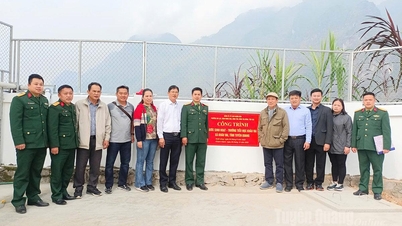
In addition, poverty reduction efforts have been integrated by localities with the National Target Program for Sustainable Poverty Reduction, the National Target Program for Socio-Economic Development in Ethnic Minority and Mountainous Areas, and social security policies. Through support, the percentage of poor and near-poor households in rural areas has decreased annually; by the end of 2024, the poverty rate was 3.7%, a decrease of 2.16%, and the near-poverty rate was 4.59%, a decrease of 0.42% compared to 2023. Implementing Directive No. 42/CT-TTg on accelerating the elimination of temporary and dilapidated houses nationwide, the entire province has simultaneously implemented the program since the beginning of 2025. As a result, support was provided for 2,183 houses (1,526 new constructions, 657 repairs) with state funding of VND 141.79 billion, achieving 100% of the plan, finishing 5 months ahead of schedule and ranking 14th nationwide.
The program has no end.
Recognizing that building new rural areas is a continuous program, while awaiting approval and implementation guidelines for the 2026-2030 period, the Provincial People's Committee requests that newly merged communes continue to direct the implementation of the program according to the current criteria set for the 2021-2025 period. This includes focusing on innovating communication efforts, unifying understanding and actions regarding agriculture , farmers, and rural areas; advising on adjusting the objectives of Resolution No. 16-NQ/TU for the period up to 2030 to suit the new situation after the provincial merger and to align with the objectives and content of the 2026-2030 program. Emphasis should be placed on training and developing human resources; creating local jobs for rural laborers; enhancing the role, status, and capacity of farmers and rural residents to comprehensively improve their lives. A strategic breakthrough should be implemented in the development of agricultural and rural infrastructure. Building modern rural areas in conjunction with urbanization; developing cultural life, protecting and promoting the value of cultural heritage in rural areas; developing industry, services, tourism, and shifting the rural economic structure; innovating organization, cooperation, and production linkages along the value chain; developing the domestic market and improving export efficiency, expanding consumer markets. Improving scientific and technological capabilities, promoting digital transformation and innovation to develop an efficient and sustainable agricultural sector in an ecological direction, enhancing quality and added value. Continuing to review and refine mechanisms and policies supporting the construction of new rural areas, ensuring they are appropriate to actual conditions to encourage and support localities in implementing the program's contents, focusing on improving quality, depth, and sustainability.
Simultaneously, it is necessary to mobilize maximum local resources (provincial and commune levels) to organize and implement the program; implement synchronized solutions for capital mobilization (integrating capital from national target programs, other programs and projects; credit capital; capital mobilized from businesses and economic organizations; capital mobilized from the community and people on a voluntary basis...) to ensure full and timely mobilization as prescribed. Strengthen inspection, supervision, and evaluation of program implementation at all levels and sectors; take preventive measures and promptly stop negative manifestations and waste, strictly handle violations during program implementation, ensuring that resources are used effectively and for the intended purpose.
Youth
Source: https://baoninhthuan.com.vn/news/153508p1c30/xay-dung-nong-thon-moi-chuong-trinh-khong-co-diem-dung.htm


![[Photo] Prime Minister Pham Minh Chinh presides over a meeting on private sector economic development.](/_next/image?url=https%3A%2F%2Fvphoto.vietnam.vn%2Fthumb%2F1200x675%2Fvietnam%2Fresource%2FIMAGE%2F2025%2F12%2F20%2F1766237501876_thiet-ke-chua-co-ten-40-png.webp&w=3840&q=75)






































































Comment (0)