

The elders in the village still recount that the name "Ngàn Vắng" (meaning "Deserted Thousand Mountains") comes from the sparse population and the remoteness of the terrain. "Ngàn" means mountains and forests, while "vắng" means the absence of people passing by. The entire village is perched precariously on the mountainside; during the rainy season, roads are often cut off, and in winter, frost blankets the fields. In the past, to get to the commune center, people had to walk for hours, carrying sacks of rice and cans of oil up the steep slopes. Poverty clung to them like a swirling mist around the mountaintop. But this spring is very different.
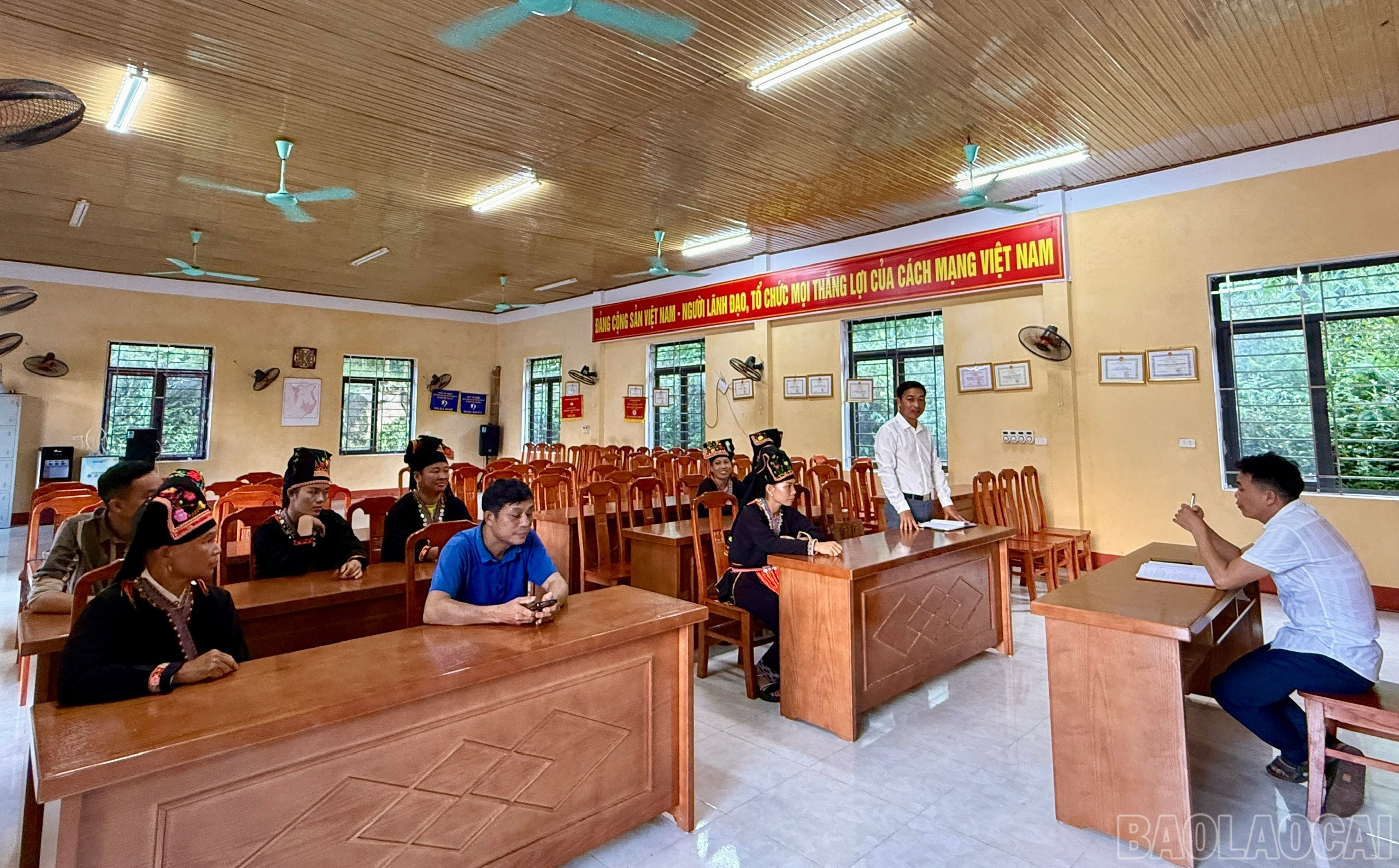
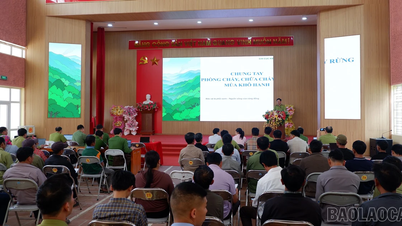
In the village cultural center, the Party branch of Ngan Vang village held its regular meeting. Besides leading and directing the promotion of agricultural and forestry production, the meeting also focused on practical issues affecting people's lives. Mr. Dang Phuc Bao, the head of Ngan Vang village, said in a warm, deep voice: “The Party branch meets once a month. Sometimes we meet with the villagers twice a month. The discussions aren't just about production; they also cover healthcare, preventing social evils, avoiding having a third child, preventing domestic violence, and preventing consanguineous marriages…”
Sitting in the front row, young Party member Ly Thi Hoa attentively took notes. She was once a poor household, but now owns over 3 hectares of cinnamon trees, earning hundreds of millions of dong annually. For her, these meetings are truly a place to resolve difficulties for herself and her fellow villagers. According to Ms. Hoa, the story of Ngan Vang's transformation began with cinnamon trees.
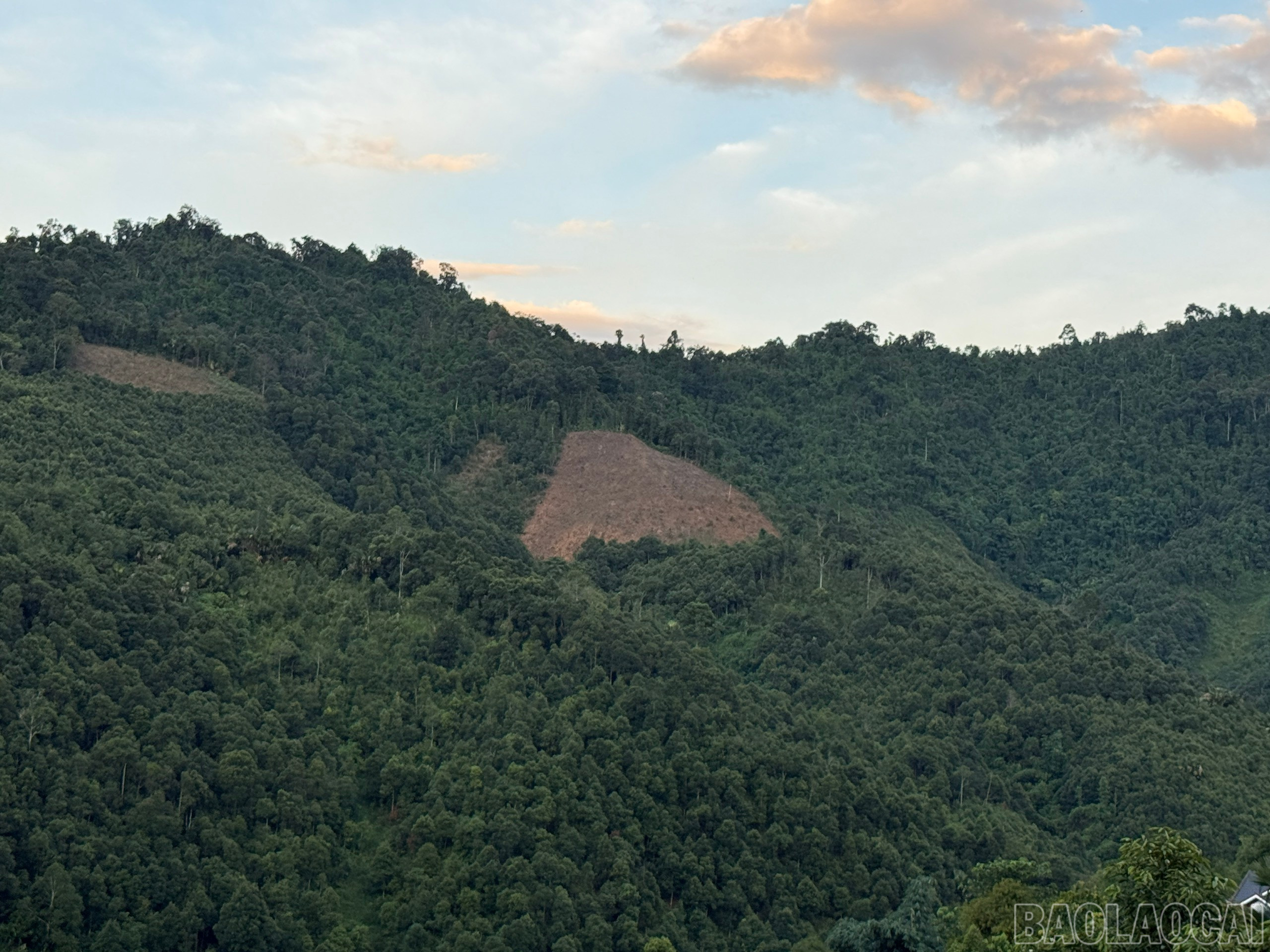
In the past, the villagers mainly grew corn and cassava, which yielded low returns. The sloping land was barren, and despite hard work, they barely had enough to eat. When the Party branch discussed a resolution on developing cinnamon cultivation as a sustainable source of wealth, many were skeptical. But the young Party branch secretary, Trieu Ton Yet, went from house to house, explaining the long-term benefits. He said, "To escape poverty, we must change our way of thinking. Party members must lead the way, and the people will follow." And he did just that. Yet's family pioneered the conversion of their entire unproductive hillside land to cinnamon cultivation. A few years later, when the first cinnamon bark was harvested and sold at prices many times higher than growing corn or rice, the villagers finally believed. From just a few hectares initially, the entire village is now covered in the green of cinnamon trees. Nearly 80 households in the village now grow cinnamon, with some owning over ten hectares and others at least two or three. Every harvest season, traders come directly to the village, filling the air with laughter and conversation, replacing the former desolate atmosphere.
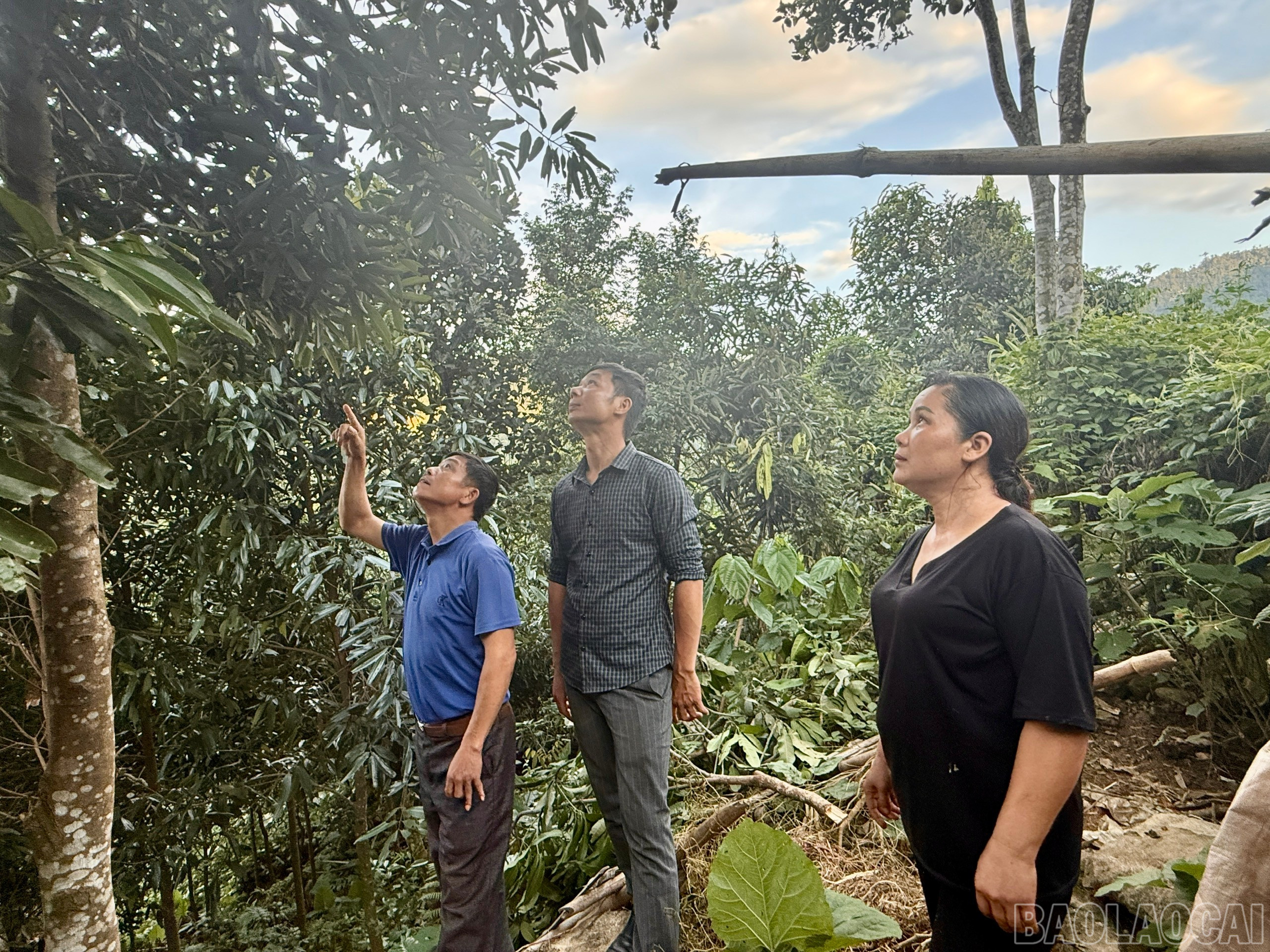
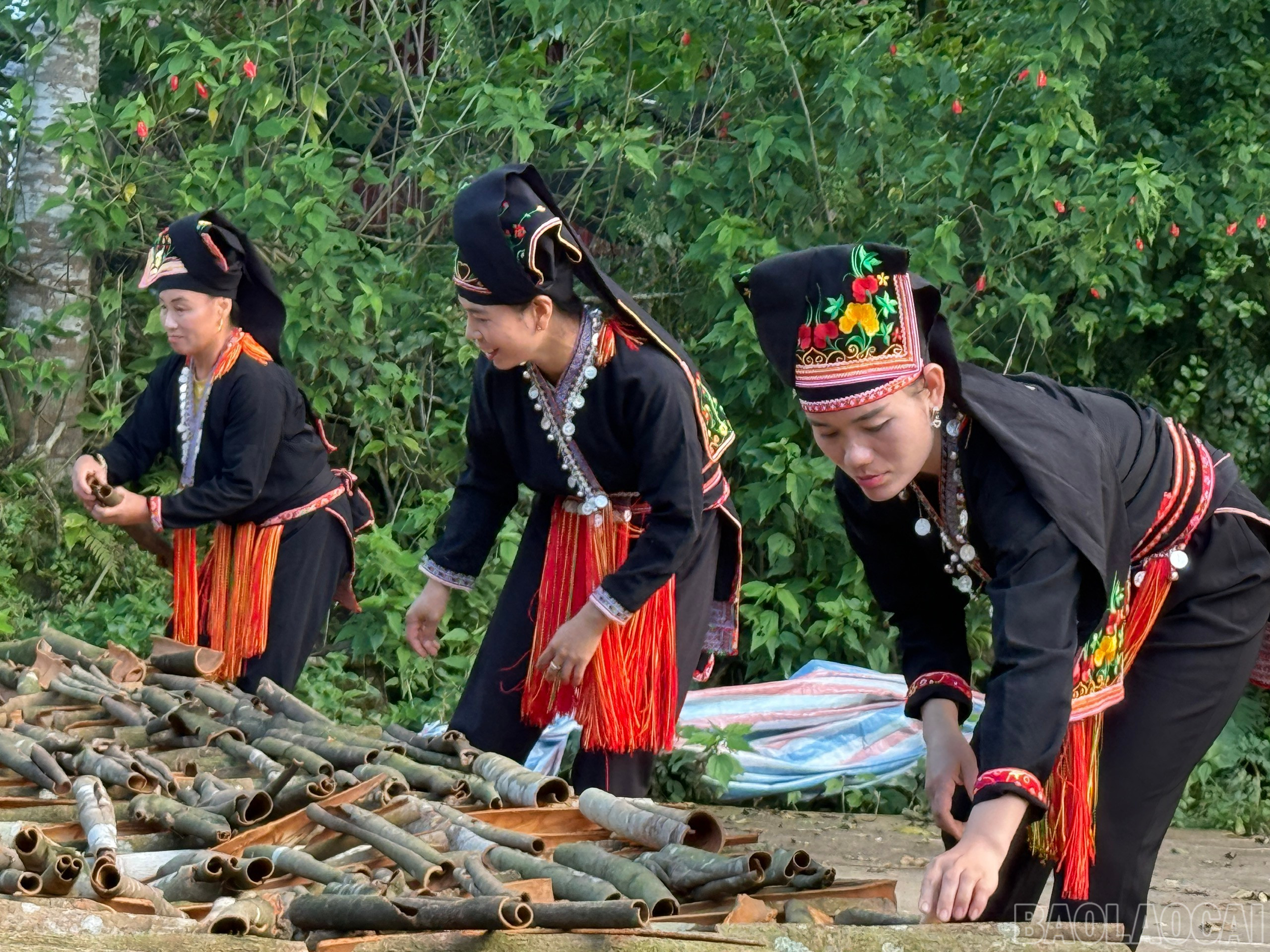
Now, the percentage of well-off and wealthy households in the village is over 50%. Over 95% of houses are solidly built villas, and people own motorbikes, televisions, and cars, and send their children to school regularly. Children no longer drop out of school due to lack of food or clothing.
To date, the livelihoods of 100% of households in Ngan Vang depend on cinnamon trees. Thanks to this product, the lives of the 357 inhabitants have changed significantly; over 95% of the houses in the village are solidly built villas, and many households have bought cars...
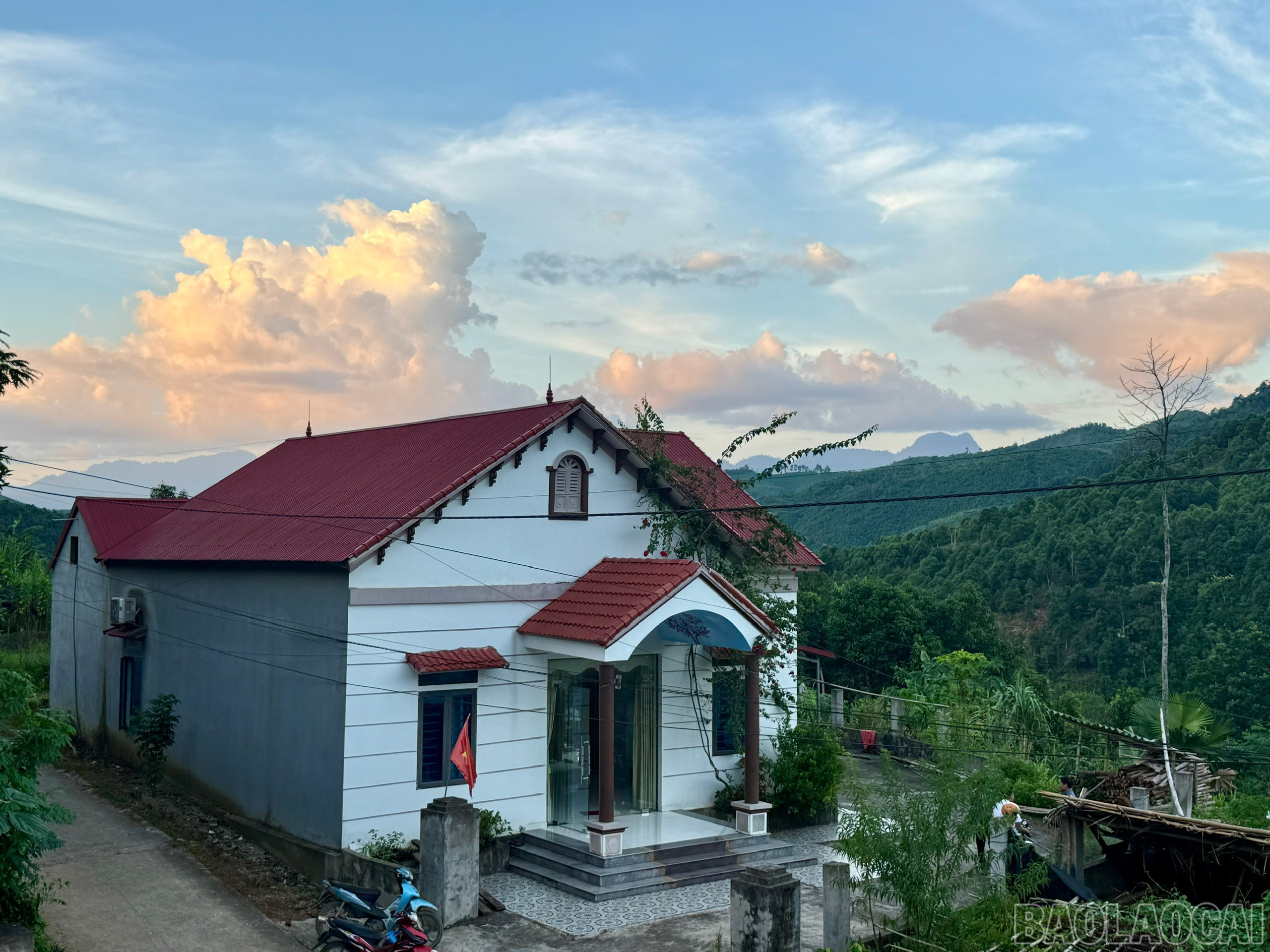
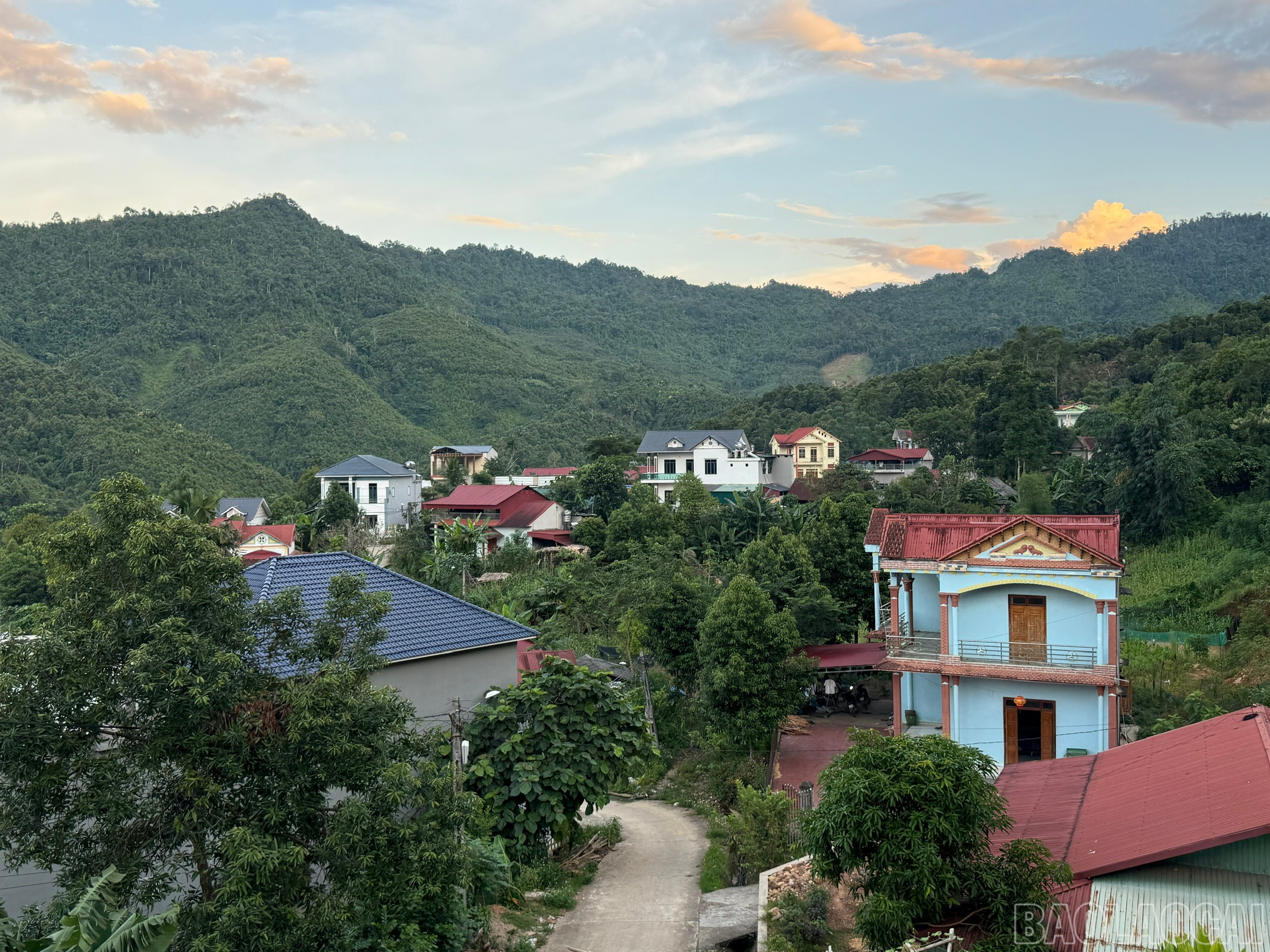
But economic development alone is not enough. The Party branch determined that it was necessary to preserve a civilized lifestyle and eradicate outdated customs. In meetings, the content of "no third child, no consanguineous marriage" was always emphasized. Party members assigned themselves to oversee groups of households, regularly disseminating information and explaining the importance of this. As a result, for many years now, the village has been free of child marriage, domestic violence, and security and order have been maintained.
With economic development, the demand for transportation and trade to Ngan Vang has increased. Although the road from the center of Phong Du Ha commune to the village has been paved with concrete, it is still quite narrow, not wide enough for two cars to pass each other, affecting the transportation of agricultural products for the villagers. Therefore, along with actively developing the economy, the people of Ngan Vang hope for government support to expand the road. As the Party Secretary, Mr. Trieu Ton Yet consulted with Party members and proposed to higher authorities to invest in upgrading the road. He affirmed: "If investment is given, we Party members will be the first to donate land to create the construction site."
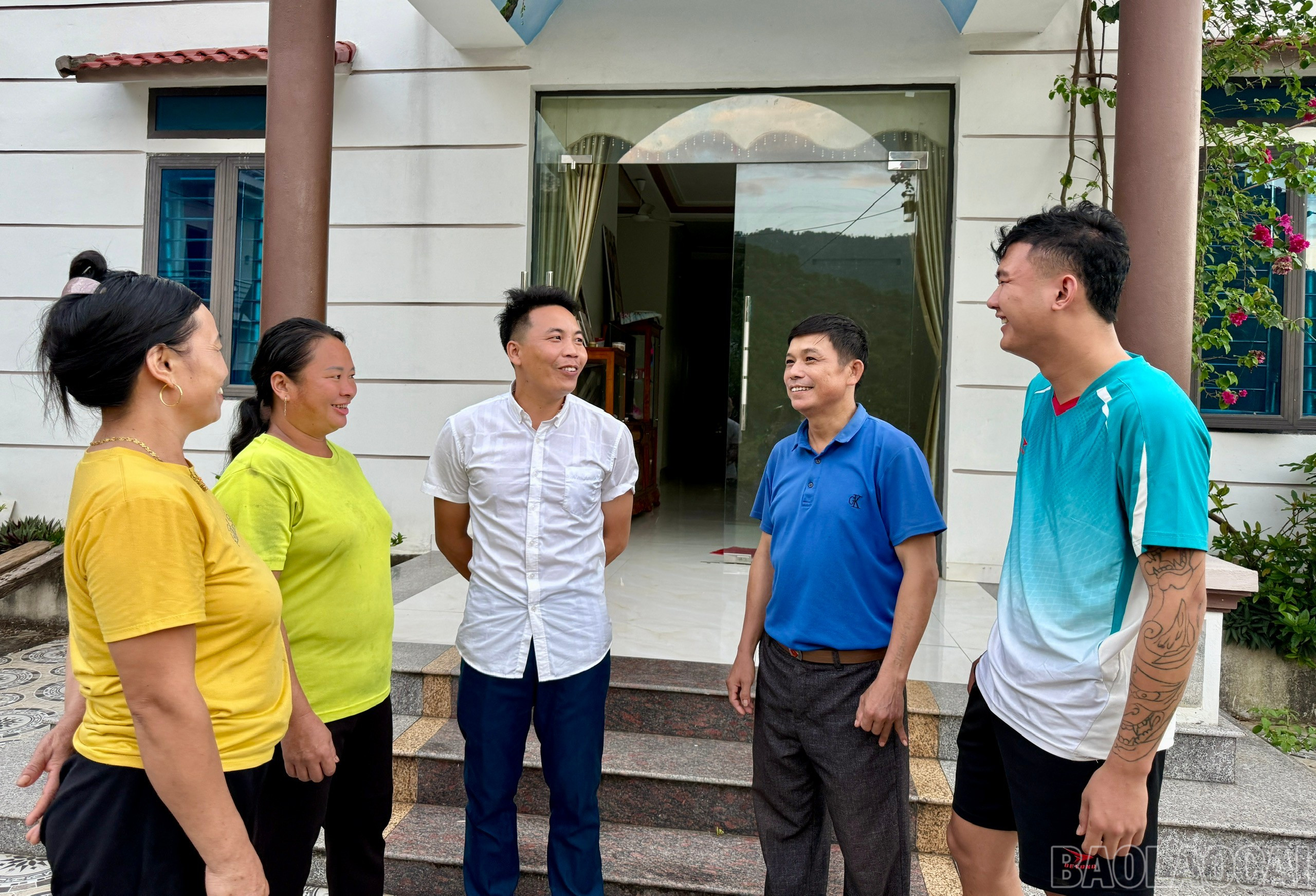
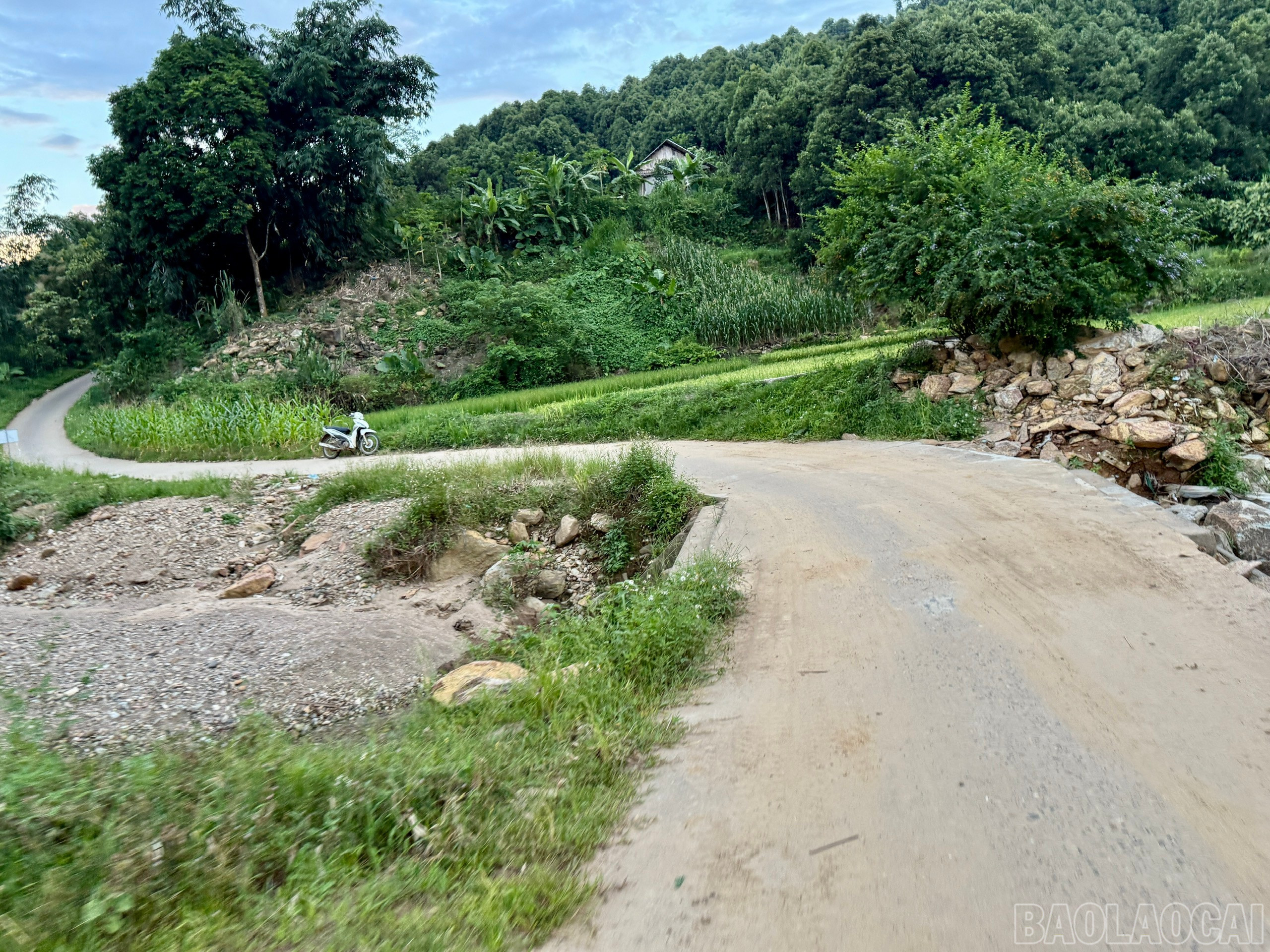
Through surveys, many party members expressed their willingness to voluntarily cut down trees, move back fences, and donate garden land without demanding compensation to create a clear area for road expansion. They understand that this road is not just concrete, but a road that brings the future closer to the local people.
In her newly built house, Ms. Ly Thi Hoa brewed a pot of fragrant cinnamon tea and told her child stories of the old days. She said, “When I was your age, the whole village only had a few rickety wooden houses. Things are different now. But to preserve that difference, we have to listen to the Party branch, we have to be united…” The child nodded, her clear eyes reflecting the spring colors outside the window.
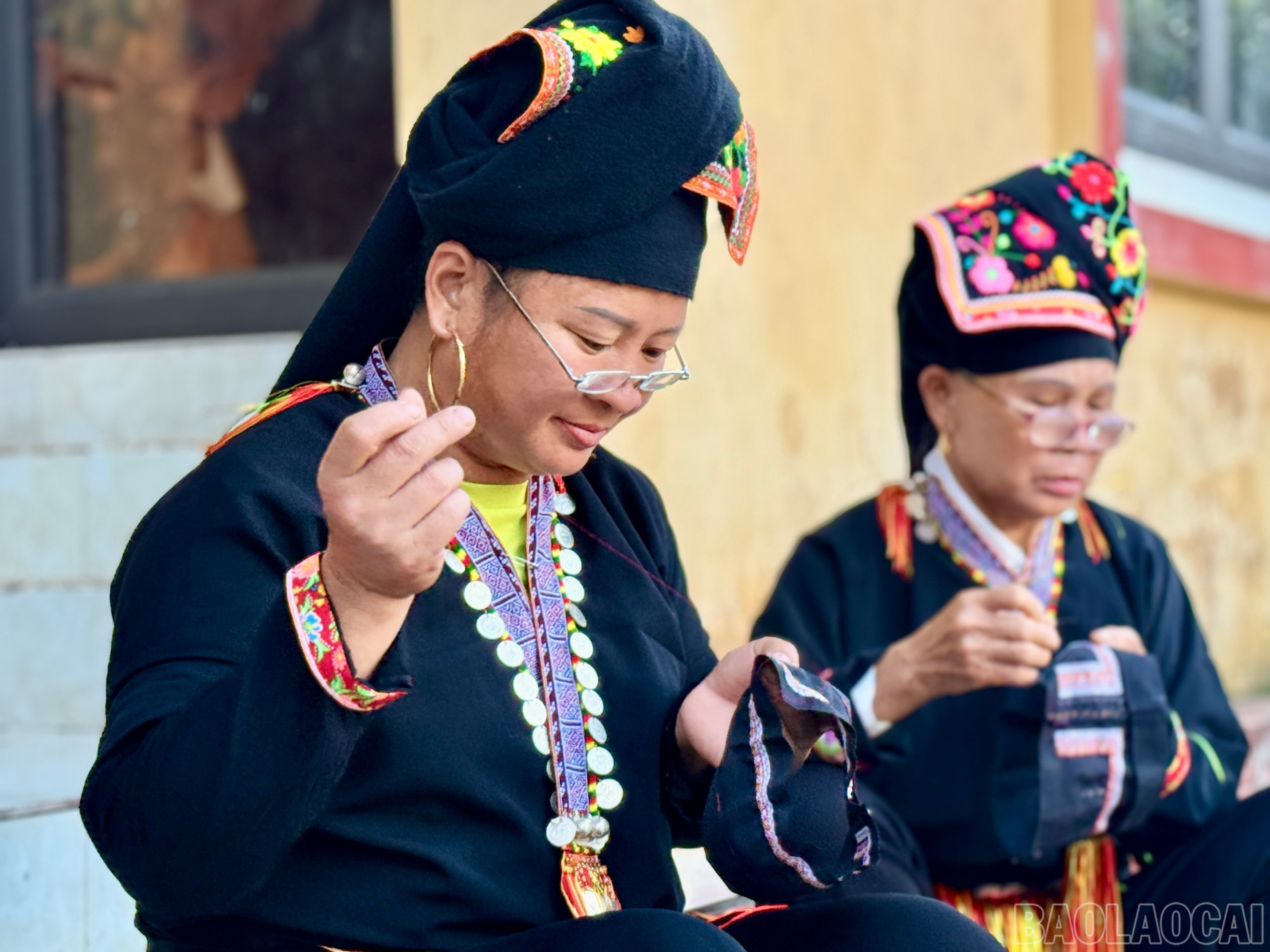
Spring in Ngan Vang is not just a change in nature, but also a spring in people's hearts. From being the highest and most remote hamlet in the commune, once the most disadvantaged, Ngan Vang has now become a model village. Prosperity is evident in every cinnamon hill, every house, every smile.
There, each party member in the branch truly acts as a "torchbearer," igniting a sense of responsibility within the community. Resolutions are not just on paper, but are concretized through action: planting an additional hectare of cinnamon trees, persuading a family to abandon outdated customs, and donating a portion of land to build a road.
The spring breeze blows through the green cinnamon trees, carrying a gentle fragrance that permeates the mountains and forests. Ngàn Vắng is no longer deserted. The laughter of children, the sound of cinnamon harvesting machines, the conversations at Party branch meetings… all blend into a symphony of change. On the high mountain peaks of Phong Dụ Hạ commune, spring continues to blossom, reflecting the people's belief in a sustainable and prosperous future.
Source: https://baolaocai.vn/xuan-ve-tren-ngan-vang-post894547.html
![[Photo] National Assembly Chairman Tran Thanh Man attends the opening session of IPU-152](https://vphoto.vietnam.vn/thumb/1200x675/vietnam/resource/IMAGE/2026/04/16/1776277863731_ctqh5-jpg.webp)
![[Photo] Mrs. Ngo Phuong Ly meets and exchanges views with Mrs. Peng Li Yuan](https://vphoto.vietnam.vn/thumb/1200x675/vietnam/resource/IMAGE/2026/04/16/1776277858080_phu-nhan-1-jpg.webp)
![[Photo] The General Secretary, President and his wife meet with Vietnamese-Chinese friendship leaders.](https://vphoto.vietnam.vn/thumb/1200x675/vietnam/resource/IMAGE/2026/04/15/1776264829725_vna-potal-tong-bi-thu-chu-tich-nuoc-to-lam-gap-mat-nhan-sy-huu-nghi-viet-nam-trung-quoc-8703641-3130-jpg.webp)
![[Photo] National Assembly Chairman Tran Thanh Man arrives in Türkiye to attend IPU-152](https://vphoto.vietnam.vn/thumb/1200x675/vietnam/resource/IMAGE/2026/04/15/1776261003665_tnk10-jpg.webp)
![[Photo] My Son at night: A thousand-year-old heritage site amidst the Milky Way](https://vphoto.vietnam.vn/thumb/1200x675/vietnam/resource/IMAGE/2026/04/15/1776261039184_ndo_br_chon6-jpg.webp)












































Comment (0)