Buying land to donate to students. Trung Leng Ho Secondary School has 96 boarding students, mostly from remote villages such as Po Ho, Ta Ta Le, and Seo Ta Le. Thanks to this model, the student attendance rate has increased significantly. With so many boarding students, the teachers have even given up their own staff quarters to provide enough accommodation. However, providing meals for nearly 100 students is the real challenge for the teachers.
You may also like  Unlocking human resources through vocational high school education.On the afternoon of June 25th, at the Hanoi College of Mechanical and Electrical Engineering, the Central Propaganda and Mass Mobilization Department, in coordination with the Ministry of Education and Training, organized a scientific conference on the theme "Orientation for building and developing vocational secondary education in Vietnam today". 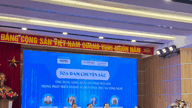 Promoting the commercialization of technology and creating modern and sustainable healthcare solutions.On June 25th, in Hanoi, the National Center for Innovation and Entrepreneurship Support (NSSC) – Ministry of Science and Technology, in collaboration with TECHFEST BeautyTech 2026, Techfest Vietnam MarTech Community, and partner organizations, held a scientific conference on the theme “Enhancing Competitiveness and Commercialization of Technology in the Digital Age”. 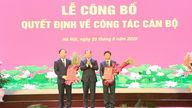 Announcement of the reappointment of the Director of the Academy of Journalism and Communication.On June 25th, the Academy of Journalism and Communication solemnly held a ceremony to announce the reappointment of the Director and the appointment of the Permanent Deputy Director of the Academy of Journalism and Communication. The school administration had the initiative to borrow land from local households to grow rice for one season to cultivate vegetables, but this only lasted for a short time. Every week, the students still brought rice home to school, and while the teachers could provide some food, they couldn't possibly buy vegetables when the budget was limited. The teachers had once discussed with the commune authorities about allocating land for the students, but it was difficult because Trung Lèng Hồ is mostly mountainous, and any land suitable for cultivation was already farmland belonging to the local people. The Party Secretary of the commune, Sùng A Cở, heard about the situation and thought a lot about it: "In the past, I also found it difficult to go to school because the school was far away. Now our children have better opportunities, but we can't bear the thought of them having to drop out because they lack food." A few days later, Secretary Cở came to discuss with the teachers the possibility of using some of the money from selling cardamom from the recent harvest to buy a plot of land from Lý A Cá's family to donate to the boarding students. The teachers were overjoyed; it's rare to find a commune official so dedicated to the students. But it wasn't as simple as just buying it whenever you wanted, because Ly A Ca's family refused to sell. Even though he was the village secretary, he couldn't force them. Pouring a cup of rice wine until it overflowed, Sung A Cu said, "I'm buying this land to give to the students, not for myself. They're like my own children and grandchildren." Finding this satisfactory, Ly A Ca agreed to sell nearly 400 square meters of land for 4 million dong. The small plot of land next to the boarding school has been transformed into a lush green garden full of various vegetables. It's a model that the teachers here jokingly call "eradicating hunger" right at the school. Solve the difficult problem. 1 PM. Trung Leng Ho Junior High School was deserted, with neither students nor teachers present. Tomorrow would be the first day of school after the extended Tet holiday break. In the boarding area, a few students from distant villages had brought rice early that morning and were busily tidying up their rooms and rearranging their belongings. Just then, a teacher appeared at the school, his boots stained with mud, his jacket soaked with dew. Before I could ask, a student said, "That's Mr. Luan. He probably just went up to the village to call the students to class tomorrow." A common difficulty for many schools in the mountainous areas of Lao Cai is that after the Lunar New Year holiday, students are often absent due to numerous festivals. Furthermore, this period coincides with the start of the new planting season, so junior high school students often have to help their families. Therefore, maintaining student attendance has been a difficult problem for many years. Mr. Dinh Ngoc Nam, Vice Principal of Trung Leng Ho Junior High School, pointed to the board assigning teachers to monitor specific areas and said: "The school has specifically assigned each teacher to monitor each village to understand the reasons for students' absence and to encourage families to send their children back to school." Along with Mr. Luan, most of the school's teachers have fanned out across the seven villages in Trung Leng Ho to call students back to class. In recent years, people's living standards have improved, so they are paying more attention to their children's education. Teacher Vu Ngoc Anh, Principal of Trung Leng Ho Primary School, shared: "A few years ago, the number of students in the commune who completed secondary school could be counted on the fingers of one hand. Thinking about education here was disheartening because the schools were dilapidated, there was a shortage of classrooms, and even when there were classrooms, the students were few because their parents thought, 'If they go to school, what will they eat?' But now, education here has undergone significant changes. For many years, Trung Leng Ho has consistently been recognized as one of the leading communes in Bat Xat in terms of prioritizing education ." Speaking about the universal education program in Trung Leng Ho, even those who have been involved in education in the highlands for many years, such as teachers Ngoc Anh and Nam, are surprised by the rapid changes in the commune. Just a few years ago, the term "universal education" was still a difficult concept to understand, even for the officials of Trung Leng Ho commune, let alone the people. The main task of the teachers at that time was to eradicate illiteracy and prevent its recurrence. But by 2005, the commune had achieved the standard for universal primary education for children of the correct age, and by 2007, it had achieved the standard for universal lower secondary education. Since then, the percentage of students attending school at the correct age and the attendance rate have consistently been maintained at a high level. You may also like Unlocking human resources through vocational secondary education.On the afternoon of June 25th, at the Hanoi College of Mechanical and Electrical Engineering, the Central Propaganda and Mass Mobilization Department, in coordination with the Ministry of Education and Training, organized a scientific conference on the theme "Orientation for building and developing vocational secondary education in Vietnam today".  Choose the right university options after knowing your exam scores.After the 2026 high school graduation exam, candidates need to calmly assess their scores and develop a suitable university application strategy.  Discuss models, mechanisms, and policies for implementing vocational secondary education.On the afternoon of June 25th, in Hanoi, the Central Propaganda and Mass Mobilization Department, in coordination with the Ministry of Education and Training, organized a scientific seminar titled "Orientation for Building and Developing Vocational Secondary Education in Vietnam Today," discussing models, mechanisms, and policies for implementing vocational secondary education according to Resolution No. 71-NQ/TW of the Politburo. The houses of the Hmong people in Trung Leng Ho are always brightly lit with fire. The fire provides warmth, helping them overcome the cold. And in the hearts of the teachers in this highland region, a fire has also been lit and is silently spreading, so that the future of the children here will be brighter. |

Source: http://laocai.edu.vn/tin-noi-bo/xuong-nui-di-hoc-chu-142689
![[Image] Ho Chi Minh City: Ma Lang area, Chicken-Rice Market about to change its appearance](https://vphoto.vietnam.vn/thumb/1200x675/vietnam/resource/IMAGE/2026/06/25/1782377698627_ndo_br_m1-jpg.webp)

![[Photo] General Secretary and President To Lam receives Palestinian Ambassador Saadi Salama](https://vphoto.vietnam.vn/thumb/1200x675/vietnam/resource/IMAGE/2026/06/25/1782365384740_a1-bnd-9423-8322-jpg.webp)

![[Image] Schools organize meetings and introduce teaching models to students admitted to grade 10.](https://vphoto.vietnam.vn/thumb/1200x675/vietnam/resource/IMAGE/2026/06/25/1782368077271_ndo_br_z7970052192242-1ec8daeb77a6eed1a4e9f58c564ddd3e-jpg.webp)