

- Journalism - Hard work, but glorious.
- This is where my journalism career began.
- The heart of amateur journalism
Mr. Danh Pham Anh Tuan, Head of the Broadcasters Team, Arts - Entertainment - Sports Department: "Keeping the passion for the profession alive."
On the occasion of the 100th anniversary of Vietnamese Revolutionary Journalism , Danh Pham Anh Tuan could not hide his emotion as he looked back on his more than 22-year journey as a news anchor. “This is a special position for those working in television journalism, a crucial bridge between information and the public. Every program I participate in is an opportunity to improve myself to repay the trust and love of the audience,” he sincerely shared.
As a son of the Khmer people, his passion for television journalism was nurtured from his time as a student at Minh Hai Ethnic Boarding School. "I've always wanted to tell the stories of my people, about their lives, festivals, work, and even the hardships they face. That's what motivated me to dedicate myself to this profession and keep the passion alive until today," he shared.

A passion for his profession, professionalism, and a unique style have helped Danh Pham Anh Tuan succeed in his career for over 22 years.
Having been in the profession for over 22 years, he believes that what keeps an MC engaged for the long term is a love for the job, professionalism, and a unique style. “Each presenter must create their own ‘essence’ so that the audience remembers them. For me, being from an ethnic minority is also an advantage, because I understand my community and can inspire young Khmer people who are aspiring to pursue this profession,” he confided.
In the context of the consolidation of newspapers and radio stations in the province, and the upcoming provincial merger, he expressed his hope: "What I hope for is that the journalistic team, especially those working in television journalism, will have a professional and creative working environment, and that their capabilities will be invested in and developed. For journalists from ethnic minority groups like myself, we need even more support so that we can not only do our job well but also contribute to preserving and spreading our ethnic cultural identity to the public."
Mr. Lam Duol, a technician specializing in the layout of Vietnamese-Khmer bilingual newspapers, said: "Maintaining and developing Vietnamese-Khmer bilingual newspapers is essential."
Coming from a Khmer ethnic background and understanding the customs, traditions, and sentiments of his people, Mr. Lam Duol feels proud to contribute to the work of disseminating information and propaganda to help his people understand and comply with the Party's guidelines and policies, the State's laws and regulations, and local regulations; at the same time, assisting the local government in promptly adjusting, supplementing, and effectively implementing ethnic affairs work.
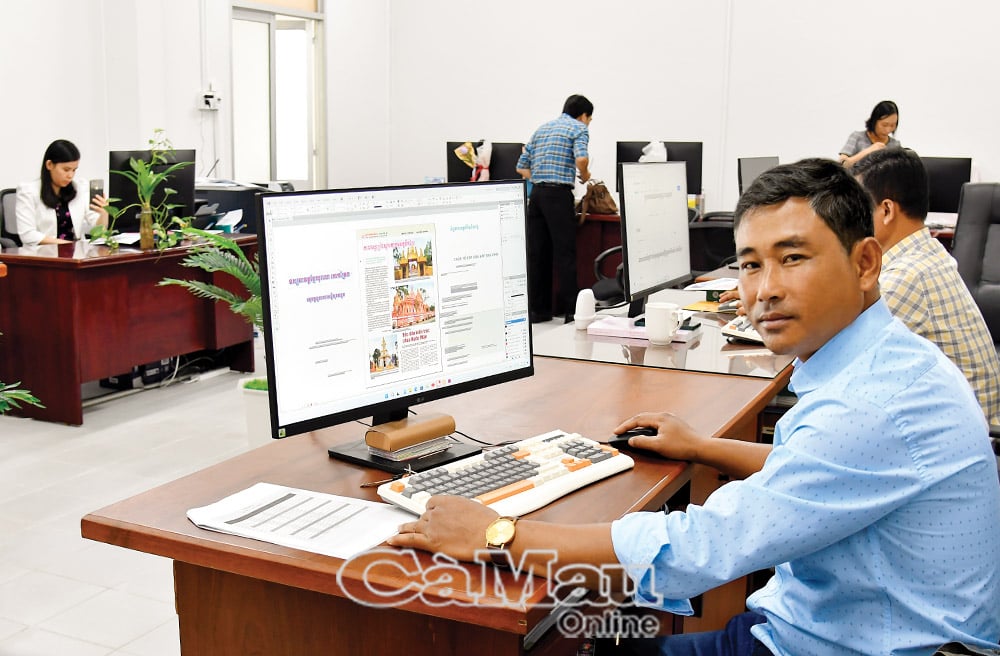
Mr. Lam Duol feels proud to be a bridge of information for his people.
According to Mr. Lam Duol, because many Khmer people are elderly and have limited access to the written language of the common Vietnamese language, maintaining and developing a bilingual Vietnamese-Khmer newspaper is extremely necessary. This special publication not only contributes to timely dissemination of the Party and State's policies and guidelines, but also preserves and promotes the national cultural identity.
He believes that the press has always been an effective bridge between the Party's will and the people's aspirations, contributing to the development of the locality and helping people feel that they are cared for and listened to. He hopes that bilingual newspaper publications will receive more investment, especially in the digital age. "People in remote areas may not use social media much, but their children and grandchildren do. That will be an important bridge to ensure that people are not left behind in the flow of information," he remarked.
He particularly hopes that more young Khmer people will become passionate about journalism, choosing this path because they love the profession and the language of their people. Journalism covering ethnic affairs requires not only professional skills but also a compassionate heart and empathy, to understand, empathize, and write in a way that resonates with the local people, making the content easy to understand and trustworthy.
“Passion, love of culture, and social responsibility are the main factors shaping my thoughts and feelings. I feel proud to contribute to the development and unity of my ethnic community through journalism,” Lam Duol shared.
Danh Soc Kha, broadcaster and translator for the Khmer language program: "Preserving the sounds of our ethnic group amidst the rhythm of modern life."
For Danh Soc Kha, working as a journalist in the Khmer language is not simply a job, but also a calling, a debt to the community. He says he is fortunate to be able to speak his mother tongue every day on the radio, to convey information to the Khmer people in their own language, and that is a source of pride that is difficult to express in words.
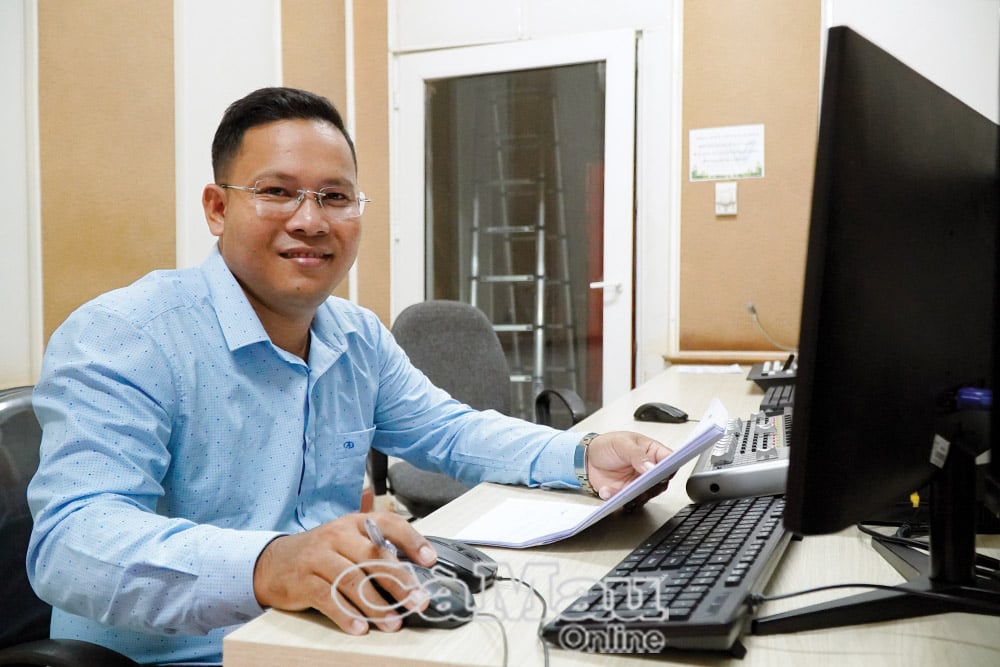
For Danh Soc Kha, journalism is a calling, a debt to the community.
He shared that the press, especially Khmer-language programs, plays a significant role in preserving cultural identity and disseminating the good customs, traditions, and festivals of the ethnic group. Through each news report, each story, and each radio program, people gain access to official information, better understand the Party's policies, the State's laws, and new knowledge to improve their education and develop their family economy .
"In this profession, there are many joys, but also many difficulties. The Khmer language has its own unique characteristics; it's not just about translating correctly, but also about being 'smooth,' fitting the cultural context, and accurately reflecting the spirit of the Khmer people," Kha shared.
Despite the hardships, every time he receives calls or messages from people offering suggestions, encouragement, or simply expressing, "The program really speaks to my situation!", he finds this profession incredibly valuable.
On the eve of the 100th anniversary of Vietnamese Revolutionary Journalism, Danh Soc Kha hopes that the team of ethnic minority journalists will become increasingly professional, applying more technology to modernize journalism while still preserving the national spirit. He hopes that, during the digital transformation and consolidation of media agencies, journalistic programs and products serving the Khmer people will continue to be preserved and disseminated, not only to bring information to the people faster, but also to continue contributing to building national unity.
Performed by Bang Thanh
Source: https://baocamau.vn/yeu-nghe-mong-muan-phuc-vu-dong-bao-dan-toc-a39755.html



































































Comment (0)