

On the evening of May 20th, the Thu Duc City Health Department announced that after receiving information about botulinum poisoning from eating Vietnamese sausage sold by a street vendor, authorities inspected the facility and ordered it to close and cease operations immediately.
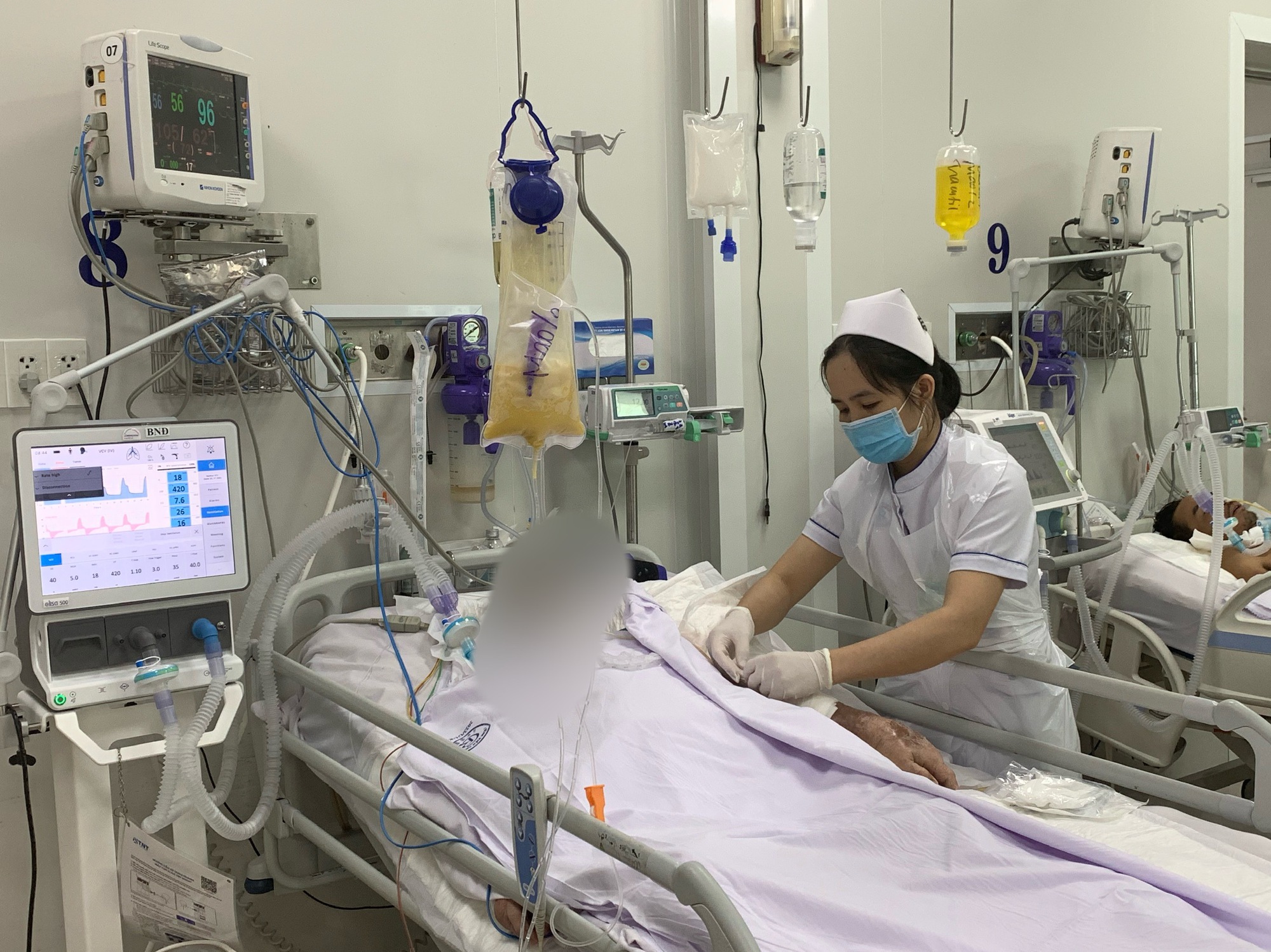
A patient is receiving treatment at the Department of Tropical Diseases, Cho Ray Hospital (Ho Chi Minh City).
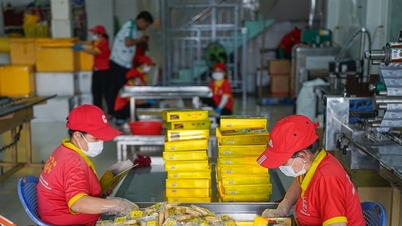
Specifically, the investigation revealed that the street vendor selling Vietnamese pork sausage was an employee of a bakery owner. This bakery owner obtained the sausage from a sausage production facility in Truong Tho Ward, Thu Duc City. This facility had been operating for nearly two months without registration papers or a sign. Authorities have taken samples of the sausage from this facility for testing and are awaiting the results.
The Health Department of Thu Duc City is directing all wards in the area to inspect all production and business establishments, especially those producing sausages, ham, and vermicelli.
Later that same day, Dr. Le Quoc Hung, Head of the Department of Tropical Diseases at Cho Ray Hospital (Ho Chi Minh City), said that his unit, along with Gia Dinh People's Hospital, was coordinating the treatment of three new cases of botulinum poisoning.
Accordingly, the three adult cases (all residing in Thu Duc City) are a continuation of the cluster of three pediatric botulinum poisoning cases currently being treated at Children's Hospital 2 (Ho Chi Minh City).
All three patients had contact with suspected contaminated food on May 13th. Two brothers (aged 18 and 26) ate bread with Vietnamese sausage sold by street vendors, and the 45-year-old man consumed a type of fermented fish sauce that had been left for a long time.
One day after eating, all three individuals experienced symptoms of digestive disorders, fatigue, headache, dizziness, and abdominal pain with signs of diarrhea. Subsequently, their condition worsened, developing muscle weakness and difficulty swallowing. The 18-year-old patient experienced the earliest symptoms, requiring hospitalization at the Ho Chi Minh City Hospital for Tropical Diseases due to muscle weakness. On the afternoon of May 15th, the 45-year-old man went to Gia Dinh People's Hospital, and the 26-year-old patient, with milder symptoms, went to Cho Ray Hospital for examination.
Dr. Hung concluded that, based on the symptoms and medical history, all three suspected botulinum poisoning. A sample from the 45-year-old patient at Gia Dinh People's Hospital was sent for PCR testing at the Ho Chi Minh City Institute of Hygiene and Epidemiology, confirming the presence of botulinum toxin. "Therefore, over 90% of these cases are botulinum poisoning and originate from food," Dr. Hung stated.
Regarding the patients' condition, currently two patients (aged 18 and 45) require mechanical ventilation, experiencing muscle paralysis with muscle strength at only 1/5. The 26-year-old patient has some muscle strength and can still breathe independently. However, the prognosis for the 26-year-old patient remains high, indicating a high risk of requiring further mechanical ventilation support in the coming days.
According to Dr. Le Quoc Hung, Head of the Department of Tropical Diseases at Cho Ray Hospital (Ho Chi Minh City), the BAT antidote for botulinum poisoning has run out. This is unfortunate for patients and a difficult situation for treating doctors. If botulinum poisoning is treated with the specific BAT antidote early, patients can recover from paralysis within 48-72 hours and will not require mechanical ventilation.
In cases where mechanical ventilation is started 1-2 days after poisoning, which is very early, the patient can recover within an average of 5-7 days and can be weaned off the ventilator, begin physical therapy, and return to a normal life with stable health.
In the absence of a BAT antidote, supportive treatment is necessary, primarily nutritional support and mechanical ventilation. This is because botulinum toxin damages the nervous system, leading to muscle paralysis. When muscles are paralyzed, breathing becomes impossible, resulting in death.
"Previously, without ventilators or invasive respiratory support, patients were very likely to die. But now, with support devices like ventilators, treatment is easier. However, the results are not as good as those achieved with medication," said Dr. Hung.
Source


![[Photo] Prime Minister Pham Minh Chinh presides over a meeting on private sector economic development.](/_next/image?url=https%3A%2F%2Fvphoto.vietnam.vn%2Fthumb%2F1200x675%2Fvietnam%2Fresource%2FIMAGE%2F2025%2F12%2F20%2F1766237501876_thiet-ke-chua-co-ten-40-png.webp&w=3840&q=75)




















































































Comment (0)