

Gallbladder polyps include various types such as cholesterol polyps, inflammatory polyps, and adenomatous polyps, each with different shapes, sizes, and risks of malignant transformation.
Gallbladder polyps are abnormal growths of tissue that protrude from the lining of the gallbladder, often discovered incidentally during routine abdominal ultrasounds or cholecystectomy (gallbladder removal) surgery to treat gallstones.
According to Dr. Tran Hieu Nhan, MD, MSc, Center for Endoscopy and Endoscopic Surgery of the Digestive System, Tam Anh General Hospital, Ho Chi Minh City, most gallbladder polyps are benign, rarely causing complications or infections, with only about 5% progressing to cancer. Gallbladder polyps are classified into the following four types.
Cholesterol polyps
According to Dr. Nhan, cholesterol polyps account for 60-90% of detected gallbladder polyps. These polyps are smaller than 0.1 cm, usually appear in large numbers, and have a low risk of malignancy.
Inflammatory polyps
Inflammatory polyps are uncommon, accounting for about 10% of gallbladder polyps. This type results from granulation tissue and fibrosis secondary to chronic inflammation. Inflammatory polyps are usually smaller than 0.1 cm and rarely progress to malignancy.

Doctor Hieu Nhan re-examined a patient in November 2023. Photo: Tam Anh Hospital
Adenomatous polyp
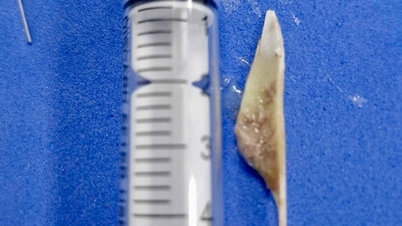
Adenomatous polyps are benign but also carry a risk of malignant transformation. The lesions typically appear as solitary, pedunculated or sessile polyps, measuring 0.5-2 cm, and may be associated with gallstones or chronic cholecystitis.
Adenomatous polyps are mostly discovered incidentally through gallbladder resection specimens or during preoperative imaging studies. Histologically, adenomatous polyps are usually tubular or papillary in shape.
Adenomatous hypertrophic polyp
This type of polyp forms inside the gallbladder without inflammation, mainly occurring in middle age, with the incidence increasing with age. Adenomatous hypertrophic polyps are precancerous lesions.
Gallbladder polyps come in many forms, but most are not a cause for concern. However, if diagnostic results reveal an abnormal polyp growth with a high risk of developing into cancer, the doctor will recommend gallbladder removal.

Gallbladder polyps can develop into cancer, causing patients significant abdominal pain. (Image: Freepik)
Dr. Nhan noted that gallbladder polyps cannot disappear on their own; on the contrary, they risk increasing in size and number over time. Most cases are asymptomatic, only becoming painful and inflamed when the polyps obstruct the bile duct. Currently, there is no way to remove polyps except through surgical removal.
Most gallbladder polyps are benign, but there is still a possibility of them becoming malignant. Early detection and treatment are crucial. Doctors recommend that everyone proactively undergo regular health checkups.
Le Thuy
| Readers can ask questions about digestive diseases here for doctors to answer. |
Source link


![[Image] Hanoi's urban life under the challenge of a "scorching hot" environment](https://vphoto.vietnam.vn/thumb/1200x675/vietnam/resource/IMAGE/2026/05/25/1779706979265_nang-nong-t5-2026-minh-duy-7-4636-jpg.webp)
































































































Comment (0)