

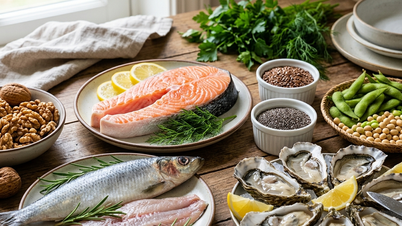
Below are four protein-rich foods that have a positive impact on skin health, along with the right ways to incorporate them to maximize their benefits.
1. Eggs help restore the skin's protective barrier.
Eggs are considered one of the most biologically valuable sources of protein, providing all the essential amino acids that are efficiently absorbed and utilized for the body's cell regeneration process.
Egg whites are rich in protein, which helps synthesize keratin – a crucial component of hair, skin, and nails. Meanwhile, egg yolks contain lecithin and various micronutrients such as zinc, which help maintain the skin's protective barrier, retain moisture, and improve its natural elasticity.
Besides its nutritional value, eggs are also used by many people in at-home skincare. Egg whites combined with honey can create a face mask that temporarily tightens the skin thanks to the film-forming properties of the protein. However, the effect is mainly supportive and does not replace specialized skincare methods.
Experts advise against eating raw eggs due to the risk of Salmonella infection. Additionally, raw eggs contain avidin, a substance that can interfere with the absorption of biotin (vitamin B7), a micronutrient essential for hair and skin. Cooking eggs allows the body to absorb the protein more effectively and safely.

Of all food protein sources, eggs are considered to have the highest biological value.
2. Pig liver is good for blood circulation and moisturizes the skin.
Animal organs are often a concern due to their cholesterol content, but when consumed in the right amounts, pork liver is one of the most effective foods for beauty from the inside out.
Pork liver is not only rich in high-quality protein but also a rich source of vitamins A, B2 (riboflavin), and B12. Vitamin A helps accelerate the skin cell regeneration cycle, preventing rough and thickened skin. Vitamin B2 directly participates in energy metabolism in skin cells, helping the skin to be rosy and bright. In particular, pork liver has a very high content of heme iron, which is absorbed much better than iron from plant sources.
Choose liver that is uniformly reddish-brown in color, has a smooth, glossy surface, and is free of pale spots (a sign of fatty liver disease). When cooking, simply boil or stir-fry it quickly for 1–2 minutes to preserve B vitamins, which are very sensitive to high temperatures. Eating liver for too long or deep-frying it will cause a significant loss of its nutritional value.
Recommended frequency: 1–2 times per week is sufficient to receive the benefits without worrying about excess cholesterol or vitamin A, both of which can be harmful if accumulated excessively.
3. Lean beef fights aging.
When it comes to anti-aging, people often think of retinol creams or vitamin C serums. Few know that lean beef contains a special compound that no cosmetic product can replace: carnosine.
Carnosine is a naturally occurring dipeptide that inhibits glycation, a chemical reaction that occurs when blood sugar binds to collagen and elastin fibers, causing them to stiffen and break, resulting in wrinkles and dull skin. This is the primary mechanism of skin aging in people with diets high in carbohydrates and sugar, and carnosine in beef is the most effective "shield" against it.
In addition, the heme iron in beef has an absorption rate of up to 15–35%, much higher than non-heme iron from vegetables (only 2–20%). Sufficient iron helps hemoglobin effectively transport oxygen to skin cells, creating a naturally rosy complexion without the need for blush or foundation.
Note: Limit red meat consumption to under 300g per week to avoid chronic inflammation, a factor that promotes cellular aging. When cooking, combine beef with bell peppers, tomatoes, or broccoli, which are rich in vitamin C, to significantly increase iron absorption.

Vary your weekly menu: alternate between eggs, fish, beef, and liver to ensure your body receives a full spectrum of amino acids and micronutrients.
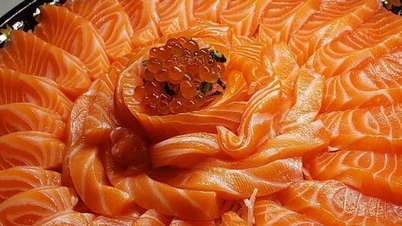
4. Salmon moisturizes and provides antioxidants.
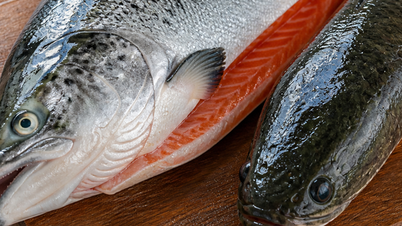
If asked to choose just one food for the skin, many dermatologists would undoubtedly pick salmon. The reason lies not only in its protein content but also in its omega-3 (DHA/EPA) and astaxanthin content – two "supernutrients" with proven anti-aging effects demonstrated through numerous clinical studies.
Omega-3s help strengthen the lipid barrier on the skin's surface, a natural protective layer that retains moisture and prevents irritants from penetrating. When the lipid barrier is healthy, the skin is always plump, has fewer wrinkles, and is less prone to redness and irritation. This is why people who consume enough omega-3s tend to have significantly healthier-looking skin compared to those who eat less fat.
Astaxanthin is a natural antioxidant that gives salmon its characteristic pink color. This compound has the ability to neutralize free radicals and protect the skin from UV damage, much more effectively than other common antioxidants. Regular consumption of salmon helps fade dark spots, reduce sun-induced pigmentation, and improve skin tone over time.
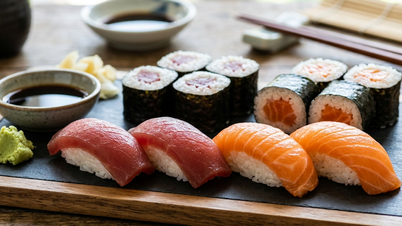
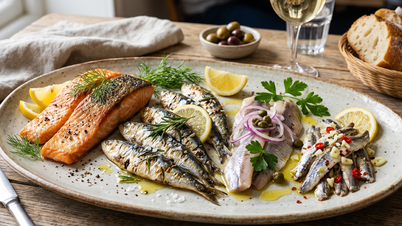
Preparation note: People with sensitive digestive systems should prioritize cooked salmon over sashimi to ensure food safety. When grilling or pan-frying, maintain moderate temperatures to preserve omega-3s, which are easily oxidized at excessively high temperatures.
5. Principles of eating protein for beautiful skin
When incorporating these food groups, please note the following:
- Firstly, prioritize gentle cooking methods such as steaming, boiling, and pan-frying instead of prolonged deep-frying at high temperatures, which not only denatures proteins but also destroys valuable B vitamins and omega-3s.
- Secondly, diversify your weekly menu: Alternate between eggs, fish, beef, and liver to ensure your body receives a full range of amino acids and micronutrients.
- Thirdly, supplement protein along with vitamin C, an essential nutrient for the liver to synthesize collagen from amino acids, and also enhances iron absorption from meals.
Ageless skin doesn't come from expensive creams or a magic diet, but from patiently nourishing each cell with the right nutrients regularly, in a balanced and knowledgeable way. Individuals with underlying medical conditions or undergoing specific treatments should consult a nutritionist before making any dietary changes.
Please check out more videos of interest:
Source: https://suckhoedoisong.vn/4-thuc-pham-giau-dam-ho-tro-da-sang-khoe-san-chac-hon-16926051820522239.htm

![[Image] Hanoi's urban life under the challenge of a "scorching hot" environment](https://vphoto.vietnam.vn/thumb/1200x675/vietnam/resource/IMAGE/2026/05/25/1779706979265_nang-nong-t5-2026-minh-duy-7-4636-jpg.webp)



![[Image] Close-up view of the interchange connecting the two expressways and Long Thanh Airport.](https://vphoto.vietnam.vn/thumb/1200x675/vietnam/resource/IMAGE/2026/05/25/1779703378210_ndo_br_z7863716673926-224453a31600126cce10622af6290afd-4549-jpg.webp)






















































































Comment (0)