

1. The consequences of incorrect toe-raising technique
Many people consider heel raises to be a light exercise and often do them instinctively. However, performing them too quickly or with incorrect posture can cause pressure to be concentrated in the wrong areas, increasing the risk of injury.
1.1 Calf muscle pain and strain: This is the most common condition when doing calf raises incorrectly. Common causes include doing too many repetitions in a row, not warming up before exercising, raising the heels too high or too quickly, and applying sudden force to the calf muscles. In this case, the calf muscles may become stiff, sore, or cramping after exercise. In more severe cases, it can cause muscle fiber tears, making walking difficult.
1.2 Plantar Pain and Plantar Fasciitis: When performing exercises with incorrect posture, excessive pressure can be exerted on the soles of the feet. This is especially common in overweight individuals, those with flat feet, those wearing ill-fitting shoes, and those exercising on hard surfaces for too long. Continuously raising the heels in an incorrect posture can strain the plantar fascia, causing sharp pain in the soles of the feet, especially in the morning after getting out of bed.
1.3 Heel and Achilles tendon injuries: The Achilles tendon is the tendon that connects the calf muscle to the heel bone. This is also the area that experiences the most pressure when standing on tiptoes.
If exercisers use incorrect technique or increase intensity too quickly, they may experience:
- Achilles tendonitis.
- Heel pain.
- Swelling and warmth around the tendon.
1.4 Stiff ankles in the morning: In some rare but serious cases, the Achilles tendon can tear if you overexert yourself or suddenly jump on your tiptoes.
1.5 Ankle pain and loss of balance: Many people have a habit of shifting their weight unevenly to one side of their foot or locking their knee when standing on their tiptoes. This causes the ankle joint to malfunction, which over time can lead to ankle pain, ligament strain, joint instability, and an increased risk of falls. Older adults or those with a history of ankle injuries should be especially cautious.
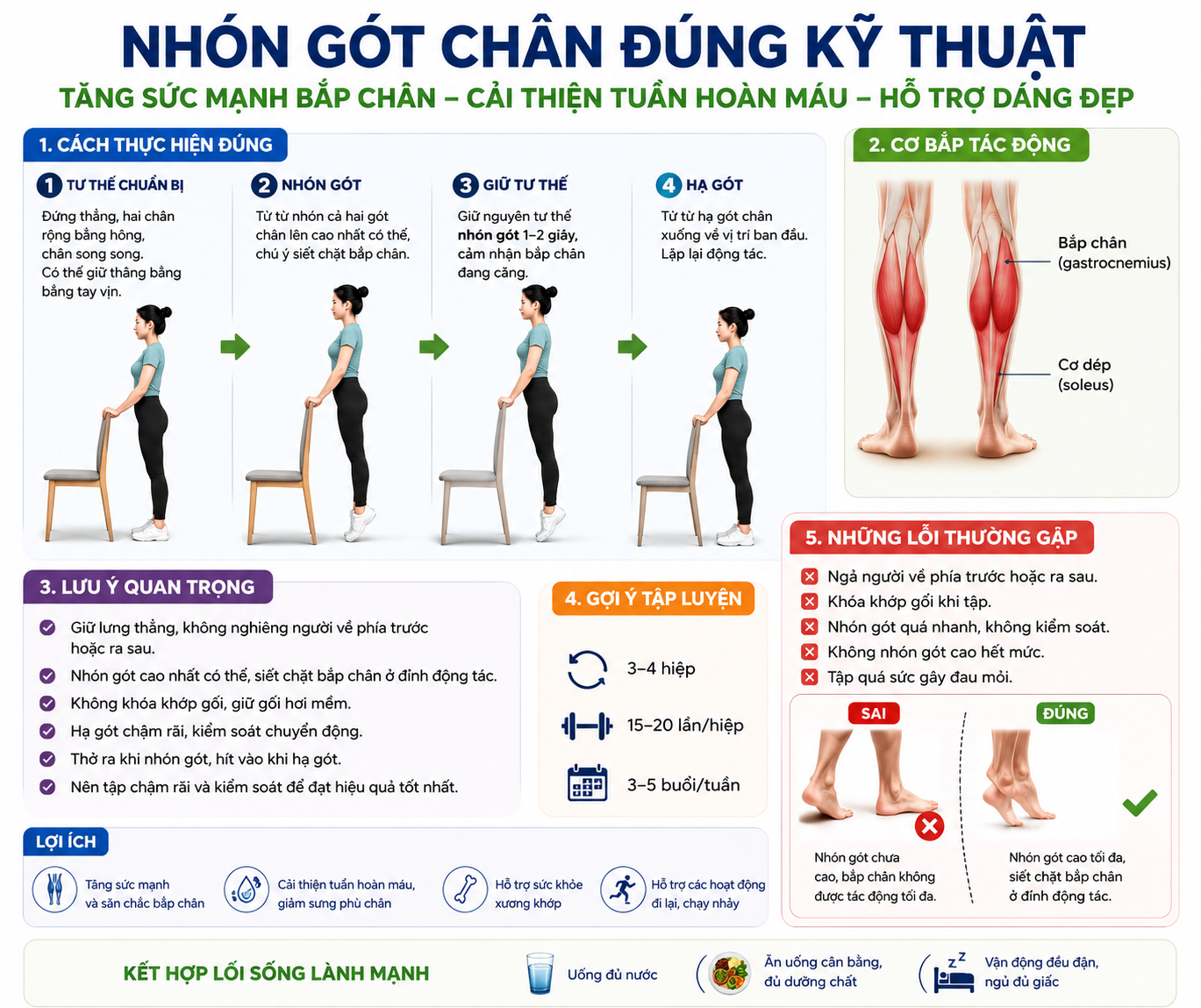
Practice the correct toe-raising technique and avoid incorrect postures.
2. How to perform the heel raise exercise correctly
To ensure the exercises are effective without putting excessive strain on muscles and joints, careful attention to technique is essential from the start.
The correct posture when standing on tiptoes.
- Stand up straight.
- Feet hip-width apart
- Shoulders relaxed
- Eyes looking straight ahead.
- You can place your hands lightly on a wall or chair to maintain balance.
- Avoid bringing your feet too close together or rotating your feet too far outwards, as this can easily misalign your ankles.
The correct way to do it
Basic principle:
- Inhale as you prepare to or lower your heels.
- Exhale when using force to stand on your toes.
- Step 1: Inhale (take a deep breath through your nose, gently tighten your abdominal muscles to stabilize your body).
- Step 2: Exhale and slowly raise your heels. As you exhale through your mouth, slowly lift your heels until you are standing on your toes.
Note:
- Don't jump up too quickly.
- Don't put pressure on your big toe.
- Keep your weight evenly distributed across your entire forefoot.
- Step 3: Hold for 1-2 seconds at the highest position, feeling your calf muscles gently tighten, without over-straining them.
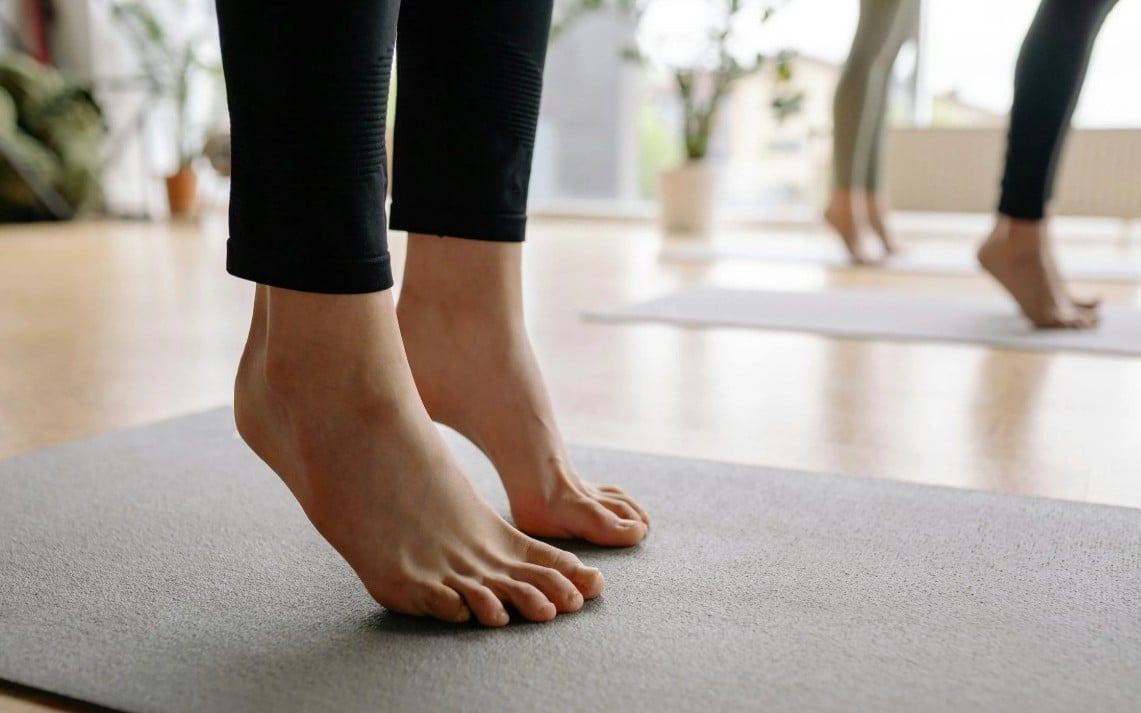
- Step 4: Inhale and slowly lower your heels (lower your heels slowly, controlling the movement instead of letting your feet drop to the floor). This is a very important step to help stretch the calf muscles more effectively. Proper breathing helps increase the effectiveness of the exercise.
Many people tend to hold their breath while exercising, which causes muscles to tire quickly and increases strain on the cardiovascular system. Coordinating your breathing correctly helps:
- Improves balance.
- Reduce muscle tension.
- Supports blood circulation.
- It helps to make the movements more stable and rhythmic.
3. How many times should I do tiptoe raises?
For beginners:
- Perform 10-15 repetitions per set.
- Perform 2-3 sets
- Rest for about 30-60 seconds between sets.
- You shouldn't exercise so continuously that your calves become sore.
- The most important thing is the quality of the movement, not the quantity.
Tips to help reduce injuries when doing heel raises
- Warm up before exercising.
- You should rotate your ankles, stretch your calves, and walk gently for about 5 minutes to warm up your muscles.
- Choose the right shoes.
- Shoes with good elasticity and support help reduce pressure on the arch and heel of the foot.
- Avoid exercising on a surface that is too hard.
- Floors that are too hard can increase the pressure on the heels and ankle joints.
- Don't try to exercise when you're in pain.
- If you have Achilles tendonitis, plantar fasciitis, or an ankle injury, you should rest and consult a specialist before resuming exercise.
4. Who needs to be cautious when practicing heel raises?
Certain groups of people should exercise under appropriate guidance:
- Older people.
- Obese people.
- People with flat feet.
- The person has Achilles tendonitis.
- People with a history of ankle injuries.
- People with osteoarthritis...
Heel raises are a simple exercise, but that doesn't mean you can do them haphazardly. Performing them incorrectly over a long period can cause calf pain, plantar fasciitis, heel injuries, and affect mobility.
For best results, exercisers need to pay attention to controlling movement, coordinating breathing appropriately, and gradually increasing intensity. A small but properly performed exercise will help strengthen and improve leg flexibility and reduce the risk of long-term injury.
Readers are invited to watch the video :
Source: https://suckhoedoisong.vn/5-tac-hai-khi-nhon-got-chan-sai-cach-169260525092148475.htm

![[Image] A brilliant symphony and explosive power in the skies of Da Nang.](https://vphoto.vietnam.vn/thumb/1200x675/vietnam/resource/IMAGE/2026/05/31/1780196945787_anh-man-hinh-2026-05-31-luc-10-08-51.png)









![[Video] Sunset at Lap An Lagoon – Where the sun sets over the fishing nets](https://vphoto.vietnam.vn/thumb/340x192/vietnam/resource/IMAGE/2026/05/31/1780192137701_beach-landscape-sea-water-nature-grass-745871-pxhere-com.jpeg)




































































Comment (0)