

Patients are unable to receive treatment or face extremely long wait times as the healthcare crisis spreads across South Korea, many doctors are taking leave, and hospitals are paralyzed.
"I heard on the news that doctors are on strike, but since this is a public hospital, I thought there wouldn't be any problems, right?" asked 75-year-old Lim Chun-geun, standing in front of the Denver Medical Center in Seoul, his voice filled with anxiety.
Mr. Lim praised the government's decision to increase enrollment quotas for medical schools, but expressed "annoyance" upon hearing that doctors were striking to prevent it.
"The respect I once had for doctors is gone," he expressed.
Mr. Lim is not the only one affected by the doctors' strike. Many patients have had their treatment delayed because the hospital lacks sufficient staff.
"Our son has a severe disability due to a traumatic brain injury and requires inpatient treatment. But all the major hospitals have said they can't accept him, and the trainee doctors have left. We have to wait at home, which is very stressful," shared Koo Jin-hee, 51, a family member of a patient at Severance Hospital.
On February 26th, an atmosphere of anxiety permeated the waiting rooms of Severance Hospital. Many people were concerned about healthcare shortages at five major South Korean hospitals: Seoul National University Hospital, Asan Medical Center, St. Mary's Hospital, Severance Hospital, and Samsung Medical Center.
These facilities have announced they will be suspending regular outpatient care services due to the resignations of their medical interns and residents. This type of care will resume in May.
Cho Hyeon-woo, 35, has a child suffering from a terminal illness and in critical condition. However, he cannot register his son for treatment at any hospital. The father has no choice but to transfer his child to a lower-level hospital.
"I understand the doctor's point of view, but we don't know when our child might need another emergency surgery. We are extremely worried," he shared.
In recent days, all staff working in the pediatrics department of Severance Hospital have submitted their resignations, except for the fourth-year residents. The doors of the emergency department's resident office are locked, refusing access to the media and patients.
Four of the eight resident doctors at Kyunggi Medical Center have also resigned. The remaining four plan to submit their resignations later this month. At Seongnam Medical Center, the largest public health facility in eastern Kyunggi Prefecture, three resident doctors have not reported to work since February 19.
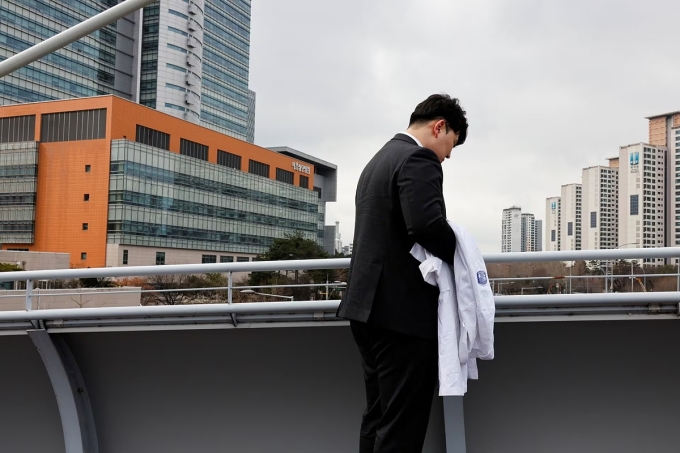
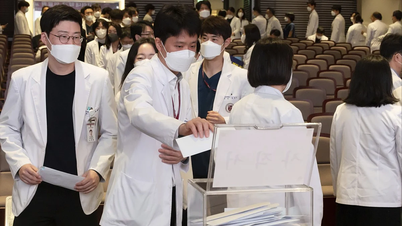
Dr. Ryu O. Hada, 25, one of the striking workers, removes his lab coat at a hospital in Seoul on February 25. Photo: Reuters
A heavy burden for those who remain.
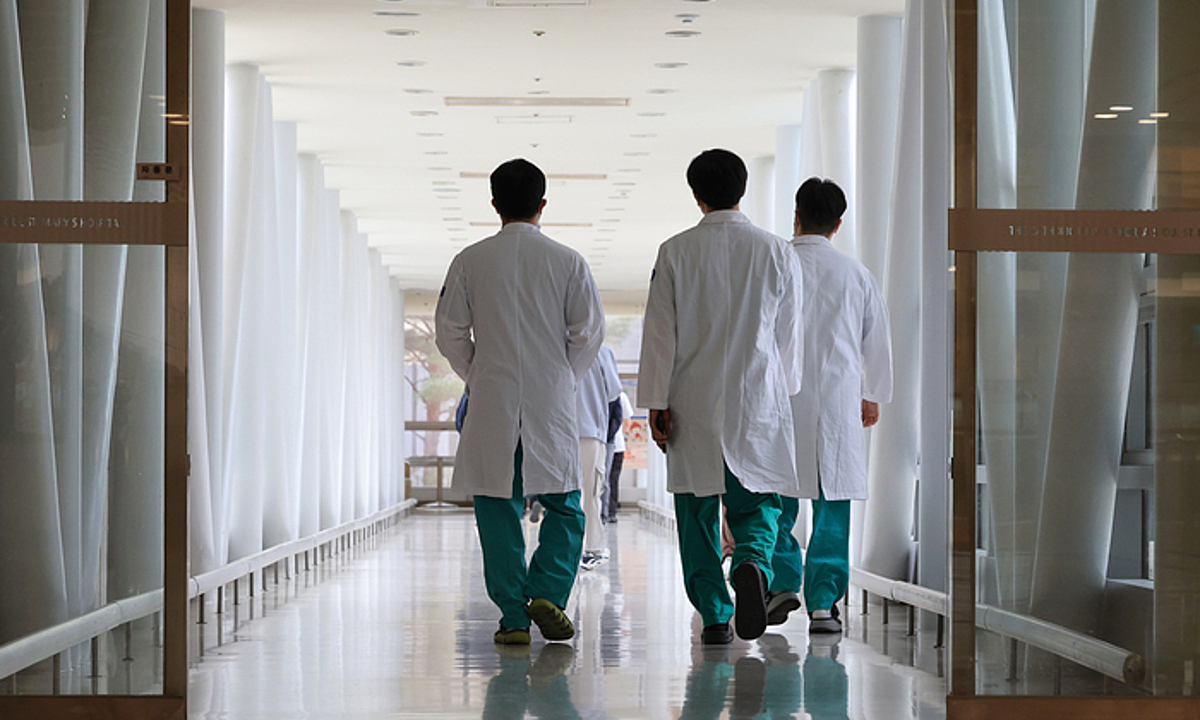
As the strike continues, many doctors are leaving, placing a heavy burden on the remaining medical staff. At major hospitals, some professors and researchers are working 90 hours a week. Experts say that if this situation lasts another two weeks or more, the remaining doctors will collapse. For medical professionals trying to fill the vacancies, the workload is only increasing.
The emergency department at Sacred Heart Hospital, part of Hallym University, where all six interns and residents had resigned, was completely overwhelmed. Eleven medical professionals divided the tasks of the remaining staff. They struggled as the number of patients increased. Many who had previously gone to second-tier hospitals began flocking to third-tier hospitals.
"I used to work 88 hours a week when I was an intern and resident. Now, I'm going back to those days. The workload has doubled," said Lee Hyung-min, a professor of emergency medicine at Sacred Heart Hospital.
According to Lee, professors like him persevere no matter how difficult the circumstances. However, he emphasized that this does not mean they agree with the new policies.
"The government should know that we persevere because the system would collapse without us," he said.
The workload is even more severe in tertiary hospitals outside Seoul, where the healthcare infrastructure is weak. The metropolitan area has secondary hospitals to transfer patients if needed. The situation in the provinces is not so favorable. Medical staff sometimes have to work three consecutive days without rest.
"We lost all three of our emergency department interns. The two remaining specialists had to fill the vacancies, so obviously the workload increased," said an expert at a regional general hospital.
Without resident physicians, faculty members had to handle backlogs, to the point where they couldn't participate in any outside activities. Many canceled seminars and press conferences, dedicating themselves entirely to tasks at the hospital.
Another group struggling with the intense workload is nurses, who are trying to fill the void left by the striking workers.
"Normally, nurses only work during the day. Now, they have to work shifts like interns, meaning they work continuously for 30 hours until the next morning," shared a nurse at a tertiary hospital in the area.
Observers are concerned that South Korea's healthcare system may be on the verge of collapse due to the increasing number of exhausted medical staff. The overload is so severe that there have been cases of doctors prescribing cancer medication on the wrong day, as they no longer distinguish between the days of the week, according to a 50-year-old professor.
"If this continues, I don't know where we're going. The work is exhausting for faculty members in internal medicine and surgery," said the director of a third-tier hospital in Seoul.
Since February 20th, more than 9,000 medical doctors, the core force caring for and treating critically ill patients, have left hospitals to protest the policy of increasing enrollment quotas at medical schools. This has plunged South Korea into a major medical crisis.
The striking doctors are protesting the government's proposed medical education reform program, calling for an increase of 2,000 enrollments in medical schools starting in 2025. They argue that this plan will negatively impact the quality of healthcare services, as well as their income and social status. Instead of increasing enrollment quotas, they believe the government should address the current income and working conditions of healthcare workers.
Thuc Linh (According to Hankyoreh )
Source link


![[Photo] General Secretary and President To Lam presides over a meeting on preparations for the review of one year of operation of the three-tiered government system.](https://vphoto.vietnam.vn/thumb/1200x675/vietnam/resource/IMAGE/2026/06/02/1780391821195_a1-bnd-4595-9717-jpg.webp)



















































































Comment (0)