

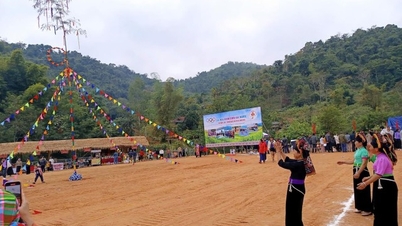
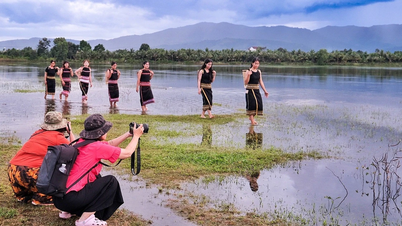
(QBĐT) - Minh Hoa is the land of simple folk songs, deeply rooted in the identity of the mountainous countryside, and always preserved by the people as an indispensable part of the daily life of the communities. Minh Hoa folk songs are used in different conditions and circumstances. Each melody has its own unique characteristics reflecting the distinctive cultural life of the local people, creating a special impression on listeners.
The soul of the mountainous homeland
Born from labor and composed by the people, folk songs in general, and Minh Hoa folk songs in particular, use easily understandable language, the "spoken language" of the locality. One of the most popular folk melodies of Minh Hoa is the "fish-catching chant," originating from the practice of making medicine from the roots of a type of tree in the forest and then releasing it into streams and creeks to catch fish.
This is also a characteristic folk song reflecting the folk knowledge and spiritual life of the people of Minh Hoa. The "Fish Medicine Chant" has a flexible rhythm, following the rhythm of pounding the medicine, with simple, easy-to-remember lyrics. This chant is usually performed collectively in a lively and joyful atmosphere. As soon as someone starts singing, everyone joins in...
Initially, the folk songs about grinding medicinal herbs focused on the task at hand. Gradually, people adapted them into call-and-response songs between men and women, and they became widely used in celebrations, festivals, and other festivities. Besides folk songs about grinding medicinal herbs, Minh Hoa also boasts other folk melodies such as lullabies, ca trù, đúm, ví, and children's songs; among these, the đúm and ví melodies are particularly popular. These are forms of courtship songs between young men and women, characterized by their graceful melodies and lyrical, sweet, and heartfelt lyrics that captivate listeners.
 |
Minh Hoa also features a unique folk singing style called "sac bua," which combines lyrics with the rhythm of large and small drums, aiming to wish families a peaceful and prosperous New Year. A special characteristic of the "sac bua" troupe is that only men are allowed to participate. Their performance attire consists of long robes and turbans. This style of singing is used during joyous occasions in Minh Hoa, such as the Lunar New Year, the Mid-March festival, birthday celebrations, housewarming parties, and business openings.
From its daily life and simple folk melodies, Minh Hoa has instilled in people a longing and affection for a land of " green tea and sweet honey ," a land that, despite hardships, still shines with unwavering faith , as in the song " The Road to Quy Dat " by composer Tran Hoan.
Spreading the love of folk songs.
Sharing a common love for folk music, many people, primarily folk artists, have established folk music clubs to practice, perform, restore, promote, and preserve this treasure of their homeland. A prime example of this is the Minh Hoa District Folk Music Club, established in July 2009. Initially, the club had only 9 members. Today, it has 22 members who regularly participate and collaborate with clubs in communes and towns to develop performance programs for cultural and political events at the local and provincial levels.
Despite facing difficulties such as a lack of practice venues, instruments, costumes, and funding, the club members remained determined to maintain their activities by using private homes and sidewalks of government offices (on days off) for practice. Later, the club was allocated a practice location at the Minh Hoa District Cultural Heritage Association and received financial support for purchasing instruments and costumes. Some members even collected old instruments to repair and create new ones for practice and performance. As a result, the club's activities have become increasingly sophisticated.
| Along with teaching and passing on the tradition, the Minh Hoa Folk Song Club has developed many impressive performances and reenactments of the "fish-catching" folk singing style, which have been recorded for documentation purposes to report to the Ministry of Culture, Sports and Tourism for the ranking of intangible cultural heritage at the national level; and collaborated with Quang Binh Radio and Television Station, VTV8, etc., to create programs and documentaries to serve the propaganda work during the Lunar New Year and promote tourism in Minh Hoa. |
Since its establishment, the club has actively collected ancient folk melodies, organized training sessions, and taught folk songs to local people and students in primary and secondary schools in the area. In addition, the club has developed many performance programs to participate in folk music festivals and competitions organized by the district and province. Many individuals in the club have received certificates of merit, commendations, and commemorative medals from various levels for their outstanding achievements in preserving and promoting the value of cultural heritage.
According to Dinh Thi Loan, head of the Minh Hoa Folk Song and Music Club: For many years, the club has maintained a schedule of two meetings per month. During district and provincial festivals and performances, the club always mobilizes members from clubs in communes and towns, as well as students from schools, to create programs that reflect the unique cultural identity of the homeland, leaving a lasting impression on viewers. In particular, the club has also established a club for teaching the unique folk song genre, promoting tourism and contributing to the preservation of the distinctive culture of the homeland.
Fortunately, the club has many members who are passionate and dedicated to traditional culture. Elderly artisans, such as Dinh Thi Phuong Dong and Dinh Thi Ha (around 80 years old), still diligently teach folk songs to the younger generation and participate in writing new lyrics for folk melodies. The club also has many members with beautiful singing voices, skilled in playing musical instruments, and very active in teaching activities, such as artisans Dinh Tien Dong, Dinh Thi Thoan, and Hoang Viet Anh…
“For Minh Hoa folk songs, the more I study and sing them, the more beautiful and captivating they become. Therefore, no matter where I go or what I do, I will do my best in collecting, preserving, performing, and teaching them to contribute to preserving the cultural essence of my homeland,” shared artisan Hoang Viet Anh, the youngest member of the Minh Hoa Folk Song Club.
In a conversation with us, Ms. Dinh Thi Loan shared: “Currently, the club faces many difficulties in its activities, but we can overcome them because we have members who are deeply committed to the culture of our homeland and passionate about folk songs and traditional music. What worries us is that the younger generation today is not very interested in folk songs, while the experienced artisans are getting older. Therefore, each of us is committed to fulfilling our responsibilities in collecting, preserving, and especially teaching these folk songs so that the folk songs of our mountainous region will live on through time.”
Nh.V
Source
![[Photo] Prime Minister Pham Minh Chinh presides over a meeting on private sector economic development.](/_next/image?url=https%3A%2F%2Fvphoto.vietnam.vn%2Fthumb%2F1200x675%2Fvietnam%2Fresource%2FIMAGE%2F2025%2F12%2F20%2F1766237501876_thiet-ke-chua-co-ten-40-png.webp&w=3840&q=75)
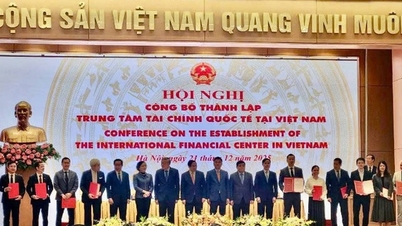
![[Photo] Prime Minister Pham Minh Chinh presides over the conference announcing the establishment of the International Finance Centre in Vietnam.](/_next/image?url=https%3A%2F%2Fvphoto.vietnam.vn%2Fthumb%2F1200x675%2Fvietnam%2Fresource%2FIMAGE%2F2025%2F12%2F21%2F1766309817714_ndo_br_dsc-3400-jpg.webp&w=3840&q=75)






















































Comment (0)